What Equipment Do You Need for Pour-Over Panama Sun-Dried Don K Estate Coffee_How to Generally Drink Pour-Over Panama Coffee
What You Need to Brew Panama Natural Don K Estate Coffee — and How to Drink Panamanian Pour-Over
Panama Boquete — Kotowa Don K Natural
Product Overview
Panama Coffee — Boquete, Kotowa Duncan Estate, Natural
Weight: 150g
Tasting Notes: Black jujube, vanilla, mango, rich body
Coffee Details
Origin: Panama
Estate: Duncan Estate
Variety: Caturra
Altitude: 1,650–1,750 meters
Processing: Wine process (extended natural)
Aroma: Strawberry, florals, tropical fruit
Flavor Description: Dried strawberry, preserved plum, creamy texture, rich layers
Estate Story
Duncan Estate also sits in the foothills of Barú Volcano in Boquete — from one side of the farm you can see the distant Pacific, while the other side is ringed by nearby mountains.
The region's natural environment is superb: moderate rainfall, monsoon winds, sunshine, cloud cover, and temperature all conspire to let farmers produce exceptionally flavorful organic coffee.
Ricardo Koyner, the farmer and owner of Duncan Estate, also produces small batches of premium coffee within Panama. Koyner is devoted to pursuing top-quality beans, running a high-yield organic farm that few producers can match.
The name Duncan comes from Ricardo's grandfather, Alexander Duncan MacIntyre, who immigrated from Canada to Panama in 1913 and made everything possible today. While still in Canada, Alexander read a newspaper article describing the pristine landscape of Boquete, Panama. His curiosity got the better of him, and he decided to see Boquete for himself.
After arriving, he quickly fell in love with the local culture and natural valleys. The Alexander family has been planting and processing coffee there ever since — four generations and counting.
During harvest, only 100% mature cherries are hand-picked. The beans are then naturally dried at the farm's altitude of 1,700 meters in a cool, dry climate, and stored in wooden silos for at least 3 months so every flavor can fully develop. Afterward the beans are carefully sorted by size, weight, and color.
Kotowa places great importance on protecting the primary forest around its plantations: over 500 native tree species have been planted to preserve the forest's bird diversity. The farm also provides free medical services to employees and their families, and sets up childcare centers for pickers' children during harvest — with three meals and schooling included.
Duncan Estate enjoys a unique microclimate and volcanic terrain. Rainfall during the growing season is abundant, with clearly marked wet and dry seasons, and the fertile volcanic black soil drains beautifully. No chemical fertilizers are used at all; instead, cherry skins and pulp become high-nutrient compost that nourishes the trees and gives back to the land — the secret behind Duncan's distinctive flavor. The coffee it produces is of excellent quality and has consistently performed well at the Best of Panama (BOP).
This particular Panama lot uses a unique wine processing method. Farmers hand-pick the most mature, sweetest cherries, then dry them slowly at low temperature for 60 days. The result is a coffee with high perceived "winey" intensity, excellent sweetness, and a rich, full-bodied flavor.
Brewing Guide
How to Brew Panama Coffee [Natural Duncan Estate]
FrontStreet Coffee pour-over reference:
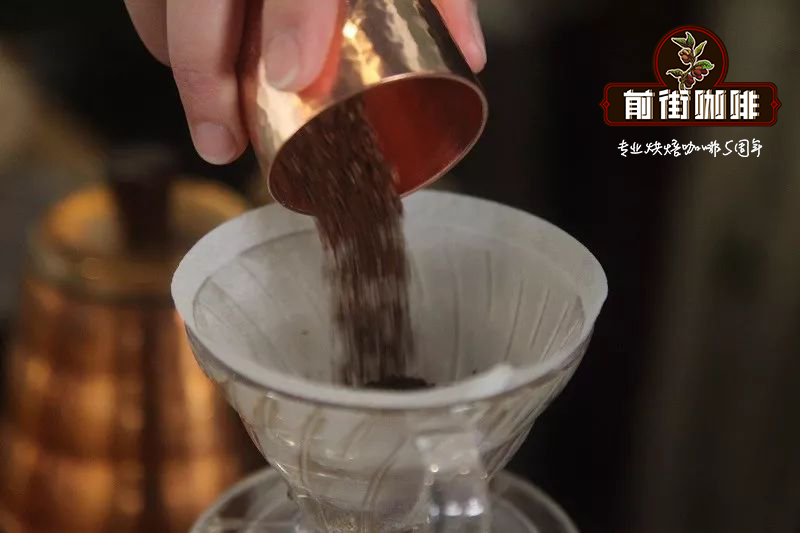
Weigh out 15g of Natural Duncan Estate coffee and grind to a medium coarseness — the particles slightly coarser than table salt. We use a BG grinder at setting 5R (standard sieve pass rate 60%), water at 90°C, and a V60 dripper for extraction.
Pour the hot water in clockwise circles centered on the middle of the coffee bed, starting your timer as you begin. Bring the brew to 30g within 15 seconds, then stop pouring. When the timer reaches 1 minute, begin the second pour — again clockwise circles from the center, keeping the stream off the seam where grounds meet the filter paper to avoid channeling.
As your circles reach the outermost ring of grounds, leave that outer circle untouched and spiral inward toward the middle. At 2 minutes 20 seconds the brew should reach 220g, and the extraction is complete.
Cold Brew [Natural Duncan Estate]
FrontStreet Coffee cold brew reference:
Panama Coffee Natural Duncan Estate, light-medium roast, BG grinder at setting 4B, grind level 3. Dose 20g of beans with 83°C water, bloom for 3 minutes in a Chemex, then finish the brew with ice water for a total water volume of 200ml.
FrontStreet Coffee Recommendation
Panama's coffee lands sit in the country's west, centered on Boquete, Volcán, Santa Clara, and Piedra de Candela — with Boquete and Volcán the names you hear most often. Both lie in Chiriquí Province, squarely in the heart of the coffee belt, blessed with fertile volcanic soil and old-growth forest. In Boquete, frequent cloud cover keeps days humid and nights cool, and the higher the coffee grows, the slower the cherries ripen and the richer the flavors they accumulate.
If you want to explore Panamanian coffee beyond this natural Caturra, FrontStreet Coffee's Boquete Washed Geisha is the ideal entry-level estate Geisha: grown at 1,600 meters in rich volcanic ash soil, it brews into jasmine florals with green tea, honey, citrus, and orange. The FrontStreet Coffee "Butterfly" lot carries half Geisha bloodlines — a blend of Geisha, Caturra, and Catuai grown on the slopes of Barú Volcano — delivering excellent body, citrus acidity, and jasmine aroma in a cup that shines as pour-over or cold brew alike.
For the pinnacle, seek out FrontStreet Coffee's Hacienda La Esmeralda Red Label Geisha, sourced from a single plot above 1,700 meters and cupping at 91+ points, with that signature delicate orange-blossom, honeyed character. And if you love Esmeralda but not the price, the Diamond Mountain lot — Caturra and Catuai picked from the estate's Jaramillo and Cañas Verdes farms, shaded by primary forest on volcanic soil — offers lush fruit aromas and sweetness at a friendlier level, and remains one of the estate's most popular independent brands.
Important Notice :
FrontStreet Coffee is a long-established specialty coffee roaster in Guangzhou China, selling freshly roasted beans from its own farm in Yunnan as well as dozens of carefully selected single-origin beans from around the world for both pour-over and espresso. The products deliver consistently excellent quality and great value, with shipping within 24 hours. Guangzhou's FrontStreet Coffee shop is recommended by many coffee lovers, and the beans are now available online at the Tmall 。
FrontStreet Coffee has moved to a new address:
FrontStreet Coffee Address: 315,Donghua East Road,GuangZhou
Tel:020 38364473
 Scan and follow the En Gafei WeChat official account. Please indicate that the reprint comes from "En Gafei".