Pour-Over Techniques | Volcano Pour, Meteorite Pour, Matsuya-style Pour, Zigzag Pour, Temperature-Reduction Pour-Over Method
Advanced Pour-Over Coffee Techniques
Last time we covered the common pour-over techniques: the one-pour ("one-knife") flow, the three-stage method, the stirring method, and the point-drip method.
Pour-over coffee really has no rigid rules. Grind size, coffee-to-water ratio, water flow volume and height, brew time, whether to spiral or drip — everything can be adjusted to your own preferences and habits once you have some experience. There is no absolutely correct method, only what suits you best.
Coffee brewed with Japanese techniques tends to have a heavy body, high sweetness, and richness — very smooth with a distinct texture. The trade-offs are weaker layering and flavor complexity, plus the considerable difficulty of keeping the water flow stable.
Today we continue with the volcano pour, meteorite pour, Matsuya-style pour, zigzag pour, and the temperature-reduction pour-over method.
Volcano Pour
★ Creates a visual effect resembling a continuous volcanic eruption; it originated in Japan and belongs to the Japanese pour-over school.
It uses single-origin beans at a relatively dark roast, with small circles drawn at the center (about the size of a one-yen coin), producing a continuous, repeated blooming. Fresh dark-roasted beans are essential because they release enough gas to make the blooming state easy to observe.
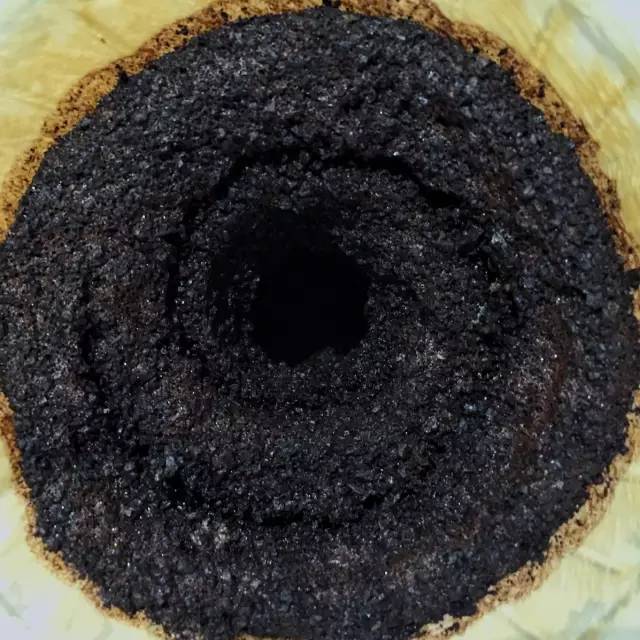
This method requires a generous dose of grounds to achieve the desired effect. The repeated blooming in the early stage can last up to three minutes — deliberate over-extraction. Later, the water flow is increased to under-extract, balancing out the coffee drawn off early on. Once extraction is complete, swirl the server to fully integrate the front and back ends of the brew.
The advantage is richness and a satisfying aftertaste. Be warned, though: trying the volcano pour with dark Italian-style beans yields a taste that is both bitter and astringent for a long time, with only a faint finish. And good single-origin beans are rarely roasted truly dark, so the right beans can be genuinely hard to find.
Essentials for this method: 1. Fresh beans 2. A stable, fine water flow 3. Careful attention to the bloom
Advantages: Produces a thick, solid mouthfeel reminiscent of flannel cloth
Disadvantages: Demanding flow control, prone to over-extraction, skewed flavor profile
Extraction Conditions
- Bean amount: 20g
- Water temperature: 88°C
- Extraction amount: 300ml
- Extraction time: 2.5 minutes +
1. The key is the bloom. Use enough water to fully wet the grounds, and keep injecting only at the center point without varying the height. What matters is whether the first drop of coffee emerges at around the 1-minute mark. The bloom is the single most important part of this method.
2. When the surface of the grounds looks dull, begin the second injection — still carefully — and complete the final pour.
The visual effect is better with dark roasts than light ones, but that doesn't mean light roast is off-limits.
Light-roast beans brewed this way generally show more body than the common one-pour and three-stage methods. Swirling the server suits dark roasts; when a light roast is extracted correctly, it's better to drink it straight. Blooming a light roast and managing the flow are much harder than with dark roast, but if the bloom succeeds and the 1-minute injection stays stable, later pours can be far more generous.
Meteorite Pour
★ Creates multiple meteorite-crater effects, hence the name
During pouring, the water flow continuously pushes the grounds at the center outward, creating layered formations like meteorite impact craters. After the bloom, inject water to just cover the grounds — neither too much nor too little — then gradually narrow the pouring radius toward the center. Throughout, avoid flooding the upper layer with too much water, and stop pouring once the liquid has drained through.
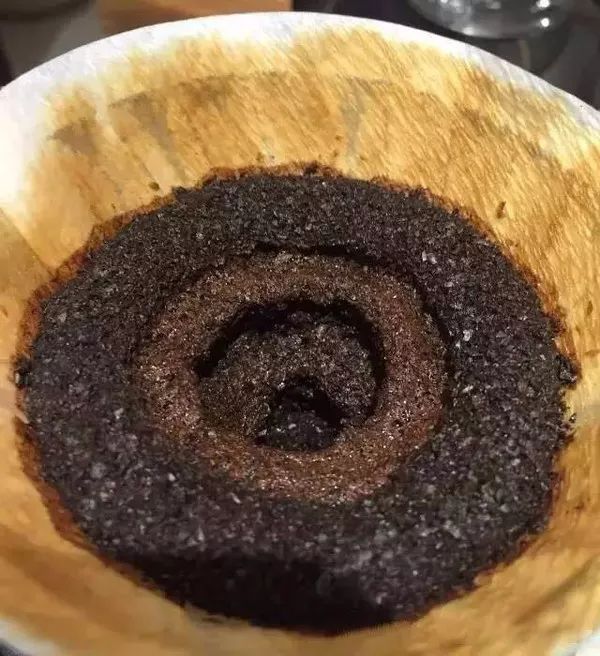
This pour makes extreme demands on the brewer's timing, water volume, and technique, though it asks little of the dose size or extraction time. The reward is rich layering and prominent flavors. The drawback is that water amount and injection timing are very hard to master: too much water floods the upper layer and ruins the work; mistimed pouring lets the retained liquid drain out too early, and the subsequent extraction turns astringent.
Overall it can be used in commercial settings, but the bar is high and failure is easy — this method is really more for enthusiasts.
Essentials: 1. Fresh medium-dark roast beans 2. Skilled switching between flow heights and volumes
Advantages: Clean, balanced sweetness and bitterness with a thick consistency and strong flavor layers
Disadvantages: The powder bed collapses easily; high failure rate
Extraction Conditions:
- Powder amount: 20g
- Water temperature: 88°C
- Extraction amount: 300ml
- Extraction time: 2.5 minutes +
The extraction consists of four water injections:
1. First injection for the bloom.
2. A forceful injection at the center, spiraling outward along the edge of the emerging bubbles.
3. Another forceful center injection for a few seconds, then change the flow height, bringing the kettle spout close to the grounds while drawing spirals with a small-to-medium flow, working outward as if digging into the bed. When the column nears the edge of the dripper, spiral back to the center — here a beautiful coffee donut appears.
4. The final forceful injection goes only at the center point. If the remaining coffee wall afterwards follows the shape of the dripper, consider it a success.
Matsuya-Style Pour Method
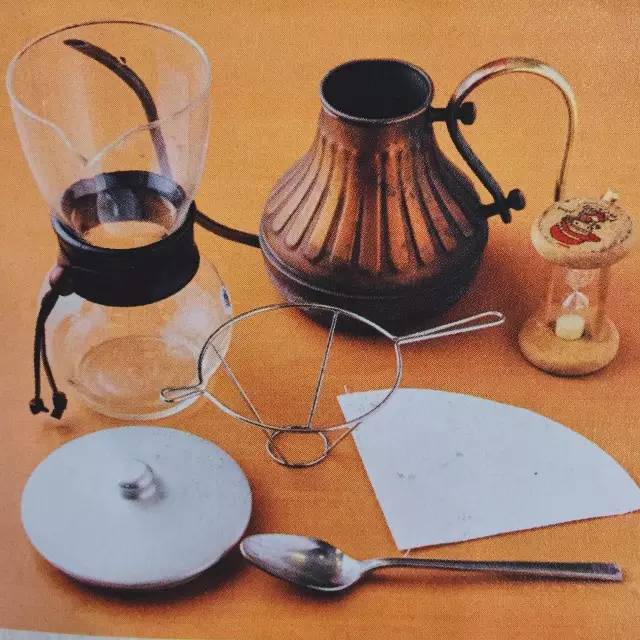
★ Requires a custom metal stand and blooming cover
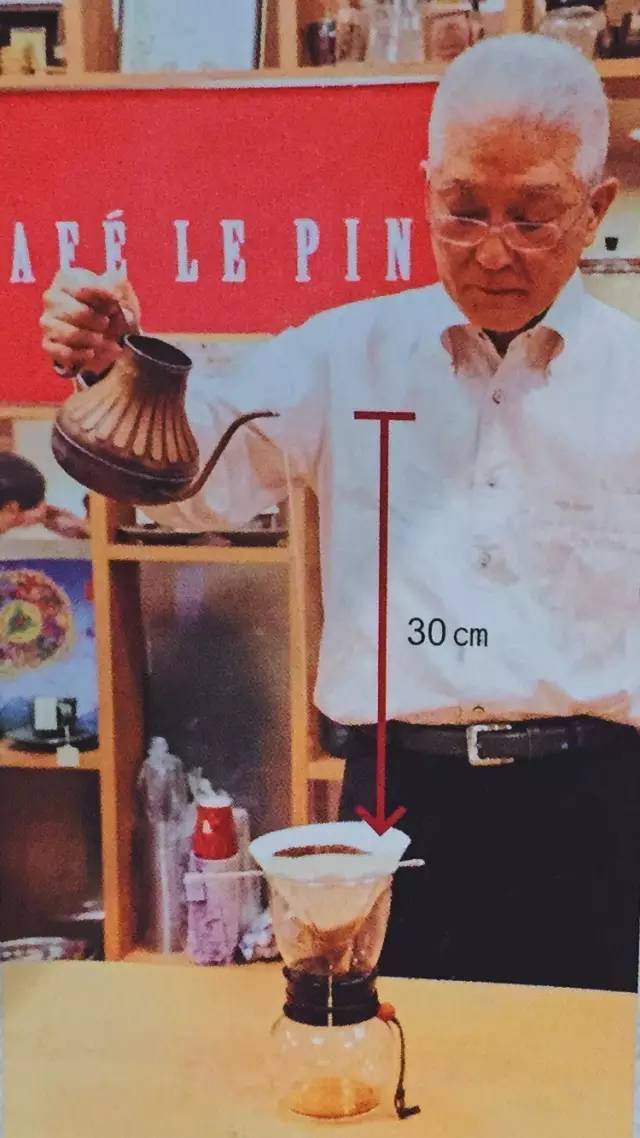
Matsui Kazuyoshi
The Matsuya-style pour method was conceived around 1962, with self-developed seam-lined custom filter paper and a metal stand that doesn't interfere with the expansion of the coffee bed. The filter paper is cone-shaped with the extraction water flow in mind, while the dedicated metal stand holds the paper at the correct angle.
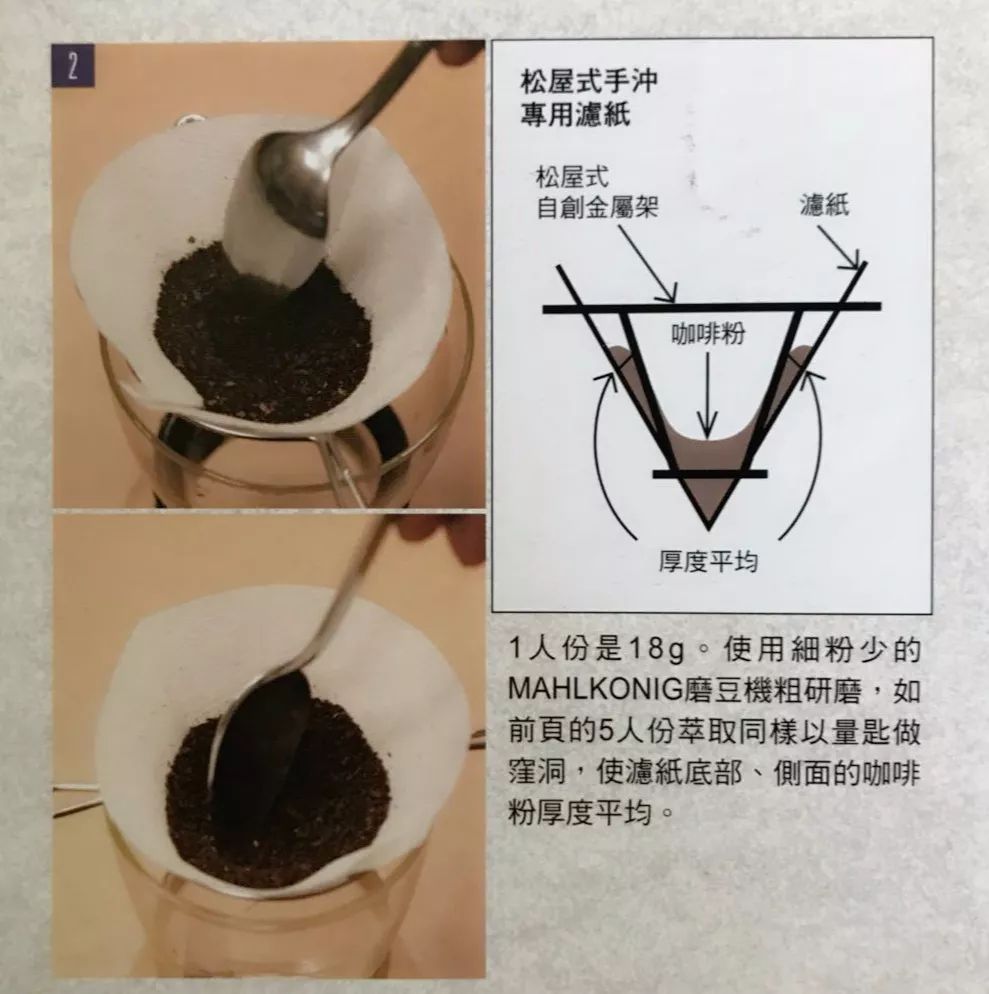
Unlike other methods, the Matsuya-style puts considerable thought into the water injection, blooming method, and extraction amount. For 5 servings, only 3 are extracted, with the remaining 2 topped up with hot water. Even some time after brewing, the flavor barely changes and the cup never turns muddy — this is the Matsuya-style's greatest characteristic.
Extraction Parameters (1 serving, 120ml)
- Bean amount: 18g
- Grind setting: Medium-coarse
- Water temperature: Above 90°C
- Extraction amount: 120ml
- Extraction time: 4 min
- Roast level: City roast
- Filter paper: Always the seam-lined cone-shaped paper. Thanks to the seam, it can accommodate the bed's expansion under a large water flow without breaking, even for large volumes.
- Custom metal stand: Aluminum when developed 50 years ago; now stainless steel for added strength.
1. Pour the grounds into the filter paper and use a measuring spoon to create a shallow depression, distributing the coffee evenly against the sides so the bed is the same thickness at the bottom and the walls.
2. Inject a small water flow into the center of the bed. Water temperature about 95°C, poured from about 30cm above the surface — imagine driving the hot water into the coffee. Because the bed is of uniform thickness, the center is easily penetrated.
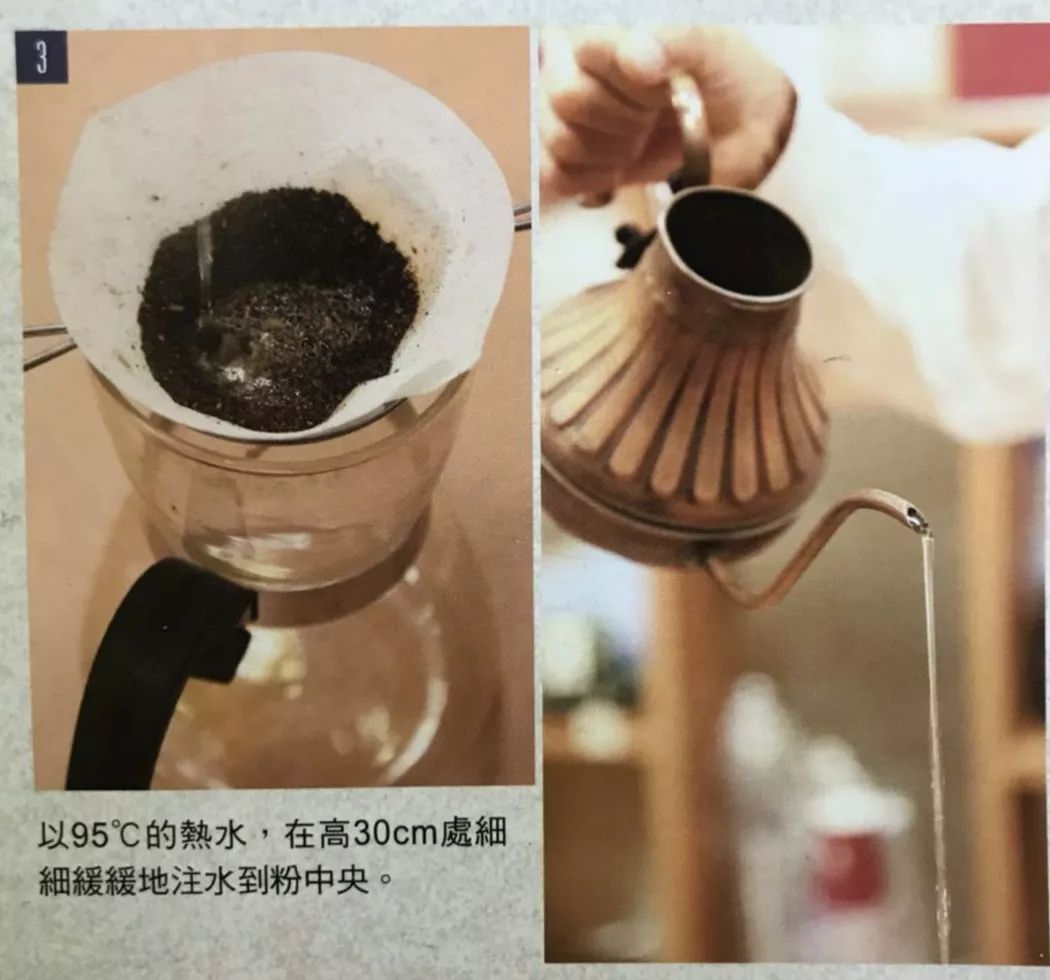
3. Keep pouring into the center, and once about half the grounds are wet, begin spiraling the column along the boundary between wet and dry coffee until all of it is wetted, then stop.
4. Cover with the lid and bloom for 3 minutes. The grounds will expand, and the paper will expand with them. Since the ideal temperature inside the bed is 80–82°C, reheat the water in your kettle during the bloom if it has cooled.
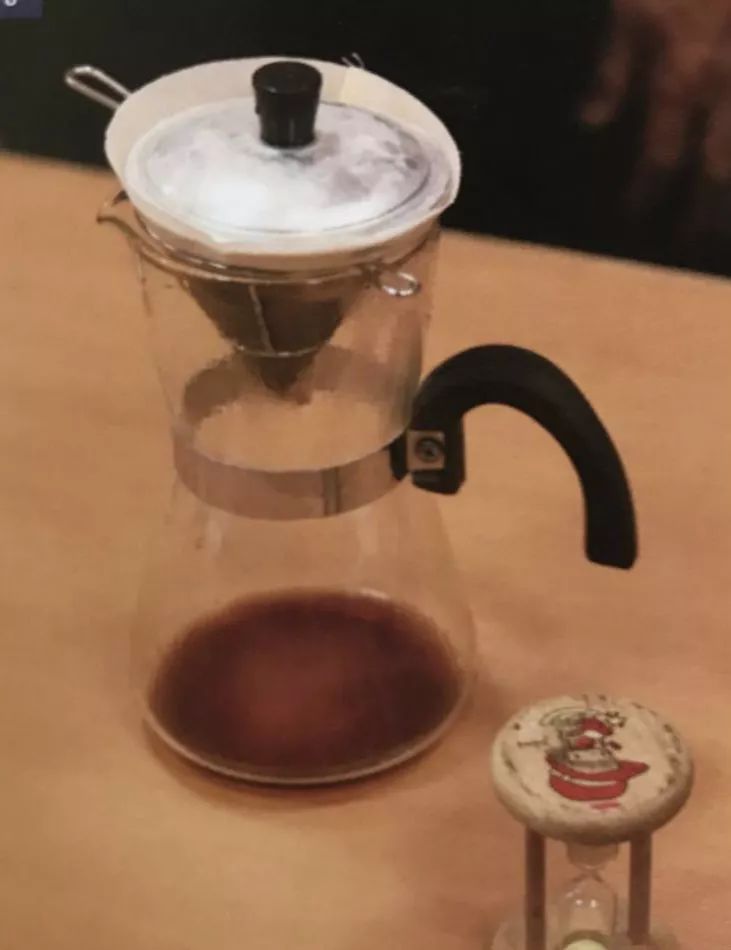
5. After the bloom, inject hot water again, finely and slowly — center to outside, outside to center — until you reach 120ml, then remove the dripper.
Zigzag Pour Method
★ Uses flannel equipment, with no blooming step

This innovative method was developed by Mr. Tahara Shizun of Japan's Ran-Kan. Extraction takes just 40 seconds, with original values of 16g of coffee and 150ml extracted. It is built on three stages with different effects, with the water amounts increasing from small to medium to large.
Extraction Conditions:
- Bean amount: 18g
- Grind: Coarse
- Water temperature: 85°C+
- Extraction amount: 180ml
- Extraction time: 40s
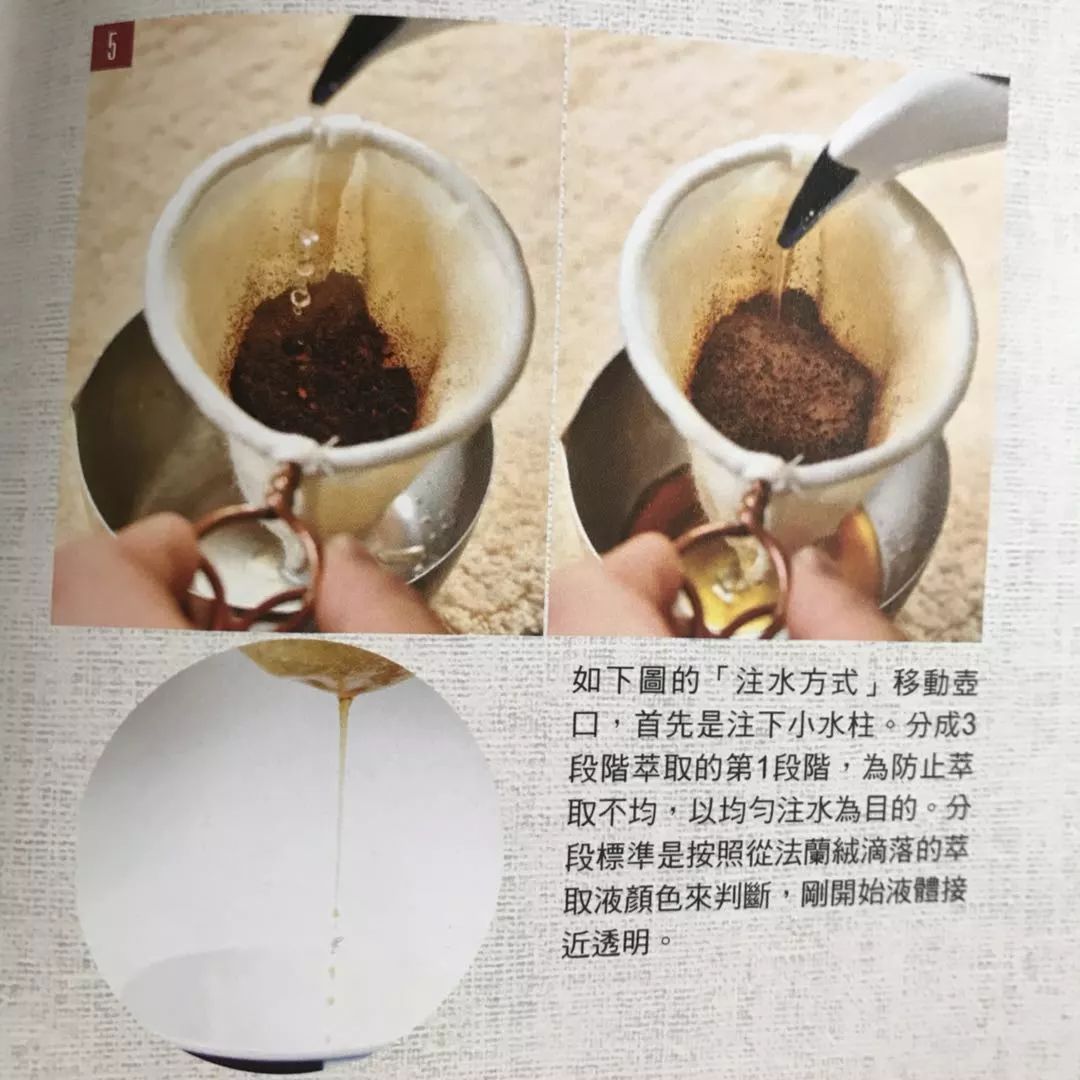
1. Move the kettle spout in the zigzag pattern shown above, first with a small flow. This is the first stage of the three-stage extraction, aiming for even wetting to prevent uneven extraction. (Only the flavors the hot water actually passes through get extracted, so you must cover all the grounds.)
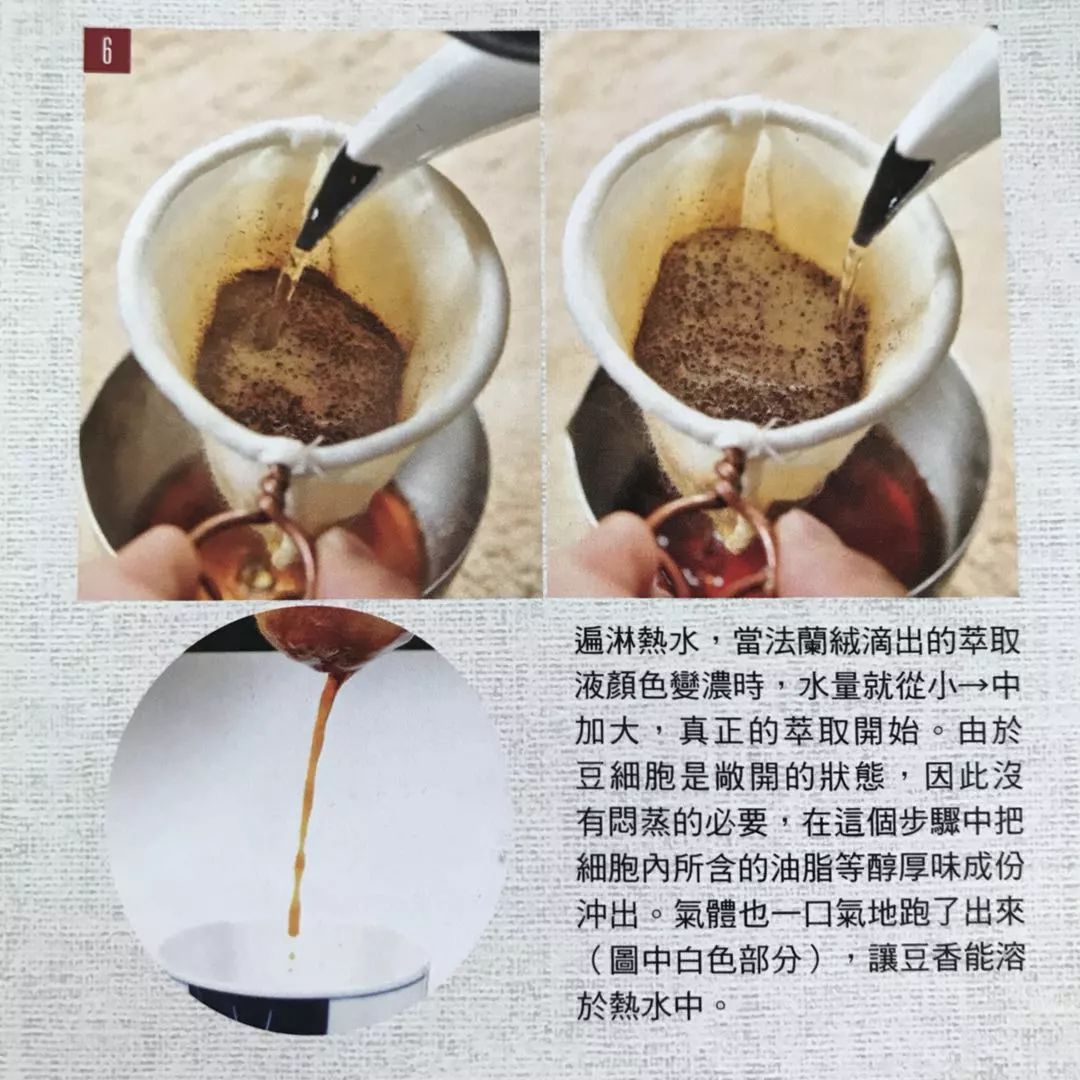
2. Pour hot water over everything, and when the dripping from the flannel becomes concentrated, increase the water amount. Since the bean cells are already open, no bloom is needed.
3. When the color of the dripping becomes light, increase the flow again. This final stage is for harmonizing the flavors.
Temperature-Reduction Pour-Over Method
An advanced technique using a HARIO V60 ceramic dripper to brew medium-dark roasted beans while avoiding the bitter, astringent flavors of the later extraction stages!
1. Stepwise cooling to lower the tail-end extraction rate. Disadvantage: overall flavor is lighter and the mouthfeel thinner.
2. Simply discard part of the tail extraction. Disadvantage: overall concentration rises and flavors become more complex.
3. A large, stirring flow to dilute the tail section. Disadvantage: the coffee-to-water ratio easily drifts, and poor handling can instead heighten tail-end astringency.
Pour-Over Parameters:
- Roast level: Medium-dark
- Grind: Medium
- Coffee 16g, extracted liquid 240g
- Coffee-to-water ratio 1:15
- Bloom and first-pour temperature: 88°C
- Second-pour temperature: 78°C
- Third-pour and final stirring temperature: 68°C
Below are the specific brewing steps:
Bloom: 25g of water, 20 seconds
First pour: water at 88°C, 50g, in fine circles
First cooling — after the first pour, add 80g of cool water to the kettle to bring the temperature down. The ratio of hot to cool water is a closely guarded trick, and something you'll need to explore yourself; anyone with a sensitive thermometer will find it manageable.
Second pour: water at 78°C, 50g, with a flow slightly larger than the first, still in circles.
Second cooling — after the second pour, add another 80g of cool water to the kettle. A sensitive thermometer really helps here, but as long as you work quickly, adjusting the temperature before the extraction level drops is no problem.
Third pour: water at 68°C, 70g. This time you can clearly feel the larger flow (watch the tilt angle of the column!). For all three pours, each stage's spiral speed is faster than the last — all in the name of even extraction.
A note on the final large-flow stir: anyone who has watched Taiwanese baristas brew will recognize this move. (To repeat — it is not about rushing the clock.) After the third pour, while water still remains above the bed, use a large flow to stir and tumble the grounds, speeding up filtration so the slower final drainage doesn't push the tail end into over-extraction.
Many brewers run into this: during the first two pours the grounds are still degassing and expanding, the gaps between particles are larger, and flow is fast. By the third pour, degassing is essentially finished and the grounds — especially the fines — settle at the bottom of the dripper. Clogged filter paper then slows filtration abruptly, over-extracting the tail and turning the coffee bitter.
This is why some brewing guides recommend "cutting the tail" — though dropping the tail section is effectively the same as reducing the coffee-to-water ratio and raising concentration.
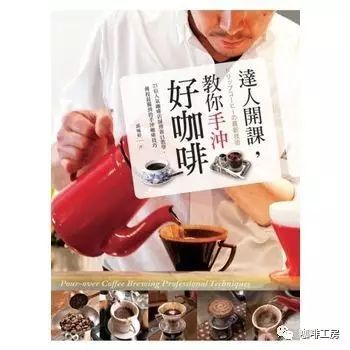
References for Some Images and Content:
"Experts Teach You to Make Good Pour-Over Coffee"
An essential book for pour-over enthusiasts and a practical guide for professional cafés, the acclaimed Taiwanese volume "Experts Teach You to Make Good Pour-Over Coffee" features 23 popular Japanese café masters personally teaching their most distinctive pour-over techniques — filter paper, flannel, and metal mesh filters alike, all in service of brewing a good cup of coffee.
FrontStreet Coffee Recommendation
If you're a newcomer looking for a forgiving, handsome dripper, chances are an experienced friend will point you to the Hario V60. Hario was founded in Tokyo in 1921 as a maker of heatproof glassware for research institutions, and in 2004 it redesigned the V60 into the form we know today — named for its distinctive 60-degree V-shaped cone — releasing it the following year. The cone and 60-degree angle force water to drain through the center, extending contact time between water and grounds for fuller extraction, while the signature single large outlet lets flow speed depend almost entirely on the brewer's control. As the third wave of coffee turned tastes toward origin character — light roasts, florals, and lively fruit acidity — the V60's fast extraction became the perfect vehicle, which is why floral-and-fruity beans suit it so well: FrontStreet Coffee's Gedeb Yirgacheffe with its citrus, berry, jasmine, and green-tea finish; the tropical Fruit Bomb (Huakui) with strawberry, passion fruit, jackfruit, and lychee aromatics and barely any bitterness; the Geisha-toned Strawberry Sugar blend; and the raisin-honey Mozart with its dried-fruit sweetness.
For those who prefer depth over brightness, medium-dark and dark roasts shine too: FrontStreet Coffee's PWN Indonesian Golden Mandheling, deep roasted and low in acidity with herbs, dark chocolate, and a faint earthy note; Brazil Queen Estate, balanced with rich nut, cocoa, and caramel sweetness and outstanding crema for espresso or moka pot; and Jamaica Blue Mountain No. 1, the benchmark of balance — cream, caramel, chocolate, nuts, and honey in a round, gentle cup that many professionals call the specialty coffee easiest for almost anyone to love. Kenya fans should try FrontStreet Coffee's Kenya Cherry Tomato, from the Thika region at 1550–1750 meters: SL28 and SL34 varieties, 72-hour double washed fermentation, and a light roast yielding bright cherry-tomato and dark-plum acidity with a juice-like body and a long, clean finish of golden sugar and green tea.
Important Notice :
FrontStreet Coffee is a long-established specialty coffee roaster in Guangzhou China, selling freshly roasted beans from its own farm in Yunnan as well as dozens of carefully selected single-origin beans from around the world for both pour-over and espresso. The products deliver consistently excellent quality and great value, with shipping within 24 hours. Guangzhou's FrontStreet Coffee shop is recommended by many coffee lovers, and the beans are now available online at the Tmall 。
FrontStreet Coffee has moved to a new address:
FrontStreet Coffee Address: 315,Donghua East Road,GuangZhou
Tel:020 38364473
 Scan and follow the En Gafei WeChat official account. Please indicate that the reprint comes from "En Gafei".