Costa Rica Las Lajas Estate Red Honey Coffee Beans Pour-Over Guide & Flavor Characteristics
Coffee from Costa Rica never fails to surprise, and FrontStreet Coffee believes this — what about you? The red honey processed coffee from Las Lajas Estate is one of FrontStreet Coffee's recent new offerings. The estate needs no introduction: it is a very famous estate in Costa Rica, and during each coffee production season, green coffee merchants from around the world visit seeking cooperation to secure the best coffee of the season. FrontStreet Coffee's red honey processed coffee brings rich fruit sweetness and acidity, and as the temperature drops it reveals sweet notes of dark chocolate and caramel as well.
Costa Rican Coffee
Costa Rica was the first country in Central America where coffee was introduced and cultivated. Sitting on the Central American isthmus, it has extremely fertile volcanic soil with good drainage and a suitable climate, which together produce high-quality coffee beans. All of its cultivated coffee is Arabica, appearing green and generally large in size, so the quality is basically superior. It is one of the country's most valued coffee-growing regions. Costa Rican coffee generally tastes balanced and mild, with good fruit acidity, plenty of aroma, and a rich, thick texture.
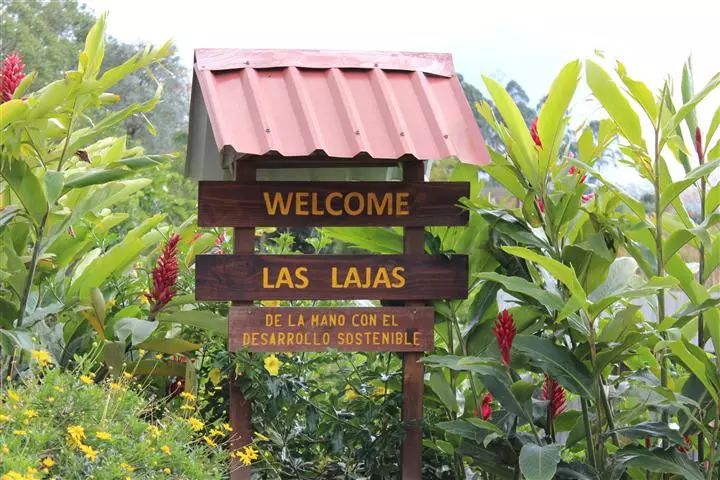
Las Lajas Estate
Among the refined natural and honey processing methods popular in Costa Rica today, Las Lajas Estate was one of the first estates to begin systematic research and processing. For many years it has been a coffee estate favored by buyers worldwide. Las Lajas Estate is currently run jointly by third-generation estate owner Francisca Cubillo and her husband Oscar. The estate lies in the Central Valley production area, not far from the capital and quite close to Poas Volcano, at an altitude between 1,250–1,500 meters, with an annual production of about 55,200 kilograms.
Years ago, owner Francisca hoped to further enhance the flavor expression of the estate's coffee. At the time, the vast majority of Costa Rican coffee farmers used traditional washed processing to supply the American and European markets. So she began researching and improving many of the estate's equipment and facilities to better suit natural and honey processed coffee. During harvest she uses a Brix meter to select cherries that meet the standard, builds her own washing station for processing, and finally places the coffee on African beds for sun drying.
Among the coffees processed at Las Lajas Estate, the owner divides honey processed and natural coffees into different products based on flavor expression. For honey processing, Costa Rican farmers mostly use washing station depulpers to control how much pulp is retained, but Las Lajas Estate took another route — retaining 100% of the pulp and instead controlling the drying and turning time on African beds to bring out different flavor expressions. Las Lajas red honey processing removes the fruit skin and then places the coffee uniformly on African beds in the morning for sun drying until noon, when it is turned. The main flavors are mango, dried fruit, coffee cherry, and honey, with excellent sweetness.
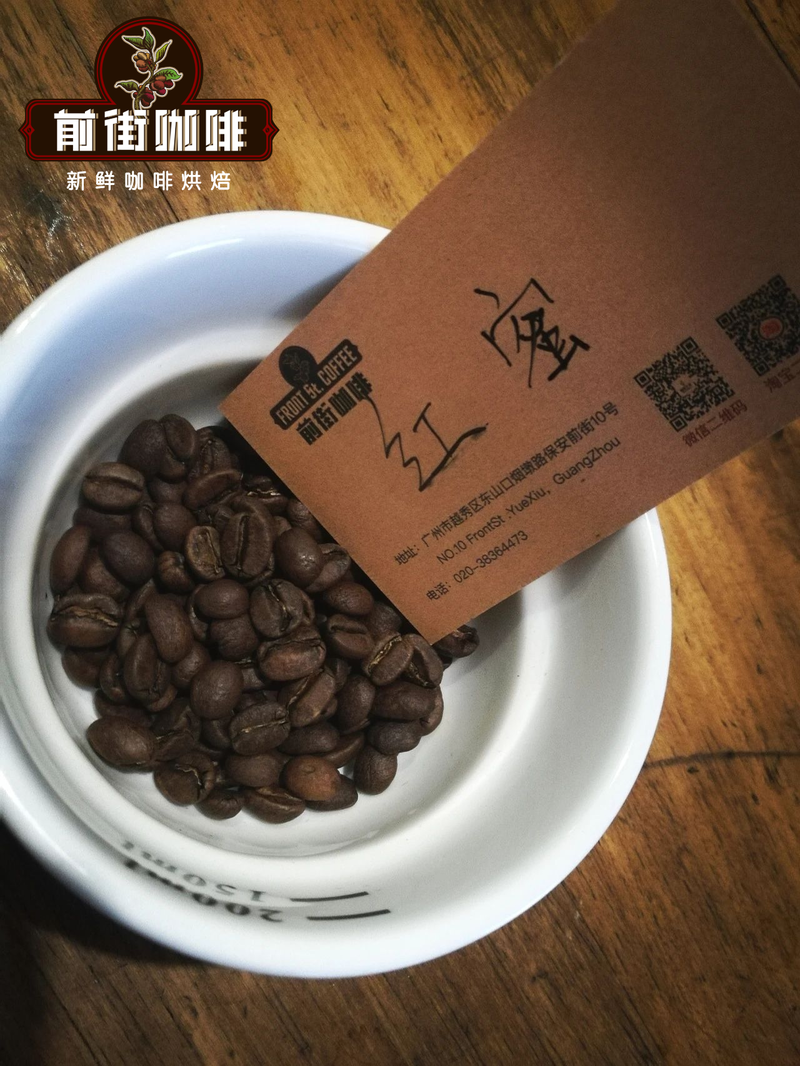
FrontStreet Coffee Costa Rica Las Lajas Estate Red Honey
Region: Central Valley
Altitude: 1300-1500m
Processing Method: Red Honey Process
Grade: SHB
Variety: Caturra, Catuai
FrontStreet Coffee Costa Rica Las Lajas Estate Red Honey Roasting Curve
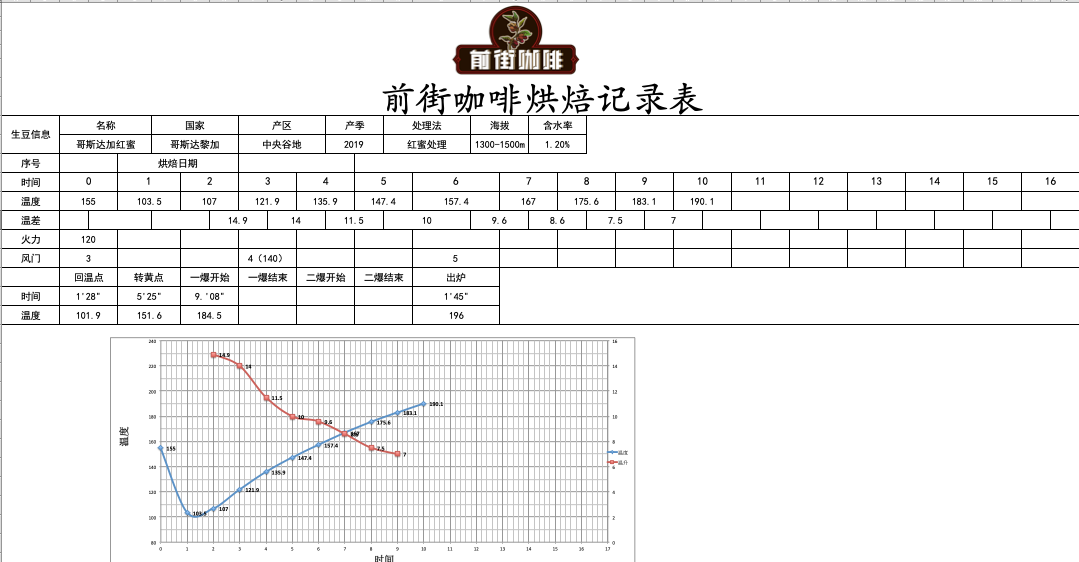
For this bean we chose a relatively low charge temperature and a fast roast profile, setting the roast degree to medium to express the solid, viscous mouthfeel of honey processed coffee. At 155°C bean temperature, charge the drum with 120 heat and the damper at 3. The turning point comes at 1'28". When the drum temperature reaches 140°C, open the damper to 4. At 8'30", ugly wrinkles and black spots appear on the bean surface and the toast aroma clearly shifts into coffee aroma, which can be defined as the prelude to first crack. Listen carefully for the sound of first crack from there. At 9'08", first crack begins; open the damper to 5, develop for 1'45" after first crack, and discharge at 196°C.
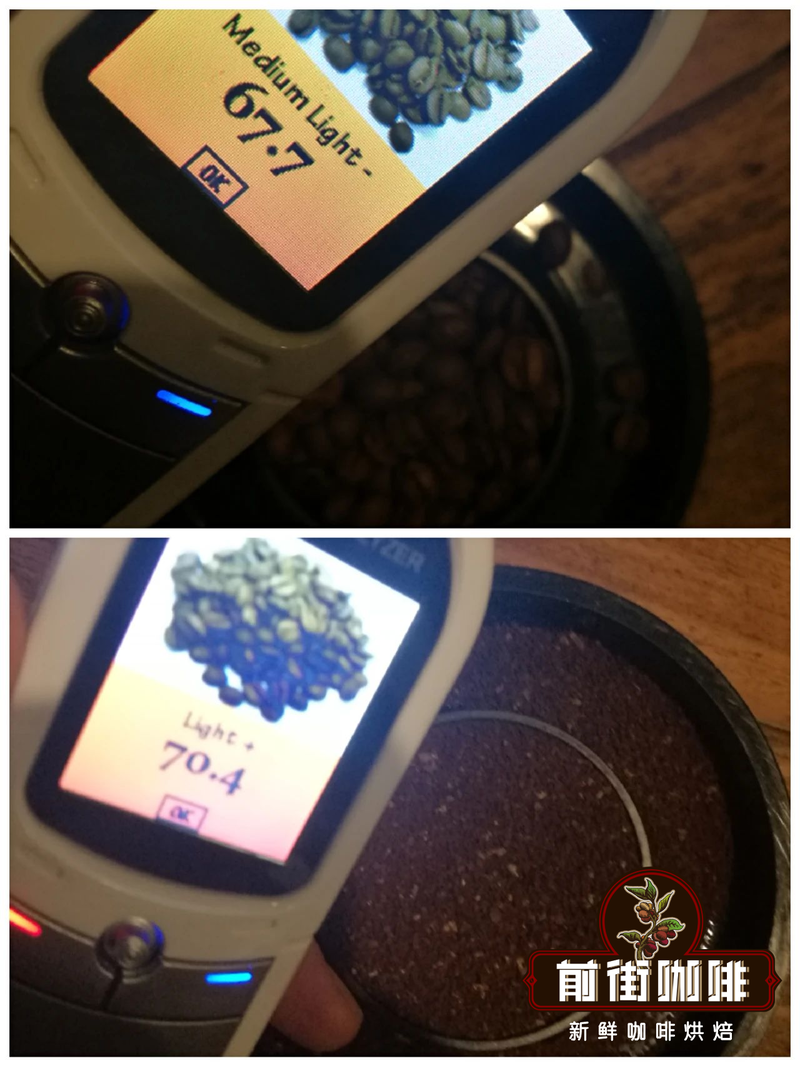
The Agtron color value is 67.7 (upper image), the Agtron pink value is 70.4 (lower image), and the Roast Delta value is 2.7.
FrontStreet Coffee Costa Rica Las Lajas Estate Red Honey Cupping
Flavor: When hot, it shows chocolate and caramel. As the temperature changes, nectarine and green grape acidity emerge.
FrontStreet Coffee Recommended Brewing Method
Brewing Method: Pour Over
Dripper: Hario V60
Water Temperature: 90°C
Coffee-to-Water Ratio: 1:15
Grind Size: BG 6S (58% pass-through rate on the Chinese standard 20-mesh sieve)
FrontStreet Coffee Brewing Technique
Segmented extraction: in the first segment, inject 30g of water and bloom for 40 seconds. In the second segment, pour to 126g. When the water level drops and is about to expose the coffee bed, continue with the third segment to 225g. When the water level drops and is about to expose the coffee bed again, remove the dripper. (Timing starts at the beginning of the first pour, during the bloom.) Extraction time is 2'06".

Flavor: The entry reveals yellow peach and grape acidity with a dark chocolate aroma. As the temperature changes, sweet-and-sour fruit flavors gradually emerge, with a faint yellow-sugar aroma in the aftertaste.
FrontStreet Coffee Recommendation
Honey processed coffees like this one are wonderful on a pour-over, so a Hario V60 is a natural match. Hario was founded in Tokyo in 1921 as a maker of heat-resistant glass and lab equipment, and it redesigned the V60 prototype in 2004, naming it for its 60° cone angle and "V" shape before launching it a year later. The cone shape and single large hole push water toward the center before it drips through, extending contact with the coffee, and because the flow rate depends on your pouring, V60 brewing is wonderfully responsive to your technique.
If you love the fruit-forward side of this Costa Rican cup, FrontStreet's Ethiopia Huakui is a must. It is one of the biggest stars of recent specialty coffee, overflowing with tropical fruit — strawberry, passion fruit, jackfruit, even lychee — with obvious sweetness, very little bitterness, and a smooth, juicy body that many drinkers describe as "the coffee that doesn't taste like coffee."
For a cleaner, brighter cup, try FrontStreet's Kenya Cherry Tomato, a washed Kenyan single origin from the Sika region, grown at 1,550–1,750 meters from the classic SL28 and SL34 varieties. Its traditional 72-hour double washed fermentation draws out the fruit while keeping the cup clean and pure, and a light roast protects the lively acidity and complex fruit. You get cherry tomato and smoked plum on the nose, a bright, substantial acidity like fresh-pressed juice, mid-palate sweetness with pear and black plum, and a clean, long finish of yellow sugar and green tea.
And if you want to taste the very top, FrontStreet's Panama Esmeralda Red Label Gesha is the legendary pick: elegant jasmine florals with citrus, bergamot, and fine black tea, a clean and transparent body, and a long, layered finish that keeps it one of the ultimate experiences coffee lovers chase.
Important Notice :
FrontStreet Coffee is a long-established specialty coffee roaster in Guangzhou China, selling freshly roasted beans from its own farm in Yunnan as well as dozens of carefully selected single-origin beans from around the world for both pour-over and espresso. The products deliver consistently excellent quality and great value, with shipping within 24 hours. Guangzhou's FrontStreet Coffee shop is recommended by many coffee lovers, and the beans are now available online at the Tmall 。
FrontStreet Coffee has moved to a new address:
FrontStreet Coffee Address: 315,Donghua East Road,GuangZhou
Tel:020 38364473
 Scan and follow the En Gafei WeChat official account. Please indicate that the reprint comes from "En Gafei".