Indonesian Coffee Growing Regions: Gayo Mandheling Coffee Beans Organic G1 Double Hand-Picked Flavor Characteristics
Professional Coffee Knowledge Exchange
Indonesian Coffee: Overview
In the mid-17th century, coffee trees were introduced to Indonesia by the Dutch (some official sources suggest it was even earlier). In 1712, the first batch of coffee from Java was sold to Amsterdam. In the most recent full year, Indonesia exported 300,000 tons, making it the fourth-largest coffee producer in the world. Approximately 75,000 tons of that is Arabica.
Ninety percent of this coffee is grown by small tenant farmers on plots of one hectare or less. Indonesian coffee flavors are particularly distinctive for various reasons. The most important influences are soil type, altitude, coffee varieties, processing methods and aging techniques. This combination of natural and human factors creates a unique "terroir" for each type of coffee (see Note 1).
Indonesian coffee varies greatly in quality, and most is marketed by island of origin, such as Sumatra, Sulawesi, Java or Timur. The advantage of Indonesian coffee is that most varieties offer rich, restrained flavors and lively acidity. The disadvantage is that they may also carry an uncomfortable astringency or slight moldy flavors. Others display earthiness, which some enthusiasts appreciate while others dislike it.
Java Island (Jawa)
Java holds an extremely important position in coffee history.
Unlike most other Indonesian coffees, which are grown on very small farms and initially processed there, Java Arabica is grown on large farms or plantations, mostly operated by the government using modern wet processing. Java produces refined, aromatic coffee with relatively low acidity, a delicate mouthfeel and good balance.
Sulawesi Island (Sulawesi)
The former name of Sulawesi Island was Celebes. Sulawesi is one of the oldest islands in the archipelago, with exposed rocks dating back over millions of years. Yellow-red podzolic soils are found in the coffee-producing regions. These soils often contain several layers of iron-rich clay beneath the surface. The most famous growing region is Toraja, in the highlands of South Sulawesi. Kalosi, south of Toraja, is the major metropolitan area of this region and is most commonly used to represent Sulawesi coffee. It is renowned for its full viscosity, rich flavors and deep yet lively acidity.
* Kalosi: Market name for coffee from the southwestern part of Sulawesi Island.
* Toraja: Growing area in the southeastern highlands of Sulawesi Island.
Sumatra Province
"Sumatra" coffee is extremely complex and elusive.
The best coffee in Sumatra comes from two places: the Central Aceh region near Lake Tawar in northern Sumatra, and the mountainous area surrounding Lake Toba in the south. Because of the many small tenant farmer producers and their unique semi-washed processing methods combined with iron-deficient soils, coffee beans from this region have a distinctive blue color at the fresh green bean stage.
* Mandheling: Once praised as the world's fullest-bodied coffee bean.
Mandheling is a trademark used for Arabica coffee from North Sumatra, produced by the Mandailing people from the Tapanuli region of northwestern Sumatra.
* Lintong: Mandheling Lintong is the most famous coffee from the Lake Toba region on North Sumatra Island.
* Gayo Mountains: In Aceh Province on the northern part of Sumatra Island, Gayo coffee is grown on the slopes surrounding the town of Takegon and Lake Tawar.
The altitude in the production area averages between 1,110 and 1,300 meters, with coffee grown by small tenant farmers under shade trees. The wet-processed version of this coffee is cleaner but typically lacks the flavor characteristics of traditional Sumatra processing. The traditionally processed coffee resembles that from the Mandheling region of Sumatra. Its advantage is unique flavors and a deep yet lively viscosity. Aceh, at the northernmost tip of Sumatra Island, is a fascinating and complex place. Due to long-term political instability, Aceh is not a region that ordinary people typically visit.
The Gayo people have firm personalities and are hardworking, and nearly 20% of coffee processors are women.
Timor Island (Timur)
Divided into East Timor and West Timor, coffee here originated in the early 20th century. East Timor has not used chemical agents or fertilizers for the past 25 years and should be the world's largest organic coffee producer. However, due to East Timor's political instability, exports are difficult, and most beans currently available are from West Timor.
Civet Coffee (Luwak)
Civet coffee, from Sumatra Island, Indonesia, is famous not for its origin but for its unique processing method. A mammal called the civet eats ripe coffee cherries. The civet's digestive system corrodes the outer layer of the cherry, then digests and excretes the seeds. Coffee beans are selected from the feces, cleaned and sorted. Because production is limited, and because of its rarity and special taste, this coffee has become one of the rarest and most expensive in the world. Some companies now create a product called "Kopi Luwak" by manually feeding coffee cherries to civets.
Soil Types
In the Aceh, Bali, Papua and Flores highlands, the soil is mainly Andosols, the name derived from the Japanese words "an" (black) and "do" (soil).
These fresh soils originate from volcanic mud and are highly fertile, containing important trace nutrients.
In the Java and Lintong regions where Arabica coffee is grown, the soil is a combination of Andosols and Umbrisols. Umbrisols are brown podzolic-like soils, mixed with considerable organic matter in weathered volcanic soil.
Harvesting and Processing Methods
Whether from small tenant farmers or medium-sized estates, all Arabica coffee in Indonesia is hand-picked. Since coffee cherries do not ripen simultaneously, farmers harvest every 10 days over a period of 5 to 6 months.
They pick only red, ripe cherries to express the best quality, aroma and flavor. When mechanical harvesting is used, unripe cherries reduce coffee aroma and result in coarser flavor.
After harvesting, these special coffees are processed in various ways, and the final product carries its characteristic taste and aroma.
Generally these characteristics enhance coffee quality. However, poor or inconsistent processing methods can lead to loss of flavor and cloudiness.
The three main processing methods are: 1. Dry 2. Wet hulling (semi-washed) 3. Washed.
Most small farmers in Sulawesi, Sumatra, Flores and Papua process coffee using a unique method called "giling basah" in Indonesian, translated as wet hulling.
In this technique, farmers use machines to remove the cherry hulls. The beans still hold much mucilage and are then stored for about a day, during which the mucilage is washed away. The coffee is then partially dried and ready for sale at approximately 30-35% moisture.
Removing the coffee hulls in this semi-wet state allows the beans themselves to reveal a unique deep blue color. This processing method reduces acidity and increases the coffee's body, creating this classic Indonesian-style coffee.
Indonesian green coffee beans are traded using barrels as the unit of trade.
Altitude
All Arabica coffee regions in Indonesia fall within the optimal altitude range for Arabica coffee, between 1,000 and 1,800 meters. Typically, coffee grown at higher altitudes grows more slowly, yields less, and the fuller beans have more flavor.
Wamena region of Papua: 1,400 to 2,000 meters
Moanemani region of Papua: 1,400 to 1,700 meters
Central region of Flores: 1,200 to 1,700 meters
Toraja region of Sulawesi: 1,000 to 1,700 meters
Kintamani region of Bali: 1,000 to 1,500 meters
Ijen Plateau in East Java: 1,300 to 1,500 meters
Lintong region of Sumatra: 1,200 to 1,500 meters
Aceh region of Sumatra: 1,110 to 1,300 meters
Varieties
There are over 20 varieties of Arabica coffee circulating in the Indonesian commercial market, in six main categories.
The most well-known is Typica, the original cultivated variety introduced by the Dutch. When Indonesian coffee suffered leaf rust outbreaks, many Typica varieties disappeared in the late 1880s. However, in Sumatra, Sulawesi and Flores, especially in high-altitude and remote areas, Typica can still be found in places such as Bergandal and Sidikalang.
After beans are sorted by size, some producers store the coffee for one to three years before sale. This process gives the coffee a very mild and warm character with woody and cinnamon flavors. Fresh beans gradually change color from deep yellow to brown.
*Note 1: The French word "terroir" originally means "land, homeland." The Chinese have an old saying: "A region's water and soil nurture its people." The "region" here refers to a specific area's water and soil, including geographical location and climate. "Its people" are those who have long lived there. People from different regions, shaped by different environments, lifestyles, geography and climate, ideas, cultural history and ways of dealing with others, naturally develop different cultural characteristics. This saying captures the concept of terroir.
Terroir is the combination of all these factors. "Terroir" refers to the various subtle environmental factors that constitute the "personality" of coffee. Like parents' teachings and examples, the temperament and cultivation of neighbors, and the influence of the surrounding regional environment on people, these factors are significant.
Coffee trees are also influenced by their growing environment - soil quality, terrain, altitude, drainage, weather and even local traditions - resulting in completely different expressions. At this point, the different appearances of the same coffee variety, planted and processed the same way in different regions, can be easily attributed to differences in "terroir" that encompass soil, topography and climate - irrefutable and irreplaceable, because only this region exists in the world.
Indonesian Coffee Growing Regions
Indonesia is a large archipelagic country made up of numerous volcanic islands, naturally possessing excellent coffee-growing environments and latitudes. Each island differs according to its terrain and climate. The Indonesian islands that grow coffee include Sumatra, Sulawesi, Java, Sumbawa, Flores and Papua. Among them, Sumatra is Indonesia's main growing area, and the most famous Mandheling comes from here. Sumatra Island is divided into two producing regions: first, Aceh in North Sumatra; second, Lintong near Lake Toba in the center-south. Aceh's most famous growing area is the Gayo mountains surrounding Lake Tawar, which is also the main Mandheling producing area, at 1100-1300 meters. (Mandheling is a coffee name, not a producing region, referring to Arabica coffee from northern Sumatra, named after the local Mandheling ethnic group.) The Lintong producing area lies southwest of Sumatra's largest lake, Lake Toba, and is an important source of Indonesian specialty coffee. Java Island was the earliest island in Indonesia to grow coffee, introduced around the 16th century by the Dutch East India Company. Sulawesi Island is another producing region for the famous Indonesian coffee "Toraja," located in the southern mountainous area of Sulawesi on the equator. Because the early Dutch colonists brought Arabica green beans and made it world-famous at the time as Celebes Kalossi, and later the Japanese entered Toraja, improving the local coffee industry and quality, Toraja also became famous in Asia. Indonesian coffee beans are mainly processed using the semi-washed method, graded by the proportion of defective beans and the number of times defective beans are hand-sorted.
Gayo Mandheling Organic G1 Double Hand-picked DP
Gayo Mandheling G1 DP Organic Certified
■ Country: Indonesia
■ Region: Gayo, Aceh
■ Processing method: Semi-washed
■ Altitude: 1100-1300 meters
■ Variety: Arabica
■ Flavor description: Thick and full body, milk chocolate, nuts, raisins, excellent balance
The Gayo producing area, surrounding the picturesque Lake Tawar, has an abundant average annual rainfall of 2200mm and an excellent average altitude. Coffee growing areas sit at approximately 1100-1400 meters with volcanic soil that supports cultivation. This area typically relies on independent small farmers, who grow coffee under shade trees to improve quality. Unlike the Mandheling from Lintong on the southwest side of Lake Toba, another Indonesian specialty coffee region, Gayo coffee has a more restrained and inward character, typically with a very thick mouthfeel and rich chocolate and dried fruit flavors.
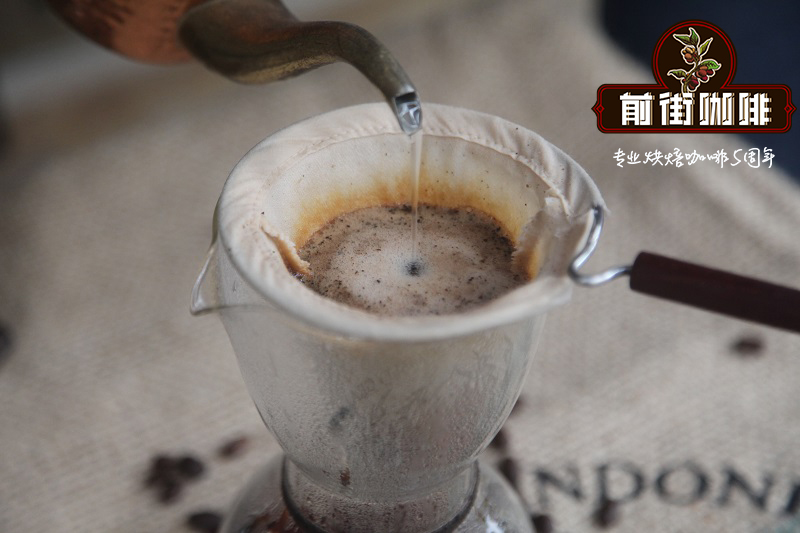
FrontStreet Coffee suggests using 86-88°C water to brew Mandheling, and if possible a Kono dripper to increase the full-bodied texture.
On the palate are flavors of herbs, spices and chocolate, with a caramel-like persistent sweet aftertaste.
FrontStreet Coffee Recommendation
The highest expression of the Gayo style described here is FrontStreet PWN Indonesia Golden Mandheling. It comes from the Gayo Mountains in Aceh, Sumatra, at 1100-1600 meters, on the Ateng variety, graded G1 with three rounds of hand sorting and processed by wet hulling. Roasted dark, the acidity is very low and the body thick and long, opening with abundant herbs and dark chocolate and a faint earthy note underneath - ideal for anyone who likes a bold coffee without acidity.
For the traditional Lintong profile, FrontStreet Lintong Mandheling comes from the Lintong highlands near Lake Toba at 1100-1600 meters, made from Typica and Caturra and wet-hulled as well. It brings toasted bread, nuts, caramel, pine and herbs, with the low acidity and heavy body that wet hulling creates.
And if you want that thick, sweet Sumatran character on an espresso machine, FrontStreet Classic Blend layers the creamy nut flavor of Brazilian coffee with medium-dark Sumatran Mandheling. Butter, roasted chestnut and caramel stand out, the Mandheling adds sandalwood, herbal and spice notes and lifts the body, and a small proportion of Robusta rounds out the crema for latte art or a layered Dirty.
Important Notice :
FrontStreet Coffee is a long-established specialty coffee roaster in Guangzhou China, selling freshly roasted beans from its own farm in Yunnan as well as dozens of carefully selected single-origin beans from around the world for both pour-over and espresso. The products deliver consistently excellent quality and great value, with shipping within 24 hours. Guangzhou's FrontStreet Coffee shop is recommended by many coffee lovers, and the beans are now available online at the Tmall 。
FrontStreet Coffee has moved to a new address:
FrontStreet Coffee Address: 315,Donghua East Road,GuangZhou
Tel:020 38364473
 Scan and follow the En Gafei WeChat official account. Please indicate that the reprint comes from "En Gafei".