What Varieties Are Yunnan Small-Bean Coffee? Flavor Characteristics of Yunnan Red Honey Catimor Pour-Over Coffee
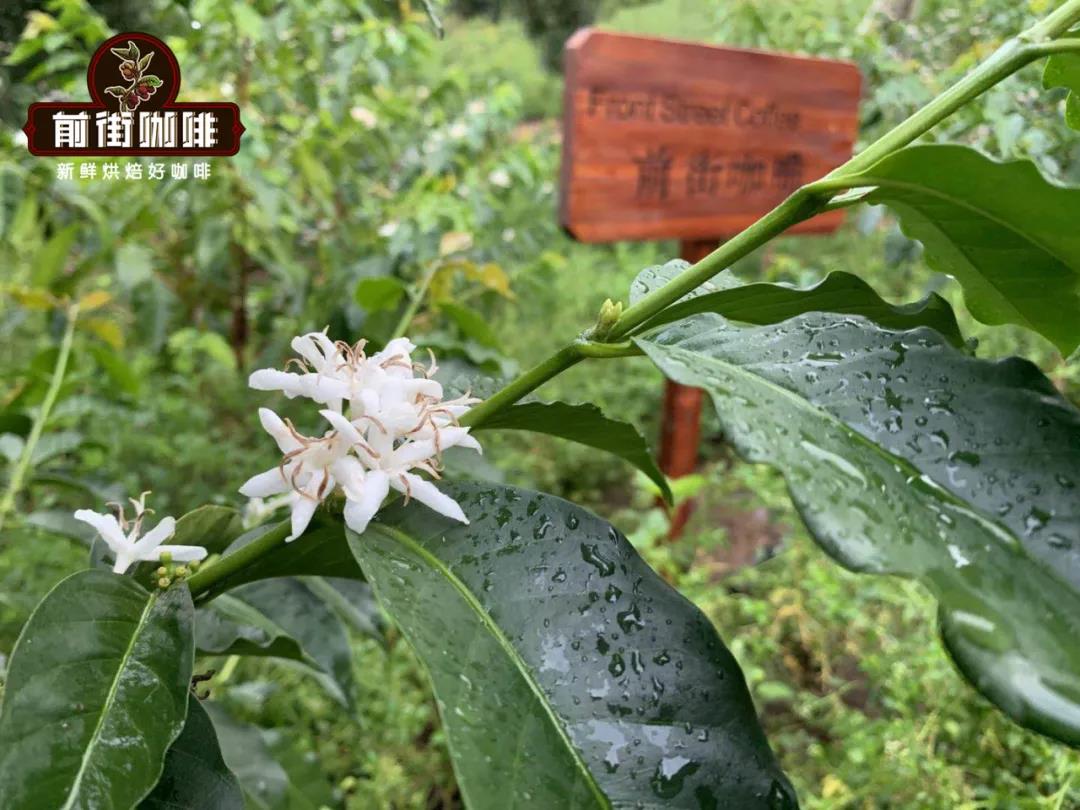
In 2018 the owner of FrontStreet Coffee walked the familiar path he had taken several times over the past few years in Yunnan, planting the second batch of Arabica coffee. FrontStreet Coffee's coffee cultivation actually began around 2013-2014, half a year before the company started roasting coffee.
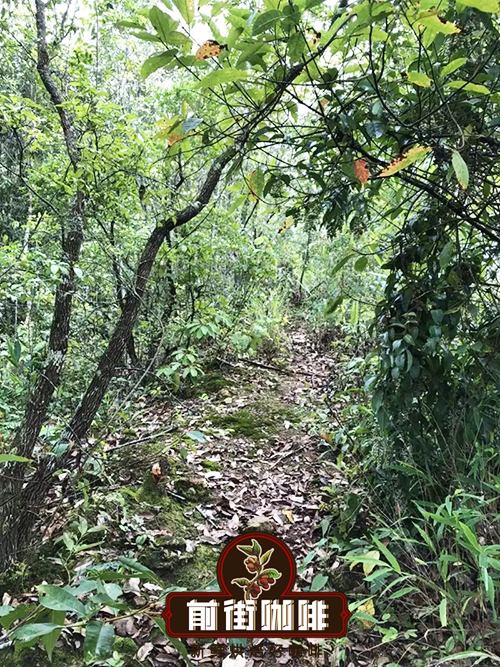
FrontStreet Coffee was originally called "Dazhen Coffee," a name chosen because the plan was to plant coffee in a place in Guangdong called Dazhen. After growing Catimor seedlings to 20cm, it took more than half a year to understand the relationship and sequence among three key factors: variety, altitude, and processing method.
The foundation of specialty coffee
The relationship and sequence of these three factors are crucial. Select the right variety, plant it at the appropriate altitude, and experiment with processing methods after maturity to express unique flavors — that, as FrontStreet Coffee sees it, is the only logical path for specialty coffee to gain distinct regional character. It is also the work recently led by the Yunnan Agricultural Department: establishing a flavor map of Yunnan specialty coffee, which means identifying the regional flavors Yunnan specialty coffee should naturally possess.
Why have Yunnan beans leaned so heavily on processing methods in recent years? Because they are trying to bypass this three-factor relationship. The varieties they planted cannot be changed, and neither can the altitude. Coincidentally, the market is also trending toward processing, so you find many Yunnan beans emphasizing their techniques. As an aside, 99% of coffee planted in quantity in Yunnan is Catimor, a hybrid of smaller varieties, because planting new varieties takes four to five years to reach flowering and fruiting.
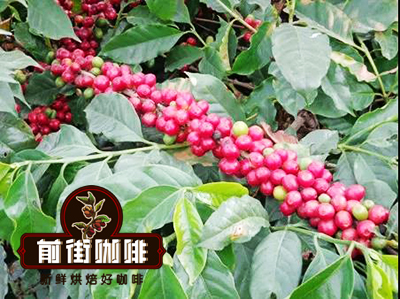
Catimor
Changing only the processing while neglecting variety and altitude is both strange and entirely normal. Because of those three factors, the owner of FrontStreet Coffee had to set aside the Guangdong planting plan for the time being and begin roasting coffee. Since the shop he found was on Bao'an Qianjie, Dongshankou, Yuexiu District, Guangzhou, he renamed "Dazhen Coffee" to "FrontStreet Coffee." While roasting, the company kept pushing forward with its ideas about specialty coffee cultivation.
The owner also visited researchers with deep expertise in coffee cultivation and the Tropical Agricultural Science Research Institute, which houses the Ministry of Agriculture's coffee germplasm repository, along with a few farmers growing specialty coffee. He clarified why Yunnan does not plant mainstream specialty varieties like Typica and Bourbon, and through a fortunate opportunity found a suitable piece of land near the Yunnan-Myanmar border.
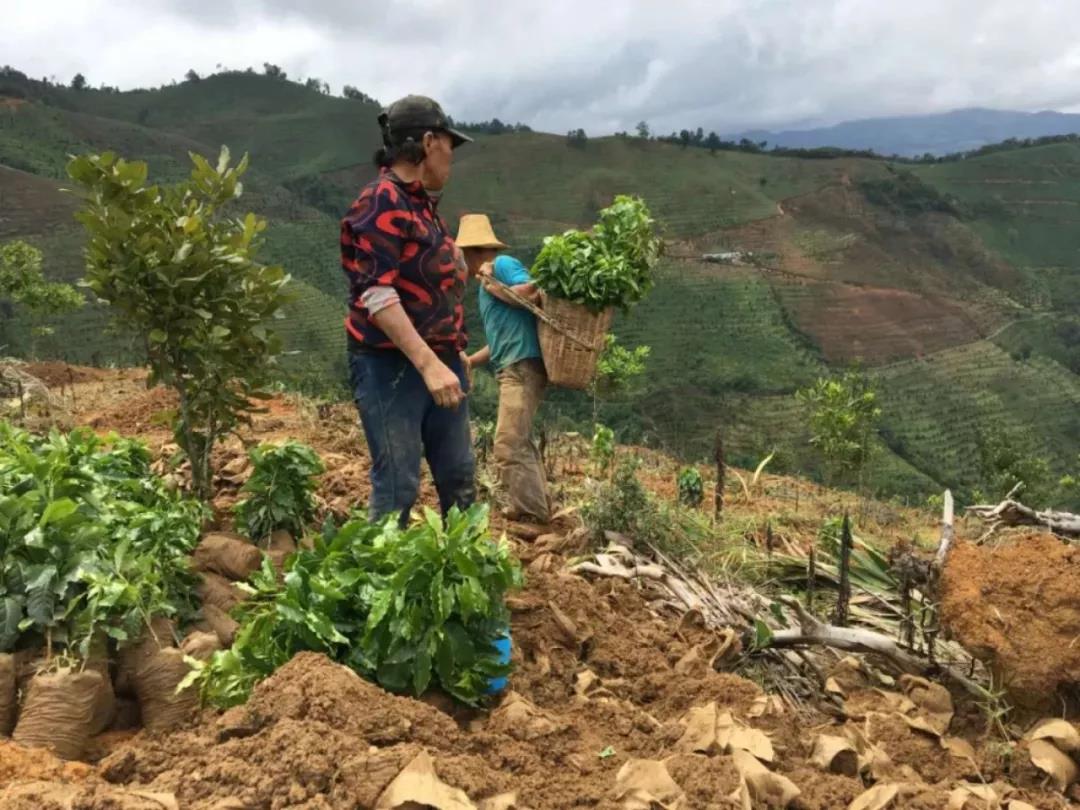
Yunnan has no four seasons, only a dry season and a rainy season, and most coffee regions share similar conditions. That is the fundamental reason some areas use natural processing. June marks the start of the rainy season in the producing regions, with rain expected for the next three to four months — the most favorable window for coffee cultivation. Only by planting seedlings then can they develop extensive root systems under the nourishment of rainwater and survive the first six-month dry season.
For this planting batch, FrontStreet Coffee chose Typica seedlings, whose copper-colored new leaves are their distinguishing feature. Typica yields extremely little — only one-third of Catimor's yield — which is why it costs more. Typica and Bourbon are also very susceptible to coffee leaf rust, one reason farmers are reluctant to plant Arabica varieties.
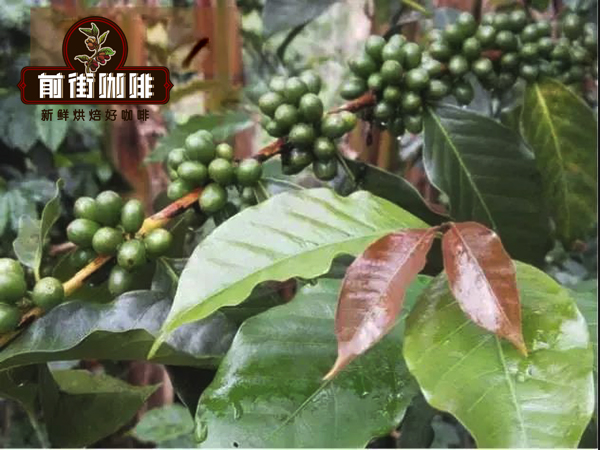
Typica
The reality of Yunnan coffee cultivation
Only when you visit Yunnan's coffee regions during planting season can you truly grasp what the rainy season means. Sunny for a few minutes, then raining for half an hour — if the plantation is large enough, a single tour without rain gear will soak and dry your clothes several times over. In such weather, a full day yields very few trees planted.
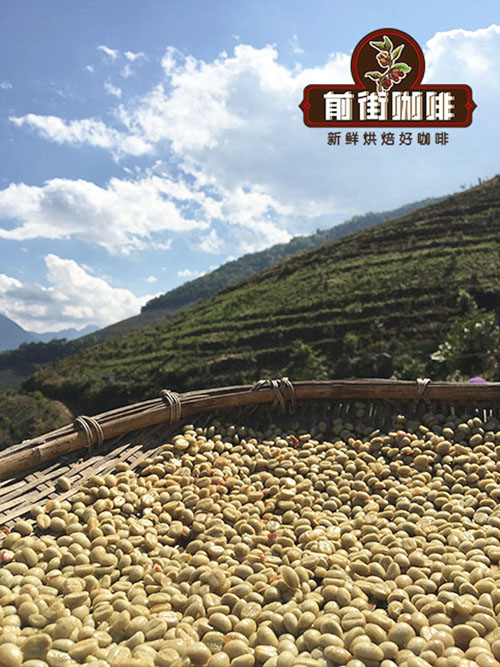
Several years ago, a major reason Yunnan coffee could not become specialty coffee was that Catimor was too cheap and could only be sold as a bulk commodity, at about 15-20 yuan per kilogram. The selling price barely covered harvesting and fertilizer costs, so farmers were unwilling to manage it properly. Typica and Bourbon have low yields and are prone to disease, making management costs higher and the exploration time longer — to say nothing of whether unique flavors could be developed. On one hand, farmers lacked awareness of specialty coffee; on the other, even those who had it would avoid cutting down old trees and spending several years replanting.
Turning washed Catimor into red honey processed Catimor might raise the price somewhat, provided the immature market would accept it. The decline in Yunnan coffee prices in recent months, despite praise for quality, has already demonstrated the problem.
Despite all the risks and difficulties, the owner of FrontStreet Coffee remains tireless, because he knows clearly that from planting a tree to harvesting cherries three to four years later, then experimenting with suitable processing methods and finally perfecting them, it takes at least five years to complete a basic goal.
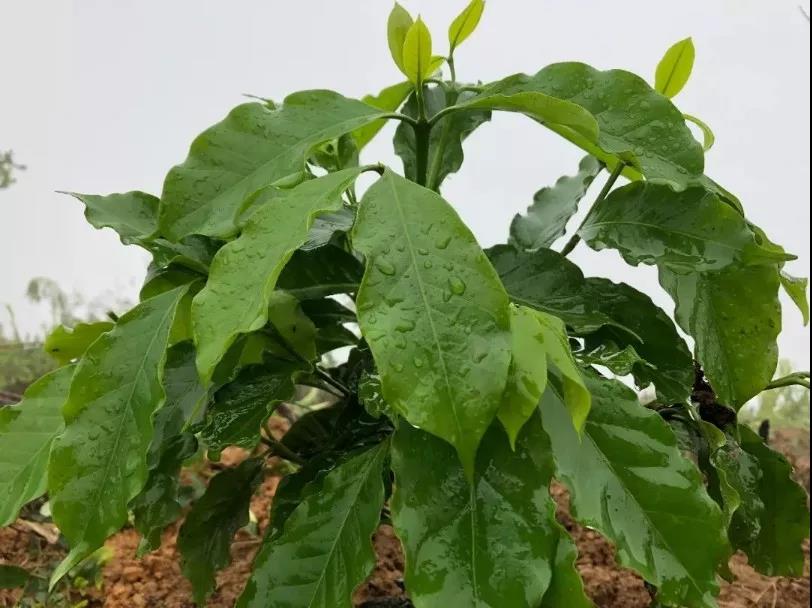
Most importantly, when multiple locations began showing similar stylistic base notes, veteran drinkers who had enjoyed coffee for years took one sip and thought, "Ah, this is the taste of Yunnan specialty coffee." Perhaps these winds and rains are only the beginning. Although five foundational years have passed, it can only be said that Arabica coffee has been grown successfully. Everyone focused on varieties, but no one could guarantee producing high-quality specialty coffee. The owner firmly believes there is no such easy thing in this world; after multiple rounds of variety selection and post-harvest processing experiments, several more years would pass.
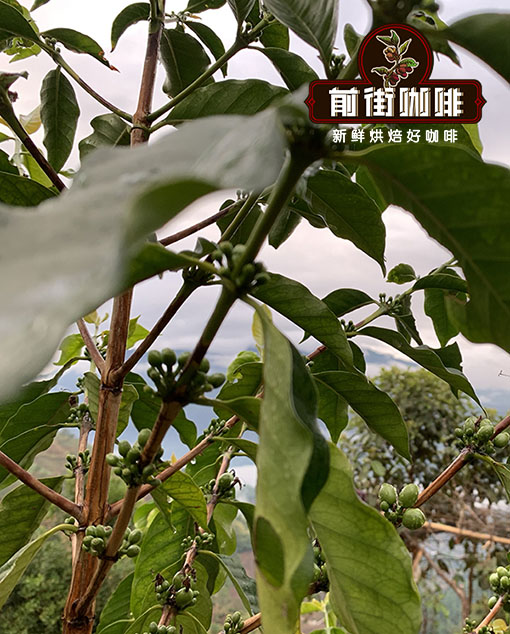
The difficult path of specialty coffee always needs some people to explore it. Trying might offer some hope. Without trying, it remains a blank space.
Yunnan Huaguoshan specialty coffee
About 5-6 years ago, FrontStreet Coffee began sourcing Typica from the Baoshan region in Yunnan, creating the Yunnan Huaguoshan specialty coffee that represents the character of Yunnan beans.
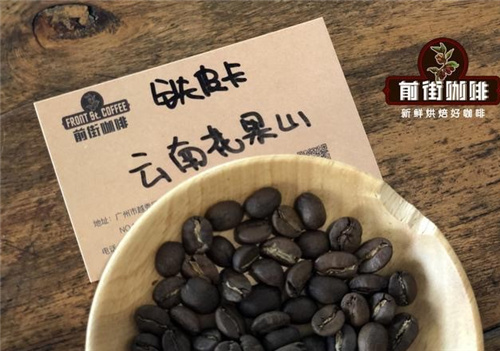
Product name: Huaguoshan
Coffee origin: Baoshan, Yunnan, China
Coffee variety: Typica
Production altitude: 1200M
Quality grade: AA
Processing method: washed
Roast level: medium roast
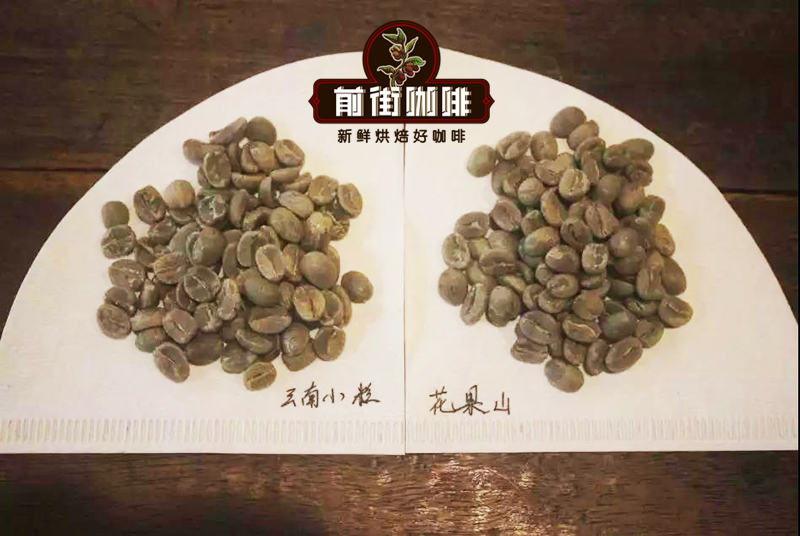
Baoshan, Yunnan
Baoshan sits on a low-latitude plateau. Its special geography forms a three-dimensional climate where "one mountain has four seasons, and ten miles have different weather," which suits coffee particularly well. Baoshan has a long coffee history and is recognized as the best small-bean coffee producing area, making it one of the better coffee regions both nationally and globally.
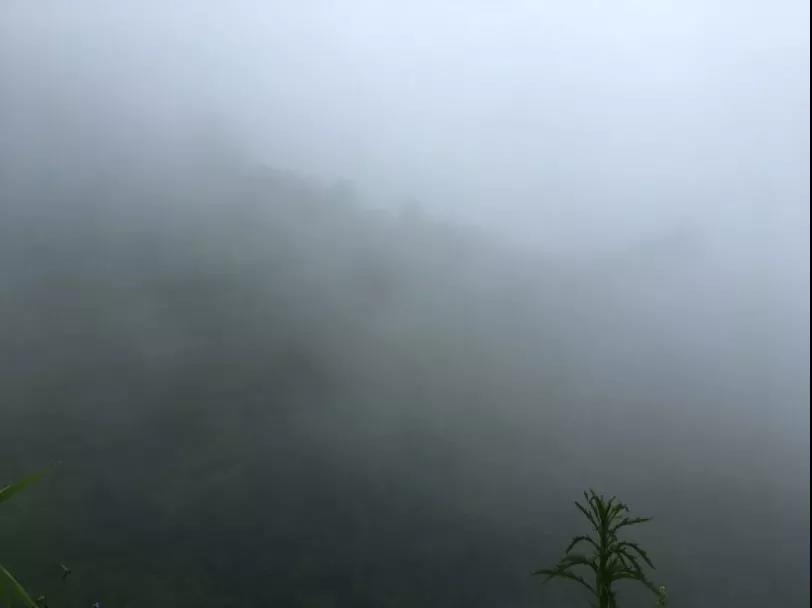
Coffee grown at the highest altitudes here can rival Jamaican Blue Mountain. The area is also known for producing the world's most expensive kopi luwak. In fact, Baoshan began large-scale coffee cultivation as early as 1952, with a history of over 60 years to date. The region now has 5,000 mu of coffee gardens, making it one of Asia's best coffee-producing areas.
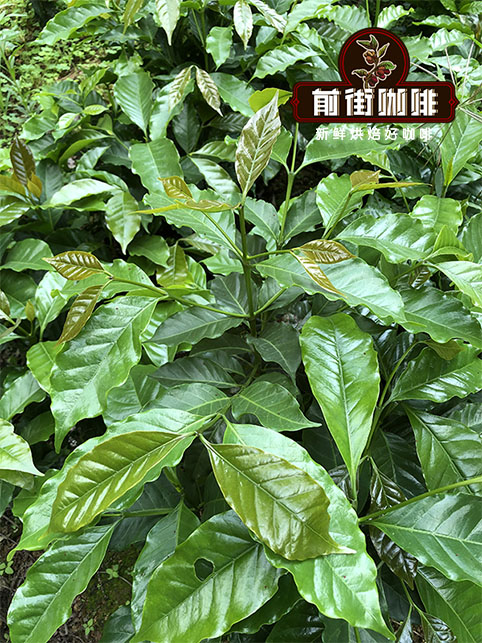
Yunnan's coffee history is long. As early as 1892 a French missionary brought coffee seeds to Yunnan and successfully planted the first coffee tree in a place called Zhukula.
The western and southern parts of Yunnan Province lie between 15°N and the Tropic of Cancer. Most areas sit between 1000 and 2000 meters, with mountainous, sloped terrain, significant elevation changes, fertile soil, abundant sunlight, plentiful rainfall, and large day-night temperature differences. These unique natural conditions create the special character of Yunnan small-bean coffee — rich but not bitter, aromatic but not intense, with a light fruit note.
Data shows that in 2017 China's coffee export volume was 104,900 tons, with an export value of $646 million. Yunnan's coffee production reached 136,000 tons, accounting for over 95% of national production, with exports of 60,700 tons, the highest in the country.
Coffee is also the most developed and mature market economy among the industries led by the Baoshan municipal government since the founding of New China. To develop it further, Baoshan has made various attempts, including launching the Yunnan Baoshan Coffee World project.
FrontStreet Coffee roasting demonstration
The bean moisture content is 10.9%, so the roasting plan starts at 200°C, then uses high heat and a small air vent to speed dehydration. After the dehydration phase ends, open the medium vent and use medium heat to avoid rushing the Maillard reaction. After first crack, develop for 3 minutes before dropping.
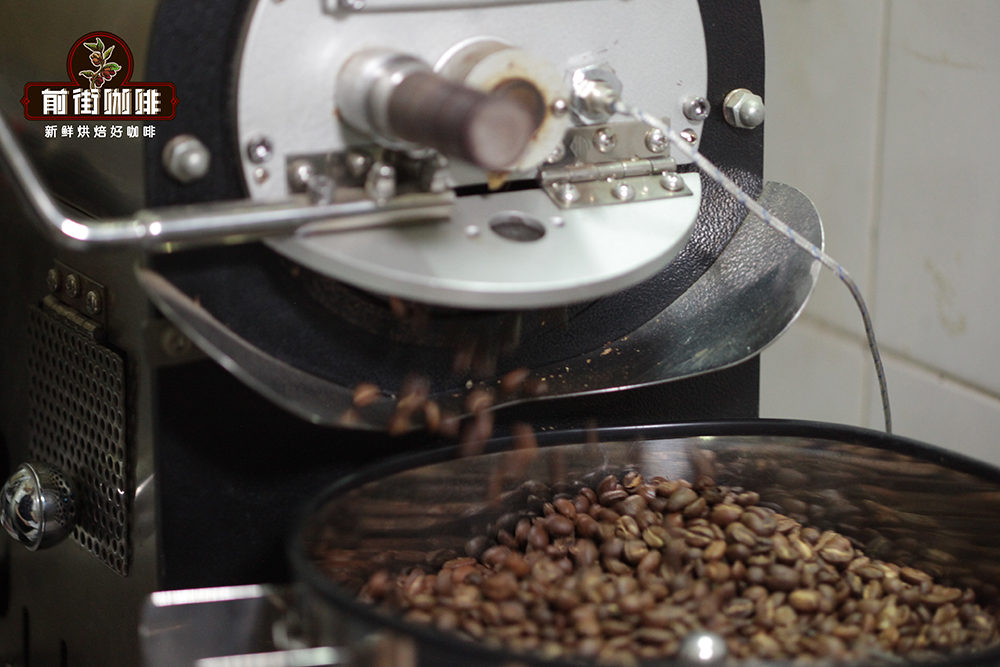
Temperature return point: 1'32", 92.5°C; yellowing point: 5'40", 148.5°C; first crack: 8'59", 188.0°C; develop for 3 minutes before dropping: 12'00", 196°C.
FrontStreet Coffee cupping results
Rich fruit aroma on entry, with melon and herbal notes. Smooth entry with nuts and milk chocolate in the middle, followed by lively, bright plum acidity in the finish. Salivation on both cheeks, good balance, medium body with full texture. From hot to warm you can feel the layers of sweet and sour — first sweet, then sour. Acidity of apricot-peach and citrus tones, with black tea and some brown sugar in the aftertaste.
FrontStreet Coffee brewing suggestions
Brewing device: Hario V60
Parameters: 15g of coffee grounds
Water temperature: 90°C
Grind size: coarse sugar
Water-to-coffee ratio: 1:15
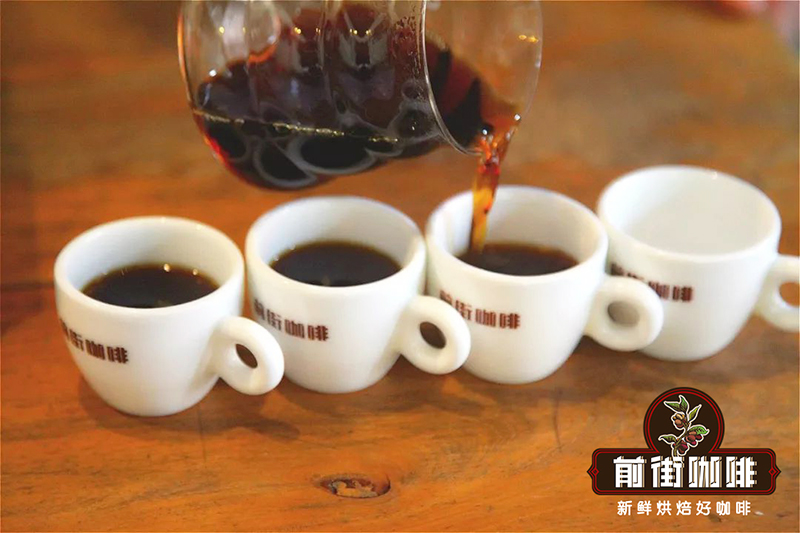
FrontStreet Coffee brewing technique
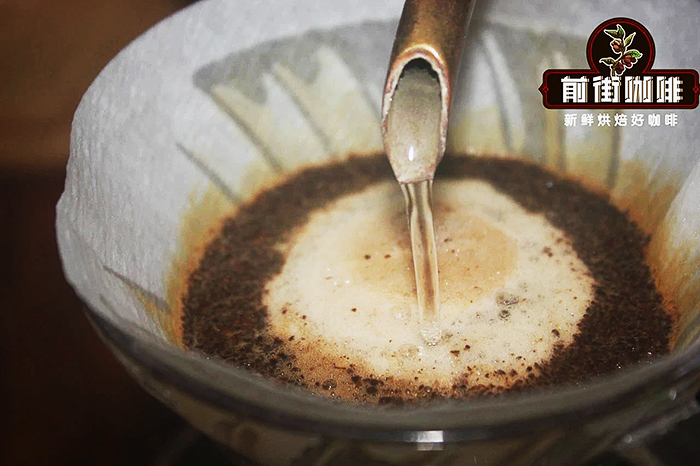
30g of water for the bloom, blooming for 30s. First pour to 120g, then pause. Use a vertical stream with small, slow circles. Second pour to 225g, with a slightly faster flow and circle to reduce fine particles clogging the filter and causing over-extraction.
Flavor description: rich but not bitter, aromatic but not intense, with floral notes, melon sweetness in the middle, and a black-tea sensation in the finish.
Yunnan small-bean coffee
About 3 years ago, FrontStreet Coffee also began sourcing Catimor (small-bean coffee) from the Baoshan region in Yunnan, creating the Yunnan Small Bean Coffee daily drinker that likewise represents the character of Yunnan beans.
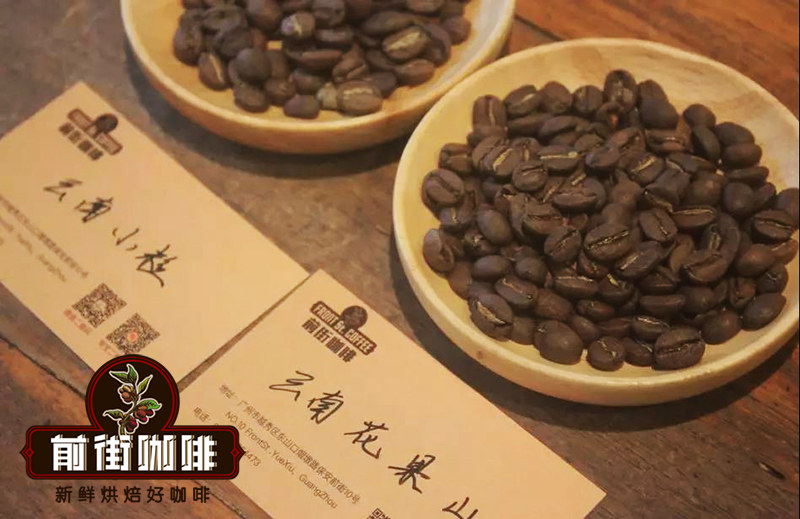
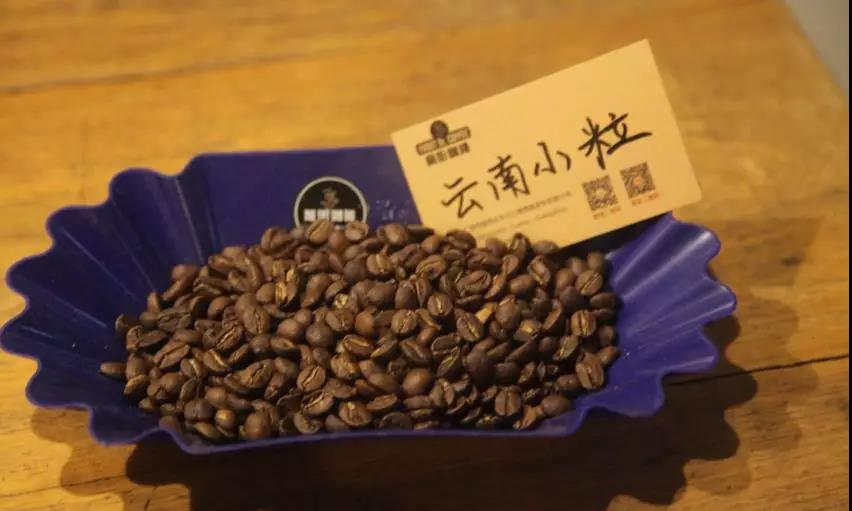
Region: Baoshan, Yunnan
Altitude: 1200m
Processing method: washed
Variety: Catimor
FrontStreet Coffee roasting demonstration
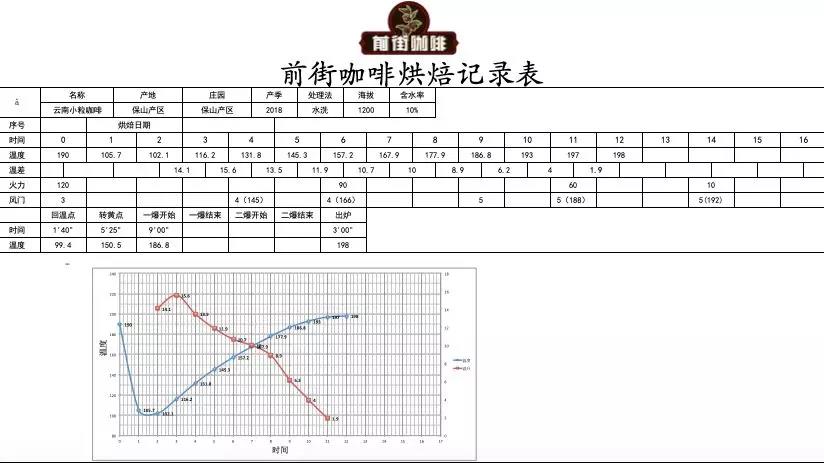
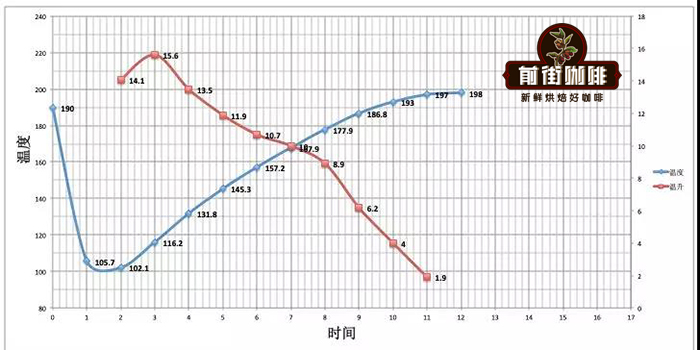
Charge the beans at 190°C with heat 120 and air vent 3. Temperature returns at 1'40"; when the temperature reaches 145°C, open the air vent to 4 with heat unchanged. When it reaches 166°C the bean surface turns yellow, the grassy smell disappears completely, and dehydration begins. At 188°C, adjust heat to 60°C and air vent to 5. At 8'37" the bean surface shows wrinkles and dark spots, and the toast aroma clearly changes to coffee aroma, which can be defined as the prelude to first crack — listen carefully for the crack. First crack starts at 9'00" with the vent unchanged. Develop for 3 minutes after first crack, then drop at 198°C.
FrontStreet Coffee cupping results
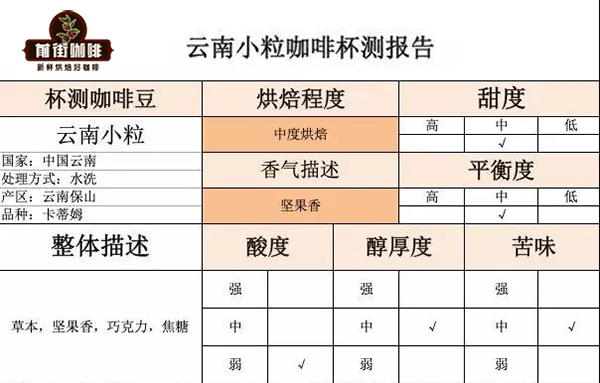
Smooth entry with an Asian herbal note. Lively, bright acidity with salivation on both cheeks. Soft acidity, a good balance of richness and body, and rich layers. The aftertaste brings dark chocolate, honey, and cane sugar with distinct flavors. After complete cooling, brown sugar flavors emerge.
Please note
1. Flavor descriptions vary by individual and are influenced by water temperature and brewing method. This cupping report is based on the flavor-wheel limits under the same brewing equipment and parameters, for reference only.
2. Content will be updated promptly as new information arrives. The latest information prevails.
FrontStreet Coffee brewing suggestions
Filter: V60
Water temperature: 90-92°C
Coffee-to-water ratio: 1:15
Grind size: medium-fine, fine sugar (VARIO 50: China standard 20-mesh sieve pass-through 57%)
Flavor description: nutty aroma on the nose, with herbal, chocolate, and caramel notes on entry, and light fruit acidity in the aftertaste.
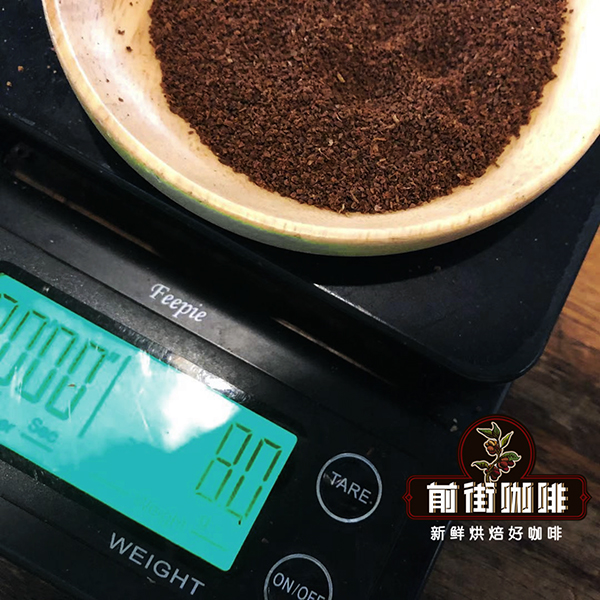
FrontStreet Coffee brewing technique
Segmented extraction. Use 30g of water for a 30-second bloom. When pouring to 124g with a small circular motion, make a segment. Continue pouring to 227g when the water level drops and is about to expose the coffee bed, then stop. When the water level drops and is about to expose the bed again, remove the filter cup. Extraction time is 2 minutes, timed from the start of the bloom.
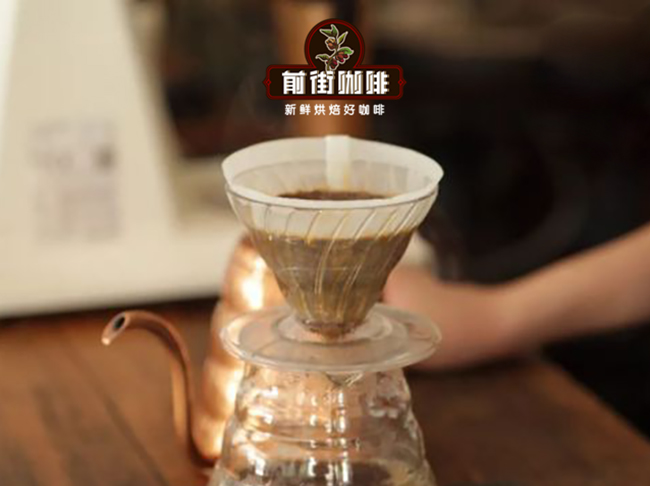
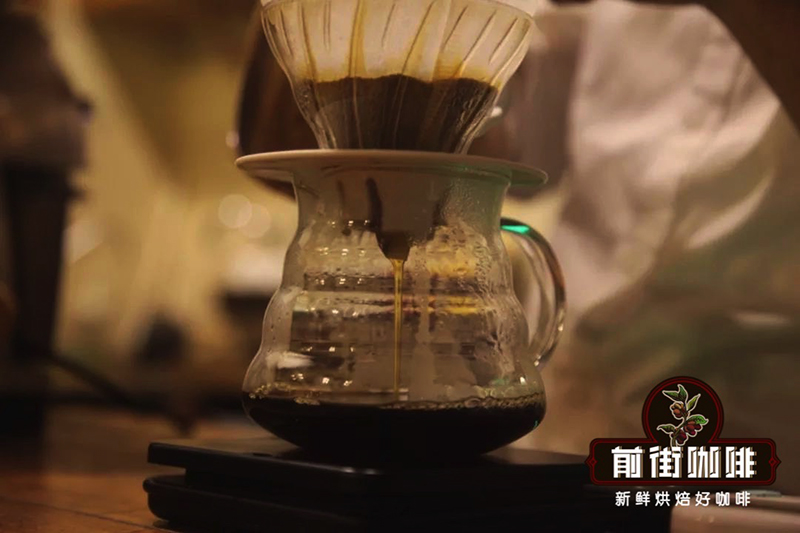
When Yunnan coffee comes up, is your first reaction disdain? In fact, Yunnan coffee has developed quite well in recent years — more standardized, with a complete range of varieties, including natural, washed, honey processed, high altitude, yellow Bourbon, and more. From bean varieties to diverse processing methods, it is no longer the Yunnan coffee of the past. Tracing honey processing: it is the method of making green coffee by removing the skin and pulp layers and drying the beans with the mucilage in the sun. After the outer pulp is removed, a viscous, gelatinous substance remains on the bean.
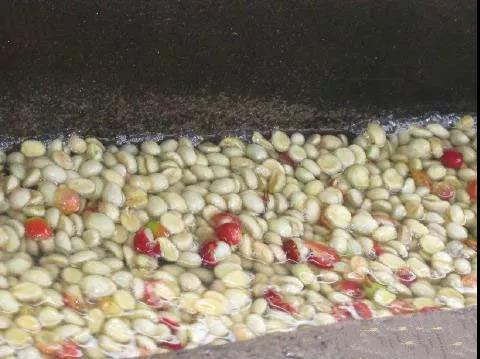
Depending on the pulp components removed and the drying time, honey processing divides into:
1/ Yellow honey processing (approximately one week of drying)
2/ Red honey processing (approximately two weeks of drying)
3/ Black honey processing (more than two weeks of drying)
Among these, black honey is the most stringent. Honey processing carries labor costs as high as natural processing. Honey-processed coffee has prominent flavor, presenting brown-sugar sweetness and stone-fruit aromas.
In South America, honey-processed coffee is very popular. Honey processing enhances sweetness and fruit flavor, with overall softness and balance. Yunnan coffee's exploration of processing methods is praiseworthy and worth recommending.
High altitude with large day-night temperature differences lets sucrose from the coffee cherries accumulate, one factor in why high-altitude beans outrank low-altitude ones in quality.
The mysterious nights at the border are fascinating: bean-sized stars, a deep blue sky, a bright moon, and the sweet, fermented smell of coffee pulp and skin filling the valley. They leave a mark on the memory, so that later, drinking coffee, you can confidently taste that note in certain single-origin cups.
FrontStreet Coffee Recommendation
Yunnan's story, as the notes above show, is a long one of variety, altitude, and processing coming together, and FrontStreet Coffee's Yunnan range lets you taste where that effort has arrived. It is a warm, approachable corner of the world's coffee map rather than an acidic, floral one, so it suits anyone who prefers a gentler, sweeter cup.
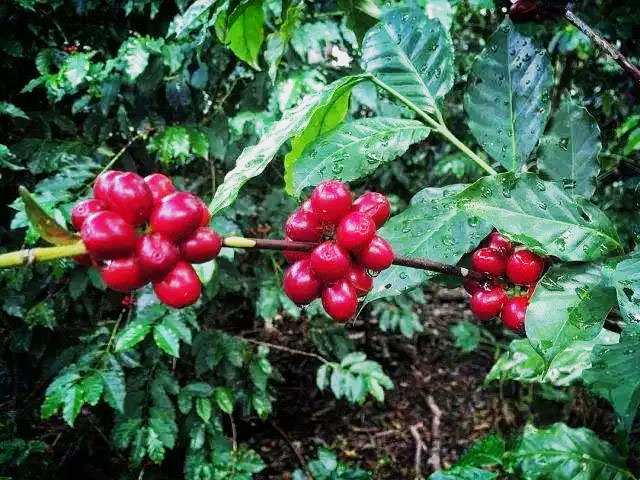
FrontStreet Coffee Yunnan Small Bean is the entry point. Sourced from Baoshan and given washed processing and a medium roast, it shows soft nut and chocolate sweetness with a light plum acidity, and its friendly price has made it a first taste of Yunnan for a great many drinkers. FrontStreet Coffee 2013 Sun-dried Typica is the step up: FrontStreet built its own estate in 2013 and planted Typica, both because it is one of the oldest varieties with a pure Arabica lineage and an elegant, clean flavor of its own, and because the earliest coffee trees in Yunnan, brought in by a French missionary, were also Typica — the hope being to recover that original regional taste. Picking only fully ripe red cherries and drying them in the sun, then roasting to a medium level, gives a more balanced cup with fuller sweet-and-sour: dark berry character alongside caramel sweetness, chocolate, and a hint of dried apricot, with a black tea finish. To drink Yunnan as an espresso, FrontStreet Coffee Dark Cocoa Blend joins Yunnan small bean with Brazil Cerrado, Brazil supplying the mixed-nut aroma and balanced body while Yunnan supplies the chocolate and citrus, for an Americano that balances sweet, sour, and bitter with a nutty brown-sugar sweetness and a latte with an almond-cream smoothness — a good starter bean for anyone learning to pull shots.
Yunnan small bean is a medium roast, so it is forgiving in the cup: a moderate water temperature and a medium-fine grind bring out its nut, chocolate, and caramel notes without pushing the acidity forward, and it works equally well as a pour-over, in a French press, or through an espresso machine. Give it a slow, even pour and it will taste of exactly where it came from.
Important Notice :
FrontStreet Coffee is a long-established specialty coffee roaster in Guangzhou China, selling freshly roasted beans from its own farm in Yunnan as well as dozens of carefully selected single-origin beans from around the world for both pour-over and espresso. The products deliver consistently excellent quality and great value, with shipping within 24 hours. Guangzhou's FrontStreet Coffee shop is recommended by many coffee lovers, and the beans are now available online at the Tmall 。
FrontStreet Coffee has moved to a new address:
FrontStreet Coffee Address: 315,Donghua East Road,GuangZhou
Tel:020 38364473
 Scan and follow the En Gafei WeChat official account. Please indicate that the reprint comes from "En Gafei".