What are the best varieties of Yunnan small bean coffee and what are the flavor characteristics of Yunnan red honey processed coffee?

With the rise of domestic coffee, customers visiting FrontStreet Coffee have started paying attention to beans from Yunnan. Observant customers will notice that none of FrontStreet Coffee's Yunnan beans use novelty processing methods - they all rely on the most traditional natural and washed processes. That is deliberate: FrontStreet Coffee believes the finest ingredients need only the simplest processing.
Chinese Coffee History
Unlike tea, coffee culture has never run deep in China. The country's earliest coffee consumption dates back only to the late Qing Dynasty, when most of the drinkers were foreigners; meanwhile, China's coffee cultivation history spans barely a hundred years.
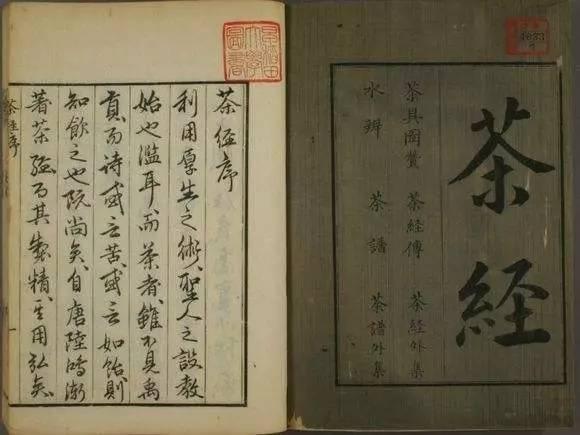
After China's defeat in the Sino-French War in the late Qing Dynasty, the imperial court was forced to open Yunnan as a trading port, letting French influence into the region. Father Alfred Tientsin was assigned to build a Catholic church and spread Christianity in Zhukula Village, Pingchuan Town, Binchuan County, Dali. Being a coffee drinker, he planted an Arabica coffee tree beside the church.

The exact planting year cannot be verified, and in fact there are three competing accounts:
1. An elderly Yunnan local, born in 1903, recalled church staff mentioning that the priest planted coffee trees outside the church for his own production and sale.
2. A Yunnan company widely promoted through numerous media outlets in 2008 that Father Tientsin planted the trees in 1892.
3. A member of the Hainan Provincial Association for Science and Technology cited historical documents in academic journals fixing the year as 1904. This account is now generally considered closest to the truth.
Chinese Coffee Growing Regions
Coffee cultivation in China is concentrated in Fujian, Hainan, and Yunnan provinces. Because Fujian and Hainan sit close to the ocean at average altitudes not exceeding 1000 meters, they suit only Robusta. Public attention has therefore focused on Yunnan.
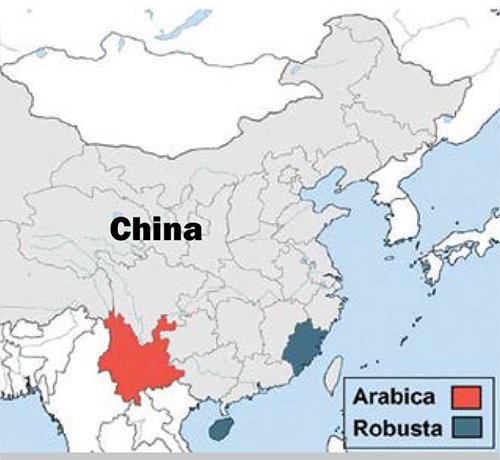
Yunnan Province lies in southwestern China, between 15 degrees north latitude and the Tropic of Cancer. Most of the province sits between 1000 and 2000 meters, with predominantly mountainous, sloping terrain, wide elevation variation, fertile soil, abundant sunlight, plentiful rainfall, and large day-night temperature swings. All of this meets coffee's requirements and has shaped the unique flavor profile of Yunnan coffee.
Where Are Yunnan Coffee Beans Produced?
Yunnan's coffee regions are mainly distributed across the western and southern parts of the province: Pu'er, Baoshan, Lincang, and Honghe.

Dehong
Known as the "Hometown of Chinese Coffee," Dehong Prefecture grows all of its coffee above 1000 meters, with 30,000 mu planted on terrain above 1600 meters. The prefecture also relies primarily on organic fertilizers and organic pesticides, producing high-quality coffee that makes it one of the world's rare premium coffee areas.
Baoshan
Coffee cultivation in Baoshan began in the mid-1950s, started from seedlings introduced from Southeast Asia by the late patriotic overseas Chinese Mr. Liang Jinshan. In recent years, with expanding international trade, the small-bean coffee of the Lujiang Basin has become renowned - European, American, and Arab buyers, especially merchants from Britain, America, Egypt, Hong Kong, and Macao, treat it as premium coffee in high demand. In December 2010, after review by China's national quality inspection authorities, "Baoshan Small-Bean Coffee" received national geographical indication product protection.

Lincang
Its unique geography and climate have made Lincang a magnet for coffee companies, which have successively established 200-mu and 100-mu high-quality seedling bases in Mengding Town of Gengma Autonomous County and at Xingfu Farm in Lincang City, cultivating coffee in Gengma, Zhenkang, Yunxian, Cangyuan, and Yongde.
Pu'er
The tea town of Pu'er has a 150-year history of coffee cultivation. In the early 1990s, Pu'er City began developing coffee as a dominant industry to restructure the local economy and raise farmers' incomes.

Yunnan Coffee Bean Varieties
With China's reform and opening-up, international brands like Nestlé and Starbucks entered Yunnan and pushed hard for Catimor cultivation. Before Catimor, Yunnan small-bean coffee was Typica - but growers cut down the more elegant-tasting Typica trees in pursuit of higher yields and stronger disease resistance, replanting with Catimor, which carries some Robusta genes.

Typica
Typica is the oldest native variety of Ethiopia, and every Arabica variety descends from it. Typica has bronze-colored young leaves and oval or slender-pointed beans; it offers elegant flavor but poor disease resistance and low yield.
Catimor
Catimor was developed by Portugal in 1959 by crossing Timor with Caturra, producing a variety with strong resistance to leaf rust and coffee berry disease, and high yield. Because Catimor carries Robusta genes, its flavor is rich and full-bodied with a faint defect note.

FrontStreet Coffee: Yunnan Huaguoshan Coffee Beans
Region: Baoshan, Yunnan, China
Altitude: 1200m
Variety: Typica
Process: Washed

FrontStreet Coffee: Yunnan Small-Bean Coffee Beans
Region: Baoshan, Yunnan, China
Altitude: 1200m
Variety: Catimor
Process: Washed
FrontStreet Coffee's Brewing Recommendations for Yunnan Huaguoshan and Yunnan Small-Bean
FrontStreet Coffee recommends the V60 conical dripper. The V60's wide opening and signature spiral ribs let air escape more easily, improving extraction quality. The body may be lighter, but the high concentration that draws out Yunnan coffee's fruit acidity and distinct aroma is its great strength.
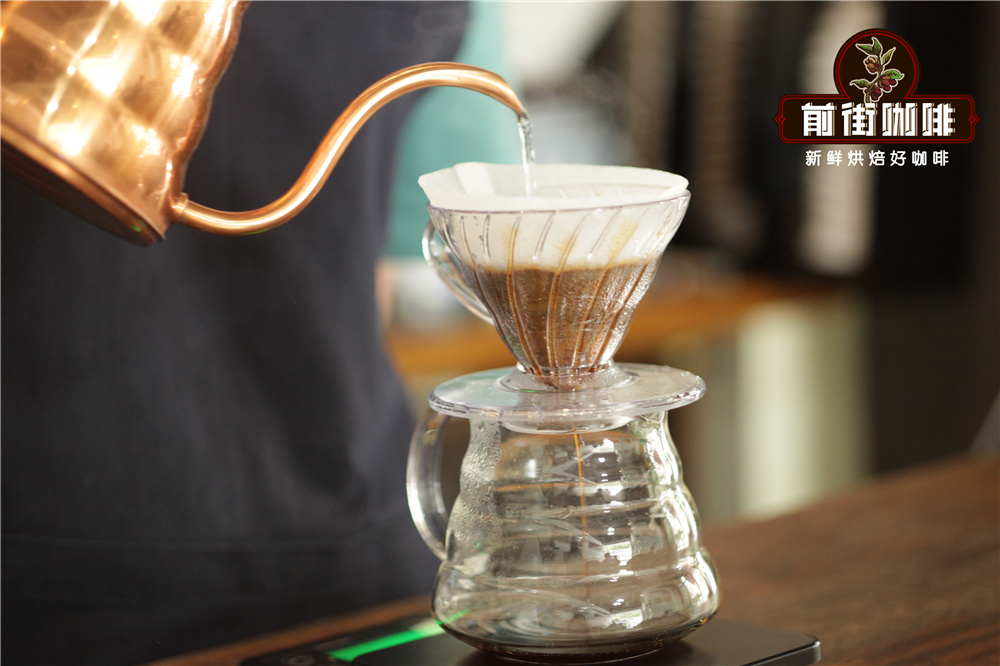
Filter: V60
Water Temperature: 90-92°C
Coffee-to-Water Ratio: 1:15
Grind Size: Medium-fine, like fine sugar (EK43s #10.5: 75% pass rate on the #20 standard sieve)
Brewing Method: segmented extraction. Bloom with 30g of water for 30 seconds, pour in small circles up to 124g, then continue to 227g once the water level drops and is about to expose the bed; remove the dripper when the level drops again (timing starts at the bloom). Extraction time is 2 minutes.

FrontStreet Coffee: 2013 Natural Typica Coffee Beans
Region: Lincang, Yunnan, China
Altitude: 1300m
Variety: Typica
Process: Natural
FrontStreet Coffee's Brewing Recommendations for Yunnan Natural Typica
Filter: KONO
Water Temperature: 86-88°C
Coffee-to-Water Ratio: 1:15
Grind Size: Medium-fine, like fine sugar (EK43s #10.5: 75% pass rate on the #20 standard sieve)
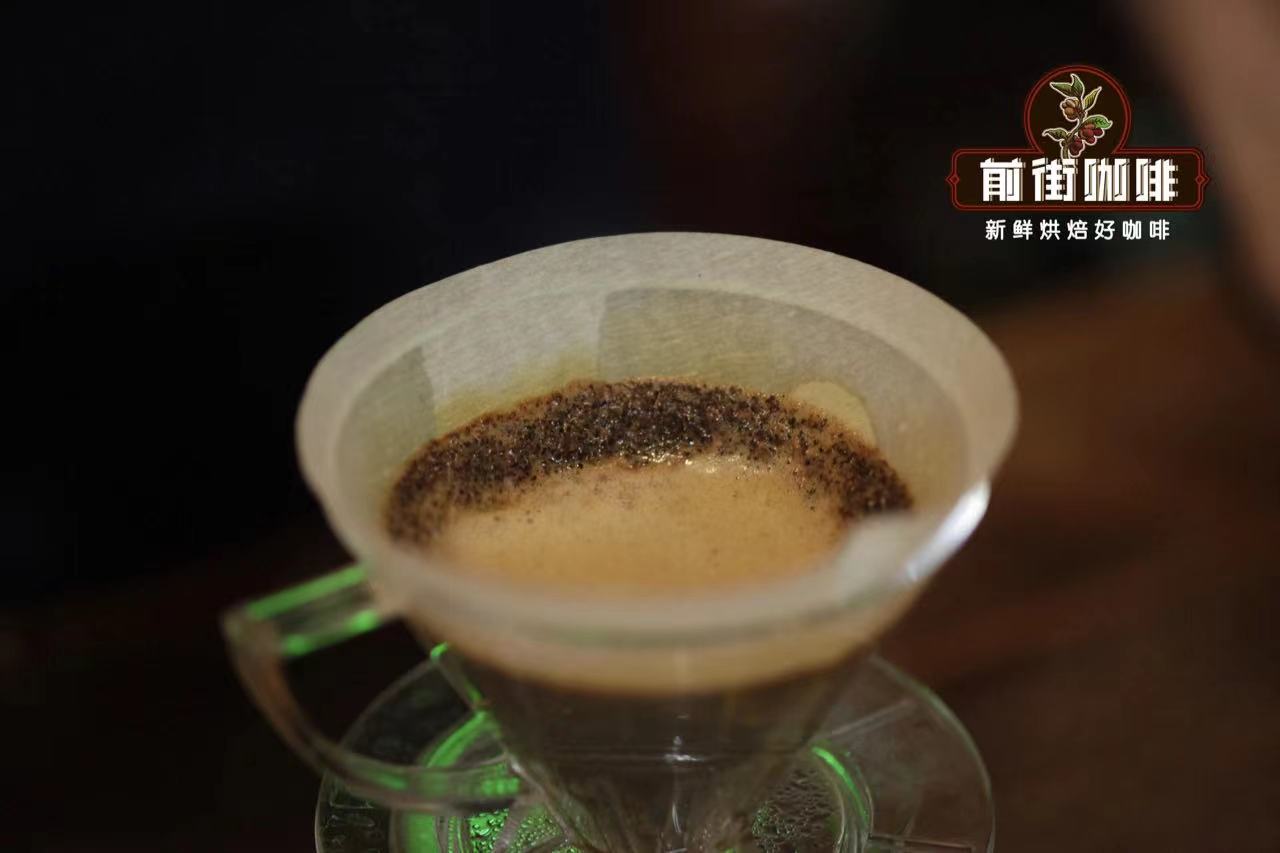
Flavor Profile Comparison of Yunnan Coffee Beans
FrontStreet Yunnan Huaguoshan: Rich but not bitter, aromatic but not intense, with floral notes, melon sweetness in the middle, and a black tea finish.
FrontStreet Yunnan Small-Bean: Nutty aroma, herbal notes, chocolate, caramel, with a faint fruit acidity in the aftertaste.
FrontStreet Yunnan Natural Typica: Berry acidity, nutty notes, brown sugar sweetness, with a tea-like finish.
FrontStreet Coffee Recommendation
Yunnan coffee deserves a place in every specialty shelf, and FrontStreet Coffee's selections trace the region's full story. The FrontStreet Yunnan small-bean coffee from Baoshan - washed, medium-roasted - offers soft nut, chocolate, and caramel sweetness with a gentle plum acidity at a friendly price, while the FrontStreet 2013 Yunnan natural Typica, grown on FrontStreet's own estate from fully ripe sun-dried red cherries, shows dark berry and citrus tones, caramel sweetness, chocolate, a hint of dried apricot, and a black tea finish. For espresso fans, the FrontStreet Dark Cocoa Blend pairs Yunnan small-bean with Brazil Cerrado for nutty, brown-sugar sweetness in a perfectly balanced cup.
Important Notice :
FrontStreet Coffee is a long-established specialty coffee roaster in Guangzhou China, selling freshly roasted beans from its own farm in Yunnan as well as dozens of carefully selected single-origin beans from around the world for both pour-over and espresso. The products deliver consistently excellent quality and great value, with shipping within 24 hours. Guangzhou's FrontStreet Coffee shop is recommended by many coffee lovers, and the beans are now available online at the Tmall 。
FrontStreet Coffee has moved to a new address:
FrontStreet Coffee Address: 315,Donghua East Road,GuangZhou
Tel:020 38364473
 Scan and follow the En Gafei WeChat official account. Please indicate that the reprint comes from "En Gafei".