Papua New Guinea | Eastern Highlands Baroida Estate Washed Bean Flavor and Brewing?
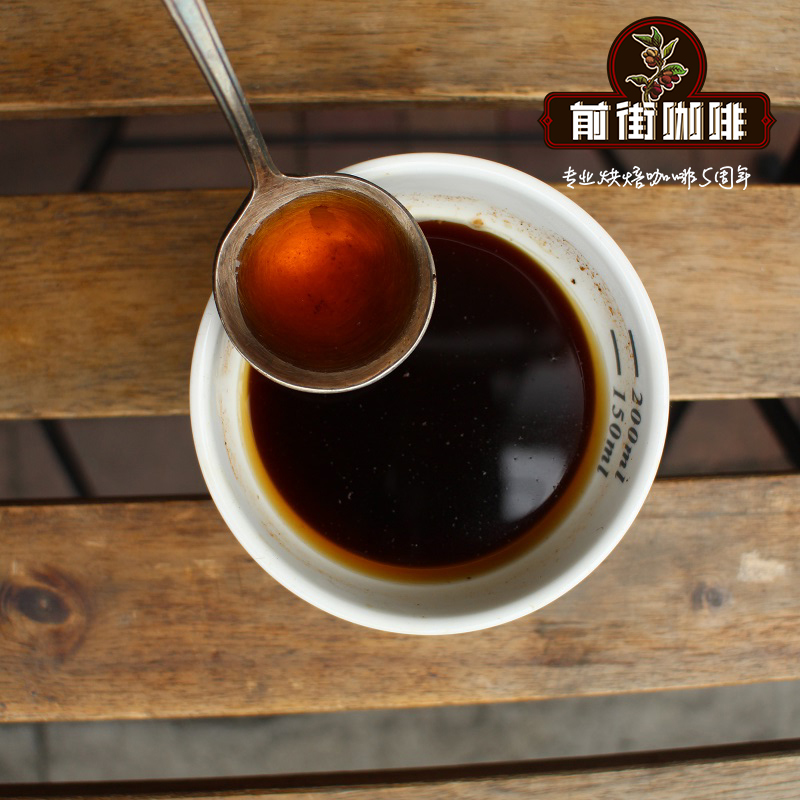
Papua New Guinea | Baroida Estate Washed Bean Flavor and Brewing from the Eastern Highlands
Baroida Estate sits in the Eastern Highlands of Papua New Guinea, at the top of the Lamari River Valley in the Jabarra mountain range, and was founded by Ben Colbran. In the 1960s Ben bought this land from the indigenous Taro people, and the estate's founders were practically the first to farm this valley. The 220-hectare plantation, with roughly 1 million coffee trees, is the only coffee estate in Papua New Guinea owned and operated by foreigners. Its elevation reaches up to 1,775 meters. In the past, traceable plot-by-plot information mostly showed up for Gesha varieties from Panama in Central America, and later occasionally from Colombia in South America.
In 1965 the government encouraged the early settlers to plant coffee as a long-term crop. Ben began planting coffee trees at Baroida and became one of the first coffee producers in the Eastern Highlands, soon exporting his output abroad. The estate is divided into 26 blocks, and GPS is used to track the varieties and daily production of each block's batches with precision. The Colbran family is now on its third generation, run jointly by Ben's son Nickel and grandson Chris. Beyond its own output, Baroida also brings together the production of nearby small estates and smallholders, building a larger supply network. After more than 50 years of working with estates and smallholders in the region, the Colbran family has earned wide respect from the people of the Lamari River Valley: from early guidance on farming technique and promoting the coffee industry to recent bridge building, road paving, and school construction locally, they have opened up sales markets for the community. For the past 20 years the family has also served as a procurement agent for large multinational traders, guaranteeing a steady supply of high-quality coffee through direct trade, which is still remarkable today and makes Baroida one of Papua New Guinea's most outstanding and distinctive coffee estates.
Papua New Guinea lies in the southwestern Pacific, within the volcanic belt of the Pacific Ring of Fire, so its fertile volcanic soil is an important natural condition for good coffee. Despite that good environment, its share of the global coffee bean market is small, only 0.7%. Coffee matters greatly to the country as the only cash crop in the highland areas, and 40% of the nation's more than 2 million smallholder families rely on coffee beans as a vital source of income. Most Papua New Guinea coffee is grown in the highlands, where Arabica accounts for as much as 95%, and the processing method is mainly washed fermentation in the early stage followed by sun-drying later. The main varieties include Bourbon, Arusha, and Mundo Novo.
Estate coffee from Papua New Guinea comes from larger-scale farms and shows cleaner, more refined cupping characteristics. The taste is lighter than Java beans, with subtle aromas and complexity, and the acidity and brightness can sometimes rival the finest Central American beans. A renowned American roaster described Papua New Guinea's sun-dried beans as having astonishing depth and diverse aromas. Coffee from Kimmell Estate is bright and acidic with rich fruit aroma, while coffee from Arokara Estate is milder and more balanced, suited to espresso.
Within Papua New Guinea, the important coffee regions include Eastern Highlands Province, Enga Province, Western Highlands Province, and Chimbu Province, with elevations mostly between 1,200 and 1,900 meters and a strong Central American style. Production is dominated by smallholders, with a few large estates or government support programs. Papua New Guinea's beans have won wide praise in recent years for their solid body, very low acidity, and clean flavor, which suits Asian preferences and makes the country a rising Asian coffee origin.
Coffee Information
Region: Eastern Highlands
Producer: Baroida Estate
Processing Method: Washed
Varieties: Bourbon, Typica
Elevation: up to 1,775 meters
Flavor: Malic acid, dried fruit, syrupy sweetness, nutty chocolate, Southeast Asian spices, round texture, balanced taste
Brewing Recommendations
FrontStreet Coffee Recommended Brewing:
Dripper: Hario V60
Water Temperature: 90°C
Grind Size: Fuji Royal grinder setting 3.5
Brewing Method: 1:15 water-to-coffee ratio, 15g coffee, first pour 25g water, 25s bloom, second pour to 120g then pause, wait until the water level drops to half before pouring again, slowly pour until reaching 225g, extraction time around 2:00
Analysis: The three-stage method clearly defines the front, middle, and back-end flavors of the coffee. Because the V60 has many ribs and drains quickly, pausing during the pour extends the extraction time.
FrontStreet Coffee Recommendation
For a gentle introduction to the celebrated Geisha profile, FrontStreet Coffee's Panama Boquete Geisha is the obvious first stop. This entry-level Geisha lets you taste the classic orange-blossom honey of high-quality Panamanian Geisha at a reasonable price, with an oolong-tea-like body, delicate fruit acidity, and clearly separated layers.
Geisha is usually roasted medium-light and has a hard, dense texture that tends to sink and clog the drain hole. FrontStreet therefore suggests a grind of about 78% pass-through on the China standard #20 sieve, roughly fine-sugar size, and water at 91°C. Brew 15g of coffee in a small Hario V60 at a 1:16 ratio with a three-stage pour: start the clock, pour 30g for a 30-second bloom, then pour in small circles to 125g, wait for the bed to drop halfway, and continue in small circles to 225g. Once it finishes draining, total extraction time lands around 2:10 to 2:20.
Geisha is also popular as a single-origin espresso: pulled at a medium roast it keeps its floral and fruit notes, and as a slow-drawn cold brew it turns round and sweet.
Important Notice :
FrontStreet Coffee is a long-established specialty coffee roaster in Guangzhou China, selling freshly roasted beans from its own farm in Yunnan as well as dozens of carefully selected single-origin beans from around the world for both pour-over and espresso. The products deliver consistently excellent quality and great value, with shipping within 24 hours. Guangzhou's FrontStreet Coffee shop is recommended by many coffee lovers, and the beans are now available online at the Tmall 。
FrontStreet Coffee has moved to a new address:
FrontStreet Coffee Address: 315,Donghua East Road,GuangZhou
Tel:020 38364473
 Scan and follow the En Gafei WeChat official account. Please indicate that the reprint comes from "En Gafei".