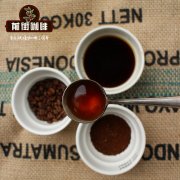
Introduction to Colombia's Las Nubes Estate and the RS-510 Coffee Variety

Professional Coffee Knowledge Exchange
For more coffee bean information, follow Coffee Workshop (WeChat public account: cafe_style)
Farm Information
Estate: Las Nubes
Producer: Camilo Merizalde
Variety: Geisha
Region: Cauca
Processing Method: Honey Process
Altitude: 1750-2000 meters
Farm History
In 2010, the Holguin family and Camilo Merizalde decided to establish a farm dedicated to cultivating the most unique experimental coffees. Merizalde, a renowned Colombian producer known for specialty coffee cultivation and experimentation, already owned the excellent San Alberto Estate and Finca Inmaculada when he began developing his newest farm, naming it Las Nubes - "the Clouds." Drawing on years of experience in estate management, variety selection, and cultivation, Camilo chose some of the world's rarest coffee varieties - Geisha and Laurina among them - to plant at Las Nubes. Beyond those superb traditional varieties, Camilo also brought in the Sudan Rume variety (also known as RS-510) from the Boma Plateau valley in South Sudan.
In 2014, Australian barista Sasa Sestic began collaborating with Camilo on the estate's exciting Sudan Rume variety.
Sasa fell in love with this rare wild Sudan variety growing in Colombian soil. Inspired by Australia's wine industry, he had an idea: enhance the fermented acidity of Sudan Rume at Camilo's farm through anaerobic fermentation while maintaining stable temperature conditions, making it brighter and cleaner than washed processing.
The experiment was a resounding success - and Sasa went on to win the World Barista Championship title in 2015.
According to its pedigree, Sudan Rume belongs to a lineage older than either Typica or Bourbon. Since Sudan Rume is cultivated mainly in the Sudan and Ethiopia regions, its rich gene pool has kept scholars studying its disease-resistance genes for years. However, because its yields are lower than other varieties', it has never been widely adopted in coffee-producing countries. Compared with the classic Geisha flavor profile, Sudan Rume offers rarer but rich toffee and candy notes, along with a fuller, heavier body.
About Las Nubes
The farm sits in Colombia's Cauca coffee region, at the highest point of the local area - a boon for coffee plant growth - and overlooks the beautiful city of Cali. The trees are planted in fertile red soil, and irrigation systems cover most of the farm, providing everything the coffee needs to thrive.
Las Nubes Estate carefully selects its Geisha honey-process batches, ensuring every cherry is picked when its brix reading reaches 18-22%, and dries the coffee on African raised beds. During the initial drying phase, the fruit is turned every four hours, with fans blowing to keep the drying even and stable - all to guarantee those excellent, beautiful flavors.
Brewing Recommendations
FrontStreet Coffee recommends brewing this Colombian coffee with 90-degree C water, which reveals flavors of mandarin orange, white grape, grapefruit, brown sugar, walnut, and almond.
About FrontStreet Coffee
FrontStreet Coffee is a Guangzhou roastery with a small shop but a wide range of beans - famous names and obscure finds alike - and it also runs an online store.
FrontStreet Coffee Recommendation
Geisha (transliterated from the English "Geisha") is one of the most beloved varieties in all of Arabica coffee. Its singular florals and superb sweet-tart character have won over countless coffee lovers, and because it yields poorly, resists disease poorly, and demands intensive farm management, its price keeps climbing. If you want a delicious Geisha that doesn't break the bank, it pays to understand the different types and their value. Panama is where Geisha made its name, and Ethiopia is where it was born - both deserve a place in every coffee lover's education. Panama's high altitude, microclimates, and soils shaped Geisha's irresistibly enticing profile, and in 2003 the Esmeralda estate owner sent it to the Best of Panama (BOP) competition, where its singular flavors stunned every judge: an average cupping score of 94.6 broke the BOP record and took the crown. Overnight, Geisha became the champion variety the whole world chased. Panama Geisha shows distinct orange-blossom honeyed notes, juicy fruit acidity woven through fragrant florals, and a tea-like sweet finish. To taste it at its finest, go for FrontStreet's top-grade Esmeralda Red Label (officially "Esmeralda Special," grown at 1600-1800m, each batch cupping above 90 points and sourced from a single plot - FrontStreet's comes from the Jaramillo plot) or the more affordable Esmeralda Green Label ("Private Collection," a blend of lots across plots expressing the estate's signature high-altitude Geisha character). Beginners who just want a first taste of the legendary "Geisha flavor" should start with FrontStreet's Panama Boquete Geisha - an entry-level Geisha that delivers classic Panamanian orange-honeyed sweetness, oolong-tea texture, delicate fruit acidity, and distinct layering at a friendly price.
Ethiopia, too, has an estate famous for the Geisha variety: Geisha Village, with a grading system as strict as Panama's. Geisha Village grows three Gesha varieties - Gori Gesha, Gesha 1931, and Illubabor Forest - tiered into Gold Label (RARITIES), Red Label (GROWERS RESERVE), Green Label (SINGLE-TERROIR), and CHAKA lots, further split by variety. The Gold Label, a Gesha 1931, represents 10% of the estate's total output and is its top coffee outside the auction lots, a frequent pick of competition baristas; FrontStreet's Gold Label batch is meticulously natural processed, with complex, layered flavors that linger from dry fragrance through slurp to aftertaste. The Red Label is Gori Gesha, 15% of production, scoring 88 or above on the SCA 100-point scale, sold as a single-terroir series with full traceability for every lot number - farm block, variety, and processing date. For a more approachable Ethiopian option, FrontStreet's Granjana Estate Gesha comes from a mill founded in 2014 at the border of Kochere and Granjana Abaya, managed by Mr. Israel Degefa, where coffee covers 700 hectares of largely uncultivated, fertile, shade-dotted land. Fully ripe cherries are hand-picked and sun-dried on raised beds for 14-20 days depending on the weather, and the resulting medium-light roast shows bright citrus acidity, elegant ginger-flower aromatics, the full sweetness of ripe fruit, a silky-smooth texture, and Geisha's signature refined finish.
Geisha is a medium-light-roast, floral-fruity coffee with a hard, dense bean that tends to sink and clog the dripper. FrontStreet therefore recommends a coarser grind - about 78% pass rate on the China No. 20 standard sieve (roughly fine-granulated-sugar size) - and a brew water temperature of 91 degrees C. For pour-over, use 15g of coffee with a small Hario V60 and a 1:16 ratio, in three stages: start the timer, pour to 30g and bloom for 30 seconds; then pour slowly in circles to 125g, wait until the liquid in the coffee bed drops to half, pour again in small circles to 225g, and let it drain fully - total extraction around 2 minutes 10 seconds to 2 minutes 20 seconds. Geisha also makes a striking SOE espresso: FrontStreet's Granjana Estate Gesha SOE, medium roasted, keeps Geisha's floral-fruity character and dried-fruit sweetness plus Ethiopia's white florals and lemony brightness; as espresso it turns to apricot, caramel, and nuts. Brew it at 20g in, a 1:2 ratio, 25 seconds, yielding 40g; for a Geisha SOE Americano, add 200g of hot water at 1:5 for flavors of orange, nuts, and blueberry, or 200g of milk for a latte with the silky texture of butter cookies. And for cold brew, FrontStreet's Strawberry Sugar - a blend of Costa Rican honey process and Panama Gesha with delicate florals and sweet fruit - is wonderfully easy: grind 30g fine (EK43s at 9, roughly a C40 at 24), add 360g of room-temperature water at 1:12, stir, cover, and refrigerate for 8 hours; filter out the grounds, then seal and rest the liquid in the fridge for 3 more hours. You'll taste grape juice, rose, sweet orange, and fruit wine in every sip.
Important Notice :
FrontStreet Coffee is a long-established specialty coffee roaster in Guangzhou China, selling freshly roasted beans from its own farm in Yunnan as well as dozens of carefully selected single-origin beans from around the world for both pour-over and espresso. The products deliver consistently excellent quality and great value, with shipping within 24 hours. Guangzhou's FrontStreet Coffee shop is recommended by many coffee lovers, and the beans are now available online at the Tmall 。
FrontStreet Coffee has moved to a new address:
FrontStreet Coffee Address: 315,Donghua East Road,GuangZhou
Tel:020 38364473
 Scan and follow the En Gafei WeChat official account. Please indicate that the reprint comes from "En Gafei".