Puerto Rico Yauco Town San Pedro Region Resting Process | Flavor and Brewing of Special AA Washed Beans?
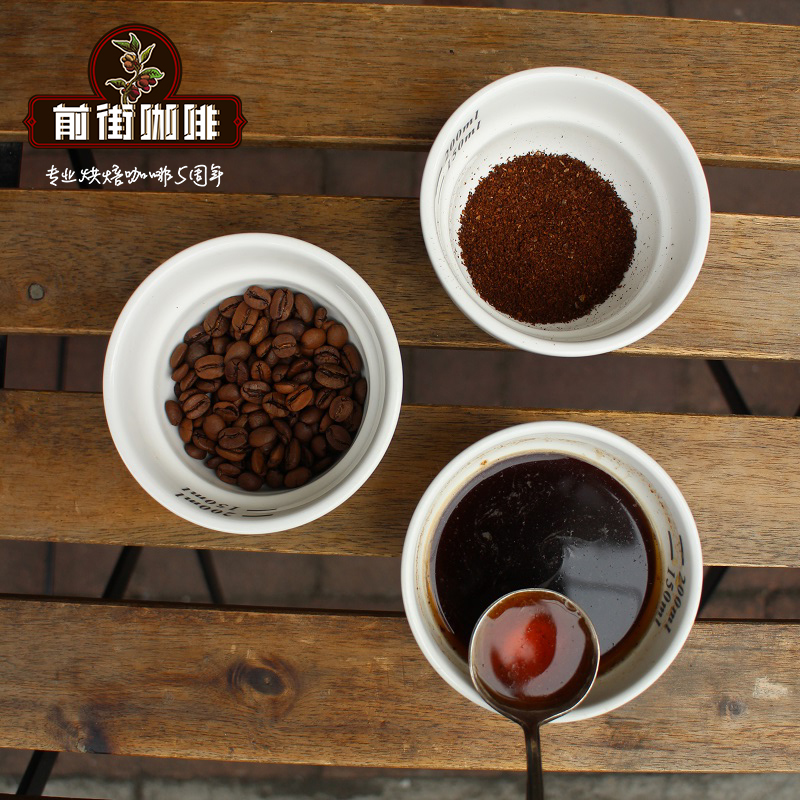
Puerto Rico Yauco Selecto AA Resting Process | Premium AA Washed Bean Flavor and Brewing
Puerto Rico is an autonomous territory of the United States in the Caribbean, with its capital at San Juan. In Spanish, Puerto Rico means "rich port." Puerto Rico's coffee history dates back to 1736, when early Spanish immigrants brought coffee seedlings. In the 18th century coffee was not valued, because the main economic crop was sugarcane. In the early 19th century, due to political factors in Europe, French settlers began immigrating to Puerto Rico from the Mediterranean island of Corsica. Because of exclusion by the Spanish, many French people settled in Yauco, in the southwest.
Yauco's geography is mostly hilly, so the French decided to plant coffee. After half a century of hard cultivation, the quality was recognized by the market, which established the future position of Yauco Selecto coffee. All coffee in this country is carefully cultivated, and the premium coffee is Yauco Selecto, where "Selecto" means "selected." Yauco Selecto is grown only on three farms in the southwestern part of the island (San Pedro, Caracolillo, and La Juanita), with a rich and intense flavor, a long-lasting aftertaste, and an aroma that can compete with the world's other excellent coffees.
The mountainous climate here is mild, giving plants a longer maturation period (from October to February of the following year), and the soil is high-quality clay. The people here have always adopted an ecologically protective, meticulously cultivated planting method, picking only fully ripe coffee beans and then placing them in drum devices for washing for 48 hours. Yauco Selecto beans are always stored with the parchment until shipment, when the outer skin is removed to ensure freshness. When goods are submitted, relevant government practitioners such as the FDA and USEA are also present; their job is to supervise whether producers comply with federal regulations. Practitioners from local evaluation committees also take one bag as a sample from every 50 bags and use international measuring instruments to evaluate their quality.
Yauco Selecto AA beans are rested for 60 days after drying and processing (with parchment) before export, so the maturity of the flavor is even better. The premium beans that arrived this time also include the Nicaraguan Monimbo estate beans that made a splash in the 2002 coffee competition, PNG Sigri AA, and the rare Sigri PB (do you remember when I got the PB sample in Seattle?). These beans will be cupped and put on the shelves successively.
The main coffee-producing areas of the Caribbean were hit by multiple hurricanes in 2004, so coffee harvests were affected, leading to insufficient supply. Yauco Selecto produces fewer than 15 containers per year. As a result, some defective beans can be found in this year's green beans. Looking at the Yauco that arrived on June 1st, although it is AA grade, the inspection results show about one defect per 350 grams of green beans. At this year's Seattle SCAA exhibition, there were fewer participating companies from this region than in previous years, also a result of hurricane damage. The green beans of this batch of Yauco are not of the Bourbon variety but of Porto Rico varieties, with an appearance quite similar to the traditional Typica variety. If you have Yauco Selecto beans from previous years, you might compare them, as there will be obvious differences in the appearance of the green beans. In cupping, it still presents the typical "Yauco style."
Cupping Notes:
Region: Yauco town, Puerto Rico (mountainous area in southwestern Puerto Rico)
Estate: San Pedro, Santa Ana
Grade: AA
Variety: Porto Rico varieties (no new commercial varieties used)
Processing: Washed method
Dry Aroma: Oily aroma, stone fruit fragrance, spicy sweetness, with floral and lemon balm notes
Wet Aroma: Milky sweetness, tea fragrance, stone fruit flavor, citrus sweetness, caramel sweetness
Slurp: Cocoa sweetness, very oily and thick body, citrus and other fruit sweetness, long-lasting caramel aroma
Cupping (2): Medium Roast
Dry Aroma: Nutty sweetness, fruity sweetness, spicy sweet fragrance, oily flavor, minty cool aroma
Wet Aroma: Creamy sweet fragrance, cocoa nutty sweetness, some floral tea fragrance, spicy sweetness
Slurp Flavor: Creamy oily body, ripe sweet-and-sour citrus flavor, cocoa chocolate flavor, very long-lasting nasal aroma
Yauco Selecto AA is a premium coffee from the island of Puerto Rico, translated in Chinese as Yauco Selecto, and is a renowned island coffee on par with Hawaiian Kona coffee and other fine Caribbean beans.
Puerto Rico means "rich port" in Spanish, and coffee was introduced to Puerto Rico over 250 years ago, beginning in 1736 when Spain began colonization and coffee cultivation. By the 19th century, coffee had become the second-largest industry on the island. In the early 19th century, immigrants from the French island of Corsica were forced to settle in the high mountain areas of the southwest, and they chose coffee as their main crop. These cultivation areas were centered mainly around a town called Yauco. In 1860, two major events established the status of Yauco Selecto beans:
First: The Mariani family first used a cotton gin machine — originally for sieving cotton fibers — to remove the outer shell of coffee cherries, which had a revolutionary impact.
Second: The leader of the Corsican growers financially supported the beans of this region, shipping them back to major European coffee trading centers and recommending them to buyers, quickly generating a widespread response... Their hard work finally paid off.
In the 1860s, Puerto Rican coffee, especially that produced in the Yauco region, gained a reputation as premium coffee. Emperors and empresses from all over Europe regarded it as the finest of coffees! It was widely consumed by high society. Coffee-producing countries also competed to imitate Puerto Rico's cultivation methods. At that time, the island's production ranked 6th in the world! (In other words, gourmets in Europe were already enjoying specialty coffee a hundred years ago.)
In 1898, two devastating hurricanes struck Puerto Rico. The hurricanes damaged the coffee industry, and the great war between the United States and Spain also began that same year. After the war, the island, along with the Philippines and Cuba, became a U.S. territory. Once again, the U.S. government was only interested in the sugar industry (much like Spain at the time). The double blow was that European countries no longer considered Puerto Rican coffee a colonial product. Fortunately, in the first half of the 20th century, Cuba, an emerging market, purchased most of Puerto Rico's coffee, though Yauco Selecto continued to be exported to Europe to supply some gourmets.
In 1917, the people of Puerto Rico became U.S. citizens, which meant minimum-wage protection — and also meant that coffee cultivation costs were as expensive as in Hawaii's Kona region. Puerto Rico's labor costs must comply with U.S. government standards, and the coffee cultivation environment must also comply with U.S. environmental policy, which in fact raised many production costs in Puerto Rico. Under this rising cost structure, the factors supporting the Puerto Rican coffee industry include:
(1) Because the island produces high-quality coffee! Under a free economic system, if the quality were poor and uncompetitive, the island market could simply buy imported coffee, and exporting poor quality to other countries would be even harder.
(2) Government protection and care, because it is a traditional, high-quality agricultural product, so government policy also encourages and assists continued coffee cultivation.
(3) Support from island residents, due to increased national income and a developed tourism industry: between 1965 and 1990, all coffee produced on the island was fully consumed domestically.
The reasons Yauco Selecto beans are superior to those of other producing areas on the island include:
1. They are planted in the highest-altitude mountainous areas of the island, resulting in slow growth and rich fruit flavors.
2. Only Bourbon and old varieties from the island are used. Although yields are lower, in the Yauco mountainous area the old varieties do not have the flavor deficiency problem of new commercial varieties.
3. Abundant rainfall, fertile soil, and a location in the island's best high-altitude microclimate zone.
4. Two estates meticulously control the entire process, from planting coffee seedlings to post-harvest processing, with very strict quality control.
Yauco Selecto has the characteristics of complete flavor, a rich and intense aroma, distinct layers, delicate sweetness, and a long-lasting aftertaste, presenting the qualities specialty coffee should have, with a memorable finish. Annual production is small, making it a must-try coffee for connoisseurs.
Product Name: Puerto Rico Yauco Selecto AA
Origin: Puerto Rico
Green Bean Processing: Washed
FrontStreet Coffee's Recommended Brewing:
Dripper: Hario V60
Water Temperature: 90°C
Grind Size: Fuji Royal grinder setting 3.5
Brewing Method: Water-to-coffee ratio 1:15, 15g coffee grounds. First infusion with 25g of water for a 25s bloom. Second infusion to 120g of water, then stop. Wait until the water level in the coffee bed drops to halfway, then continue infusing slowly until 225g. Extraction time around 2:00.
Analysis: Using a three-stage brewing method clearly distinguishes the front, middle, and back-end flavors of the coffee. Because the V60 has many ribs and drains faster, stopping the water flow extends the extraction time.
FrontStreet Coffee Recommendation
Yauco Selecto's appeal is its washed clarity and balance, and FrontStreet Coffee's washed single origins share that same clean, well-structured character. FrontStreet Coffee's Jamaica Blue Mountain No.1 is a close relative in spirit: an island coffee grown from the Typica variety, its medium roast balances acidity, bitterness, sweetness, and aroma into cream, caramel, chocolate, nut, honey, and light fruit notes, and it is often described as the easiest specialty coffee for most people to love.
For the cleanest expression of washed processing, FrontStreet Coffee's Kenya Small Tomato comes from the Thika region at 1,550–1,750 meters, grown from the classic SL28 and SL34 varieties and processed with Kenya's signature 72-hour double washed fermentation. A light roast keeps its lively acidity and layered fruit, with cherry tomato, smoked plum, snow pear, black plum, and yellow sugar notes and a clean, lingering finish. And for village-level washed quality, FrontStreet Coffee's Sundingding (Gutingding) Cooperative coffee, from the Woka area at the southeastern edge of Yirgacheffe, shows jasmine florals, bright citrus acidity, and green tea and honey notes after a medium-light roast.
FrontStreet Coffee suggests brewing all of these with a Hario V60 at 90°C, using 15g of coffee and a 1:15 ratio, ground on a Fuji Royal setting 3.5. Pour 25g of water and bloom for 25 seconds, then pour to 120g and pause; when the water level drops to half, continue slowly to 225g for a total extraction of about 2:00.
Important Notice :
FrontStreet Coffee is a long-established specialty coffee roaster in Guangzhou China, selling freshly roasted beans from its own farm in Yunnan as well as dozens of carefully selected single-origin beans from around the world for both pour-over and espresso. The products deliver consistently excellent quality and great value, with shipping within 24 hours. Guangzhou's FrontStreet Coffee shop is recommended by many coffee lovers, and the beans are now available online at the Tmall 。
FrontStreet Coffee has moved to a new address:
FrontStreet Coffee Address: 315,Donghua East Road,GuangZhou
Tel:020 38364473
 Scan and follow the En Gafei WeChat official account. Please indicate that the reprint comes from "En Gafei".