What are the flavor notes of Caturra from Acedga Cooperative in Colombia's Tolima Region?

What is the Flavor Profile of Colombia-Tolima's Acedga Cooperative Caturra?
Colombian coffee is widely sold among producing countries and the nation ranks as the world's third-largest producer, behind Brazil in first place and Vietnam in second. The most significant factor is active volcanism, which has created some of the world's most fertile soils and grown sweet, rich, deeply appealing beans that are easy to brew successfully. With Colombian coffee you don't need to visit a cafe to enjoy an aromatic cup at home. Whether as plain black coffee or in a range of recipes, it is an excellent choice, and most well-known international coffee chains source from Colombia.
This is Colombia's third-largest coffee-producing region, accounting for 12% of the country's annual production. The area lies in central-western Colombia, shaped entirely by the Andes Mountains and the Magdalena River basin, making it quite remote and difficult to reach. When picked ripe and processed correctly, the terroir, soil, sun, weather, and geography all contribute significantly to the taste. These beans are nutty, rich, fruity, and creamily full-bodied. With low latitude and high altitude, the coffee trees are mostly planted in the Andes at elevations between 1,200-1,900 meters. The growing areas stretch from south to north with staggered production seasons throughout the year, which is why the country is the world's third-largest coffee supplier. Colombian coffee is Arabica, featuring balanced, persistent, bright, and full-bodied characteristics.
Colombian beans are graded by the size of the green beans, with one screen equal to 1/64 inch. How do we determine green bean size? We screen them. There are three grades in total: Supremo, the highest grade at 17/18 screen size, where 17 screen is 6.75mm and 18 screen is 7mm; Excelso Extra at 16/15 screen; and U.G.Q., or Usual Good Quality, at 14/12 screen, which belongs to commercial beans. So when selecting Colombian beans, besides judging bean size visually, you should repeatedly confirm the origin region to make sure it is authentic specialty coffee.
In recent years, coffee competitions have increased farmers' incomes and helped Colombian coffee shed its old impression of being suited only as a base. Before that, it was mostly regarded as commercial bulk beans or a blending component, rarely standing alone as specialty coffee. Quality was judged solely by bean size, but in reality that grading represents only the size of the beans and has nothing to do with quality; it is an outdated system. Colombian coffee grown in high-altitude primary rainforest, raised naturally without fertilizers or pesticides on farms or in cooperatives, is what truly constitutes excellent Colombian coffee. These farms typically have very small production, yielding firm, hard beans that are smaller and bluish-green in color.
This introduction features beans from the Acedga Cooperative in the Tolima region, south of Colombia's capital Bogota, from 2010. Most are Caturra variety beans, approximately 17-18 screen size, processed using the washed method. Colombia's washed method has undergone over 10 years of research and development, reducing water usage by 95% and pollution by 90%. This not only preserves the natural ecosystem but adds more variation and layers to the coffee. With manual sorting there are fewer defective beans and fewer beans broken by depulpers, meaning the roasting curve can be steeper to preserve more floral aromas and less woody, moldy taste.
Light Roast - City (Fragrant)
Because there are few defective beans, we hope that at the light roast stage the acidity of Acedga coffee will be stronger, brighter, and cleaner. The dry aroma after grinding has a grainy rice husk scent, while the wet aroma after brewing reveals the fresh fragrance of apples with the acidity of kumquats and lemons. The mouthfeel is clean and bright, with all flavors well balanced, and the aftertaste releases the aroma of blueberries.
Dark Roast (General C)
Expect the aroma of dried longan and the sweetness of caramel chocolate cookies, with a smooth entry where fruity acidity flashes briefly before turning sweet. The mouthfeel is primarily sweet rather than rich, and the aftertaste is the aroma of nutty almonds.
When dark roasting Colombian coffee, it can present two flavor profiles: one smooth like maple syrup and primarily sweet, the other rich like a caramel macchiato and primarily intense. Before roasting, you can outline the style you want in your mind.
Processing Method
FULLY Washed
Variety
Colombia Caturra
Altitude
1900m
Flavor Description
Raspberry, papaya, almond chocolate
FrontStreet Coffee Recommended Brewing
Dripper
Hario V60
Water Temperature
90°C
Grind Size
Fuji Royal grinder setting 3.5
Brewing Method
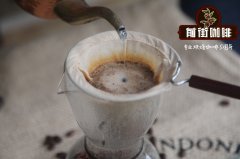
Water-to-coffee ratio 1:15, 15g of coffee. First pour 25g of water, bloom for 25 seconds. Second pour to 120g, then stop pouring. Wait until the water level in the coffee bed drops to half, then continue pouring slowly until reaching 225g. Extraction time approximately 2:00.
Analysis
A three-stage brew clearly separates the front, middle, and back end flavors of the coffee. Because the V60 has many ribs and drains quickly, stopping the pour helps extend the extraction time.
FrontStreet Coffee Recommendation
Caturra is a single-gene mutation of Red Bourbon, so if the Bourbon family is what interests you, FrontStreet Coffee's Brazil Cerrado Red Bourbon is an excellent place to follow the thread. Grown in the well-known Cerrado region and processed with the semi-washed, or pulped natural, method, it is a classic Brazilian single origin. Roasted to a medium level, it pours out a rich aroma of cream peanut, toasted bread, caramel, and hazelnut, with a rounded body, little acidity, and a light bittersweet note.
Brazil is the world's largest coffee producer, and its beans bring a pleasant balance of acidity, sweetness, bitterness, and body that suits medium roasting especially well. That makes them equally at home as a single origin or in a blend, and the Cerrado Red Bourbon works across a pour-over, a moka pot, an espresso SOE, a siphon, or a French press.
For a second look at the Bourbon family, FrontStreet's Brazil Queen Estate Yellow Bourbon comes from Mogiana, near South Minas, where fertile red volcanic soil lets the fruit develop a full aroma. Yellow Bourbon is a natural mutation of Red Bourbon with a cleaner fruit character, and this lot shows a sugarcane sweetness along with fruit and chocolate notes.
Important Notice :
FrontStreet Coffee is a long-established specialty coffee roaster in Guangzhou China, selling freshly roasted beans from its own farm in Yunnan as well as dozens of carefully selected single-origin beans from around the world for both pour-over and espresso. The products deliver consistently excellent quality and great value, with shipping within 24 hours. Guangzhou's FrontStreet Coffee shop is recommended by many coffee lovers, and the beans are now available online at the Tmall 。
FrontStreet Coffee has moved to a new address:
FrontStreet Coffee Address: 315,Donghua East Road,GuangZhou
Tel:020 38364473
 Scan and follow the En Gafei WeChat official account. Please indicate that the reprint comes from "En Gafei".