The Difference Between Authentic Blue Mountain Coffee and Indonesian Mandheling Coffee - How to Brew Golden Mandheling Coffee Beans?

When people talk about rich, full-bodied coffee, two names usually come up first: FrontStreet Coffee's Indonesian Mandheling and FrontStreet Coffee's Jamaica Blue Mountain No. 1. Even people who have never drunk coffee have probably heard of both. Today FrontStreet Coffee looks at what separates them.
FrontStreet Coffee - Indonesian Mandheling Coffee
Indonesia sits astride the equator and is made up of a great many islands, large and small. It ranks third in the world in coffee production, mostly Robusta, though Arabica is cultivated as well, with growing areas on Java, Sulawesi, and Sumatra. The Mandheling beans we talk about come from Sumatra and are the most representative Indonesian coffee.
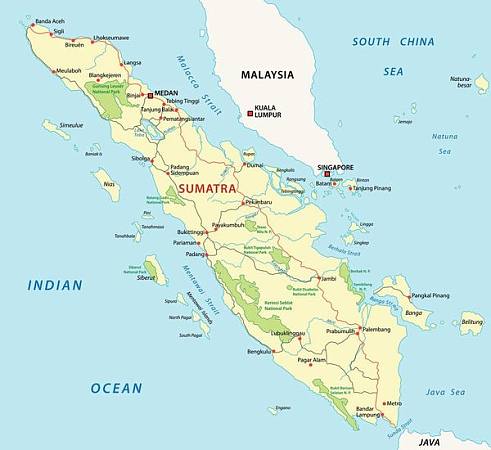
"Mandheling" is actually the name of an ethnic group on Sumatra, not a coffee variety. Naming a coffee after a people comes from a folk tale passed down over generations. Around 1945, Japanese soldiers stationed in the area tasted locally grown coffee on Sumatra and found it extraordinarily good. When they asked the locals what it was called, perhaps because of the language barrier or perhaps to protect a trade secret, the answer was the name of their ethnic group: Mandheling. Years later the soldiers still could not forget the coffee, so they began buying from the island and called it Mandheling coffee. The local who had answered them spotted a business opportunity and started selling carefully selected, uniform, visually appealing Mandheling beans to Japan. That man was the owner of Indonesia's renowned PWN green bean company.
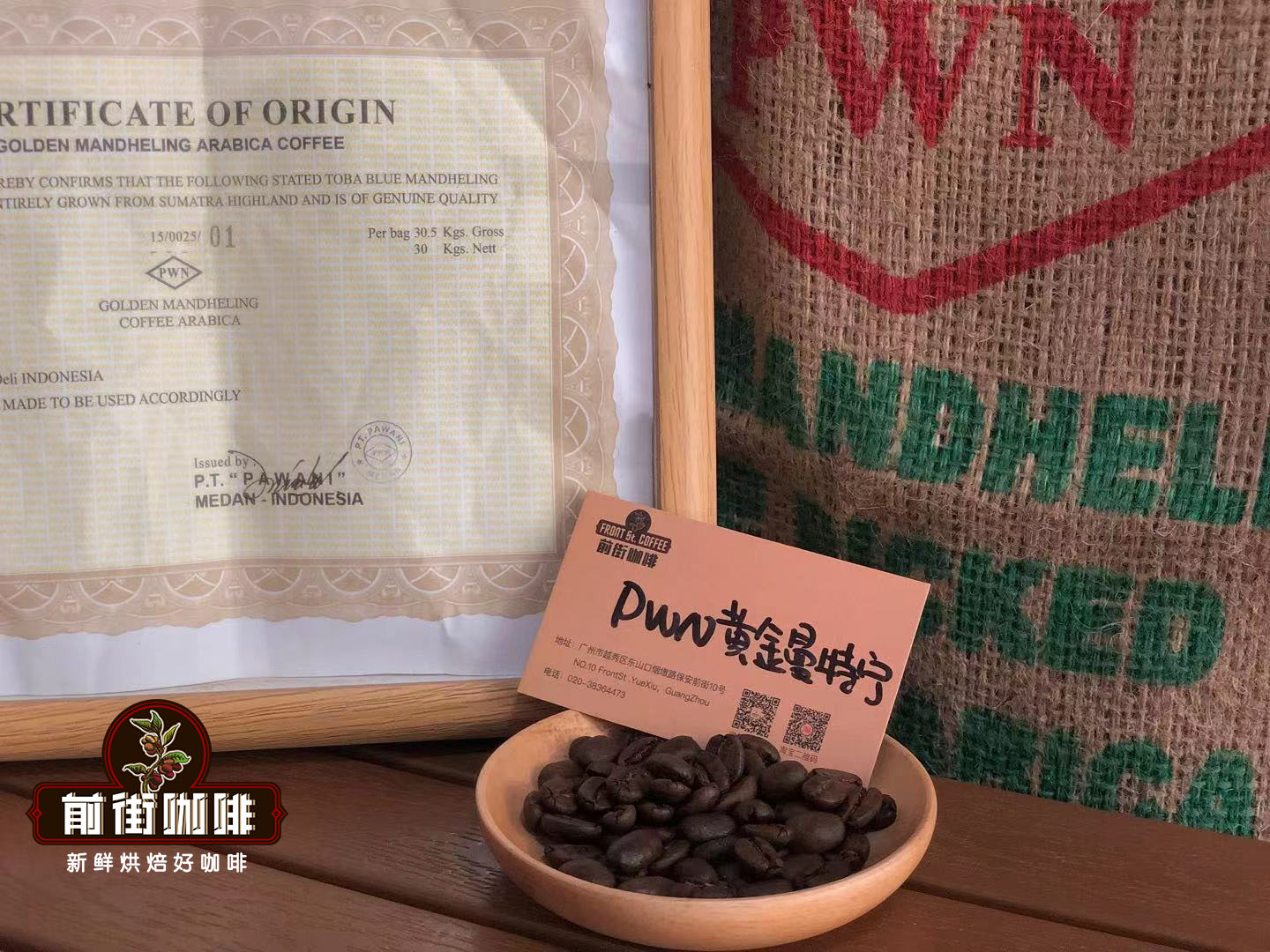
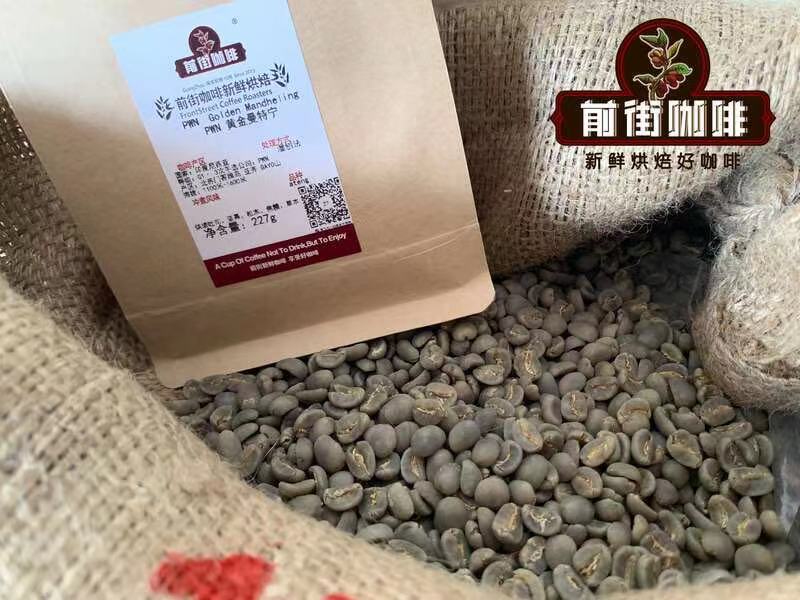
PWN applies strict selection standards to the beans it sells. It takes only Mandheling beans meeting a specification of 18 screen or above with fewer than 3 defective beans in a 300g green bean sample, which places them in the highest G1 grade. These beans are dark green with a flat, uniform shape. After processing, the green beans go through density-based color sorting and then hand selection. After four rounds of meticulous sorting, PWN Golden Mandheling beans show uniform color and consistent shape. It is said that during processing, Mandheling beans give off a golden luster in sunlight, which is how PWN Golden Mandheling got its name. For many years, FrontStreet Coffee's Golden Mandheling has come from PWN.
FrontStreet Coffee - Jamaica Blue Mountain No. 1 Coffee
Jamaica is an island nation in the Caribbean. The Blue Mountain range, at 2255m, is the highest peak on the island, about a 40-50 minute drive from the capital, Kingston. This mysterious mountain is often wrapped in cloud and mist, and the world-famous Blue Mountain coffee grows there.
FrontStreet Coffee's Jamaica Blue Mountain coffee is precious because it combines excellent genetic heritage with superior environmental conditions. The Blue Mountain range lies in the coffee belt, with fertile volcanic soil, cool and foggy weather, and frequent rain, creating a harmonious balance of water in the soil. Coffee trees are grown in mixed planting, alongside banana and avocado trees in terraced fields. The variety cultivated is Typica, the "ancestor" of many coffee varieties.
Typica is no longer widely planted today, largely because of its weak constitution, poor disease resistance, and very low yield per plant. It was introduced to the Blue Mountains in the 18th century and has grown there for more than two hundred years. Blue Mountain Typica has adapted to the local island terroir and evolved better disease resistance, particularly against coffee berry disease, which is much stronger than in typical Typica. FrontStreet Coffee believes the refined, clean flavor of its Jamaica Blue Mountain is inseparable from Jamaica's commitment to careful cultivation of the Typica variety.
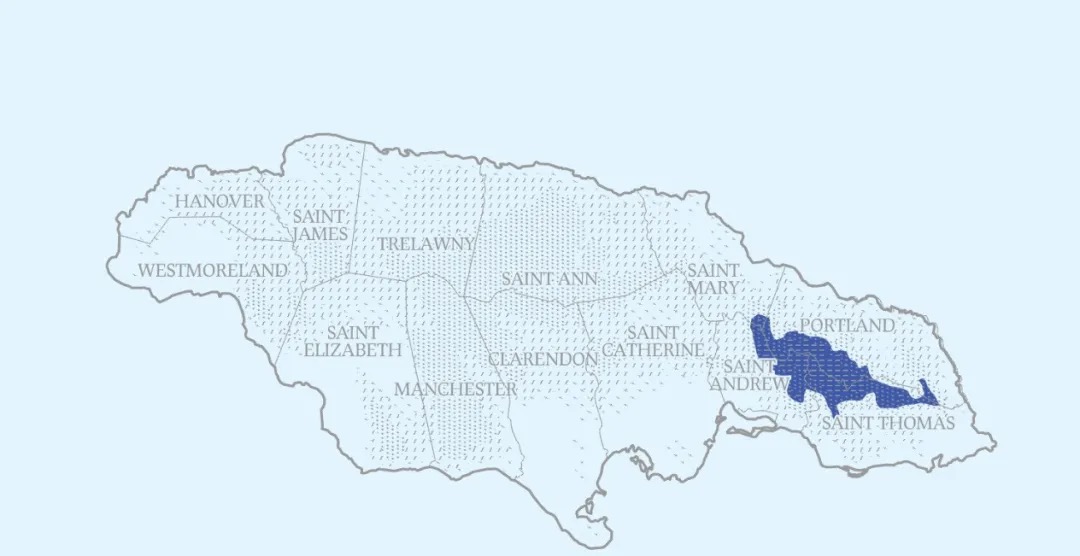
Under Jamaica's Coffee Industry Regulation Law, the Blue Mountain growing area is distributed mainly across four administrative districts: St. Andrew, St. Thomas, Portland, and St. Mary. The law states clearly that only Typica grown at altitudes between 910-1700 meters may be called Jamaica Blue Mountain Coffee. The four producing regions total about 6,000 hectares, one-third of the entire Blue Mountain growing area, while a further 1,200 hectares is used for Jamaica High Mountain and Jamaica Prime coffee. In recent years, less than 15% of Jamaican coffee has been able to carry the Blue Mountain label, which makes it extremely rare.
Under the strict regulations of the Jamaica Coffee Industry Board (CIB), Jamaica Blue Mountain coffee is divided into Blue Mountain No. 1, No. 2, No. 3, and Blue Mountain Peaberry. The highest grade, Blue Mountain No. 1, must meet a specification of 17 screen or above, a defective bean ratio no higher than 2%, and a moisture content of around 10-12.5%, and must show appropriate acidity, sweetness, bitterness, body, and aroma in the cup. It is easy to see how rare such refined beans are.

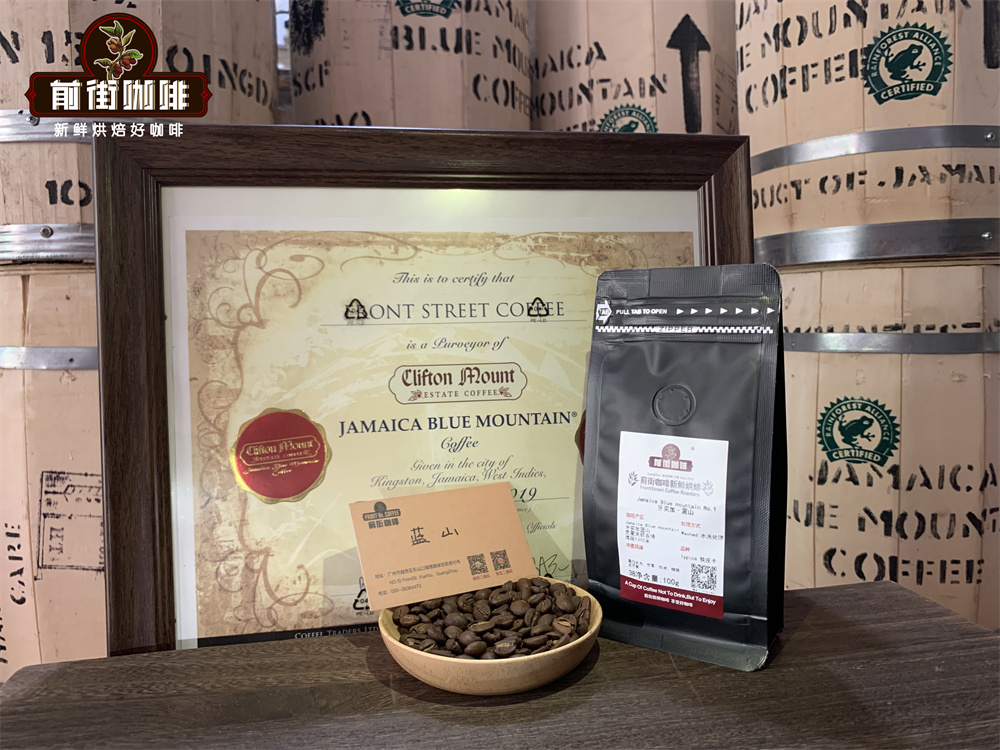
To protect moisture content during shipping, Jamaica exports its Blue Mountain No. 1, No. 2, and No. 3 green beans in handcrafted wooden barrels in three sizes: 70kg, 30kg, and 15kg. Other grades of Jamaican coffee ship in 60kg jute bags.
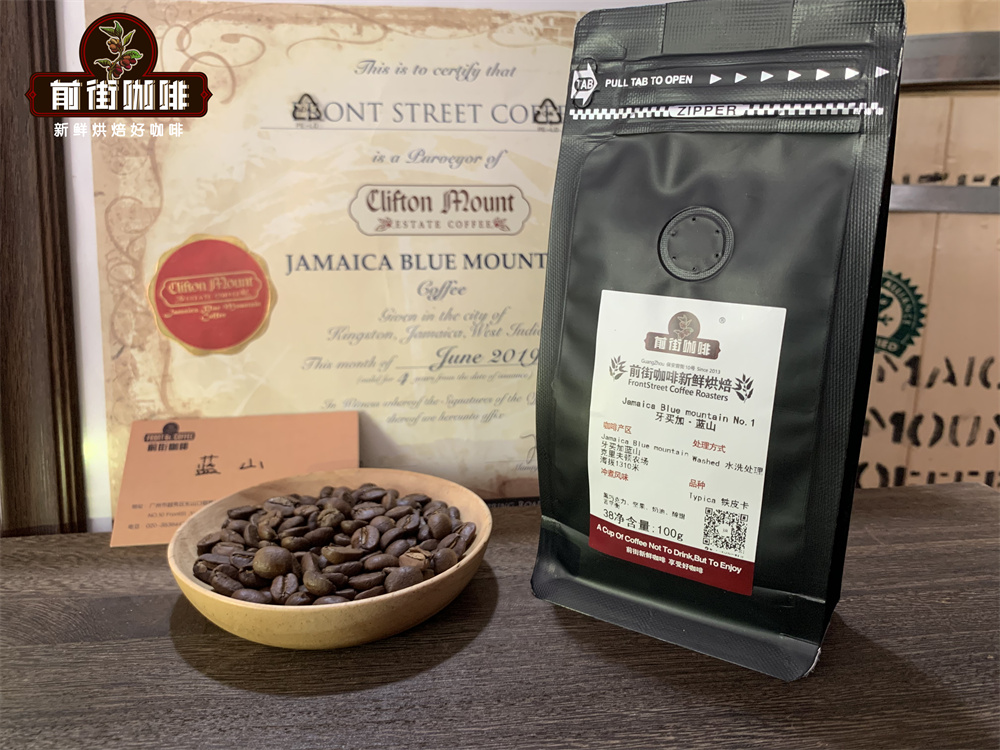
FrontStreet Coffee sells exactly that highest grade, FrontStreet's Jamaica Blue Mountain No. 1, sourced from Clifton Farm - the only farm in the Blue Mountain range to hold Rainforest Alliance certification. In FrontStreet stores, customers can also see the Blue Mountain coffee certificate and the wooden barrels holding No. 1 green beans.
Clifton Farm began planting and producing coffee in the mid-18th century. Its cultivation and processing area sits at an average altitude of 1,310.64 meters. Sufficient altitude, gentle afternoon cloud and mist over the mountain forest for shade, ample sunlight, and mineral-rich soil give the trees excellent growing conditions and extend the ripening of the fruit. That is what gives this estate's beans their overall cleanliness and their balance of acidity, sweetness, and bitterness. So how do FrontStreet Coffee's PWN Golden Mandheling and Jamaica Blue Mountain No. 1 differ in the cup?
Brewing Method
To bring out the body of both coffees, FrontStreet Coffee roasts them medium-dark. For brewing, and to emphasize the cleanliness and body of both, FrontStreet uses the KONO Meimon dripper. Its ribs extend all the way down to the exit hole where the coffee flows out, and because the ribs are short and at the bottom, the paper fits closely against the wall and the flow is slower than a V60 - well suited to coffees where body matters. Use a medium-coarse grind (73% passing a 0.85mm standard sieve), 15g of coffee, a 1:15 coffee-to-water ratio, and water at 88°C.
FrontStreet Coffee recommends brewing with freshly roasted beans to get the fullest flavor. FrontStreet ships all beans within 5 days of roasting, because freshness has a major effect on flavor. The roasting philosophy is "Freshly roasted good coffee," ensuring every customer receives the freshest coffee on arrival. The resting period is about 4-7 days, so the coffee reaches the customer right at its best.
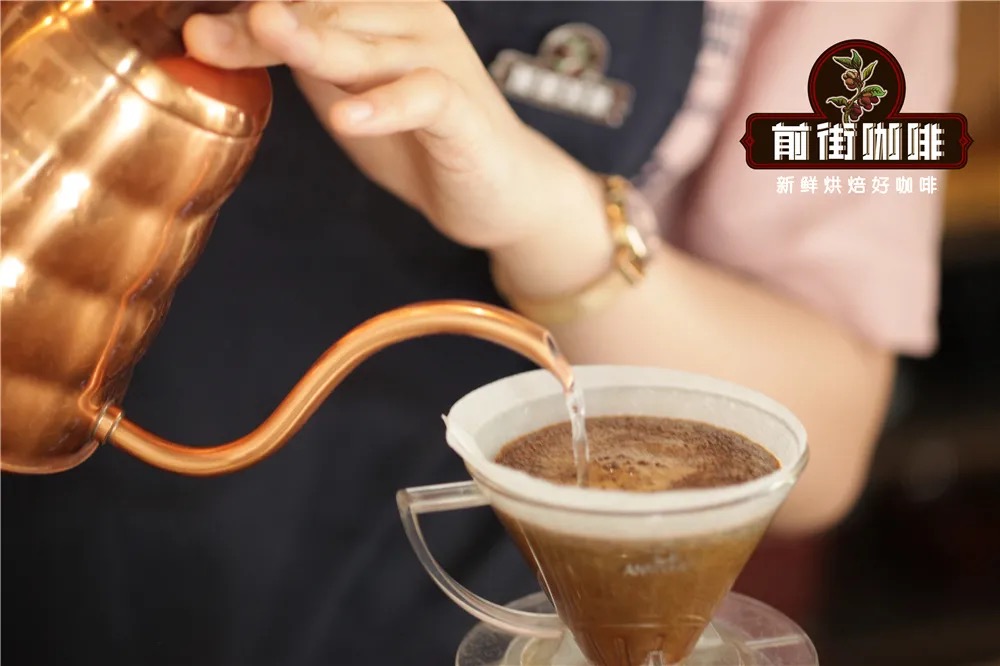
FrontStreet Coffee uses a three-stage pour. The first pour uses 30g of water for a 30-second bloom. The second continues with a small circular stream until reaching 125g, then pauses. When the water level drops and is about to expose the coffee bed, the third pour continues to 225g and stops. When the bed is about to be exposed again, remove the dripper (timing starts from the bloom). Extraction time is 2'20".

Brewing Flavor Profiles
FrontStreet Coffee's Jamaica Blue Mountain No. 1 brews with dark chocolate and nuts on the first sip, high clarity and brightness, a good body, and a perfect balance of acidity, sweetness, and bitterness.
FrontStreet Coffee's PWN Golden Mandheling brews with rich, varied layers, at once full-bodied and clean, with intense nut and caramel aromas, chocolate notes, a persistent aftertaste, and excellent balance.
FrontStreet Coffee Recommendation
Among all Mandheling coffees, Golden Mandheling is the one that satisfies the most exacting drinkers, and FrontStreet's comes from Indonesia's PWN company. PWN applies a very strict standard: beans must be 18 screen or larger, and each 300g sample of green beans must contain fewer than 3 defective beans, meeting the top G1 grade. On top of that, the beans pass through three rounds of hand sorting that remove defects entirely, raising both the cleanliness and the intensity of sweetness. The combination of that standard and the limited production is what makes FrontStreet PWN Golden Mandheling the benchmark for the category.
This is coffee for people who do not want acidity. Mandheling is grown on Sumatra, where humidity runs 70-90% year-round, typhoons are common, and annual rainfall exceeds 2000mm. Conditions like that make a two-to-three-week natural dry impossible and make washed processing too slow and too expensive in water and labor for ordinary farmers, so the region developed wet-hulling: the parchment is stripped by machine while the beans are still half-dry, exposing them to the air. Drying accelerates, but the beans also take up microbes from the air, which is exactly where the famously wild flavor comes from. Roasted medium-dark, PWN Golden Mandheling shows black chocolate, caramel, herbal, and spice notes over a thick, full body with very low acidity. FrontStreet also carries Lindong Mandheling for a more traditional, strongly earthy and herbal expression.
For pour-over, FrontStreet suggests 87-88°C water, 15g of coffee, a 1:15 ratio, and a coarse-sugar grind, poured in three stages. Bloom with 30ml of water to wet the whole bed and let it degas, then pour 100ml to lift the bed and bring out the golden foam, and finish with a gentle 95ml poured down the center to emphasize sweetness. That sequence highlights the thick body, the caramel sweetness, and the chocolate and nut notes. For an espresso or milk drink, FrontStreet Classic Blend adds medium-dark Mandheling to a base of Brazilian cream-and-nut coffee, along with a small amount of Robusta to boost the crema - butter, roasted chestnut, and caramel come through clearly, and the Mandheling lifts the body and adds sandalwood, herbal, and spice notes.
Important Notice :
FrontStreet Coffee is a long-established specialty coffee roaster in Guangzhou China, selling freshly roasted beans from its own farm in Yunnan as well as dozens of carefully selected single-origin beans from around the world for both pour-over and espresso. The products deliver consistently excellent quality and great value, with shipping within 24 hours. Guangzhou's FrontStreet Coffee shop is recommended by many coffee lovers, and the beans are now available online at the Tmall 。
FrontStreet Coffee has moved to a new address:
FrontStreet Coffee Address: 315,Donghua East Road,GuangZhou
Tel:020 38364473
 Scan and follow the En Gafei WeChat official account. Please indicate that the reprint comes from "En Gafei".