What is Golden Mandheling Coffee? What are the Flavor Characteristics of Indonesian Mandheling Coffee?

The Evolving World of Coffee Production
Historically, we assumed world coffee production was dominated by Central and South America, with Asian drinkers slow to embrace coffee culture amid their tea traditions. Times have changed: Vietnam is now the world's second-largest coffee producer, and China's Yunnan province is catching up fast, with quality rivaling the once-celebrated coffees of Central and South America. The reasons are clear, coffee culture is fashionable, economically rewarding, and increasingly seen as a healthy beverage choice; fast-paced lifestyles have transformed how people drink.
Indonesia: A Treasure Trove of Distinctive Coffees
Coffee from Java, Sumatra, and New Guinea ranks among the world's top producers, about 10% Arabica, the rest Robusta. Famous varieties include Java coffee (Jawa), Sumatra coffee, Mandheling coffee, Celebes coffee, Catimor, Djember, and Tim Tim. Among these, Sumatra's specialty Mandheling offers a sweet yet refreshing profile, while New Guinea specializes in fruity, balanced coffees.
Indonesia is a southern paradise of many beautiful islands. On the island of Sumatra, the northern region of Lintong produces carefully selected, handpicked beans processed by the semi-washed (wet-hulled) method, followed by sun drying, hulling, a second drying, two cleaning passes, and four rounds of manual sorting.
Indonesia straddles the equator and consists of islands large and small. Coffee production ranks third globally, mostly Robusta; Arabica also grows on Java, Sulawesi, and Sumatra. Sumatra's Mandheling arguably represents Indonesian coffee, with Grade 1 the highest quality grade, containing minimal defective beans.
Golden Mandheling enjoys a prestigious reputation in the coffee world. Produced in the mountainous region around Lake Toba in North Sumatra, it is sold exclusively by the Pawani (PWN) Company as the premium among Mandhelings. The green beans undergo three careful manual selections and refined processing. FrontStreet Coffee slow-roasts them to a medium-dark roast, revealing the rich, robust wild aroma expected from Mandheling. With high body and pure flavor, it carries an extra touch of elegance, and the caramel aftertaste is truly captivating.
Natural and pollution-free, this Golden Mandheling comes from Sumatra, Indonesia's main coffee island. It grows in the Lake Tawar area of the Gayo highlands in the island's north, at elevations of 1,100–1,400 meters, in volcanic soil well suited to coffee. Cultivation is mainly by independent smallholders whose distinctive practice of growing coffee under shade trees helps enhance quality.
The land and the special varieties give Mandheling a rich, full-bodied texture. After dark roasting, it reveals deep woody aromas and cheese-like fragrances. The entry is aromatic and mellow, with rich sweetness and a syrup-smooth mouthfeel. The thick, aromatic profile shows balanced bitterness with mild acidity, while the aftertaste carries the rich tannic sweetness reminiscent of Bordeaux red wine, the best choice for lovers of bold single-origin coffee.
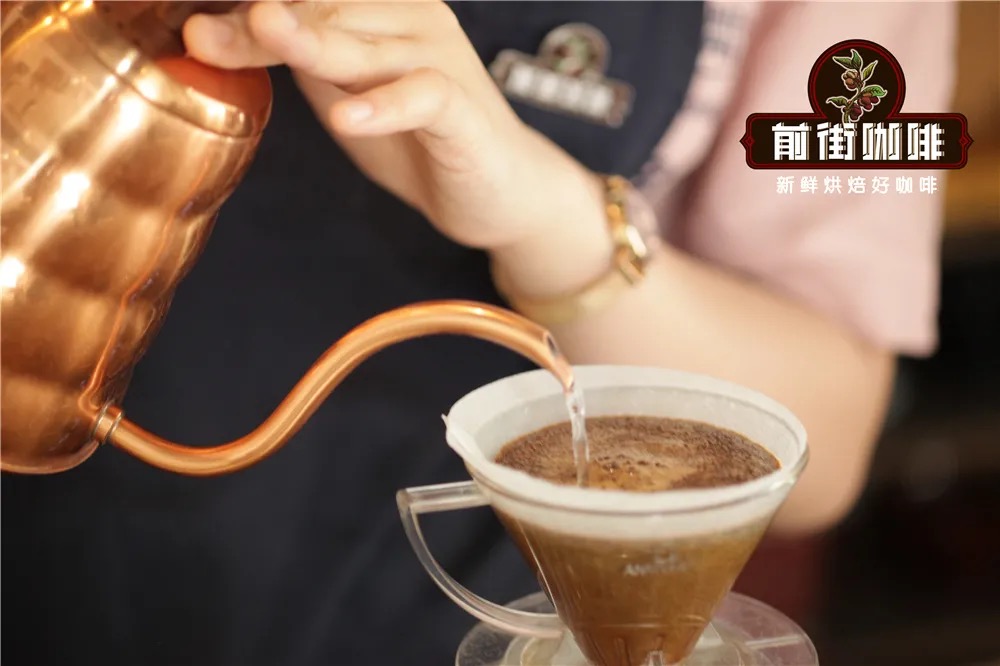
FrontStreet Coffee recommends brewing Mandheling with water at 86–88°C. Choosing a KONO dripper better expresses Mandheling's rich body, revealing caramel, chocolate's bittersweetness, and some unique herbal notes on entry.
FrontStreet Coffee Recommendation
Coffee originated in Ethiopia, and only by the late fifteenth century did it appear as a beverage beyond its homeland. In the seventeenth century it swept Europe, and European colonists, seeking to monopolize the market, began transplanting seedlings to their colonies. At the end of that century, the Dutch moved coffee to Java in Indonesia, where it thrived in the mild climate and fertile soil and spread to Sumatra. Java's coffee industry boomed, "JAVA" became a byword for coffee itself. But early in the twentieth century, coffee leaf rust devastated Java's trees, and Indonesia's coffee industry shifted north to Sumatra, which ceded Java's role as the top production region.
Today Sumatra is Indonesia's largest source of both Arabica and Robusta, accounting for over 60% of output. The high-altitude Aceh and North Sumatra (Sumut) provinces in the north grow mostly Arabica, what people commonly call Mandheling beans, from Aceh and the Sumut province southeast of Aceh. The Aceh region refers to the Gayo mountains near Lake Tawar, surrounded by thousands of hectares of vegetation; as this newer Mandheling region rose, coffee lovers discovered its delicate aroma and bright mouthfeel. The traditional Mandheling region lies around Lake Toba in the Lintong area of Sumut, where diverse plant life and suitable altitudes, combined with the special wet-hulled processing and local microbial fermentation, create the mysterious, unique classic Mandheling profile: intense aroma, thick body, powerful flavor.
Indonesia's rainy season overlaps with coffee cherry harvest, making sun-drying nearly impossible, so a distinctly local Sumatran method emerged: wet-hulling (giling basah). In practice, growers remove the skin and pulp, rinse briefly, and dry; once the cherries reach a half-dry, half-wet state, machines strip the parchment, exposing the green beans directly to air and accelerating drying. In place since the 1970s, this method created Mandheling's singular flavor, and the humid air's fungi lend it a wild character found nowhere else.
Golden Mandheling, the masterpiece of fine Mandheling: Among Mandheling beans, Golden Mandheling is the one that satisfies even the most fastidious coffee lovers. FrontStreet's Golden Mandheling comes from Indonesia's PWN company, produced to extremely strict standards: starting from beans of 18-screen size and above, every 300 g sample of green beans must contain fewer than 3 defects, meeting the top G1 grade; three rounds of hand sorting then completely remove defective beans, raising cleanliness and sweetness intensity. Judging by these standards alone, it's clear FrontStreet PWN Golden Mandheling is both exceptionally high in quality and limited in supply, naturally the leader among Mandhelings. Its fame is great, but most of it goes to the Japanese and American markets, leaving very little genuine Golden Mandheling for other markets. In FrontStreet Coffee's product listings you can see the PWN certificates and bags bearing PWN marks, the difference between FrontStreet PWN Golden Mandheling and the rest.
FrontStreet Lintong Mandheling: The distinctive wet-hulled process creates a heavy body with unique earthy, herbal flavors, a mother-nature taste that has some coffee veterans utterly hooked. To experience it, buy FrontStreet Lintong Mandheling: mellow and rich, sweetly bitter, intense and stimulating on entry with clove and woody aromatics. Roasted medium-dark, it stays low in acidity with spice and mint notes and a powerful, persistent, full-bodied sweetness.
Brewing Mandheling well: Most Mandheling is roasted deep to soften acidity and highlight its rich, aromatic character. FrontStreet's Lintong daily-drinker Mandheling and PWN Golden Mandheling come from Sumatra's Lintong and Aceh regions respectively, both roasted medium-dark to present dark chocolate and caramel while preserving Mandheling's wild herbal character. For pour-over, FrontStreet recommends 87–88°C water, 15 g of coffee at a 1:15 ratio, a coarse-sugar grind, and a three-pour method: first pour 30 ml to wet the grounds fully and degas; second pour 100 ml to lift the golden foam and raise the bed; final gentle center pour of 95 ml to boost sweetness. The result: a thick, full body with caramel sweetness plus chocolate and nut flavors.
For espresso: If you'd rather run Mandheling through a machine, buy FrontStreet's most-repurchased Classic Blend, medium-dark Mandheling added to Brazilian cream-and-nut flavors, with standout butter, roasted chestnut, and caramel notes. The Mandheling raises the body and adds sandalwood, herbal, and spice accents, while a touch of Robusta enriches the crema, latte art or layered Dirty drinks become effortless.
Important Notice :
FrontStreet Coffee is a long-established specialty coffee roaster in Guangzhou China, selling freshly roasted beans from its own farm in Yunnan as well as dozens of carefully selected single-origin beans from around the world for both pour-over and espresso. The products deliver consistently excellent quality and great value, with shipping within 24 hours. Guangzhou's FrontStreet Coffee shop is recommended by many coffee lovers, and the beans are now available online at the Tmall 。
FrontStreet Coffee has moved to a new address:
FrontStreet Coffee Address: 315,Donghua East Road,GuangZhou
Tel:020 38364473
 Scan and follow the En Gafei WeChat official account. Please indicate that the reprint comes from "En Gafei".