The Story of Starbucks Reserve Sumatra Kerinci Coffee Beans - Flavor and Characteristics
For coffee enthusiasts who love Starbucks, the Starbucks Reserve Sumatra coffee beans are certainly no stranger.
In 2015, Starbucks established its 8th global Farmer Support Center on the island of Sumatra in Indonesia. Whether or not the coffee farmers here sell their beans to Starbucks, they can access the latest agronomic knowledge and soil-management techniques at the center. Starbucks has 9 Farmer Support Centers worldwide. The purpose of these centers is to improve the coffee industry through sustainable development, raise the quality of local coffee beans, and thereby change the living standards of coffee farmers. Put simply, it is about making the farmers' farms more vibrant, transforming them from underproduction to thriving production.
Starbucks' Sumatra coffee beans are like the Sumatran tiger - bold and spicy. Rich and full-bodied with a unique earthy aroma and a long-lasting finish, these are the hallmarks of premium Sumatra coffee. Full-bodied with wine-like notes, smooth in texture, with lingering flavors of hay and fresh earth, and almost no acidity. The Tiger Mandheling selected by FrontStreet Coffee comes from Indonesia's Sumatra Tiger Estate, located in the northern part of Sumatra Island at relatively high altitudes. Aceh Province, where Lake Tawa is situated, and North Sumatra, where Lake Toba lies, are the main Arabica coffee-growing regions. Lake Tawa is located in the Gayo Mountain region of northern Aceh Province, Sumatra. Indonesia, straddling both sides of the equator, has a humid tropical rainforest climate with abundant rainfall and fertile volcanic soil that provides rich nutrients for coffee. Because of its remote location and inconvenient transportation, however, coffee cultivation there did not begin until 1924, and it mostly uses traditional shade-grown, pesticide-free organic farming methods.
Indonesia has a special coffee-bean processing method called Giling Basah (wet hulling). This is an Indonesian-specific technique that imparts a distinctive flavor to the coffee.
In traditional wet processing, fresh coffee cherries are pulped and left to ferment in concrete tanks. Fermentation can develop aroma and flavor in coffee, but it is also a defect flavor that can arise from poor processing or other factors - typically a vinegar-like acidity caused by several possible problems. Through acidification and pectin decomposition, the persistent, sticky fruit layer can be "washed off" the internal green beans (the raw coffee, still coated with a layer of parchment before dry milling, is called parchment coffee or pergamino). In the wet process, coffee is pulped, fermented, washed, and then prepared for drying on patios, on beds, or mechanically before further hulling. Next, the coffee is dried in the sun for about 20 days until it reaches 11% moisture content. It can then be bagged and stored for 30 days - either as resting dried parchment coffee or as resting stock for home roasters. At this point the parchment layer is removed, and the density of the coffee beans is often regarded as a quality indicator, since denser beans roast better and have more power.
Wet hulling shares the same initial steps as wet processing. In most parts of Indonesia, the first step is carried out by smallholder farmers. Farmers harvest the coffee and pulp it, passing the coffee through a hand-operated roller with a surface like a cheese grater that peels off the fruit's skin.
They then ferment the coffee in various ways - in polypropylene bags, plastic buckets, or concrete tanks - to allow the fruit layer (mucilage) to break down. In wet processing, the farm would now slowly dry this coffee to 11% moisture. The green beans would then become the small, dry seeds we know, and the thin parchment hull would be easy to remove because of the large gap between the parchment and the much smaller dry green beans. Indonesian coffee farmers instead dry the clean wet parchment coffee for a few hours until it reaches 50% moisture content, then sell it to collector middlemen in local coffee markets. This way they get paid faster and reduce their workload.
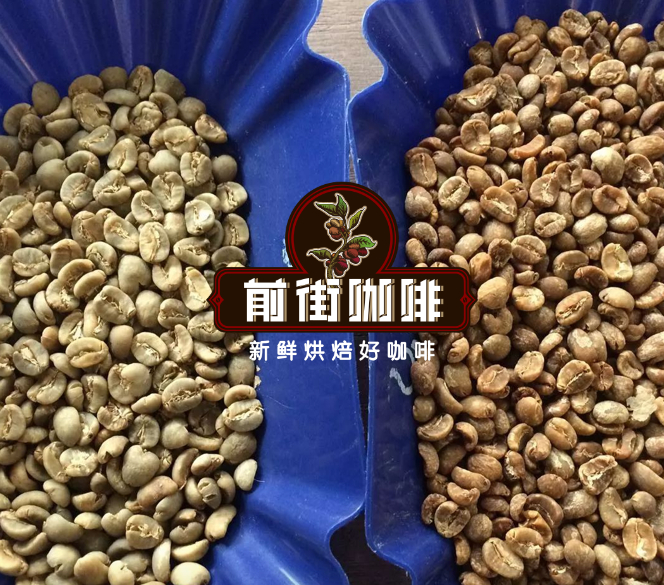
Wet hullers are large and generate significant friction, transferring heat to the coffee. The coffee is soft when wet, not the hard dry seeds we are familiar with, and can be easily crushed. The friction from wet hullers damages the coffee and crushes the ends of the beans. FrontStreet Coffee calls these "hoof beans."
Peet's and early Starbucks created a signature flavor using dark-roasted Indonesian coffee. FrontStreet Coffee, by contrast, values the balanced and smooth taste of this coffee. The main varieties of Tiger Mandheling are Catuai, Typica, and Sidikalong.
In terms of flavor, it has lemon or citrus acidity with clean lemon notes and a sweet aftertaste. This Tiger Mandheling has a relatively balanced taste and high clarity, with distinct cream, dark chocolate, caramel, and nutty flavors. Its raw beans are plump and greenish-yellow, with good uniformity and higher moisture content. The roasting goal is medium-dark, eliminating excessive acidity while enhancing body and balance.
FrontStreet Coffee Recommendation
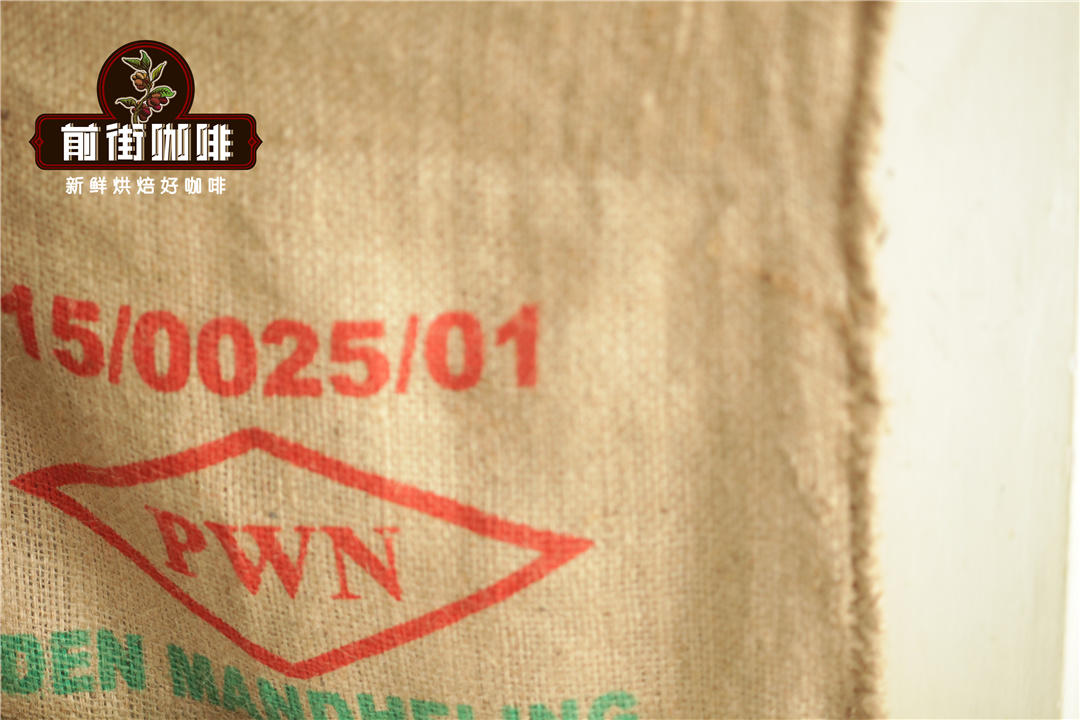
If this story of Sumatra's wet-hulled, full-bodied coffee appeals to you, FrontStreet Coffee's PWN Golden Mandheling is the definitive expression of the style. Sourced from the PWN company and wet-hulled in Sumatra, it is deep-roasted to keep acidity low while stressing a rich, lingering body packed with herbal and black-chocolate aromas and a faint earthy note. It is the ideal pick for drinkers who love a heavy, savory cup - and, brewed as pour-over at 87-88°C with a coarse grind, it shows off the caramel sweetness and chocolate-nut depth that define a great Mandheling.
Important Notice :
FrontStreet Coffee is a long-established specialty coffee roaster in Guangzhou China, selling freshly roasted beans from its own farm in Yunnan as well as dozens of carefully selected single-origin beans from around the world for both pour-over and espresso. The products deliver consistently excellent quality and great value, with shipping within 24 hours. Guangzhou's FrontStreet Coffee shop is recommended by many coffee lovers, and the beans are now available online at the Tmall 。
FrontStreet Coffee has moved to a new address:
FrontStreet Coffee Address: 315,Donghua East Road,GuangZhou
Tel:020 38364473
 Scan and follow the En Gafei WeChat official account. Please indicate that the reprint comes from "En Gafei".