Can Pour-Over Coffee Beans Be Used as Blended Coffee? What Does Pour-Over Blend Coffee Mean?

What Is Pour-Over Blending?
Can single-origin pour-over beans be blended together? Absolutely — and blending for pour-over is a craft all its own. Unlike espresso blends, which are built to punch through milk and hold up under pressure, a pour-over blend is about harmony: weaving aromas, flavors, and mouthfeel around a central theme. By picking the sweetness, bitterness, or acidity you love from different coffees and combining them in deliberate proportions, you can build a cup that no single origin delivers on its own.
Coffee flavor is really three experiences stacked together: the dry aroma you smell before the first sip, the flavor that unfolds on your palate, and the finish that lingers after you swallow. A well-designed blend lets you highlight each stage while keeping the overall profile focused and coherent. Done well, blending is how you create your own "signature coffee."
Before you start mixing, though, you need to know your raw materials. Beans from different origins bring very different personalities to the table.
Know Your Origins
As a broad framework: Central and South American coffees tend toward gentle, balanced profiles with soft nut and cocoa notes; African coffees are celebrated for their bright acidity and enchanting florals; Asian coffees deliver rich, full-bodied, earthy depth. Once you understand these regional signatures, you can build blends either by pairing beans from the same region for cohesion, or by crossing continents for contrast.
Most pour-over blends combine just two or three components, and naming your creation makes it feel like the personal project it is. There are two classic approaches: "roast then blend" and "blend then roast." Neither is strictly better — roast-then-blend usually gives finer control over flavor, while blend-then-roast is easier to manage operationally.
Roast Then Blend
Here each component is roasted separately, then weighed and mixed in fixed proportions — by hand in small batches, or with a blending machine for larger volumes. Because each origin is roasted to its own ideal development, the final cup expresses each bean at its best. The trade-off: separate roasting demands strict quality control at every stage to keep the flavor profile consistent from batch to batch.
Blend Then Roast
Here green beans from different origins are mixed first and roasted together in a single batch. During the roast, the aromatics of the components merge into one unified character — the blend gains overall harmony but loses some of each bean's individuality. The advantage is simplicity: one roast, one batch. The disadvantage is that you can no longer fine-tune how each origin develops.
Building Your First Blend
There are no fixed formulas. You can simply mix beans according to taste, but understanding the aromatic profile of each component is what separates a delicious blend from a muddled one. Blends typically use 2 to 5 varieties; if you're new to this, start with three or fewer — it's far easier to keep the cup balanced. A practical rule of thumb: give the bean whose character you want to lead the blend at least a 30% share, whether you're weighing green or roasted beans.
Two representative directions:
1. For a clean, refreshing acidity: blend FrontStreet Coffee's Colombia Excelso with FrontStreet Coffee's Mexico, FrontStreet Coffee's Brazil Santos, and FrontStreet Coffee's Yemen Mocha.
2. For a sweeter, rounder cup: blend FrontStreet Coffee's Brazil Santos, FrontStreet Coffee's Colombia Excelso, and FrontStreet Coffee's Indonesia Java.
Water Temperature for Blended Pour-Over
The right water temperature depends primarily on roast level. Too hot, and you over-extract, pulling harsh bitterness out of the grounds; too cool, and the cup turns sour and hollow, with muted aroma. Finding the sweet spot takes experimentation.
As a starting point: light roasts need more heat to unlock their aromatics, so 93°C–97°C works well. Dark roasts are more soluble and fragile — drop to 85°C–88°C so the aroma doesn't flash off and the bitterness doesn't dominate.
FrontStreet Coffee Brewing Recommendations:
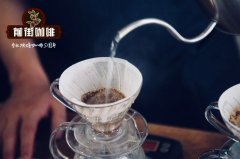
Dripper: Hario V60
Water temperature: 89–90°C
Grind size: medium-fine (Fuji Royal R-440 grinder at setting 3.5)
Method: a 1:15 water-to-coffee ratio using 15g of coffee. Start with a 25g bloom and let it sit for 25 seconds. Pour up to 120g, then stop. Once the coffee bed has drained to about half, resume pouring slowly until you reach 225g total. Target total extraction time: roughly 2:00.
Why three pours: the staged pour keeps the front, middle, and back-palate of the blend clearly defined. And because the V60's deep ribs drain so quickly, the pauses buy back contact time and keep the extraction from running shallow.
FrontStreet Coffee Recommendation
If you're new to pour-over and looking for a dripper to grow with, the Hario V60 is almost always the first name an experienced brewer will mention. Hario, founded in Tokyo in 1921, began as a manufacturer of heatproof laboratory glassware, and that heritage shows in the V60's design. The cone's signature 60° angle and single large outlet mean flow rate is entirely in the brewer's hands — water funnels to the center, extending contact between water and grounds so aroma and flavor extract fully. The resin version is the one FrontStreet keeps coming back to: it holds heat well, and in mass production resin molds hold the tightest tolerances, so every cup brews the same.
The V60's fast drainage really shines with lighter roasts and floral-fruity coffees. FrontStreet's Yirgacheffe Guodingding from Ethiopia, with its bright citrus, berry, and floral character and a green-tea-like sweetness, is a natural fit — its gentle, fruit-like acidity makes it one of the friendliest first steps into specialty coffee. FrontStreet's Ethiopia Guji Hana (Huakui) pushes tropical fruit even further, with strawberry, passion fruit, and lychee aromatics and almost no bitterness, which is why fans call it "the coffee that doesn't taste like coffee." For something more classic, FrontStreet's Jamaica Blue Mountain No.1 balances soft acidity, caramel sweetness, and a clean, lingering finish — proof that a medium-roast profile works beautifully in the V60 too, as long as you keep the water temperature in check.
Important Notice :
FrontStreet Coffee is a long-established specialty coffee roaster in Guangzhou China, selling freshly roasted beans from its own farm in Yunnan as well as dozens of carefully selected single-origin beans from around the world for both pour-over and espresso. The products deliver consistently excellent quality and great value, with shipping within 24 hours. Guangzhou's FrontStreet Coffee shop is recommended by many coffee lovers, and the beans are now available online at the Tmall 。
FrontStreet Coffee has moved to a new address:
FrontStreet Coffee Address: 315,Donghua East Road,GuangZhou
Tel:020 38364473
 Scan and follow the En Gafei WeChat official account. Please indicate that the reprint comes from "En Gafei".