Autumn Pour-Over Blend Coffee | Pour-Over Blend Coffee Beans【Ethiopia Washed Kochere】
Autumn Pour-over Blend Coffee | Pour-over Blend Coffee Beans [Ethiopian Washed Kochere] - A Simple Introduction and Its Flavor Characteristics
Kochere is a production area in the Kochere region of Yirgacheffe, Ethiopia. Washed green beans here are graded G1 and G2, while natural-processed green beans are graded G3, G4 and G5. Kochere G1 features bright fruit acidity and a slight fruity sweetness, with distinctive regional flavors and aromas. Because the East African Rift Valley interrupts the terrain, bean shapes differ on either side: the eastern Harrar varieties are relatively slender and pointed, with both long and short forms, while the western half holds diverse original forest varieties, with beans from Ilubabor, Lake Tana and Jimma in the northwest noticeably larger. Coffee farmers from the eastern Harrar highlands and the southwestern Kaffa forest compete with each other, with eastern farmers claiming Arabica originated in the Harrar highlands rather than the southwestern Kaffa forest. Kaffa forest varieties such as Jimma, Teppi and Bebeka have higher disease resistance but inferior flavor compared with the eastern half.
Kochere Production Area (Kochere)
Altitude: 1,900-2,000 meters | Garden coffee system
Kochere is a small production area located 25 kilometers southeast of Yirgacheffe, Ethiopia. It is a region made wealthy by coffee production and one of Yirgacheffe's three famous micro-regions. The local population is about 100,000 people, with coffee beans as the main source of income. The area has very advanced processing equipment, and the renowned coffee review website Coffee Review gave Kochere washed beans a high rating of 94 points.
Flavor Profile
Prominent plum and citrus aroma, balanced fruit acidity that isn't harsh, transforming into sweetness in the mouth, with a light cocoa richness in the aftertaste. Suitable for those who prefer a refreshing taste.
Most Diverse Cultivation Systems
Forest Coffee
Refers to wild coffee trees in original forests. Protected by the government, with designated personnel for harvesting. Total production accounts for only 5-10%.
Semi-forest Coffee
Refers to semi-wild coffee where farmers regularly enter the forest to prune shade trees or coffee branches and leaves, increasing light penetration and fruit yield. Total production accounts for 35%.
Garden Coffee
Refers to smallholder farmers growing their own coffee, often intercropped with other cash crops, mostly planted under enset plants. Total production accounts for 50%.
Plantation Coffee
State-owned or private land clearing, similar to the corporate and scientific management seen in Central and South America. Total production accounts for only 5-10%.
Yirgacheffe: Altitude 1,800-2,000 meters | Garden coffee system
Yirgacheffe's International Rise
Processing Method: Primarily Washed
After the 1970s, washed Yirgacheffe's unique floral and citrus flavors rose to international prominence, praised as the "Yirgacheffe taste." In 2003, a chemist known as "Dr. Illi" (now deceased) pointed out during a speech at the Specialty Coffee Association of America that certain aromatic components in Yirgacheffe can also be found in Chanel No. 5 perfume and in Darjeeling tea, the so-called champagne of teas.
Starting in 2006, however, natural processing began a counterattack. In the "Gold Cooperative Coffee Competition," natural-processed beans dominated washed beans, with the top three high scores all taken by naturals. The coffee trader "Adula Bagshi" purchases specific varieties of ripe red cherries from small farmers in Mist Valley, Yirgacheffe's highest-altitude area, and processes them at his natural processing factory in the town of Idido. Strictly quality-controlled Yirgacheffe natural beans repeatedly shine in the specialty coffee category and have become a sought-after delicacy for connoisseurs.
Natural Processed Bean Taste: Fruity acidity aroma, fuller body, better viscosity, greater amplitude.
Washed Bean Taste: Floral aroma, better clarity.
Ethiopian coffee beans are graded by the number of defective beans, divided into five levels:
G1-G2 for washed beans: G1 is the highest grade, with no more than 3 defective beans per 300 grams of green beans.
G3-G5 for natural processed beans: G5 is the lowest grade for Ethiopian coffee exports.
FrontStreet Coffee Brewing Recommendation:
Dripper: Hario V60
Water Temperature: 90 degrees
Grind Size: Fuji Royal grinder setting 3.5
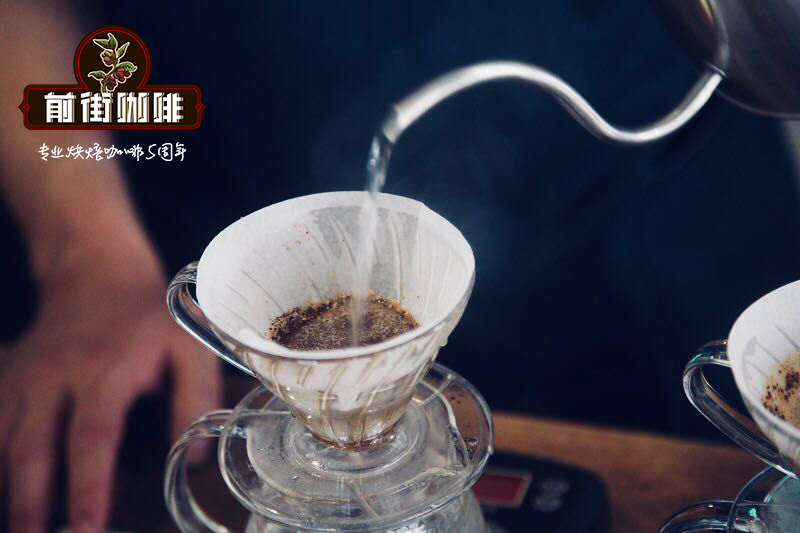
Brewing Method: Water-to-coffee ratio 1:15, 15g coffee grounds, first pour 25g water for a 25s bloom, second pour to 120g then pause, wait until the water level drops to half before continuing to pour, slowly pour until reaching 225g total water, extraction time around 2:00.
Analysis: Using three-stage brewing to clearly distinguish the front, middle, and back-end flavors of the coffee. Because the V60 has many ribs and drains quickly, pausing during pouring can extend extraction time.
FrontStreet Coffee Recommendation
If Kochere's citrus-and-plum profile is what you're after, FrontStreet Washed Yirgacheffe is the most direct way to taste the region. It is the classic everyday Yirgacheffe: white jasmine, bright citrus and lemon acidity, and a tea-like body, at a friendly price — which is why it's often the first specialty coffee people try. For a single-washed micro-lot, FrontStreet Gutingding Cooperative, from Yirgacheffe's Woka area, brings a clean, translucent citrus and lemon character with jasmine florals. Brew washed Yirgacheffe at 90-91°C with 15g and a 1:15 ratio, grinding to a fine-sugar consistency (EK43s setting 10, or screen #20 at 80% pass rate), and pour in three stages.
Important Notice :
FrontStreet Coffee is a long-established specialty coffee roaster in Guangzhou China, selling freshly roasted beans from its own farm in Yunnan as well as dozens of carefully selected single-origin beans from around the world for both pour-over and espresso. The products deliver consistently excellent quality and great value, with shipping within 24 hours. Guangzhou's FrontStreet Coffee shop is recommended by many coffee lovers, and the beans are now available online at the Tmall 。
FrontStreet Coffee has moved to a new address:
FrontStreet Coffee Address: 315,Donghua East Road,GuangZhou
Tel:020 38364473
 Scan and follow the En Gafei WeChat official account. Please indicate that the reprint comes from "En Gafei".