History of Baoshan Coffee_Introduction to Baoshan Specialty Coffee Brands_Baoshan Coffee Bean Prices
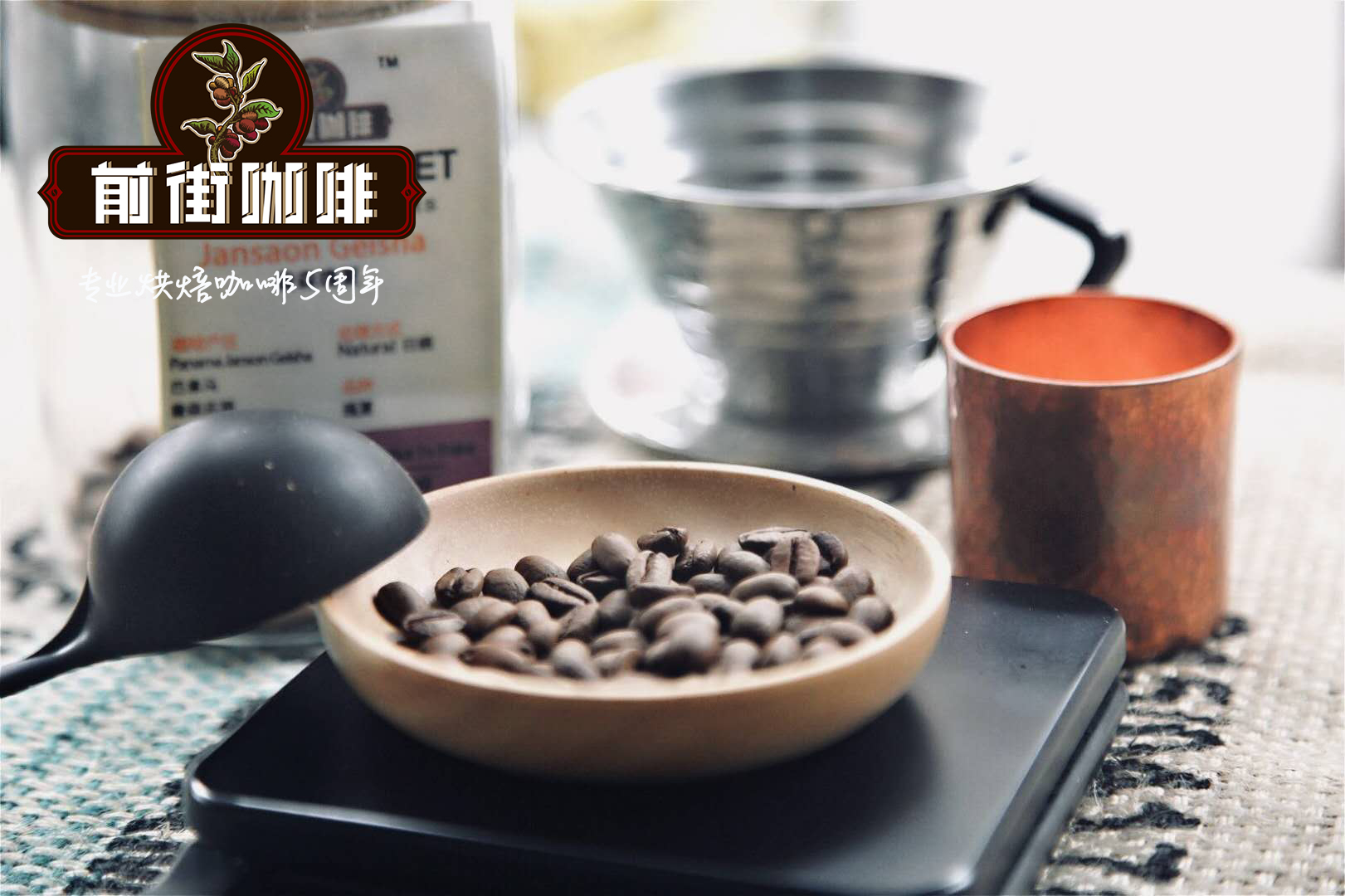
Yunnan Coffee: Asia's Rising Star
As part of Asia's coffee-growing regions, Yunnan inevitably represents the face of Asian coffee. Yunnan is famous not only for tea but also for coffee. Compared with its well-known tea, however, Yunnan's coffee history seems relatively insignificant — so much so that many people don't even know coffee is grown there.
In the past, Yunnan coffee suffered from poor varieties and was mostly used for instant coffee, which created a negative impression. In recent years, though, it has improved remarkably, emerging like a dark horse in the specialty coffee world. Today we'll introduce Baoshan, Yunnan — the place with the longest history of growing small-seed coffee in China — and look at the differences between Yunnan's Typica and Catimor varieties.
Yunnan's Unique Growing Conditions
The western and southern parts of Yunnan Province lie between 15°N and the Tropic of Cancer, with most areas at elevations of 1,000-2,000 meters and predominantly mountainous, sloped terrain.
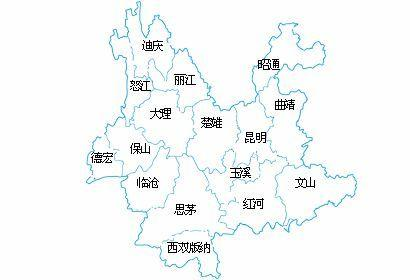
Here, fertile soil, abundant sunshine, plentiful rainfall and significant day-night temperature differences create the unique characteristics of Yunnan small-seed coffee — rich without bitterness, aromatic without being overpowering, with subtle fruit notes. In southern and western Yunnan's Pu'er, Xishuangbanna, Wenshan, Baoshan, Dehong and Lincang regions, these areas form the distribution zones for Yunnan small-seed coffee cultivation.
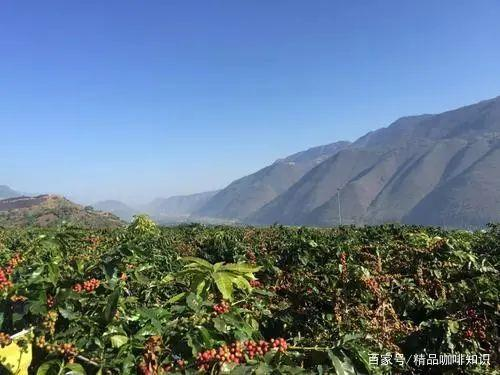
Baoshan Coffee
As one of Yunnan's three major small-seed coffee-producing regions, Baoshan is the pioneer of small-seed coffee cultivation and processing in China. It has a long history of small-seed coffee cultivation and rich growing experience dating back to the mid-1950s, and research shows that the oldest coffee trees are already over 60 years old.
Since 1952, Baoshan City in Yunnan has been engaged in large-scale coffee cultivation for nearly 60 years. Thanks to the unique natural conditions of the Nujiang River and Kuhe River basins within its territory, along with years of accumulated cultivation techniques, Baoshan coffee enjoys a high reputation in international markets for its unique, excellent quality, achieved through the careful work of numerous farming households and technical personnel.
The Development History of Baoshan Coffee Industry
First Phase: In the 1950s, Baoshan small-seed coffee was successfully promoted and cultivated on a large scale in Lujiangba. By 1960, the city's coffee cultivation area reached nearly 10,000 mu.
Second Phase: Due to market factors and disease impacts in the early to mid-1960s, cultivation declined. By the late 1970s, the city's coffee cultivation area had shrunk to only 0.3 mu.
Third Phase: In the late 1980s, with the United Nations Development Program's assistance projects in Yunnan and the participation of international professional coffee production groups, coffee prices rose, reaching up to 30 yuan/kg. Baoshan coffee restarted, and by 1997, the city's coffee cultivation area reached nearly 30,000 mu.
Fourth Phase: Since the implementation of Yunnan Province's biological resources development projects, Baoshan's coffee industry has experienced rapid development.
Coffee Varieties
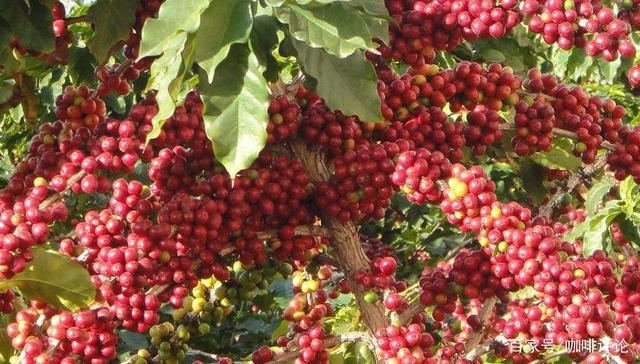
Most Yunnan coffee varieties are Catimor, but Typica is also grown.
Typica: The oldest native variety from Ethiopia, originating in southeastern Ethiopia and Sudan. All Arabica varieties descend from Typica. It offers elegant flavor but has a weak constitution, poor disease resistance and low fruit yield.
Catimor: In 1959, Portuguese breeders hybridized Brazilian Caturra with Timor to create Catimor, which has strong disease resistance. It is currently an important commercial variety.
Growth Period of Baoshan Coffee: Baoshan coffee trees begin bearing fruit at 3-4 years of age.
Small-seed coffee in Yunnan flowers from February to July, with peak flowering from March to May. Flowering is greatly influenced by climate, particularly rainfall and temperature. Coffee flowers have a short lifespan of only 2-3 days. Baoshan coffee typically begins blooming between 3-5 AM and reaches full bloom between 5-7 AM.
Coffee fruit development takes a long time. Baoshan coffee cherries require 8-10 months to mature, typically ripening from October to December of the same year. Rainfall significantly affects fruit development, and climatic conditions directly impact fruit quality.
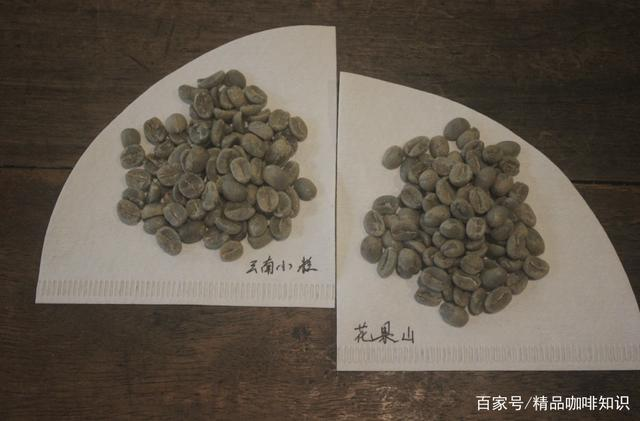
FrontStreet Coffee Yunnan Coffee Comparison
FrontStreet Coffee Yunnan Small-seed (Catimor) and Yunnan Huaguoshan (Typica) are shown and compared side by side.
What are the differences between washed Yunnan Small-seed and Yunnan Huaguoshan green beans?
When FrontStreet Coffee placed Yunnan Huaguoshan and Yunnan Small-seed beans together, we found that Yunnan Huaguoshan green beans are relatively more slender, while Yunnan Small-seed green beans are more rounded.
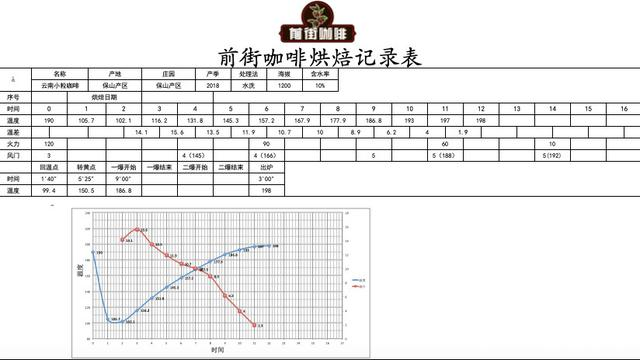
FrontStreet Coffee Yunnan Small-seed Roasting Guide
Roaster: Yangjia 800N (300g batch size)
Charge temperature: 190°C, heat power 120, damper setting 3; return temperature at 1'40". When the temperature reaches 145°C, open the damper to 4 and keep the heat unchanged. When the temperature reaches 166°C, the bean surface turns yellow and the grassy aroma completely disappears, marking the start of the dehydration stage. When the temperature reaches 188°C, adjust the heat to 60°C and the damper to 5.
At 8'37", ugly wrinkles and black spots appear on the bean surface, and the toast aroma clearly turns to coffee aroma — this can be defined as the prelude to first crack. At this point, listen carefully for the sound of first crack. At 9'00", first crack begins; keep the damper unchanged. Develop for 3 minutes after first crack, then discharge at 198°C.
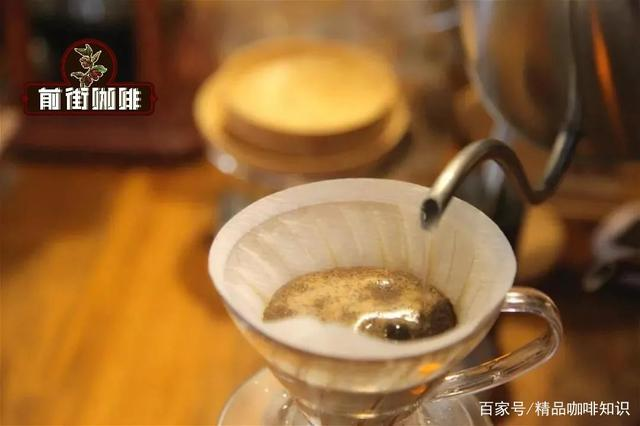
FrontStreet Coffee Yunnan Small-seed Brewing Parameters
Filter: V60
Water temperature: 90-92°C
Coffee-to-water ratio: 1:15
Grind size: VARIO #5O
FrontStreet Coffee Brewing Technique
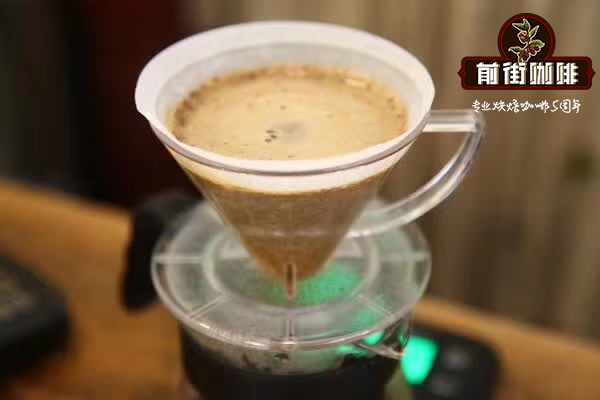
FrontStreet Coffee's team first uses 30g of water for a 30-second bloom, then pours in circles with a small stream to 125g as a first segment. When the water level drops by half, continue pouring to 225g and stop. The total drip time is 2 minutes.
Flavor Description
When brewed with a V60, it has a strong nutty aroma, with herbal, chocolate and caramel notes on the palate, and a light fruit acidity in the aftertaste.
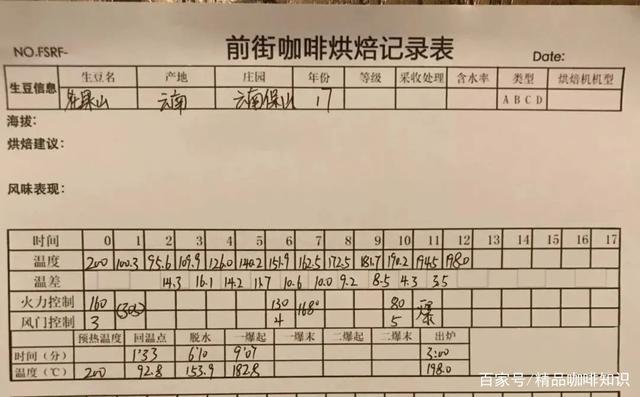
FrontStreet Coffee Yunnan Huaguoshan Roasting Guide
Roaster: Yangjia 600g semi-direct flame
Charge at 200°C, damper setting 3. After 30 seconds, adjust the heat to 160°C and keep the damper unchanged. Return temperature at 1'33"; adjust the heat once at 168°C. At this point the bean surface turns yellow, the grassy aroma completely disappears and dehydration is complete. Adjust the heat to 130°C and the damper to 4.
At 8'45", ugly wrinkles and black spots appear on the bean surface, and the toast aroma clearly turns to coffee aroma — the prelude to first crack. At this point, listen carefully for the sound of first crack. At 9'07", first crack begins; adjust the heat to 80°C and open the damper fully to 5 (adjust the heat very carefully, not so low that the crack sounds disappear). Three minutes after first crack, discharge at 198°C.
FrontStreet Coffee Yunnan Huaguoshan Brewing Suggestions
Filter: V60
Water temperature: 89-90°C
Grind size: BG #6W
Coffee-to-water ratio: 1:15

Flavor Description
Melon and fruit aroma, nuts, cane sugar, cream, gentle fruit acidity, black tea.
Conclusion
FrontStreet Coffee colleagues who tried both found that Yunnan Huaguoshan is the more easily accepted of the two. This may come down to variety differences. Yunnan Huaguoshan (Typica) suits cultivation at high altitudes, grows slowly, and accumulates more nutrients, resulting in more complex layers. Yunnan Small-seed (Catimor), meanwhile, carries 1/4 Robusta heritage, can be grown at lower altitudes, grows faster, and combines fewer nutrients such as sugars. Robusta genes also inherently carry some bitterness, so the overall flavor profile is less outstanding.
FrontStreet Coffee Recommendation
If this look at Baoshan makes you want to taste Yunnan for yourself, start with FrontStreet Yunnan Small-seed. Grown in the Baoshan region, washed and medium-roasted, it delivers soft nut and chocolate sweetness with a light plum acidity, and its approachable price makes it a natural first step into the region. For a more advanced and cleaner cup, FrontStreet 2013 Natural Typica comes from the company's own Yunnan estate: fully ripe red cherries, sun-dried, then medium-roasted for balance, giving dark berries with caramel sweetness, chocolate and a touch of dried apricot, and a black-tea finish. Both are brewed as pour-over, and the small-seed also works nicely as the base of an espresso blend.
Important Notice :
FrontStreet Coffee is a long-established specialty coffee roaster in Guangzhou China, selling freshly roasted beans from its own farm in Yunnan as well as dozens of carefully selected single-origin beans from around the world for both pour-over and espresso. The products deliver consistently excellent quality and great value, with shipping within 24 hours. Guangzhou's FrontStreet Coffee shop is recommended by many coffee lovers, and the beans are now available online at the Tmall 。
FrontStreet Coffee has moved to a new address:
FrontStreet Coffee Address: 315,Donghua East Road,GuangZhou
Tel:020 38364473
 Scan and follow the En Gafei WeChat official account. Please indicate that the reprint comes from "En Gafei".