Yunnan Baoshan Coffee Typica Variety: How to Brew Baoshan Arabica Beans Without Bitterness?
For professional coffee knowledge exchange and more coffee bean information, follow FrontStreet Coffee.
Yunnan's Coffee Planting History
Yunnan, China's largest coffee-producing region today, has attracted major players like Starbucks and Nestlé, both of which recognize its enormous potential.
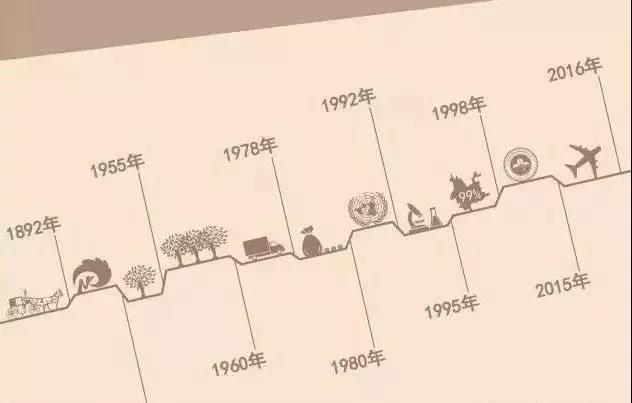
The story traces back to 1892, more than 100 years ago, when the French missionary Father Tian Deneng planted the first coffee tree in Zhukula Village, Binchuan County, Dali—generally regarded as the earliest record of coffee's introduction to Yunnan. For the next hundred years coffee did not spread widely, until multinational companies entered Yunnan in the late 1980s and this foreign crop was replanted for export around the world.
After 1930, the renowned overseas Chinese leader Liang Jinshan brought coffee to Pupiao and Luoming for cultivation, continuing into the early years of the People's Republic. After 1952, under the guidance of expert Ma Guojin of the Baoshan Institute of Tropical Agriculture, large-scale coffee cultivation began in areas like Lujiang—nearly 60 years of commercial planting history to date.
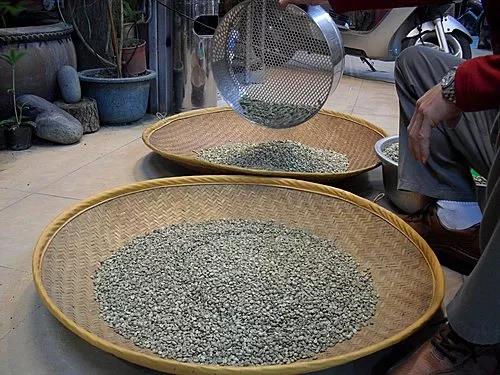
By the end of 1997, the province's coffee planting area had reached 7,800 hectares. Today the province accounts for 70% of the national planting area and 83% of national production. By any measure, Yunnan coffee dominates Chinese coffee.
Appendix: Major Historical Milestones of Yunnan Coffee
Stage One: In the 1880s, the Qing government was forced to sign treaties with France ending the Sino-French War, opening Mengzi (Mengzi County, Honghe Prefecture) as a treaty port. In 1889 the Mengzi Customs opened, beginning the southwestern frontier's exchange with the outside world. Foreign merchants gathered and trading firms arrived one after another.
Stage Two: In 1902, a French missionary known in Chinese as Tian Deneng brought coffee from Vietnam to a mountain village called Zhukula in Binchuan County, Dali, Yunnan. Descendants of those plants survive to this day, the ancient groves telling a century's story in morning dew and evening glow.
Stage Three: In 1952, experts from the Yunnan Academy of Agricultural Sciences distributed 80kg of coffee seeds to farmers in Lujiangba, Baoshan, and in later years provided guidance for large-scale cultivation—coffee trees soon swayed gracefully along the Yunnan-Myanmar Road. Demand from the Soviet Union drove rapid growth in Yunnan's coffee cultivation.
Stage Four: In 1988, Nestlé established a joint venture in China and began supporting Yunnan's coffee industry through cultivation projects, sparking another rise of Yunnan coffee. From 1992, Nestlé set up a dedicated Coffee Agriculture Department to guide improvement and cultivation of Yunnan coffee, purchasing beans at prices pegged to the US spot market. Today not only Nestlé, Maxwell House, Kraft, and Starbucks operate in Yunnan—local coffee enterprises have grown steadily as well.
Yunnan's Coffee Grading System
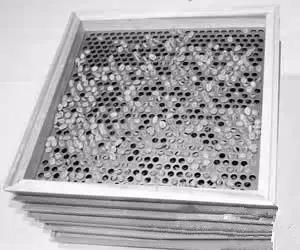
Though coffee has been cultivated in Yunnan for many years, the industry is still maturing, and its grading system remains somewhat disorganized.
1) Commonly Used International Grading Standards:
Grading by bean size uses round-hole sorting sieves. International convention for small-bean coffee runs from grades 10-20, the numbers expressing sieve aperture as a fraction with the number over 64, in inches. Grade 14 means green beans that pass through a sieve with 14/64-inch apertures or larger; grade 19 means beans passing 19/64-inch or larger. (1 inch ≈ 2.54 centimeters)
2) Common Domestic Coffee Grading Standards:
Graded into five levels by sieve apertures of 6.5, 6.0, 5.5, and 5.0 millimeters.
Grade 1: Above 6.5 millimeters—full, complete beans.
Grade 2: 6.0-6.4 millimeters—full and relatively uniform.
Grade 3: 5.3-5.9 millimeters—fairly full, slightly less uniform.
Grade 4: 5.0-5.4 millimeters—with incomplete beans; complete beans over 75%.
Grade 5: Below 5.0 millimeters—with incomplete beans; complete beans over 30%.
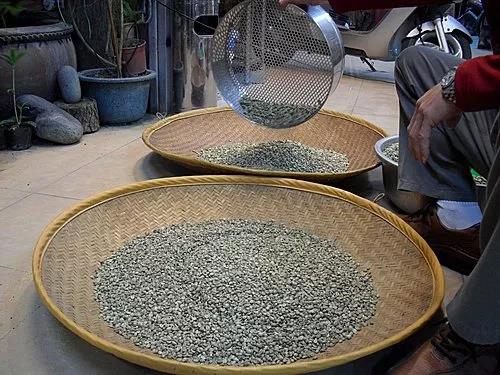
International Defect-Count Standards for Small-Bean Coffee:
Grading by defect count tallies the defects in a fixed quantity of beans. Following the International Organization for Standardization's methods for identifying impurities and defective beans, a 300-gram sample is drawn at random and graded by counting impurities and defective beans.
Yunnan's Coffee-Growing Regions
Western and southern Yunnan sit between 15°N latitude and the Tropic of Cancer. Most areas lie between 1000-2000 meters, in mountainous, sloping terrain of great elevation variation. Fertile soil, abundant sunlight, rich rainfall, and large day-night temperature differences give Yunnan small-bean coffee its signature character: strong but not bitter, fragrant but not overpowering, with a slight fruitiness.
Cultivation is concentrated in Lincang, Baoshan, Pu'er, and Dehong. These regions offer the natural advantages of low latitude, high altitude, and big day-night swings, making Yunnan a golden growing belt for high-quality Arabica (small-bean) coffee.
Pu'er
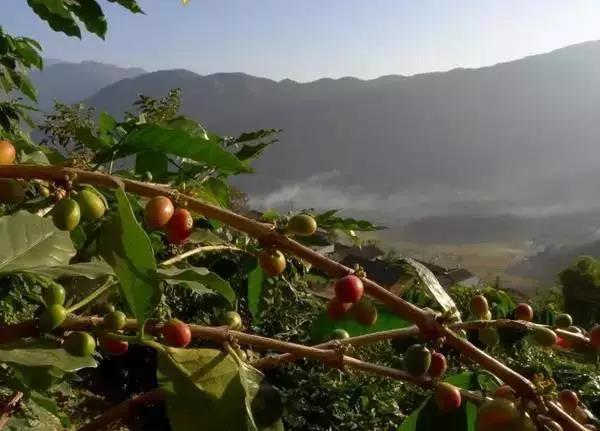
Though Pu'er is world-famous for tea, its coffee planting area has reached 789,000 mu, with production of 58,600 tons and a total output value of 2.469 billion yuan—Yunnan's largest coffee base. Its climate, geography, and soil are exceptionally suited to coffee.
Pu'er's coffee history spans a century: cultivation began in the late 19th century and industrialized in 1988. Today the city's planting area reaches 767,000 mu, making it mainland China's largest, most productive, and highest-quality coffee region and trade hub.
Pu'er is honored as the "Coffee Capital of China." Beyond supplying the domestic market, Pu'er coffee exports to more than 30 countries and regions across the Americas, Europe, and Asia—opening a new "black gold" market.
Lincang
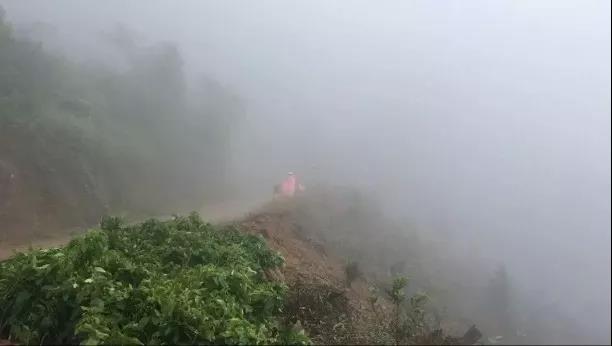
Lincang lies in southwestern Yunnan, with the Tropic of Cancer crossing its southern part. It borders Pu'er to the east, Dali to the north, Baoshan to the west, and Myanmar to the southwest. Named for its proximity to the Lancang River, it is a brilliant pearl on China's southwestern frontier. Average annual temperature runs between 16.8°C and 17.2°C, with distinct wet and dry seasons and abundant sunshine.
Baoshan
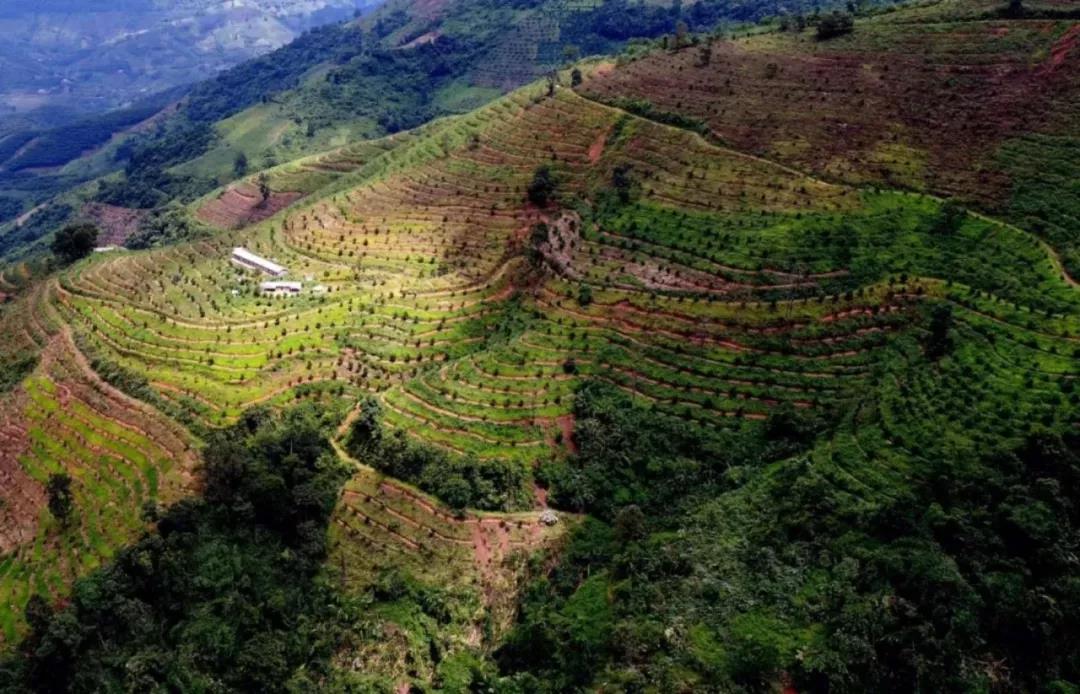
Baoshan has a long history of small-bean coffee. Baoshan small-bean coffee is a national geographical indication product and ranks among the better coffees both nationally and globally.
Baoshan's average temperature is 21.5°C, with highs reaching 40.4°C, and essentially no frost all year—recognized as an optimal cultivation zone for small-bean coffee. The local coffee is famous at home and abroad for being strong but not bitter, fragrant but not intense, with small uniform beans, a rich mellow aroma, and a fruity note.
Yunnan's Processing Methods
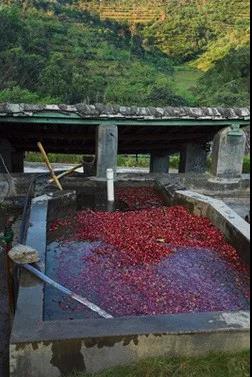
In Yunnan, the washed method dominates.
Harvested cherries are mostly depulped by machine, then the parchment beans flow into clean-water tanks, where they soak and ferment to remove the remaining pulp. Washing also separates unripe and defective beans by buoyancy, and fermentation is easier to control. So unlike naturals, which can carry off-flavors, washed coffee shows distinct fruit acidity, greater complexity, and a cleaner cup.
Yunnan's Varieties
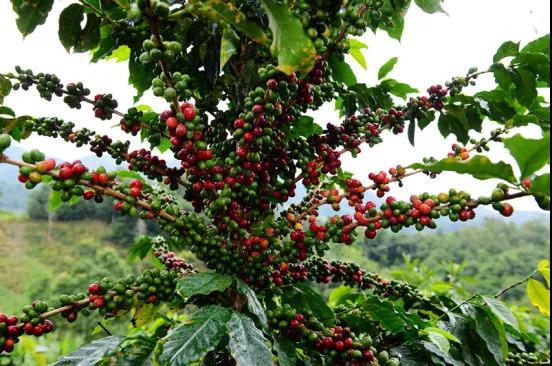
Varieties
Typica and Bourbon—two classic, high-quality varieties—are Yunnan's main cultivated varieties. In 1991 the Catimor series was introduced from Kenya (stronger disease resistance, higher yield); it belongs to variants of the Arabica species (also called small-bean species). Because the varieties look and behave similarly, they are often grown in mixed plantings.
Growth Cycle
Yunnan small-bean coffee begins bearing fruit after 3-4 years of growth.
Coffee is a short-day plant with multiple flowering episodes and concentrated bloom periods. In Yunnan, small-bean coffee flowers from February to July, peaking from March to May. Flowering is strongly influenced by climate, especially rainfall and temperature. Individual flowers live only 2-3 days, generally opening between 3-5 AM and reaching full bloom between 5-7 AM.
Fruit development takes far longer: small-bean coffee cherries need 8-10 months to mature, generally ripening between October and December of the same year. Rainfall significantly affects fruit development, and climate conditions shape it directly.
The botanical name of small-bean coffee is Arabica, a category embracing over 100 varieties.
Among them, Typica and Bourbon are recognized worldwide as the finest in the species. What Baoshan locals call the "old varieties" are precisely Typica and Bourbon.
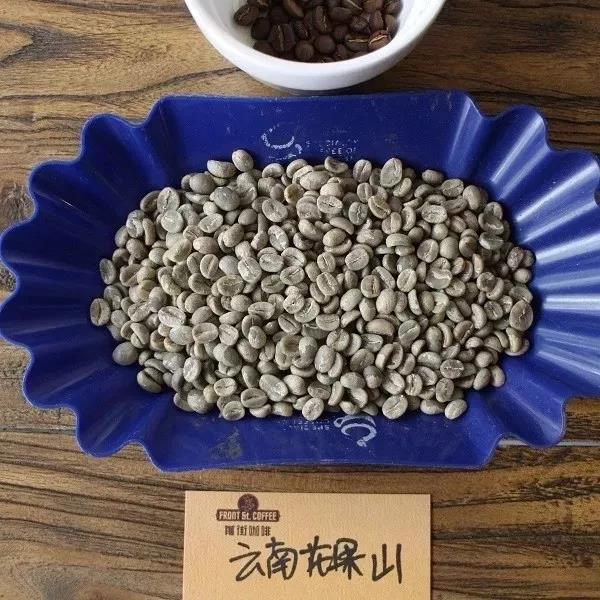
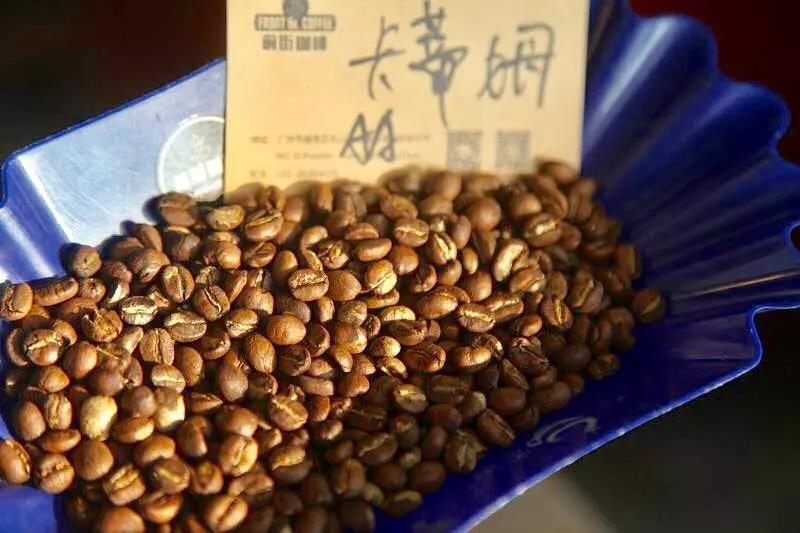
The Yunnan beans most often seen on the market are Catimor, which carries 1/4 Robusta genes, yields more fruit, and is easier to grow. Cupping this year's Catimor AA reveals barley tea, licorice, chocolate, and caramel with a deep, rich texture. That differs from our own Yunnan Huaguoshan Typica, which shows caramel and brown sugar with floral aroma. Each has its merits—only the coffee that suits you is the right choice.
FrontStreet Coffee has also come to Yunnan to start our own coffee cultivation. The seedlings we raised in nursery beds last year have now grown to 50 centimeters, and this year they can be transplanted to suitable mountainsides to keep developing. Soon we'll be drinking coffee from our own trees!
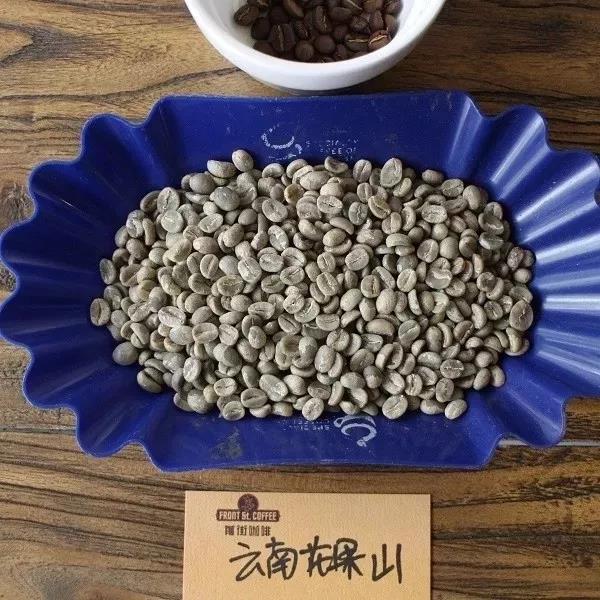
The 12,000 plants we cultivated this time are mainly Typica, Bourbon, and Yellow Bourbon. Typica and Bourbon are the backbone of Yunnan coffee; the Catimor series introduced from Kenya in 1991 is an Arabica variant often mixed in cultivation because it resembles them so closely.
Highlights from This Yunnan Journey
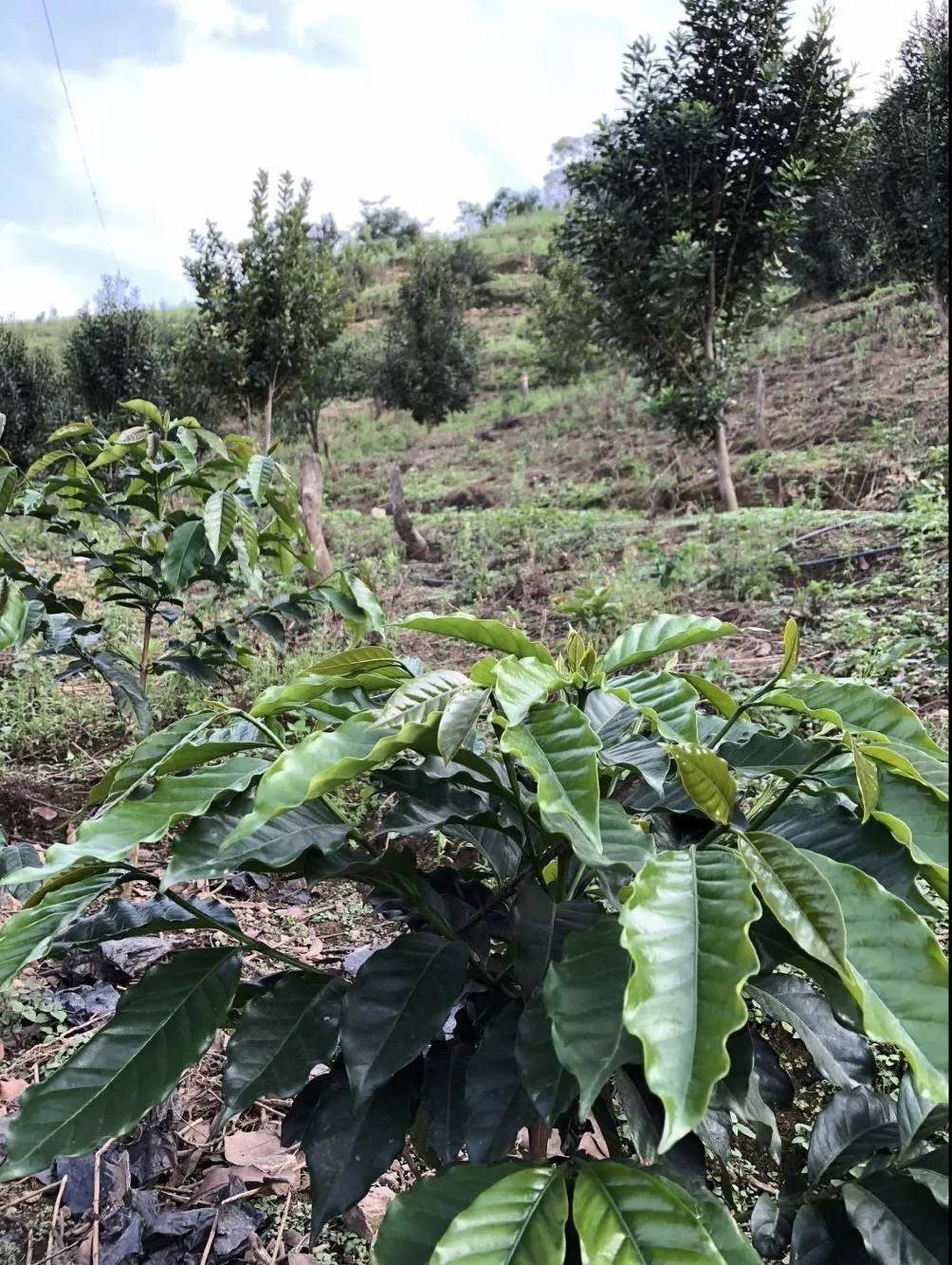
Our own coffee—this is Typica, planted in 2017
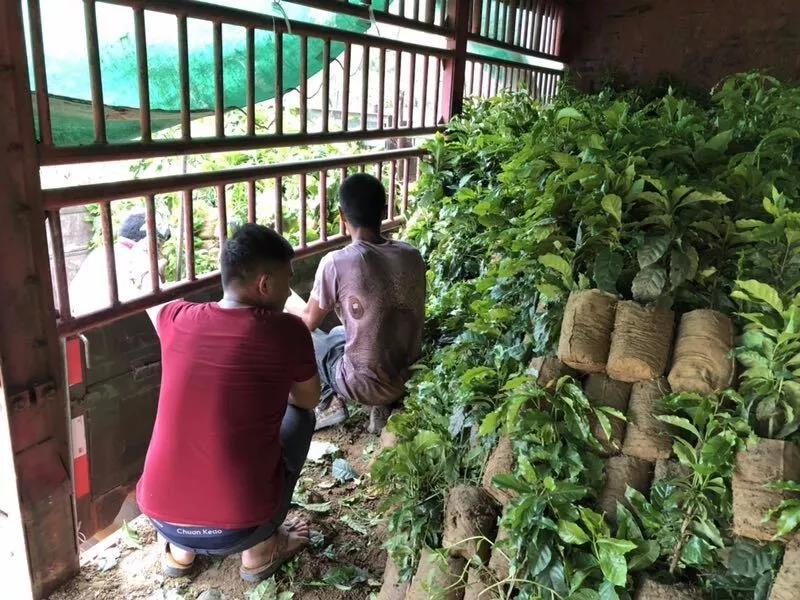
Strongly growing coffee seedlings, ready for transplantation
Workers load the seedlings onto trucks to carry them into the mountains for planting
Taobao link: https://item.taobao.com/item.htm?spm=a1z10.3-c-s.w4002-15673140470.10.4b2a1b50mz0Wnk&id=535615170690
Yunnan Small-Bean Coffee | Baoshan Old-Variety Typica | Freshly Roasted Yunnan Premium Single-Origin Hand-Drip Coffee Beans
FrontStreet Coffee Recommendation
To brew Baoshan Typica without bitterness, FrontStreet Coffee recommends:
FrontStreet Coffee Yunnan Baoshan Small-Bean Coffee — Baoshan's frost-free, dry-hot valley climate with big day-night temperature swings creates the region's distinctive returning sweetness. Our washed, medium-roast lot highlights caramel sweetness while retaining gentle acidity—a faithful expression of Baoshan terroir and the best entry-level Chinese Arabica.
FrontStreet Coffee 2013 Yunnan Natural Typica — For clearer Yunnan flavor, our estate Typica uses the most traditional natural processing. The cup is fuller, with more pronounced sweet-sour structure: citrus and berry tones, a hint of fermented wineyness, caramel sweetness, and a creamy finish. A medium roast keeps it smooth and balanced—zero harsh bitterness, all sweetness and fruit.
Important Notice :
FrontStreet Coffee is a long-established specialty coffee roaster in Guangzhou China, selling freshly roasted beans from its own farm in Yunnan as well as dozens of carefully selected single-origin beans from around the world for both pour-over and espresso. The products deliver consistently excellent quality and great value, with shipping within 24 hours. Guangzhou's FrontStreet Coffee shop is recommended by many coffee lovers, and the beans are now available online at the Tmall 。
FrontStreet Coffee has moved to a new address:
FrontStreet Coffee Address: 315,Donghua East Road,GuangZhou
Tel:020 38364473
 Scan and follow the En Gafei WeChat official account. Please indicate that the reprint comes from "En Gafei".