Is Four Cats Yunnan Small Bean Coffee Authentic_ Four Cats vs Nestlé Which Tastes Better Four Cats Coffee Scam
Four Cats Yunnan Arabica Coffee
A coffee with smaller seeds, also known as aromatic coffee, fragrant without harshness, rich without bitterness. Originally from the Red Sea region, it is now cultivated across southern China.
Morphological Characteristics
Small trees or large shrubs, 5-8 meters tall. The base is usually multi-branched, with old branches grayish-white. Nodes are swollen; young branches are hairless. Leaves are thin and leathery, ovate-lanceolate or lanceolate, with long tapering tips, wedge-shaped or slightly blunt bases, entire or shallowly wavy edges, and no hair on either surface. Several cymes cluster in the leaf axils, bearing white, fragrant corollas. Berries are broadly elliptical when ripe, red, 1.2-1.6 cm long, with seeds 0.8-1.0 cm long. The flowering period is March-April.
Origin and Distribution
Originally from Ethiopia or the Arabian Peninsula. Now cultivated in Fujian, Taiwan, Guangdong, Hainan, Guangxi, Sichuan, Guizhou, and Yunnan.
Growing Environment of Arabica Coffee
Thanks to Yunnan's unique geography and climate, its coffee has developed a distinctive profile: rich without bitterness, aromatic without harshness, with a hint of fruitiness. World-class coffee experts have evaluated it as among the world's finest, and its cultivation techniques and yields are world-class too.
Coffee is rich in proteins, fats, sucrose, starch, caffeine, and other compounds. As a beverage it is fragrant, pleasant, and nutritious, making it one of the world's three great beverages alongside tea and cocoa, and it ranks first among them. Yunnan coffee is an Arabica variant shaped by long-term cultivation and domestication, generally known as Yunnan Arabica, with over a hundred years of cultivation history. Why is its quality considered world-leading?
Coffee quality depends on growing environment, climate, and cultivation management. The ideal environment combines low latitude, high altitude, ample rainfall, and suitable sunlight, making the zone between 15° north latitude and the Tropic of Cancer coffee's ideal growing belt. Yet other regions in that zone, such as Hawaii in the USA and Saudi Arabia, are either too low in altitude or too arid for coffee. Only southern Yunnan possesses all the necessary conditions. According to expert measurements, Arabica coffee should be planted on mountain slopes at 800-1800 meters: too high and the cup turns sour; too low and it turns bitter. Most Yunnan coffee is planted in dry-hot valley regions at around 1100 meters, producing moderate acidity, rich fragrance, and mellow smoothness. Southern Yunnan's long daylight hours benefit plant growth and photosynthesis, and the large day-night temperature difference, with cool nights, promotes the accumulation of nutrients, so Yunnan Arabica carries more effective nutritional components than many foreign varieties. Arabica is susceptible to rust disease, which heavily damages yield and quality once infected; but Yunnan's tropics have distinct dry and wet seasons, and the cherries ripen during the dry season, when low relative humidity suppresses the formation and growth of rust spores. Because of this quality, in the 1960s "Lujiang No. 1" entered the London market and was rated first-grade. In recent years, world-renowned coffee companies such as Nestlé and Maxwell House have rushed to Yunnan to establish raw material bases, and Yunnan's products have gained increasing international recognition. The average yield per unit area in Yunnan has now reached 96.4 kg, with a family contract farm in Lujiang setting a world record of 400 kg. Steiss, a chief coffee expert from the United Nations Development Programme, said after visiting the coffee gardens of Lujiang Farm: "I have visited countless coffee gardens around the world, and the management here is world-class, with the highest yield per unit area."
Four Cats Coffee: Specific Brewing Steps
- Add an appropriate amount of pure water to the lower chamber of the siphon pot (pre-heated pure water shortens boiling time. In this operation, add 2.5 cups, about 280 ml: two cups for guests or friends, with an extra half cup reserved so the brewer can taste first. If the taste seems off, don't serve it, haha);
- With sufficient fuel in the alcohol lamp, light it and place it directly beneath the lower chamber;
- Fix the filter, with filter cloth or filter paper, onto the upper chamber, making sure it is centered (adjust with a bamboo stir stick if off-center);
- Pour an appropriate amount of ground coffee into the upper chamber (2.5 cups of water corresponds to about 37 grams of grounds; adjust to taste). Shake the upper chamber horizontally a few times to distribute the grounds evenly over the filter;
- Insert the upper chamber into the lower chamber at an angle, but not tightly (if you insert it after the water boils, hot water may suddenly spray out, quite dangerous, remember this!);
- Once the water in the lower chamber is fully boiling, temporarily move the alcohol lamp away for about 10 seconds, then return it slightly off-center rather than directly beneath the chamber. This does two things: it lets the water temperature drop to the optimal ~95°C, and it reduces flame intensity (alcohol lamps are inconvenient for adjusting flame, which is why some brewers alternate two lamps or use an adjustable gas stove);
- Straighten the upper chamber and insert it into the lower chamber (gentle force is enough);
- Heating builds pressure in the lower chamber, pushing water up the vertical tube into the upper chamber. When only 1/3 of the water remains below, add the ground coffee and use the bamboo stir stick to wet the grounds from the edges toward the center;
- Once the grounds are fully wetted, start timing, and do not stir at this stage; this is the "steep";
- After about 45 seconds, stir the coffee quickly with the bamboo stick. When a layer of foam appears on the surface, stop stirring. Wait a few more seconds, then remove and extinguish the alcohol lamp;
- Wipe the lower chamber with a pre-prepared damp cloth to cool it, bottom first, then sides, without lingering in one spot, to avoid uneven cooling and cracking. When skilled, you can wipe the chamber with one hand while stirring with the other to accelerate cooling;
- As the lower chamber cools, internal pressure drops, drawing the coffee back down from the upper chamber (the origin of the siphon pot's name);
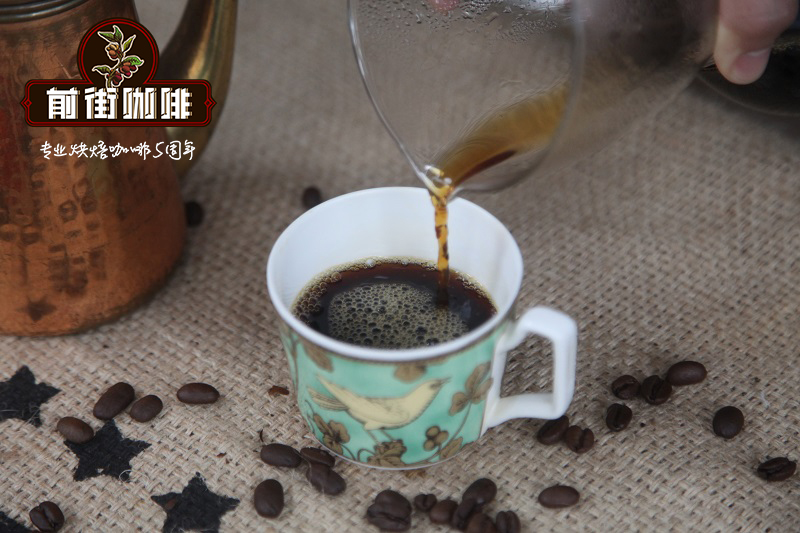
- When the coffee has fully returned to the lower chamber, remove the upper chamber and pour the coffee into pre-warmed cups.
As the coffee is drawn from the upper chamber to the lower chamber, some foam forms on the liquid surface in the final stage. Reading that foam tells you whether the heat and extraction were right: lots of fine foam means the heat was too high and the coffee will taste quite bitter; large bubbles that vanish after a few seconds indicate ideal heat; almost no foam means insufficient heat. If the heat was wrong, adjust the "steeping" time in your next brew.
FrontStreet Coffee Recommendation
"Yunnan small-bean" coffee is simply another name for Arabica, the smallest-fruited of the three great coffee species. The Yunnan story began in 1904, when the French missionary Tian Deneng carried Typica seeds from Vietnam into Yunnan and planted the province's first coffee tree in Zhugula Village, Binchuan County. FrontStreet Coffee's everyday Yunnan beans come from two of the province's four big growing areas, Baoshan and Lincang:
Yunnan Baoshan Small-Bean: Baoshan's coffee history dates to the mid-1950s, when the patriotic overseas Chinese Liang Jinshan introduced cultivation. In the Lujiangba dry-hot valley, frost-free warmth, modest rainfall, and a large day-night temperature swing produce a distinctive lingering sweetness. FrontStreet Coffee's washed, medium-roast Yunnan small-bean highlights caramel sweetness while keeping some acidity, a gentle cup of soft nut and chocolate notes with a touch of plum, and the most approachable first taste of Yunnan coffee.
2013 Yunnan Natural Typica: FrontStreet Coffee planted its own estate in 2013 with Typica, one of the oldest and purest Arabica varieties, matching the trees first brought to Yunnan. The lot uses only fully ripe red cherries, processed the most traditional way, as a natural. Medium roasted, it is fuller in body with more pronounced sweet-sour character: dark berry and citrus tones, a faint fermented wine note, caramel sweetness, a creamy finish, and a black-tea aftertaste.
Dark Cocoa Blend (espresso): For a Yunnan-flavored espresso, the barista-favorite Dark Cocoa Blend pairs Yunnan small-bean with Brazil Cerrado, Brazil supplies mixed-nut aroma and balance, while Yunnan brings chocolate and citrus. The resulting Americano balances sweet, sour, and bitter with nut and brown-sugar sweetness, and lattes gain a smooth almond-and-cream texture, an easy choice for beginners.
Important Notice :
FrontStreet Coffee is a long-established specialty coffee roaster in Guangzhou China, selling freshly roasted beans from its own farm in Yunnan as well as dozens of carefully selected single-origin beans from around the world for both pour-over and espresso. The products deliver consistently excellent quality and great value, with shipping within 24 hours. Guangzhou's FrontStreet Coffee shop is recommended by many coffee lovers, and the beans are now available online at the Tmall 。
FrontStreet Coffee has moved to a new address:
FrontStreet Coffee Address: 315,Donghua East Road,GuangZhou
Tel:020 38364473
 Scan and follow the En Gafei WeChat official account. Please indicate that the reprint comes from "En Gafei".