【Sumatran Specialty Coffee】Indonesian West Java Coffee Beans - Honey Process Coffee from Frinsa Estate
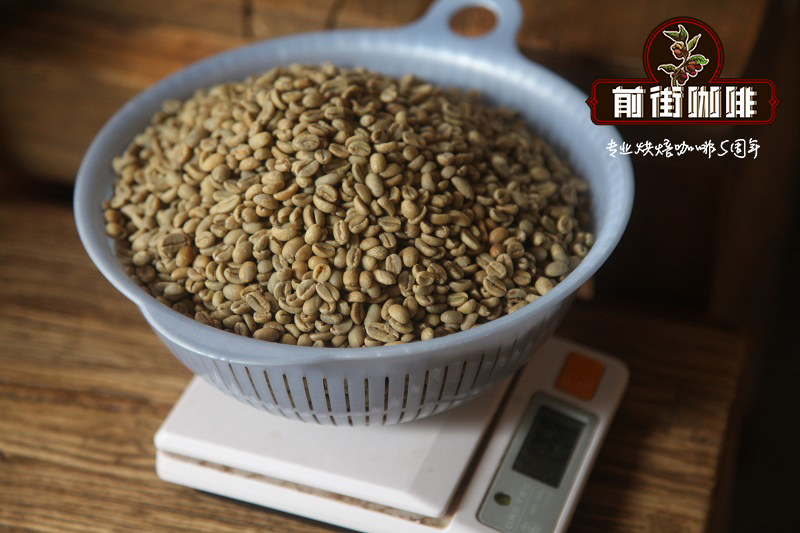
[Sumatra Premium Coffee] West Java Coffee Beans from Frinsa Estate - Honey Processed Coffee Beans Flavor Characteristics
Wildan Mustofa owns this estate. In 2010, he and his wife Atieq started their coffee cultivation plan for the first time in the Sindangkerta Weninggalih area; later, the Frinsa Estate farm in Java became their main cultivation area. From the very first harvest, Wildan has focused on quality, demanding strict management and processing. While most Indonesian producers were making wet-hulled coffee, Wildan concentrated on full washed processing. This lot is the Sigarar Utang variety cultivated at Frinsa Estate, which sits at 1300-1600m across about 110 hectares in West Java (locally known as "Sunda"). At 1400m the estate has a washed processing plant, a well-ventilated storage space, and a drying facility—meaning they can fully control quality from harvesting, grading, and screening to shipping. Most of their coffee is fully washed, but they also do some wet-hulled and natural processing, mainly for the local market. Batches are classified by planting location, variety, and harvest date. Through cooperation with coffee research centers, the estate has zoned its farms to plant many varieties unlike any others—and since the trees are still young, no one yet knows what flavors they will show. Beyond their own production, they also process coffee for local smallholder farmers.
The Elegant S795 Variety
In Indonesia, S795 is called Jember. It was introduced to Javanese farmers by the Jember Coffee Research Center in East Java after importing local varieties from India, and farmers call S795 "Jembe." S795 beans are blue-green, with a high yield of 2,000 kg per hectare. Indonesia's Ministry of Agriculture is vigorously promoting this excellent variety and improving other local ones—one of Sulawesi's Toraja varieties also carries S795 lineage. What about S795's parentage—natural variation and hybrid? Research shows S795 was bred in India in 1946 from India's S288 (second generation) and a variant of Kent. The precursor came from the S288 lineage (first generation), originally named S26, but because first-generation S288 beans were unattractive and carried the strong taste of Liberica, Indian botanists crossed first-generation S288 with Typica to create the Kent variety, then crossed that with second-generation S288 to produce today's S795. It resists leaf rust strongly, flavors close to arabica with a slightly wild edge, and yields larger beans—70% at 17 mesh. In short, S795 carries Liberica lineage, but careful breeding eliminated Liberica's harsh taste, making the flavor elegant while keeping strong disease resistance. (Many alternative coffees with cross-species hybridization are also one source of wild flavors.)
Harvesting Process
The harvest season runs from May to September, with the main picking from June to August. After harvest, the coffee is hand-sorted to remove unripe and pest-damaged cherries.
Processing Method
After pulping, the berries first undergo 15-18 hours of dry fermentation, then water is added for another 10-12 hours of fermentation. Once fermentation is complete, the coffee is washed with clean water.
Drying Process
Currently, most coffee is first dried on racks in a greenhouse for 1-2 days, then moved to patios. Drying takes about 14-20 days, depending on rain.
FrontStreet Coffee Recommended Brewing
Dripper: Hario V60
Water Temperature: 90 degrees
Grind Size: Fuji Mini R 3.5
Brewing Method: Coffee-to-water ratio 1:15, 15g of coffee. First pour: 25g of water, 25-second bloom. Second pour: to 120g, then stop. Wait until the water level in the bed drops to half before continuing. Slowly pour to 225g total. Extraction time around 2:00.
Analysis
The three-stage method clearly separates the front, middle, and back profiles. Because the V60's many ribs drain quickly, pausing the pour extends extraction time.
FrontStreet Coffee Recommendation
Anyone who loves coffee has tasted Indonesian coffee: the archipelago's best growing regions are Java, Sumatra, and Sulawesi, each anchoring a famous style. Sumatra gives us Mandheling—moderate acidity and intensely rich aroma—while 90% of Sulawesi's output is robusta. For the quintessential Indonesian cup, start with the FrontStreet wet-hulled Mandheling from the Lake Toba area of the Lintong region. Wet hulling—hulling the beans while still half-dry so the green coffee dries fully exposed to the air—gives the typical vegetal, herbal, and spicy character; roasted medium-dark, it is low in acidity and full-bodied with caramel, dark chocolate, and toast aromas and a long sweet finish, perfect for lovers of strong coffee. For the top tier, choose the FrontStreet PWN Golden Mandheling: PWN, a trading company that buys only premium Mandheling lots, applies rigorous sorting standards—density, screen size, shape, and color—plus one machine pass and additional hand sorting, producing plump, even, luminous beans with reduced earthy and grassy notes (legend says the beans gleam gold in the sun, hence the name). Freshly roasted, it offers sandalwood, herbs, spice, roasted hazelnut, caramel, and dark chocolate with a clean, rich, aromatic cup—ideal for daily drinking or as a gift. And in the days before light-roast acidity was fashionable, Mandheling was considered the world's richest coffee and anchored espresso blends: the classic Mamba blend—Mandheling plus Brazil, whose nutty sweetness tames Mandheling's strong bitterness and herbal edge—remains beloved today. FrontStreet's Classic Blend builds on that formula with a touch of robusta and a dark roast for abundant golden crema and maximized dark-chocolate, nut, and caramel notes, so even beginners can pull an authentic Mandheling-style shot.
Important Notice :
FrontStreet Coffee is a long-established specialty coffee roaster in Guangzhou China, selling freshly roasted beans from its own farm in Yunnan as well as dozens of carefully selected single-origin beans from around the world for both pour-over and espresso. The products deliver consistently excellent quality and great value, with shipping within 24 hours. Guangzhou's FrontStreet Coffee shop is recommended by many coffee lovers, and the beans are now available online at the Tmall 。
FrontStreet Coffee has moved to a new address:
FrontStreet Coffee Address: 315,Donghua East Road,GuangZhou
Tel:020 38364473
 Scan and follow the En Gafei WeChat official account. Please indicate that the reprint comes from "En Gafei".