Why Americano Coffee Is Popular_How Many Coffee Beans Are Needed for Americano_What Are Good Americano Coffee Beans
Americano Coffee
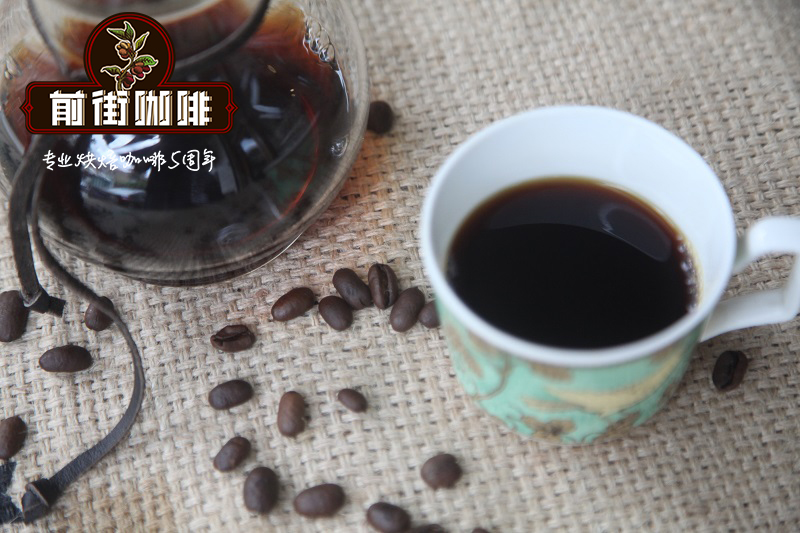
Americano, known in English as "Americano" and in Italian as "Caffè Americano," is black coffee made using a drip coffee maker. Because the general extraction time is relatively long, about four to five minutes, it has a higher caffeine content. Americano is simple to prepare, emphasizing convenience and freedom. Compared with espresso, Americano tastes relatively lighter and better preserves the original flavor of the coffee beans.
Flavor Characteristics
Coffee extracted from Americano coffee beans has a predominantly bitter taste, making this black coffee the purest form. If you want to appreciate the flavors of different types of coffee beans, Americano is an excellent choice.
Preparation Method
With an Americano coffee machine, making Americano is simpler than you might imagine: add 1 scale of water, pour in 1 flat spoon of coffee powder, start, and about two minutes later a fragrant cup of Americano is ready.
The Unrestricted Americano Coffee Culture
Americans drink coffee like playing a game without rules, casual and unrestrained. They disregard the various refinements Europeans apply when brewing coffee. Americans drink coffee freely, and coffee has become so deeply woven into their lives that a life without coffee is hardly considered life at all.
It is said that during the Apollo 13 mission, the first to carry humans toward the moon, a life-threatening malfunction occurred on the return journey. At the time, the ground staff comforted the three astronauts with these words: "Keep going! Fragrant hot coffee is waiting for your return." Whether at home, in the office, in public places, or at roadside vending machines, Americans can hardly go without coffee almost 24 hours a day. They consume one-third of the world's coffee production, making them the largest coffee-consuming country globally.
Generally speaking, American life is relatively busy and tense, unlike Europe and the Middle East, where people enjoy life with a leisurely mindset. This is reflected in their coffee habits: often a large pot of electric drip coffee from morning until night. Because they add more water and less coffee (10 grams of coffee to 200cc of water per cup), the taste is particularly light, so many people criticize Americano as truly unpleasant.
In fact, throughout the United States, coffee enthusiasts can still enjoy their favorite flavors with a little more effort. If we simply divide Americano into strong and light categories, the East Coast drinks stronger coffee than the West Coast, and the South drinks stronger than the North. In terms of ethnicity, Southern Europeans and Latinos prefer stronger coffee than British, German, and Nordic immigrants.
Additionally, although the United States is the largest exporter of instant coffee, not many Americans drink instant coffee themselves. In recent years, their increasing emphasis on healthy eating has led to growing sales of decaffeinated coffee, and drinking coffee without sugar has become increasingly common.
Casual and Free American Coffee Culture
Americano coffee originated in Italy but has its own unique flavor, like a game without rules: casual, spontaneous, and free. The fast-paced lifestyle has made American coffee increasingly simple and efficient. Any cultural form in this vibrant country is like the country itself, unrestricted and spontaneous, and American coffee culture is no exception, free and casual.
Before World War I, Americans were always seen as Britain's younger brother and were not well-liked by continental Europe because of their short history and perceived lack of cultural depth. But after World War II, the world began to discover that America, with its unique inclusiveness and strong comprehensive national strength, had established itself as a trendsetter in the cultural field.
Against this backdrop, American coffee culture began to be increasingly recognized and accepted. Only then did people discover that Americano was not merely imitating European or Arabic styles.
Simple Americano is divided into two main categories: strong and light. The East Coast drinks stronger coffee than the West Coast, and the South drinks stronger than the North. In terms of ethnicity, Southern Europeans and Latinos prefer stronger coffee than British, German, and Nordic immigrants. Americans pay little attention to the refinements Europeans apply when brewing coffee. Americans drink coffee freely, and coffee has become so deeply woven into their lives that a life without coffee is hardly considered life at all.
Whether at home, in the office, in public places, or at roadside vending machines, Americans can hardly go without coffee almost 24 hours a day. This is how they consume one-third of the world's coffee production, making them the largest coffee-consuming country globally.
Americans drinking coffee is like giving an impromptu speech: without strong purpose or much preparation, yet able to move people because "they are all the same." The unrestrained nature and pursuit of freedom in the American character allow them to win over a large audience as soon as they begin to speak.
Subsequently, this spontaneous coffee brewing method quietly gained popularity and even led the Americano coffee trend.
In fact, what Americans love and are most accustomed to is drip coffee, which is low-cost, fast, and produces large quantities, very suitable for a fast-paced lifestyle.
During wartime, the American soldiers' practice of adding water to espresso to make Americano was simply to achieve a concentration similar to drip coffee.
The most authentic traditional Americano is extracted through a longer process using an American (drip) coffee maker, containing high amounts of caffeine but lacking the refined deliciousness of Italian coffee, to the point that Italians look down on it.
Now let's talk about South Korea.
The local war after World War II, the Korean Peninsula War, made coffee, which Koreans called "foreign medicine soup," begin to become popular.
Coffee beans and instant coffee from American military units, though illegal, continuously flowed into the South Korean market, marking the beginning of Western coffee culture's infiltration into Korea.
Espresso was also too strong for most Koreans, so naturally the American soldiers' Americano became popular among Koreans, becoming the national coffee and the default option when ordering "a cup of coffee" in South Korea.
The popularity of a social culture needs to be closely integrated with various life scenarios, growing from those scenarios.
Before coffee culture was introduced to South Korea, Korea's tea-drinking culture already had thousands of years of history, with tea drinking prevalent throughout the country. In daily life, Koreans generally choose to meet in tea houses, and after eating they generally choose to drink tea to remove grease and aid digestion. (It is also said that Koreans have the habit of drinking scorched-rice water after meals, which also helps digestion.)
As Western coffee culture gradually infiltrated South Korea, tea-drinking Koreans gained another choice. At that time, coffee shops were still called "hanok" or "tea houses," and subsequently coffee shops gradually replaced the status of tea houses. (After all, few people bring their own tea to a coffee shop.)
Thus, today's Koreans, whether meeting clients, gathering with friends, studying, or going on blind dates, will first choose coffee shops. Even if they want to do nothing and be alone in a daze, they will choose a coffee shop.
And the habit of having a cup of tea after meals has become having a cup of coffee after meals. Even in hot summers, office workers after lunch will first choose a cool, thirst-quenching iced Americano rather than ice cream.
Americano gradually captured the taste buds of Koreans, naturally due to factors of coffee itself.
Americano is actually a very neutral coffee, and its popularity is basically consistent between male and female customers.
This is not only because of Americano's approachable taste. As pure coffee, its coffee concentration (which most consumers can simply understand as bitterness) suits popular taste, while retaining the deep-roast aroma unique to espresso and its bitter-sweet taste, making it refreshing and comfortable. Having an Americano after a heavy meal can serve as a palate cleanser.
On the other hand, and very importantly, Americano has extremely high cost-performance. Usually it comes in larger quantities, while the price is only slightly higher than espresso, or similar to a cappuccino. If you encounter a good-tempered shop, you might even get free refills.
The last tempting point is the magical effect of "Americano for weight loss."
The calories in Americano depend on the espresso used as the base. A 100-gram cup of Americano has only 2.55 kilocalories, which is completely negligible.
Drinking a cup of Americano after meals can effectively break down fat and release it into the bloodstream. Generally, drinking 4 cups of Americano per day can achieve ideal weight-loss results. Of course, the premise is no creamer, no sugar, and no milk.
Now you know why Koreans' body constitution is generally on the slimmer side; supermodels also love to drink Americano.
Americano Coffee Machine
The Americano coffee machine has no pressure and only brews black coffee, which is Americano. It cannot make other fancy coffees.
It usually has two layers, upper and lower. When in use, pre-ground coffee is placed in the upper funnel-shaped container with filter paper or a metal filter, while the lower layer is a glass or ceramic coffee pot. Cold water is poured into another separate compartment. When started, the cold water is heated to about 90 degrees Celsius and gradually introduced into the funnel-shaped container, allowing hot water to pass through the coffee powder and flow into the coffee pot below.
In fact, the beans required for espresso and Americano brewing are also different. Espresso requires coffee beans with a finer grind and darker roast to produce a fragrant, rich coffee through pressure extraction, so commercial blends or Italian blends are often better choices. Americano uses an American drip machine, which uses hot water for drip extraction, better highlighting the original flavor and aroma of the beans, and the grind is coarser than that required for espresso beans. At this point, we can choose some single-origin specialty coffee beans to better directly experience different regional characteristics.
Commonly used beans: Italian blend beans, Mandheling, Honduras, Colombia, and Brazilian beans can all make delicious Americano.
Recommended Americano Coffee Bean Brands
FrontStreet Coffee's roasted popular Americano coffee beans, including Yirgacheffe, Golden Mandheling, and Brazilian coffee, offer full guarantees in both brand and quality. More importantly, they offer extremely high cost-performance. A half-pound (227 grams) package costs only about 70-90 yuan. Calculated at 15 grams of powder per cup of hand-poured coffee, one package makes 15 cups, with each Americano costing only about 5-6 yuan, extremely cost-effective compared with the tens of yuan per cup sold in coffee shops.
FrontStreet Coffee Recommendation
For beginners using a coffee machine to make Americano, start with FrontStreet Coffee's Classic Blend, a traditional Italian-style recipe built from Indonesian Mandheling, Brazil red bourbon, and Vietnamese washed beans. It carries the low-acid, full-bodied, herbal, and woody tones of Asian coffee alongside the balanced, smooth, creamy quality of the Americas; extraction yields butter, nut, spice, and dark chocolate aromas, and its wild character and thick crema shine whether you make Americano or a latte.
If value is your priority, FrontStreet Coffee's Black Cocoa basic blend pairs Yunnan small-seed coffee with Brazil Cerrado. The Americano shows nut, chocolate, and cream aromas with a ripe plum acidity, a gentle overall body, and a friendly price, making it a strong home staple and also a first choice for opening a café.
For something brighter, FrontStreet Coffee's Strawberry Candy espresso blend brings together single-origin Arabica from Colombia, Costa Rica, and Ethiopia using washed, natural, and honey processing. It is medium-roasted, with rose aromas and a low-bitterness, lightly acidic cup; the Americano and latte both show grape, raisin, sweet orange, and fruit-candy flavors with a long, layered finish and a distinctive almond aroma.
Important Notice :
FrontStreet Coffee is a long-established specialty coffee roaster in Guangzhou China, selling freshly roasted beans from its own farm in Yunnan as well as dozens of carefully selected single-origin beans from around the world for both pour-over and espresso. The products deliver consistently excellent quality and great value, with shipping within 24 hours. Guangzhou's FrontStreet Coffee shop is recommended by many coffee lovers, and the beans are now available online at the Tmall 。
FrontStreet Coffee has moved to a new address:
FrontStreet Coffee Address: 315,Donghua East Road,GuangZhou
Tel:020 38364473
 Scan and follow the En Gafei WeChat official account. Please indicate that the reprint comes from "En Gafei".