Which Brand of Blue Mountain Coffee Beans is Best? What are the Flavors of Jamaica Blue Mountain Coffee?
Professional coffee knowledge and more bean information - follow us for regular brewing guides and origin stories.
Jamaica Blue Mountain Coffee once dominated competitions and auctions with its exceptionally balanced, smooth blend of acidity, bitterness, and sweetness. Grown on Jamaica's Blue Mountains at elevations above 2,000 meters, only the finest Blue Mountain coffee can be cultivated at such heights. The Blue Mountains are the highest elevation in the Caribbean region, where rich soil and the high-altitude climate impart distinctive flavors to the beans. Some say Blue Mountain keeps its balanced taste regardless of brewing temperature. WALLENFORD, MAVIS BANK, SILVER HILL, MOY HALL, and GOLD CUP are the region's renowned estates.
The history of Jamaican coffee dates back to the 18th century, when the British introduced coffee trees to the island and began cultivating them on the Blue Mountains. The coffee is further categorized into high-altitude pure Blue Mountain, High Mountain Supreme beans, Premium Blue Mountain beans, and low-altitude Blue Mountain beans, with each grade commanding its own price.
Like all agricultural crops, coffee depends on favorable weather. As fellow island nations frequently hit by typhoons, we understand all too well how severe winds and rain can destroy entire harvests. Jamaica suffers hurricane invasions too, and hurricane years often bring production problems that affect both flavor and yield. In such times, Japan's UCC company stepped in with assistance, introducing hurricane-resistant cultivation methods. In gratitude for Japan's help, the Jamaican government allows Japan to purchase Blue Mountain coffee first each year, and Japanese buyers acquire 70% to 80% of production. Other estates and countries attempting to replicate Blue Mountain's flavor use similar-tasting beans, but a noticeable difference remains - hence products labeled "Blue Mountain style" or "Blue Mountain blend." Authentic Blue Mountain commands premium prices exceeding 1,500 Taiwan dollars per pound.
The Secrets of Blue Mountain Coffee
The "secret" behind Blue Mountain's pure flavor: all the trees grow on rugged mountain slopes, making harvesting extremely difficult - only skilled local female workers can handle it. Picking properly ripe cherries is crucial, since underripe or overripe beans compromise quality. After picking, the beans must be hulled the same day, then fermented for 12-18 hours, followed by washing and screening. Next comes drying, done on concrete floors or thick blankets until moisture drops to 12%-14%, after which the beans are stored in dedicated warehouses. When needed, they are brought out for roasting and grinding. Every procedure must be strictly controlled, or quality suffers.
Shade trees planted among the coffee are another distinctive feature of Blue Mountain farming. These are typically banana trees or Jamaica's native Ackee trees, which shield the coffee from intense sun and help conserve soil and water. Caring for the trees demands patience and attention: regular pruning removes old branches to encourage new growth, and constant monitoring of fruit development lets farmers remove underdeveloped fruits promptly rather than waste nutrients on them.
Blue Mountain harvesting is entirely manual. Workers navigate between the bushes on the slopes, picking each ripe cherry individually. Because cherries on the same tree ripen at different rates, a single harvest may take dozens of passes - an extremely laborious process.
After harvest, the fruit first goes through floating-water screening, then wet processing removes skin and mucilage to reveal the beans, which are sent to processing plants for centralized handling. During the coffee season, wet-processed beans (called wet parchment) are spread across the squares beside the plants like drying grain, receiving the sun's blessing.
Once dry, the beans undergo rigorous manual sorting and machine grading before final packaging for export. Blue Mountain's use of wooden barrel packaging instead of the usual burlap bags is yet another distinctive feature.
All exported Blue Mountain coffee must pass detailed inspection by the Jamaica Coffee Industry Board. Only coffee that passes the professional quality-control staff's cupping tests may enter the global market.
Blue Mountain Coffee Grades
Coffee from Jamaica's Blue Mountain region carries three designations:
Blue Mountain Coffee
Jamaica High Mountain Supreme Coffee Beans
Jamaica Prime Coffee Beans
Both Blue Mountain Coffee and High Mountain Coffee are further divided into two grades each. Ranked from highest to lowest quality: Blue Mountain No. 1, Blue Mountain No. 2, High Mountain No. 1, High Mountain No. 2, and Jamaica Prime Coffee.
Typically, only coffee grown between 457 and 1,524 meters may be called Blue Mountain Coffee.
Coffee grown between 274 and 457 meters is usually called Jamaica Prime Coffee Beans, while Blue Mountain Coffee is priced several times higher than High Mountain Coffee.
Blue Mountain Coffee represents the finest of Caribbean coffee, and like coffee everywhere it suffers hurricane damage. We have seen too many damaged beans that, when cup-tested, taste like boiled greens. In hurricane years, prices always suffer and sometimes the coffee becomes completely unsellable. The hot, humid island environment also invites insect damage and white spotting, so truly flawless beans are always rare. Combined with Japanese buyers taking 70-80% of production, prices stay high. Authentic, high-altitude 100% pure Blue Mountain Coffee comes from Jamaica's official processing plants, packed in special wooden barrels, each accompanied by a certificate.
FrontStreet Coffee's Blue Mountain comes from Jamaica's Clifton Farm, a place with a very long history. The Blue Mountain region is small - only 6,000 hectares of planting area - so not all coffee labeled "Blue Mountain" could possibly be grown there. Today's Clifton Farm is the largest estate in the region, yet even by international standards it remains small-scale cultivation, with many owners being smallholders whose families have worked the land for two centuries.
Clifton Farm's cultivation and processing facilities sit at an average altitude of 4,300 feet (1,310.64 meters), where sufficient elevation, afternoon mists that gently shade the mountain forests, adequate sunlight, and mineral-rich soil give the trees excellent growing conditions and extend the cherries' maturation period.
Clifton's high altitude and long history, combined with its unique processing, give its coffee not only the characteristic roundness and smooth mouthfeel of Blue Mountain No. 1 but also subtle floral notes and rich flavor complexity.
That is why Blue Mountain produced here commands over ten thousand dollars per barrel! At FrontStreet Coffee, however, you can purchase authentic Blue Mountain coffee for just 158 yuan - excellent value indeed.
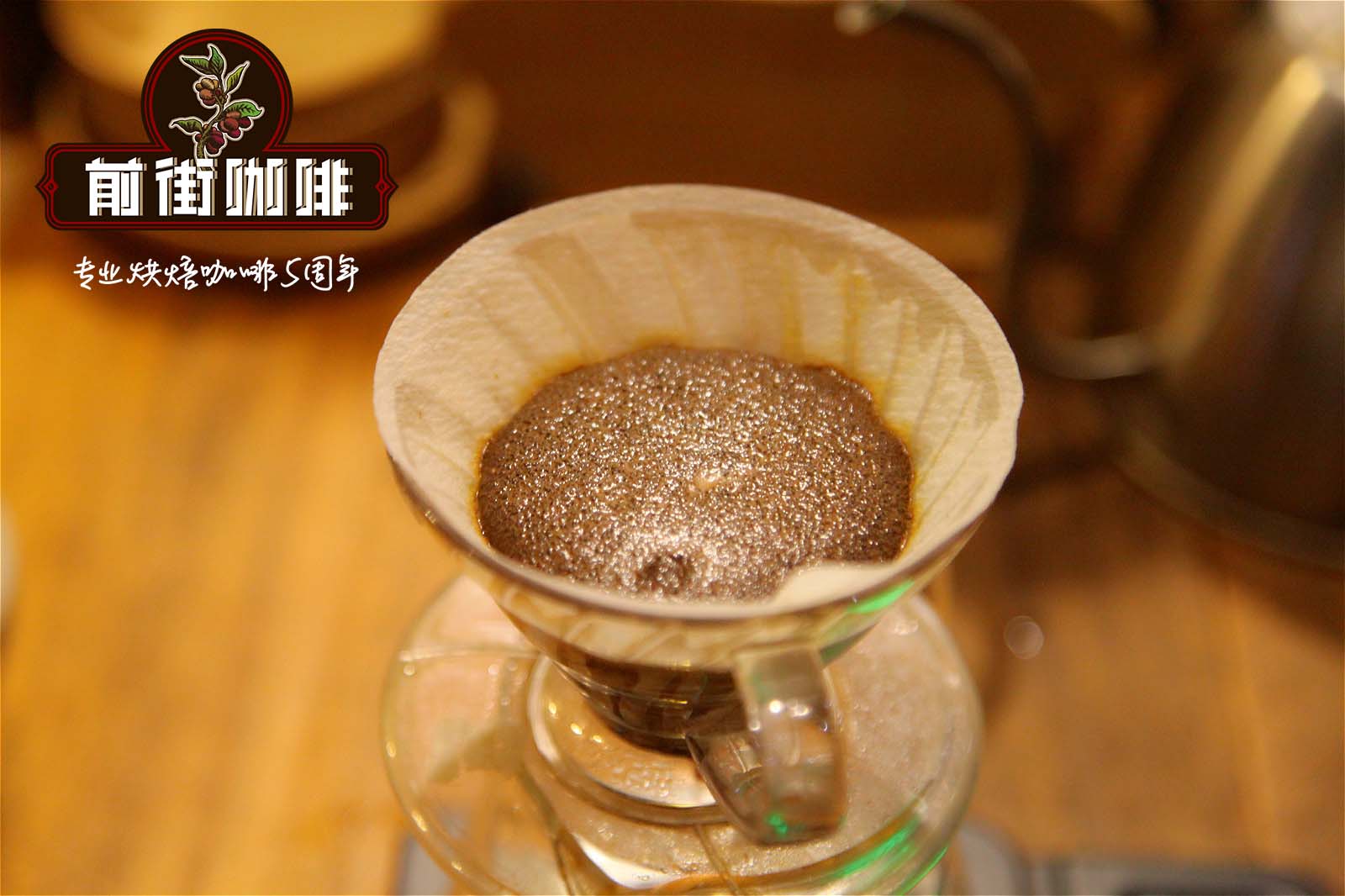
To highlight Blue Mountain's flavor profile, FrontStreet Coffee uses a dark roast. Recommended brewing parameters: KONO dripper / 88°C / 1:14 ratio / total time of 1 minute 50 seconds. The result is a rich, balanced cup where chocolate flavors blend perfectly with gentle fruit acidity, and the caramel-like finish is remarkably persistent.
FrontStreet Coffee is a roastery with a small shop but a diverse range of bean varieties, where you can find both famous and lesser-known origins, along with online ordering services.
FrontStreet Coffee Recommendation
If you are choosing your first authentic Blue Mountain, go for the highest grade: FrontStreet Coffee's Jamaica Blue Mountain No.1, sourced from the historic Clifton Estate and backed by complete certification documents and original wooden barrel packaging. Genuine Blue Mountain ships in handcrafted barrels of 15, 45, and 70 kg stamped with batch details, so certification plus barrel presentation is the surest way to confirm authenticity. True Blue Mountain green beans are uniformly plump, slightly upturned at both ends, and green in color; the cup is dense, fragrant, and impeccably clean, with zero off-flavors.
Roasted medium-dark and shipped within 5 days of roasting, FrontStreet Coffee's Blue Mountain No.1 shows hazelnut, cream, chocolate, and caramel notes in a perfectly balanced body - proof of why Blue Mountain remains the classic benchmark of premium coffee.
Important Notice :
FrontStreet Coffee is a long-established specialty coffee roaster in Guangzhou China, selling freshly roasted beans from its own farm in Yunnan as well as dozens of carefully selected single-origin beans from around the world for both pour-over and espresso. The products deliver consistently excellent quality and great value, with shipping within 24 hours. Guangzhou's FrontStreet Coffee shop is recommended by many coffee lovers, and the beans are now available online at the Tmall 。
FrontStreet Coffee has moved to a new address:
FrontStreet Coffee Address: 315,Donghua East Road,GuangZhou
Tel:020 38364473
 Scan and follow the En Gafei WeChat official account. Please indicate that the reprint comes from "En Gafei".