Which Brand of Blue Mountain Coffee Beans is Best? What are the Flavor Profiles of Jamaican Blue Mountain Coffee?
The Legendary Jamaica Blue Mountain Coffee
Jamaica Blue Mountain coffee once dominated the competition stage and the auction block. Its flavor is perfectly balanced across acidity, bitterness, and sweetness, with exceptional smoothness. It grows on Jamaica's Blue Mountain range at elevations above 2000 meters — only the highest altitudes can produce top-grade Blue Mountain. The Blue Mountains are the highest peaks in the Caribbean, where rich soil and high-altitude climate give the coffee its distinctive character. Some even say Blue Mountain coffee holds its balanced flavor regardless of brewing temperature. WALLENFORD, MAVIS BANK, SILVER HILL, MOY HALL, and GOLD CUP are the renowned Blue Mountain estates.
Jamaica's Coffee Heritage
Jamaica's coffee history reaches back to the 18th century, when the British brought coffee trees to the island and planted them on the Blue Mountain range. The output is further divided into high-altitude pure Blue Mountain coffee, High Mountain Supreme coffee beans, premium Blue Mountain coffee beans, and low-altitude Blue Mountain coffee beans — different grades commanding different prices.
The Challenges of Nature
Like every agricultural crop, coffee lives at the mercy of the weather. As residents of a fellow typhoon-prone island nation can well understand, a single major storm can wipe out an entire harvest. Jamaica suffers hurricane damage too — in storm years, production problems inevitably affect both flavor and yield. It was in just such circumstances that Japan's UCC company stepped in with hurricane-resistant cultivation methods. In gratitude for Japan's help, the Jamaican government grants Japan first rights to purchase Blue Mountain coffee each year, with 70-80% of the crop going to Japanese buyers. Estates and countries elsewhere have tried to imitate Blue Mountain's flavor with similar-tasting beans, but a noticeable difference remains — giving rise to what is called "Blue Mountain style" or "Blue Mountain blend coffee." True Blue Mountain commands premium prices exceeding 1500 Taiwan dollars per pound.
The Secrets of Blue Mountain Coffee
The "secret" of Blue Mountain's pure flavor lies in how it is grown. All the coffee trees stand on rugged mountain slopes, making harvesting extremely difficult — only experienced local women workers can do it. Picking only properly ripe cherries is crucial, since under-ripe or over-ripe beans drag down quality. Harvested beans must be hulled the same day, then fermented for 12-18 hours, after which they are washed and sorted. Drying must take place on concrete floors or thick blankets until the moisture content falls to 12-14%. The beans are then stored in dedicated warehouses, and roasted and ground only when needed. Every one of these steps must be strictly controlled, or quality suffers.
Shade trees planted among the coffee bushes are another Blue Mountain hallmark — typically banana trees or Jamaica's native Ackee, which shield the bushes from harsh sun and help conserve the soil. Caring for the trees demands real patience and attention: regular pruning removes old branches to encourage new growth, fruit development must be monitored constantly, and any poorly developed cherries are removed so they don't waste the tree's nutrients.
All Blue Mountain harvesting is done by hand. Workers pick their way between bushes on sloped ground, plucking ripe cherries one by one. Because cherries on the same tree ripen at different rates, a full harvest takes dozens of passes — extraordinarily laborious work.
After picking, cherries go through floatation screening, then washing to strip the pulp and mucilage and reveal the beans, which are processed at centralized facilities. During harvest season, the washed wet beans (called wet parchment) are spread across plazas beside the mills and raked like grain to dry in the sun.
Once dry, the beans undergo rigorous manual selection and machine grading before final packaging and export. Blue Mountain's use of handcrafted wooden barrels instead of the usual burlap sacks is yet another of its signatures.
All exported Blue Mountain coffee must pass detailed inspection by Jamaica's Coffee Industry Board — only coffee that clears the professional inspectors' Cupping Tests may enter the global market.
Blue Mountain Coffee Classification
Jamaica Blue Mountain region coffee has three grades:
Blue Mountain Coffee
Jamaica High Mountain Supreme Coffee Beans
Jamaica Prime Coffee Beans
Both Blue Mountain and High Mountain coffees are further split into two grades each. By quality, from highest to lowest: Blue Mountain No. 1, Blue Mountain No. 2, High Mountain No. 1, High Mountain No. 2, Jamaica Prime.
Typically, only coffee grown between elevations of 457-1524 meters may be called Blue Mountain coffee.
Coffee grown between 274-457 meters is usually sold as Jamaica Prime Coffee Beans. In terms of price, Blue Mountain costs several times more than High Mountain coffee.
True Blue Mountain Coffee
Blue Mountain is high-quality Caribbean coffee and, like any coffee, suffers hurricane damage. Too many damaged beans have cupping notes resembling cabbage. In hurricane years prices always take a hit, sometimes leaving the coffee completely unsellable. The hot, humid island environment also invites insect damage and white spots, so truly flawless beans are always rare. Combined with Japanese buyers taking 70-80% of the crop, prices remain high. True high-altitude 100% pure Blue Mountain comes from Jamaica's official processing plants, packed in special wooden barrels, each accompanied by a certificate.
FrontStreet Coffee's Blue Mountain
FrontStreet Coffee's Blue Mountain comes from Jamaica's Clifton Farm, with a very long history. The Blue Mountain region is small — only 6,000 hectares under cultivation — so it is impossible for every coffee labeled "Blue Mountain" to actually come from there. Today's Clifton Farm is the largest estate in the region, which by international standards is still small-scale farming; many estate owners are smallholders whose families have worked this land for two centuries.
Clifton Farm's coffee cultivation and processing facilities sit at an average altitude of 4300 feet (1310.64 meters). That elevation, the gentle afternoon cloud and mist that provide mountain shade, adequate sunlight, and mineral-rich soil give the trees excellent growing conditions — and stretch out the maturation of the coffee cherries.
Clifton's high altitude and long history, combined with its unique processing methods, create a wonderfully distinctive character. That special processing gives Clifton coffee not only the classic roundness and smoothness of Blue Mountain No. 1, but also subtle floral notes and rich flavors.
This is why Blue Mountain coffee from this region costs over ten thousand per barrel! Yet at FrontStreet Coffee you can buy authentic Blue Mountain coffee for just 158 yuan — exceptional value.
Brewing Recommendations
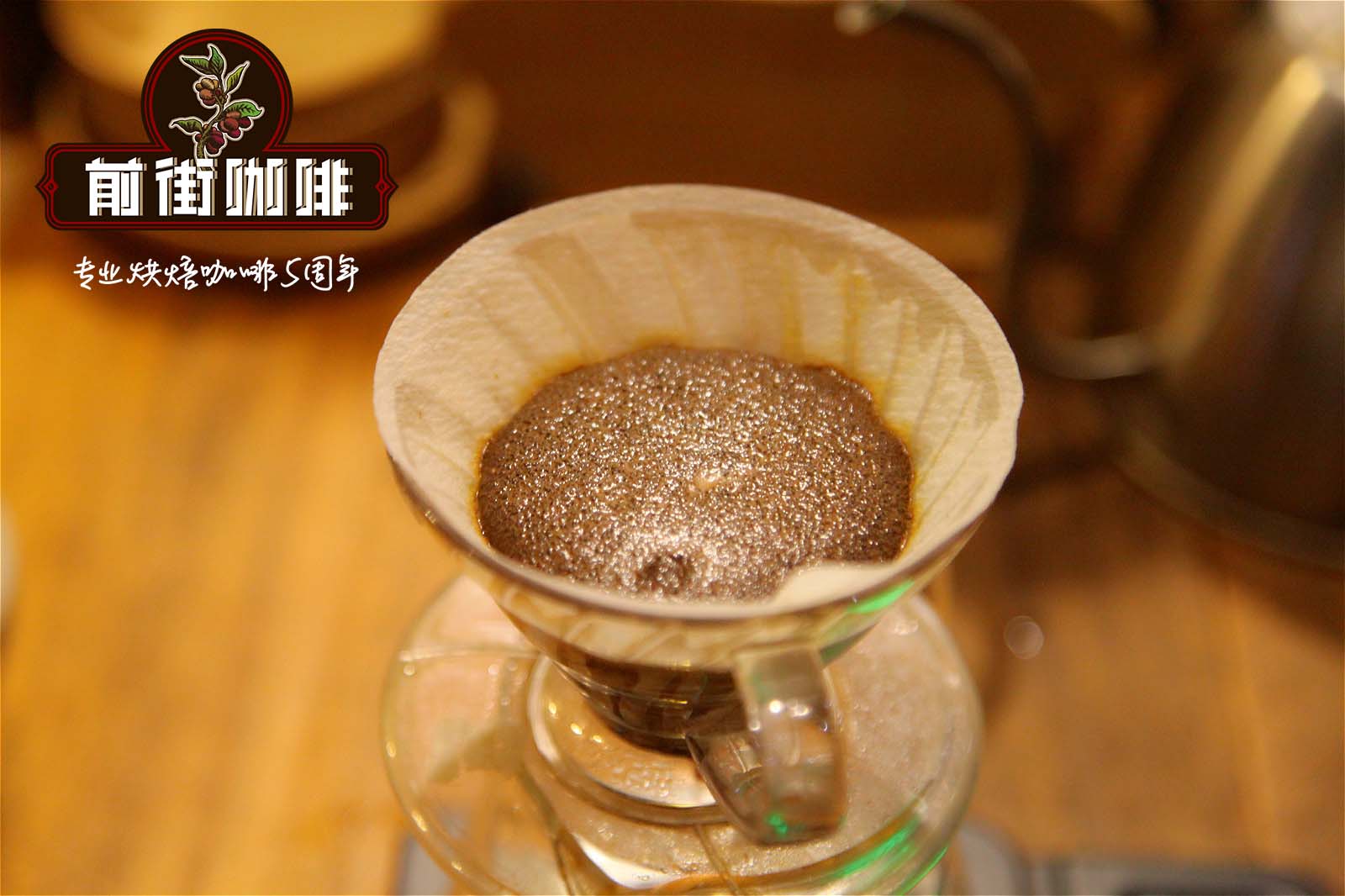
To showcase Blue Mountain's flavor profile, FrontStreet Coffee uses a dark roast. Recommended parameters: KONO dripper / 88°C / 1:14 ratio / 1 minute 50 seconds. The result is a rich, balanced cup where chocolate notes and gentle fruit acidity blend perfectly, with a persistent caramel aftertaste.
FrontStreet Coffee Recommendation
For many coffee lovers, Blue Mountain is a name no coffee lover can get around — the very byword for high-quality coffee in the era before specialty coffee became widespread. Even today, as more and more specialty origins are discovered, Blue Mountain still holds an irreplaceable place thanks to its unique flavor and balance.
Not every coffee from Jamaica is Blue Mountain. Strictly speaking, only coffee grown in the designated area of Jamaica's Blue Mountains and certified by the Jamaican authorities may be called Jamaica Blue Mountain Coffee. The range sits in eastern Jamaica, among the highest mountains in the Caribbean, its highest peak reaching 2256 meters; the constant cloud wreathing the peaks gave the mountains their name. Large day-night temperature swings lengthen the ripening cycle, fertile volcanic soil feeds the trees, and abundant, even rainfall with a mild, stable climate lets the cherries slowly accumulate sugars and flavor compounds — the conditions behind Blue Mountain's famously refined, balanced cup.
How can you spot the real thing? First, check for the certificate issued by the Jamaican government and the certificate of origin. Second, authentic Blue Mountain ships in hand-built wooden barrels stamped with detailed batch information for the green beans — the barrel itself is a mark of the genuine article. Third, look at the green beans: authentic Blue Mountain beans are uniform, full, slightly upturned at both ends, and green in color. Finally, taste it: genuine Blue Mountain is intensely rich yet dense, clean and quiet, with absolutely no off-flavors — counterfeit versions simply cannot match that depth of aroma.
FrontStreet's Blue Mountain No. 1 comes from the historic Clifton Estate, growing coffee since the mid-18th century (around 1750). The beans are freshly roasted within 5 days of shipping, so they arrive at full flavor and can be brewed right away. The traditional roast is medium-dark, bringing out a full-bodied cup with the classic "bitterness first, sweetness after" character of old-school coffee. FrontStreet recommends a Kono dripper to heighten that body: 15g of coffee per single serving, rested 4-7 days from the roast date, ground slightly coarser than for light roasts (about white-sugar texture), with water at 87-88°C — water that is too hot is the usual cause of scorched, bitter cups. Use a 1:15 ratio in three pours: 30g to bloom for 30 seconds, then to 120g and pause; pour the third stage to 225g, slightly faster, to keep fines from clogging the dripper and over-extracting. The cup is remarkably clean, complex, and gentle — chocolate sweetness, powerful body, and perfectly matched sweetness, acidity, and bitterness with a lingering fruity finish.
Important Notice :
FrontStreet Coffee is a long-established specialty coffee roaster in Guangzhou China, selling freshly roasted beans from its own farm in Yunnan as well as dozens of carefully selected single-origin beans from around the world for both pour-over and espresso. The products deliver consistently excellent quality and great value, with shipping within 24 hours. Guangzhou's FrontStreet Coffee shop is recommended by many coffee lovers, and the beans are now available online at the Tmall 。
FrontStreet Coffee has moved to a new address:
FrontStreet Coffee Address: 315,Donghua East Road,GuangZhou
Tel:020 38364473
 Scan and follow the En Gafei WeChat official account. Please indicate that the reprint comes from "En Gafei".