How to Write Wet Hulling in English: Coffee Bean Wet Hulling Method - Giling Basah or Wet Hulling?
Wet Hulling
This is a coffee processing method exclusive to Indonesia and a few neighboring coffee-producing countries. "Giling Basah" is Indonesian, literally "hulling off the hard shell under wet conditions" — and in English it goes by another name: Wet Hulling.
The earliest Chinese translation of the term appeared in Teacher Huan Huai-zong's book "Specialty Coffee Studies," and in our view his rendering — "wet hulling" — captures the method best. Other names, most notoriously "Semi-Washed," muddle several distinct processing methods and have left whole swathes of the coffee world with almost zero understanding of what wet hulling actually is. A lamentable state of affairs. Believe us: you will never see the words "semi-washed" again in our descriptions of processing methods.
Wet hulling matters to the global coffee industry as much as honey processing does. "Mandheling" — the coffee every enthusiast tries when starting out — is processed this way, and you could fairly say that the vast majority of Arabica coffee from Sumatra and Sulawesi, Indonesia, is wet hulled. According to 2014 statistics from the International Coffee Organization (ICO), Indonesia is the world's fourth-largest coffee-producing country. A processing method that contributes this much to global coffee production deserves a proper deep dive.
The Structure of a Coffee Cherry
Before the main topic, we need to understand what a coffee bean actually is.
Botanically speaking, coffee "beans" are not beans at all. Coffee fruits are fruits. They do look very much like beans, but in terms of fruit form, a coffee cherry resembles a peach far more than a bean. What we call "coffee beans" are the seeds of the coffee plant.
In other words, the beans we see have four layers of material outside them: silver skin, parchment (endocarp), mesocarp (pulp and mucilage), and exocarp (the red or yellow skin).
Why does everyone, whatever their nationality, call them beans? Mainly because people ignore the pulp of the coffee cherry — it is really very thin. Below are cross-sections of a coffee cherry and a peach.
In daily life, when we eat peaches we eat the flesh; when we enjoy coffee we roast the seed, grind it, and brew it with water, discarding every other layer. And since coffee seeds look so much like beans, everyone naturally calls them coffee beans. For simplicity we will keep saying "coffee beans" too — just remember that they aren't beans.
So why do processing methods matter at all? Coffee cherries grow on trees, and when farmers pick them they look like this.
At that point the cherries are still fruit with very high moisture content. Combined with the sugars in the pulp, piling them up for long leads to fermentation, mold, off-flavors, and even food safety problems.
So people need to convert fragile, perishable coffee cherries into something stable that ships and stores well. The idea: remove the skin, pulp, and parchment, then dry the seeds.
The Steps
Whether on small family farms or larger estates, all Indonesian coffee is hand-picked. After picking comes the routine float test: sinking cherries are kept, while floating debris and unripe fruit are screened out.
The mature red cherries then go into a depulper to strip the skin. Unlike the washed method, wet hulling uses much smaller depulping machines — so small and cheap that nearly every coffee farmer can afford one, meaning the depulping stage happens almost entirely at the farm level.
The next two pictures show farmers using these machines to scrape off the fruit skin. Hardworking coffee people always look good at work.
Next comes fermentation. In the washed method, depulped beans with their mucilage go into fermentation tanks to soak, letting bacteria break down the mucilage — a process of about 24-48 hours, with the water quality in the tank roughly matching the quality of the beans. Wet hulling fermentation is different: it lasts only about 12 hours, uses very little water, and often happens in small containers — plastic basins, even plastic bags. After this brief fermentation, most of the mucilage rinses off the parchment easily, with a little residue left behind. This step, too, happens at the farm.
Farmers bag the wet, sticky parchment and haul it to weekly agricultural market gatherings to sell, often to buyers from processing stations. Purchases are measured by volume, using locally pre-measured dedicated buckets marked at one or two liters, and farmers are paid a price of XX yuan per liter of parchment beans. Buyers often pay in tiers based on how much residual mucilage they see: more residue, lower price; less residue, higher price. The picture below shows the dedicated one-liter measuring bucket, the "a litera can."
Once a station has collected plenty of wet parchment beans, it sends the still-undried beans (35%—45% moisture content) straight into the hulling machine to scrape off the parchment and the mucilage clinging to it. That is the "wet hulling" itself. No other processing method does this: washed, natural, and honey processing all dry the parchment beans first (down to 11% moisture) and only then "dry hull" them.
Wet-Hulling Machines Have Their Tricks, Too
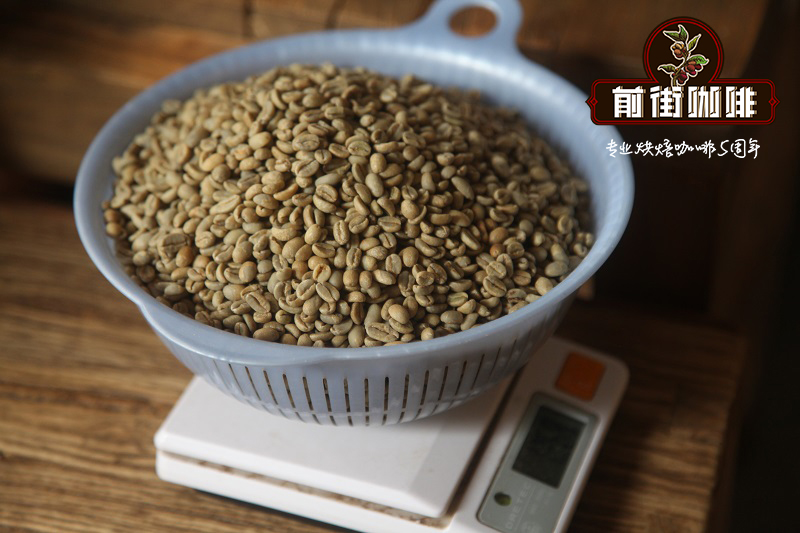
The picture above shows a dedicated Indonesian wet-hulling machine. In sheer size it is three times the size of a washed-method huller. More important than size, though, is the grinding core. The picture below shows freshly hulled wet-hulled green beans — very moist indeed.
Wet green beans look white and slightly swollen, and they are extremely soft. Run them through a washed-method machine's metal grinding core and they would quickly be ground to pieces. An American processor once tried it out of curiosity. "Only about one-tenth of the beans came out whole," the American lamented. Hence Indonesia's modified hullers: to accommodate the swollen beans, the caliber is wider and the cores are made of softer, high-friction plastic. Broken beans still abound given how fragile the green beans are, but the situation is vastly better than with washed grinders.
The first picture below shows a cross-section of washed, dried parchment beans; the second shows a cross-section of wet-hulled parchment beans with very high moisture. The wet-hulled parchment is still soft at this stage, while washed parchment has turned brittle and dry under the sun. During washed drying, the green bean inside the parchment loses moisture and shrinks, leaving a very obvious gap between bean and parchment; wet-hulled beans have no such gap — they stay swollen. Both factors make wet hulling harder, and the broken fragments from the intense friction are correspondingly numerous.
The exposed green beans, still high in moisture, are then spread out on cement ground covered with straw mats or plastic sheets to dry. Although there is no perishable mucilage left on the surface, workers must still turn the beans frequently — at such humidity, with the bare green beans so fragile, they can rot if left covered.
In theory, wet-hulled beans should dry faster without the parchment "sealing" them in. Not so. Coffee people describe drying in Sumatra as a "nightmare." Sumatra is genuinely one of the few coffee regions with such a humid climate. As one visitor to the producing areas put it, "the longest drying window in a day is 4 hours — taken out in the morning and brought back in the afternoon when the heavy rain comes." Some slightly wealthier processing workshops have built greenhouses! Drying under a shed may actually cost less than shuttling beans in and out.
The humid weather complicates picking, too. In producing countries with clear, stable weather patterns — Central America, say — pickers go through the fields an average of 3 times to gather all the cherries. In Sumatra, where weather distribution is anyone's guess, pickers go out countless times over the entire 6-month period when cherries ripen. Why? Coffee trees flower and fruit according to the weather — and if the weather is confused, the coffee trees are completely lost.
Under these harsh conditions, drying the green beans takes about half a month, with the exact number of days depending on luck. Peter Giuliano of Counter Culture Coffee and the SCAA believes that because there is no parchment protecting the beans, the freshly hulled green beans are moist and warm, and Indonesians don't use raised beds, the beans are exposed to many external enzymes and microorganisms — especially from the ground. Perhaps it is these factors during drying that give Sumatra coffee its general "earthy" odor/aroma (judge for yourself).
In the picture above, the left side shows freshly hulled green beans — white and larger; the right shows dried beans — dark green and smaller. Their common trait: an insanely high rate of defective beans.
Drying in the open air gives wet-hulled green beans another signature: a forest-green color.
So that, among other things, is why Mandheling's beans are so green!
And with that, the introduction to wet-hulled coffee processing is complete.
Evaluation
To be fair — neither gushing nor dunking — if you set a medium-quality Mandheling next to a lineup of medium-quality Central American beans on a cupping table, Mandheling is usually the first to take a hit. Its flavor profile simply doesn't fit our accustomed evaluation standards. Wet-hulled flavor is one of the most heated debates in specialty coffee: some treasure it; others would happily spit it out.
Let us dare to summarize. Beyond the subtle variations, wet-hulled beans generally carry earthy, smoky, and chocolate flavors, with acidity described as "low" — seeming rather dull. Speaking in synesthesia, this editor would say: drinking wet-hulled coffee is like having a dark cloud hanging over your heart that refuses to disperse.
The low acidity comes from the shorter, less effective fermentation and the long drying time. (If you've forgotten the fermentation step, scroll back up.) As for the "earthy" flavors, opinions differ: some blame the varieties common in wet-hulling regions (Timor and Catimor, with Robusta heritage); some, like Peter Giuliano, point to organic interactions between the green beans and their environment; some even blame the sheer number of defective beans. There are plenty of those, to be sure...
Defects enter wet hulling from many directions. Natural cherry defects are unavoidable, and hulling itself adds more — plus corrosion while the wet parchment is transported, damage to the exposed green beans from sun and humidity, and the uneven drying speed that erratic weather forces. Why does Mandheling need so many rounds of hand-sorting? Now you know why...
We'll emphasize this: anyone who claims washed and wet hulled are the same thing is pulling your leg. The names may sound close — "Semi-Washed" and "Washed" — but Semi-Washed remains an incorrect name, and the actual steps of the two methods, and the flavors they produce, are worlds apart. The next time someone tells you Mandheling is a washed coffee, raise your hand in class and we'll gently correct you.
Indonesian beans have always been an indispensable element in espresso blends. Their low acidity and rich chocolate aroma marry beautifully with milk. The second wave of coffee, brought by old Mr. Peet, stood on the shoulders of Sumatra's wet-hulled, low-acid, thick-bodied coffee — and combined with his signature dark roast, it showed the world the correct way to interpret Sumatra. Starbucks may have strayed from that path since, but who could deny the importance of Sumatran wet hulling?
And after the wave of praise, a wave of criticism. The so-called G1 Mandheling is, frankly, of limited help. A 33% defect rate is still a 33% defect rate. Never mind the several sortings at origin before export — as this editor has seen with my own eyes, green beans get hand-sorted once when they reach the roaster, sorted again after roasting, sold to shops, and the shops sort them yet again! Some have proposed a new theory about dark-roasted Sumatra: that the dark roast exists to cover up wet-hulling defects. It can't be denied. The past and future of Sumatra coffee still hold many uncertainties — as we said, on the cupping table, Sumatra often dies the most miserable death because it doesn't fit our general standards for specialty single-origin coffee.
But we should keep faith with Sumatra. In recent years the Indonesian Specialty Coffee Association (SCAI) has been established, quality supervision along the production chain has been strengthened, and some regions and estates have introduced partial washing mechanisms. Certain producing areas have begun down the path of high-quality, closely supervised, character-driven wet hulling. Whatever happens, this editor remains optimistic about coffee in Sumatra — a producing country this large and important shouldn't carry an unclear burden forever, and I believe it still has plenty of room to grow.
And with that, wet hulling — and everything you need to know about wet-hulled coffee beans — comes to a close.
FrontStreet Coffee Recommendation
Want to taste what wet hulling can do at its best? FrontStreet Coffee's PWN Golden Mandheling is the flagship example. Produced by Indonesia's PWN company under brutally strict standards — only beans above 18 mesh screen, with fewer than 3 defects per 300g of green sample to meet the top G1 grade, followed by three rounds of hand-sorting — it is remarkably clean and sweet for a Sumatran. Those strict standards also keep production limited, which is exactly why Golden Mandheling sits at the top of the Mandheling pyramid.
FrontStreet Coffee roasts both its PWN Golden Mandheling and its Lintong Mandheling staple to a medium-dark profile — dark chocolate and caramel up front, with Mandheling's wild herbal character kept intact. For pour-over, use water at 87-88°C, 15g of coffee at a 1:15 ratio, ground to the texture of coarse granulated sugar, and pour in three stages: 30ml to soak the bed and degas, 100ml to lift the bloom and draw out the golden crema, then a gentle center pour of 95ml to build sweetness. The finished cup is thick and full-bodied, with caramel sweetness over chocolate and nut flavors. If you'd rather pull shots, FrontStreet Coffee's Classic Blend — Brazil's creamy nuttiness reinforced with medium-dark Mandheling, a touch of Robusta for crema, plus notes of butter, roasted chestnut, sandalwood, and spice — makes lattes and Dirty drinks effortlessly impressive.
Important Notice :
FrontStreet Coffee is a long-established specialty coffee roaster in Guangzhou China, selling freshly roasted beans from its own farm in Yunnan as well as dozens of carefully selected single-origin beans from around the world for both pour-over and espresso. The products deliver consistently excellent quality and great value, with shipping within 24 hours. Guangzhou's FrontStreet Coffee shop is recommended by many coffee lovers, and the beans are now available online at the Tmall 。
FrontStreet Coffee has moved to a new address:
FrontStreet Coffee Address: 315,Donghua East Road,GuangZhou
Tel:020 38364473
 Scan and follow the En Gafei WeChat official account. Please indicate that the reprint comes from "En Gafei".