Introduction to Freshly Ground Coffee Powder Production Methods | How to Make Freshly Ground Coffee Powder | How to Brew Freshly Ground Coffee Powder

Once you have decided to drink good coffee, you will certainly take care choosing your favorite coffee equipment, but you may not buy a coffee grinder, choosing instead to buy pre-ground coffee or have the shop grind it for you.
Good Coffee Is Freshly Ground
Coffee beans, as an agricultural product, have important freshness requirements. After roasting, the beans expand and grow larger and become full of tiny pores, continuously releasing carbon dioxide. As the beans release gas, the volatile aromatic compounds inside are released along with it, quickly losing the charming aroma that makes coffee distinctive.
That is why coffee bags have a one-way exhaust valve. Its job is to let out the gas the beans give off while keeping air from entering the bag and oxidizing them.
The Purpose of Grinding
We grind coffee beans into powder, cutting the beans into thousands of small particles to increase the surface area and the extraction rate. Once ground, gas evaporation also speeds up and the flavor disappears in an instant. In coffee shops, if ground coffee has sat unused for half an hour, it is often thrown away.
Good coffee beans will never be pre-ground for sale. At FrontStreet, for example, beans are ground only after you buy them, and some even stricter merchants refuse to grind coffee for you at all.
What Should You Pay Attention to When Grinding Coffee Beans?
1. Coarseness
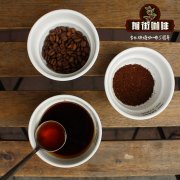
Different grind coarseness means different surface area. The finer the grind, the larger the surface area and the higher the extraction rate, and vice versa. Different extraction methods therefore need different grind settings:
Pressurized extraction: Espresso, the finest, like fine salt.
Filtered extraction: Pour-over coffee, medium, like granulated sugar.
Immersion extraction: French press, the coarsest, like sea salt crystals.
2. Uniformity
We want to grind coffee into particles that are as close to the same size as possible, so we have a reference for extraction. Larger particles, for instance, need higher water temperature and longer time. If particle size varies too much, extraction becomes inconsistent, and we cannot get a delicious, evenly extracted cup.
Choosing the Right Coffee Grinder
How Coffee Grinders Work
A coffee grinder's burrs consist of a moving grinding wheel and a stationary contact surface. Coffee beans are ground between the two. By adjusting the distance between the burrs, you control the coarseness of the particles. Once the particles are ground down to the size of the gap, they fall into the powder bin below and are not ground any further.
Why can't you use a food processor or blender to grind coffee? Because the result is not uniform. A food processor's structure is metal blades connected to a motor, using rotational force to shatter beans through repeated cutting. If you want a finer powder, you can only get it by running it longer. And because there is no powder-bin design, the beans keep getting cut no matter the setting, leaving extremely fine powder and extremely coarse particles side by side.
Are Manual Coffee Grinders Less Professional Than Electric Ones?
Manual coffee grinders work on the same principle as electric ones, so there is no need to worry about being less professional. Many people like them for the hands-on involvement they offer. Beethoven is said to have counted out sixty coffee beans every morning, put them in his grinder, and enjoyed their aroma while grinding, finding the pleasure in the process.
Most manual grinders use ceramic burrs, which do not generate enough heat during grinding to scorch the coffee, and they can be washed with water.
Should You Choose a Manual or Electric Coffee Grinder?
1. How much coffee do you drink each day? How many people are drinking?
Manual grinders suit one or two people drinking only one or two cups a day.
2. What equipment do you use to make coffee?
Manual grinders suit pour-over, a French press, and similar equipment. But if you use a moka pot, a semi-automatic espresso machine, or other pressurized extraction equipment, choose an electric grinder.
FrontStreet Coffee Recommendation
Because a hand grinder rewards beans with clear, varied character, the beans you choose matter as much as the grinder. FrontStreet Yirgacheffe Sun-Dried Red Cherry is a classic example of the sweetness that a good light roast can reach. It comes from the famous Yirgacheffe region and was among the first to champion the full red cherry natural method, so quality is high. FrontStreet roasts it medium-light, and it cups with the aroma of ripe fruit, a distinct fermented note and berries on entry, citrus acidity and creamy smoothness as it cools, and a ripe grape juice character at the end.
For a grinder-friendly everyday bean, FrontStreet Queen Estate Yellow Bourbon is a great all-rounder: good sweetness and useful in a pour-over, French press, moka pot, or espresso machine. The Queen Estate is a Brazilian specialty farm, and Yellow Bourbon is an outstanding variety; the natural processing makes the sweetness even more pronounced. FrontStreet roasts it medium, delivering nuts, cream, sucrose, and a soft fruit acidity.
And if you like a distinctly sweet, aromatic cup, FrontStreet Mozart from the Musician series is worth grinding by hand. Costa Rican coffee is famous for its sweetness, and this lot uses a raisin honey process, so slow fermentation during drying gives it Kyoho grape sweetness along with the distinctive aroma of pineapple and osmanthus. FrontStreet roasts it medium-light to emphasize the rich flavors of raisin, rose, and fermented wine.
Important Notice :
FrontStreet Coffee is a long-established specialty coffee roaster in Guangzhou China, selling freshly roasted beans from its own farm in Yunnan as well as dozens of carefully selected single-origin beans from around the world for both pour-over and espresso. The products deliver consistently excellent quality and great value, with shipping within 24 hours. Guangzhou's FrontStreet Coffee shop is recommended by many coffee lovers, and the beans are now available online at the Tmall 。
FrontStreet Coffee has moved to a new address:
FrontStreet Coffee Address: 315,Donghua East Road,GuangZhou
Tel:020 38364473
 Scan and follow the En Gafei WeChat official account. Please indicate that the reprint comes from "En Gafei".