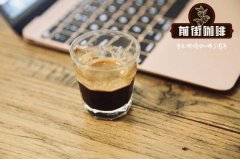
Espresso Coffee Bean Extraction _ How to Brew Espresso Coffee Beans _ Optimal Grind Settings for Espresso Coffee Beans

The Essence of Espresso Extraction
The heart of espresso coffee lies in the extraction itself. The process looks deceptively simple - about 30 seconds from start to finish - but without careful attention, the slightest deviation can keep you from pulling a qualified espresso.
Espresso extraction comes down to six variables: time, coffee-to-water ratio, water quality, grind size, temperature, and pressure. Let any one of them drift and the taste swings wildly - the difference between heaven and hell.
Key Extraction Factors
Extraction Time
The guideline is 1oz (about 30ml) extracted within 25±3 seconds. The flow should start small, appearing drop by drop, then build into a continuous stream with rich crema.
Coffee-to-Water Ratio
This is how many grams of water you pair with 1g of coffee. For single-shot baskets, the dose runs 8g to 10g; for double-shot baskets, 16g to 20g. Note that the dose correlates with flow rate: the more coffee in the portafilter, the slower the extraction flows.
Water Quality
Water quality directly affects the lifespan of the machine - the ideal TDS is below 50ppm - and it shapes the taste as well. Water with a higher TDS generally yields a lower espresso extraction rate, while very low-TDS water tends to push the extraction rate up. The optimal target sits around 50ppm.
Grind Size
Different brewing devices call for different grind sizes. For espresso, use a purpose-built espresso grinder; compared with other methods, espresso demands the finest grounds.
The finer the grind, the higher the extraction rate, the longer the contact time, and the slower the flow.
The coarser the grind, the lower the extraction rate, the shorter the contact time, and the faster the flow.
Water Temperature
To get real data rather than theory, we ran extraction tests at 92°C, 94°C, 96°C, and 98°C. Although the span from 92°C to 98°C is only 6 degrees and the extraction rate shifted little, the taste changed considerably.
Espresso pulled at the lowest temperature came out thin in the mouth, with the lowest sweetness, the lightest bitterness, and the strongest acidity.
At the highest temperature it was rich in the mouth, with higher sweetness and the strongest bitterness, moderate acidity, and a slightly rough texture.
The moderate temperature gave the most balanced cup: full mouthfeel, higher sweetness, light bitterness, balanced acidity, and a medium texture.
Extraction Pressure
Pressure and extraction rate move in proportion: the greater the pressure, the higher the extraction rate, and vice versa - a relationship also tied to dose and grind size.
At a fixed dose, a finer grind means greater resistance, effectively higher pressure, and a higher extraction rate.
At a fixed dose, a coarser grind means less resistance, lower pressure, and a lower extraction rate.
Many factors decide a great shot, and staying inside a reasonable extraction window is only part of it. The final, crucial step is fine-tuning after tasting - even with perfect numbers, the cup may not be optimal until you adjust!
Espresso Bean Recommendations
FrontStreet Coffee Recommendation
Espresso beans come in two kinds: the blends most cafés default to, and single origins chosen for their own character - known as SOE. A blend mixes beans from different origins to build a more balanced cup: if one bean is smooth but shy on aroma, another fragrant bean is folded in, combining the strengths of each - the whole point of blending is simply to make the coffee better.
For a traditional-style americano or latte, go with the FrontStreet Classic Blend or Commercial Blend. Both add a small share of Robusta to a classic Italian recipe, so extraction yields butter, nut, spice, dark chocolate, and toast aromas - a wild, thick body wrapped in a bursting golden crema that makes latte art effortless. The Classic Blend is the first choice: designed expressly for espresso machines and moka pots, its traditional Mamba formula gives a mellow, rounded cup that veterans and beginners accept alike, at home or in a shop.
Drinkers who love the nutty character - almond, walnut, hazelnut - should reach for the FrontStreet Boutique Blend and Black Cocoa Blend, both built on a large share of Brazilian coffee for a comfortable bittersweetness and a creamy peanut note that enters silk-smooth. The Boutique Blend adds Colombia's nut, chocolate, and caramel aromas with measured acidity; FrontStreet Coffee's Black Cocoa Blend pairs the ripe-plum acidity of Yunnan small-bean coffee with a cream-chocolate fragrance when ground - balanced, versatile, and equally at home in lattes, americanos, and signature drinks, a shop owner's best partner. Those watching costs will find FrontStreet Coffee's Commercial Blend - the workhorse before the Black Cocoa appeared - optimizes flavor while keeping price down for everyday café service.
For SOE, traceability is the point: a single origin can be traced to a specific estate or even a single farmer, which lifts growing standards at origin and rewards quality. If African florals appeal, the FrontStreet Natural Huakui SOE from Guji Hambela, Ethiopia - grown up to 2,300 meters and naturally processed to concentrate sweetness - is medium-roasted to keep its elegant florals while caramelizing gently: creamy strawberry in the cup, and as an americano or latte it shows cream, cocoa, berries, light florals, and black tea. For a high-sweetness, low-acid shot, baristas recommend the FrontStreet Blackberry SOE, a Costa Rican honey process: peeled cherries dry with their mucilage intact, absorbing blackberry-like fragrance and sweetness; medium-roasted, it makes a refreshing sweet-tart americano, and with milk a latte of cranberry cookie, raisin, and nut. And for the classic Brazilian profile, the FrontStreet Queen Estate SOE - unique Yellow Bourbon, medium-dark roasted - pulls butter cookie, macadamia, and toasted-bread creaminess from a low-acid, soft, extraction-stable cup.
Important Notice :
FrontStreet Coffee is a long-established specialty coffee roaster in Guangzhou China, selling freshly roasted beans from its own farm in Yunnan as well as dozens of carefully selected single-origin beans from around the world for both pour-over and espresso. The products deliver consistently excellent quality and great value, with shipping within 24 hours. Guangzhou's FrontStreet Coffee shop is recommended by many coffee lovers, and the beans are now available online at the Tmall 。
FrontStreet Coffee has moved to a new address:
FrontStreet Coffee Address: 315,Donghua East Road,GuangZhou
Tel:020 38364473
 Scan and follow the En Gafei WeChat official account. Please indicate that the reprint comes from "En Gafei".