Why Jamaican Blue Mountain Coffee is Expensive, Blue Mountain Flavor Coffee is Cheaper, and Blue Mountain Coffee's Characteristics and Story
For professional coffee knowledge exchange and more coffee bean information, follow Coffee Workshop (WeChat official account: cafe_style).
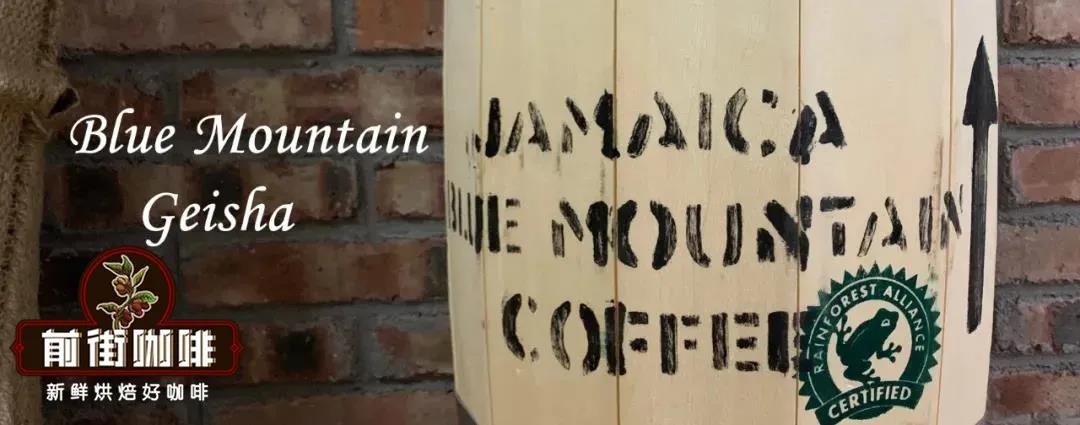
Since 2019, Blue Mountain No. 1 — which had previously insisted on washed processing alone — began to "innovate and reform" by introducing natural processing. In mid-November 2020, the first batch of Blue Mountain Geisha coffee beans also arrived in China. FrontStreet Coffee is not surprised by these "Blue Mountain reforms" of the past two years. In today's fiercely competitive coffee market, where flavors keep trending toward freshness, how can Blue Mountain hold its position? The answer is planting Geisha. Only that could bring Blue Mountain's sudden "innovation and reform" back to the front of everyone's attention so quickly. These reforms are also driven by a fear of being forgotten.
Blue Mountain No. 1 Coffee Price
In 1725, Sir Nicholas Lawes brought the first Blue Mountain coffee trees from Martinique to Jamaica and planted them in the St. Andrew region. Within eight years, Jamaica was exporting over 375 tons of pure coffee. In 1932, the Jamaican Conference passed legislation to encourage coffee cultivation and reduce the island's dependence on sugar exports. Coffee production peaked that year, with harvests exceeding 15,000 tons.
In 1948, coffee quality had declined and Canadian buyers refused to renew their contracts. For that reason the Jamaican government established the Coffee Industry Board and made changes to the "Jamaican coffee industry," standardizing processing methods, improving quality, and achieving market equivalence to rescue the fate of premium coffee. By 1969, quality was guaranteed in the market thanks to improved production standards financed with Japanese loans. By 1981, Jamaica had brought roughly another 1,500 hectares of land into coffee planting, followed by investment to develop an additional 6,000 hectares. In fact, today's Blue Mountain region is a small area with only 6,000 hectares of planting area, which makes it impossible for every coffee labeled "Blue Mountain" to have been grown there. That is why authentic Blue Mountain coffee is so expensive. The additional land — about 7,500 hectares in total — is used to grow two other types of coffee (non-Blue Mountain coffee): High Mountain Supreme and Prime Washed Jamaican, whose quality and taste cannot compare with Jamaican Blue Mountain No. 1.
The Blue Mountains lie in eastern Jamaica, at elevations of 1,000-1,700 m. Only coffee grown in this specific region can be considered authentic Blue Mountain coffee. The range is surrounded by the Caribbean Sea, and on clear days direct sunlight hits the azure water and the peaks reflect brilliant blue light — hence the name. Blue Mountain sits in the coffee-growing belt, with fertile volcanic soil, fresh unpolluted air, a humid climate, and fog and rain year-round (average rainfall 1,980 mm, temperature around 27°C). These conditions created the world-renowned Jamaican Blue Mountain coffee. Here people use mixed cultivation, growing coffee trees alongside banana and avocado trees on terraces. The mountain terrain is also rugged — every coffee tree is planted on a steep slope — which makes harvesting extremely difficult. Only local skilled female workers can manage the task. Selecting properly ripe cherries at harvest matters just as much, because underripe or overripe beans affect the quality of the coffee.
As FrontStreet Coffee noted above, harvesting in this specific region is very difficult and timing is critical. Labor and material costs rise significantly, which we can generally read as "scarcity makes things valuable." But is Blue Mountain the most expensive coffee bean? No — in recent years more and more excellent coffees have entered competitions, and their prices have surpassed Blue Mountain several times over.
As FrontStreet Coffee also mentioned earlier, Blue Mountain originally had only the Typica variety, but this year introduced Geisha. So what are the differences between these two varieties?
Traditional Blue Mountain Coffee Variety: Typica
Blue Mountain's Typica was transplanted from Martinique to Jamaica's Blue Mountains in the 1720s. After more than 200 years, Blue Mountain Typica has evolved better disease resistance, particularly superior resistance to coffee berry disease compared with regular Typica. Yet when Blue Mountain Typica is grown outside Jamaica, it cannot replicate its sweet, fragrant character. Until 2019, all the Blue Mountain coffee circulating in overseas markets was washed-processed Typica. It is precisely this single processing method and single variety that kept Blue Mountain coffee at a high quality decade after decade, and its balanced, mellow taste is what some coffee lovers appreciate. The natural-processed Blue Mountain introduced in 2019 actually enhanced the coffee's acidity, though its mellowness was not as high as the washed version.
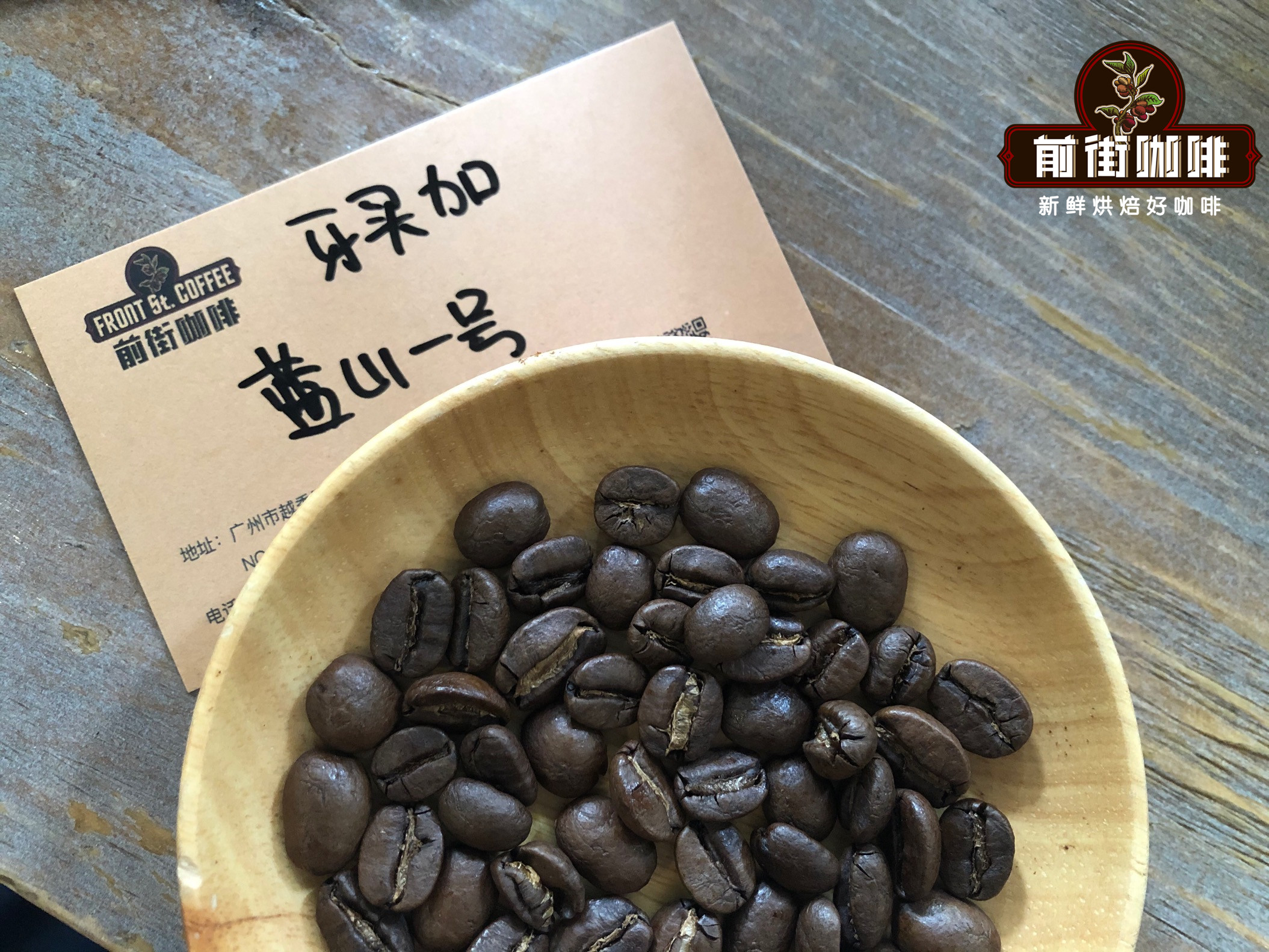
Blue Mountain Geisha Coffee Variety: Geisha Coffee Beans
Geisha traveled from Ethiopia to Kenya, then Uganda, then Tanzania, then Costa Rica, and finally Panama. It was not until 2004, when the owner of Hacienda La Esmeralda discovered Geisha and entered it into competitions, that it became famous overnight. Geisha beans are elongated in shape and have a refreshing, pleasant flavor. They must be grown at high altitude to develop their rich, fascinating floral aromas. Hacienda La Esmeralda, for instance, grows Geisha at an average altitude above 1,500 m, while the Blue Mountain coffee region sits at only 1,310 m. Cupping Blue Mountain Geisha, FrontStreet Coffee found that its floral aroma is not very obvious — you detect only a subtle jasmine fragrance when tasting carefully.
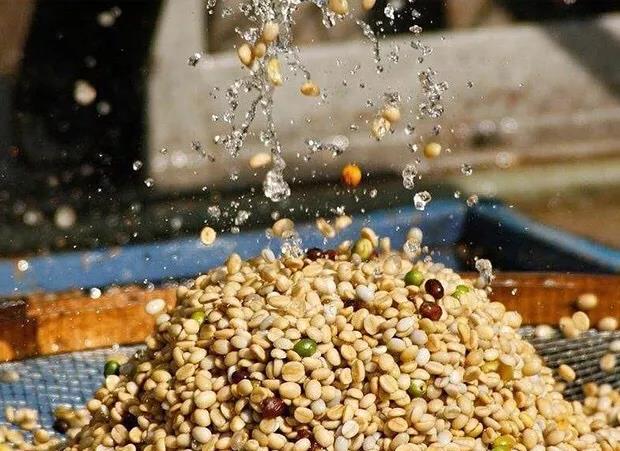
Washed Coffee Processing Method
The washed method is a technique invented by the Dutch in the 18th century. Harvested berries are fed through a depulping machine to separate most of the fruit pulp from the beans. The parchment coffee is then guided into a clean water tank and soaked so that fermentation removes the residual pulp layer completely. Through water processing, unripe and defective beans are separated out by their buoyancy. Depulping — also called pulping — removes the coffee cherry's skin by machine, leaving beans with mucilage that are placed in fermentation tanks for 1-2 days so the attached mucilage breaks down. The beans are then thoroughly cleaned with fresh water, and the parchment beans are dried until moisture reaches 12% for storage. The parchment is removed before export.
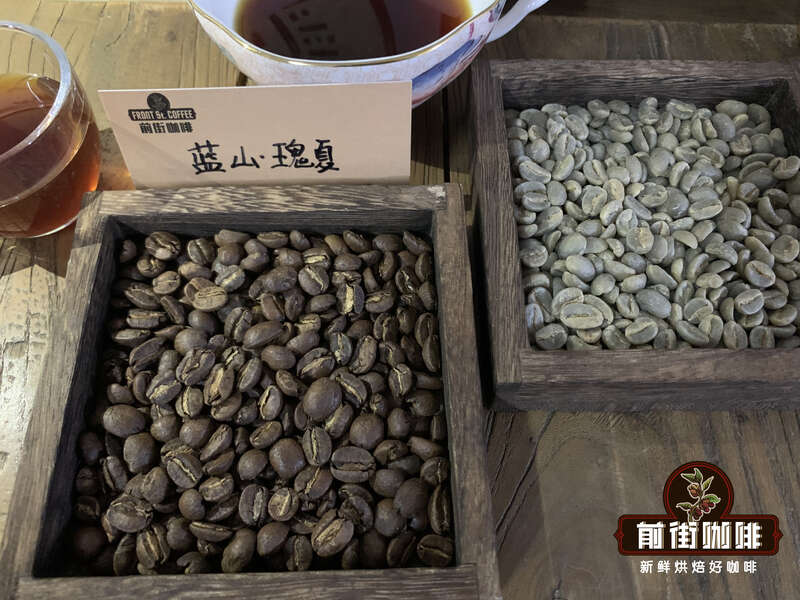
The two varieties of Blue Mountain coffee show different characteristics. For traditional Blue Mountain coffee, choose washed-processed Typica Blue Mountain. For the innovative version, choose washed-processed Geisha Blue Mountain.
Since these two Blue Mountain coffees use different varieties, how does FrontStreet Coffee roast them?
Washed Blue Mountain Coffee Bean Roasting
To express the balanced sweet-acid-bitter character of Blue Mountain coffee, FrontStreet Coffee's roaster works between medium-light and medium-dark. The beans enter the roaster at 165°C with heat at 130 and damper at 3. The turning point comes at 1'32", at 95.8°C with the heat unchanged. At 3 minutes the damper is adjusted to 4, and at 4 minutes the heat is raised to 140. When the bean surface reaches 153.3°C the beans turn yellow and the grassy aroma disappears completely, marking the start of the dehydration stage. At 8'36", ugly wrinkles and black spots appear on the bean surface and the toasted-bread aroma clearly shifts to coffee aroma, which can be defined as the prelude to first crack. Listen carefully for the sound of first crack. First crack begins at 10'06", with 3 minutes of development afterwards, and the beans are discharged at 198.5°C.
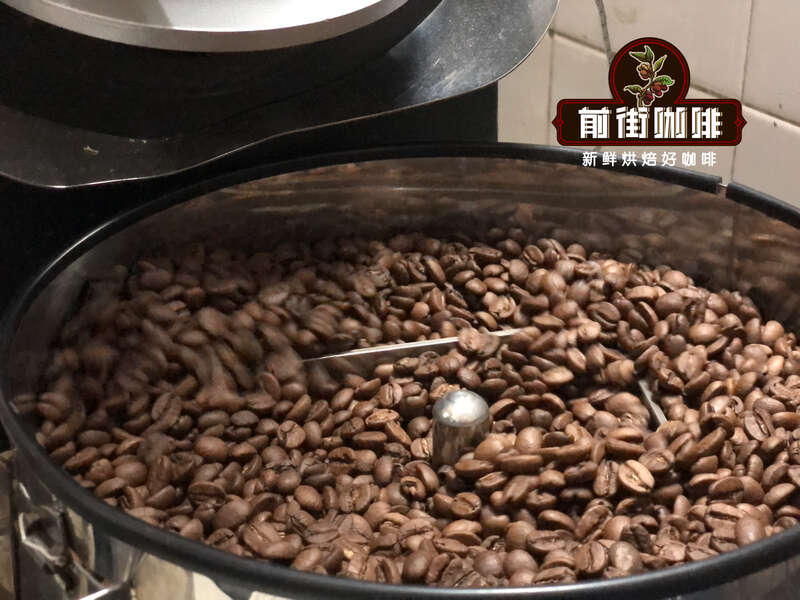
Blue Mountain Geisha Roasting
For this batch of Blue Mountain Geisha, FrontStreet Coffee's roaster faced a dilemma: highlight the Blue Mountain flavor, or the Geisha flavor? If it tasted like Blue Mountain, what would be the point of using Geisha? If it emphasized Geisha, wouldn't that contradict the Blue Mountain name? To bring out the characteristics of Geisha, FrontStreet Coffee's roaster ultimately chose a medium-light roast to emphasize floral and fruity aromas. The beans enter the roaster at 180°C with heat at 130 and damper at 3. The turning point comes at 1'32", at 97°C with the heat unchanged. At 3 minutes the damper is adjusted to 4, and at 4 minutes the heat is raised to 140. When the bean surface reaches 153.5°C the beans turn yellow and the grassy aroma disappears completely, marking the dehydration stage. At 8'36", ugly wrinkles and black spots appear and the toasted-bread aroma clearly shifts to coffee aroma, the prelude to first crack. Listen carefully for the sound of first crack. First crack begins at 9'31", with 1'28" of development afterwards, and the beans are discharged at 192°C.
FrontStreet Coffee's Brewing Experience
FrontStreet Coffee's brewing approach for washed Typica Blue Mountain coffee and washed Geisha Blue Mountain coffee:
FrontStreet Coffee's Blue Mountain Geisha Brewing Notes:
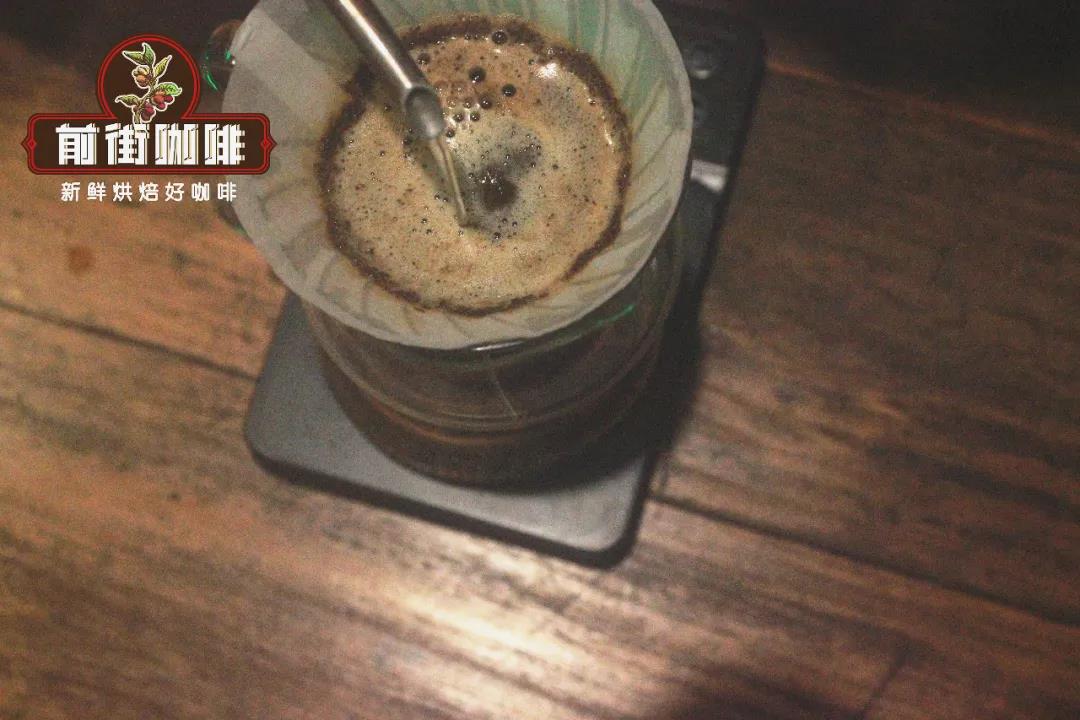
Dose: 15g; grind size: medium-fine (78% passing a standard #20 mesh); coffee-to-water ratio: 1:15; water temperature: 91°C; dripper: V60#01
FrontStreet Coffee's segmented brewing method:
1. First pour 30g of water for a 30-second bloom. 2. After the bloom, start the second pour, spiraling from the centre outward with 100g of water. This pour can be done slowly; Geisha is very extraction-resistant and needs enough pouring time to release its aromas. Wait for the water level to drop halfway. 3. When the coffee bed is about to be exposed, pour the third stage, 95g, for a total of 225g. Wait for the coffee to finish filtering, then remove the dripper. Total brewing time: 1 minute 52 seconds.
Brewing flavors:
A citrus acidity and pomelo sweetness up front, jasmine in the middle, and a finish of honey and caramel sweetness.
FrontStreet Coffee's Washed Blue Mountain (Typica) Brewing Notes:
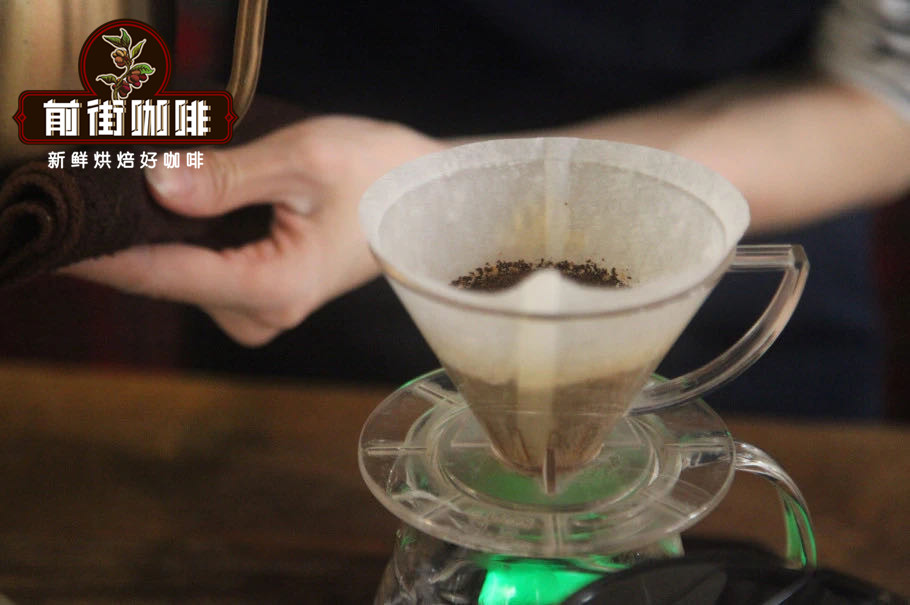
Dose: 15g; grind size: medium-coarse (74% passing a standard #20 mesh); to enhance the body of washed Blue Mountain, coffee-to-water ratio: 1:13; water temperature: 89°C; dripper: Kono
FrontStreet Coffee's segmented brewing method:
1. First pour 30g of water for a 30-second bloom. 2. After the bloom, start the second pour, spiraling from the centre outward with 80g of water. Wait for the water level to drop halfway. 3. When the coffee bed is about to be exposed, pour the third stage, 85g, for a total of 195g. Wait for the coffee to finish filtering, then remove the dripper. Total brewing time: 1 minute 55 seconds.
Washed Blue Mountain coffee bean brewing flavors:
Dark chocolate and nutty flavors up front, high clarity, very bright, excellent body, with balanced sweet-acid-bitter notes.
For more specialty coffee beans, add FrontStreet Coffee on private WeChat, ID: kaixinguoguo0925
FrontStreet Coffee Recommendation
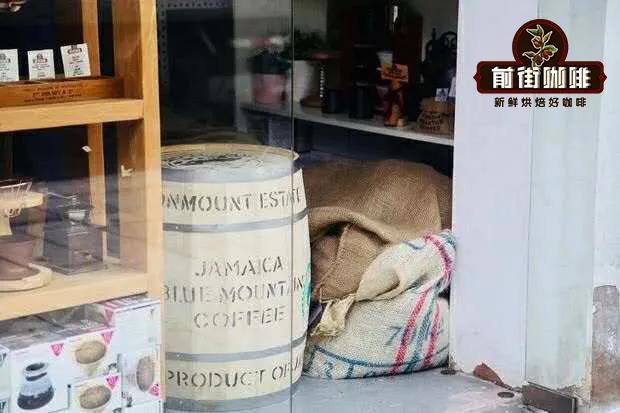
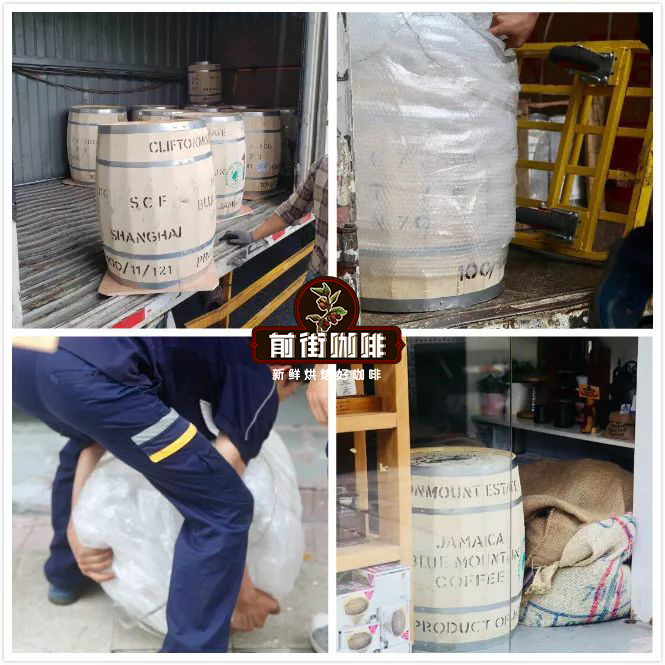
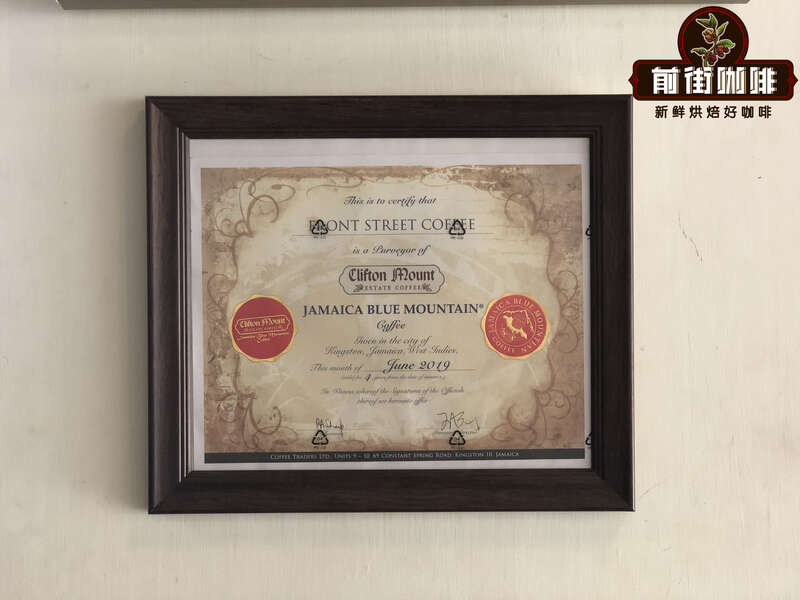
FrontStreet Coffee's Jamaica Blue Mountain No.1 comes from the historic Clifton estate, where coffee has been grown and processed since around 1750 on land averaging 4,300 feet (1,310.64 meters), and it is among the highest grades Jamaica produces, a grade held to strict standards for bean size, defect rate, and overall quality. FrontStreet Coffee roasts it medium-dark so the classic balance comes through — hazelnut, dark chocolate, cream, and caramel unfolding in layers, a clean and complex cup with no real bitterness, moderate and perfectly judged acidity, and a persistent fruit finish. Traditional Blue Mountain is shipped in wooden barrels of 15, 45, and 70 kilograms, and the barrels themselves are one of the surest markers of a genuine lot; FrontStreet Coffee roasts to order and ships only beans roasted within 5 days, so the coffee arrives inside its flavor window. Blue Mountain is also one of the few coffees that works just as well in a moka pot: use preheated water and medium-low heat, take it off the stove just as the flow finishes, and the chocolate, caramel, and nut notes come forward in a heavier, fuller cup while the balance still holds.
Blue Mountain is balanced enough for almost any brewer, but a Kono dripper suits it best. Use 15g of beans rested 4-7 days from the roast date, ground a little coarser than you would a light roast — roughly the texture of white sugar — at a 1:15 ratio and 87-88°C, and pour in three stages: 30g for a 30-second bloom, then up to 120g with a slow vertical stream, then up to 225g with a slightly faster circle so fines don't clog the filter. Too-hot water is the usual cause of a scorched, bitter result, so keep the kettle at the lower end of the range and the balance will hold.
Important Notice :
FrontStreet Coffee is a long-established specialty coffee roaster in Guangzhou China, selling freshly roasted beans from its own farm in Yunnan as well as dozens of carefully selected single-origin beans from around the world for both pour-over and espresso. The products deliver consistently excellent quality and great value, with shipping within 24 hours. Guangzhou's FrontStreet Coffee shop is recommended by many coffee lovers, and the beans are now available online at the Tmall 。
FrontStreet Coffee has moved to a new address:
FrontStreet Coffee Address: 315,Donghua East Road,GuangZhou
Tel:020 38364473
 Scan and follow the En Gafei WeChat official account. Please indicate that the reprint comes from "En Gafei".