【Antigua Coffee Region】What are the flavors of the selected batch Margaret coffee beans? Antigua coffee varieties

Flavor Profile of Selected Batch Margaret Coffee Beans from the Antigua Coffee Region | Advantages of the Antigua Coffee Growing Environment?
Antigua, a first-class growing region, features volcanic soil similar to Costa Rica's Tarrazu region. Antigua coffee is grown on the volcanic slopes about an hour's drive from Guatemala City. Compared to Costa Rica, it better preserves its distinct character, mainly because it has more microclimates - and climate strongly influences bean characteristics.
Guatemala's Antigua Valley: A Premier Coffee Growing Region
Guatemala's Antigua Valley has always been the country's most famous coffee region. The valley's microclimate provides excellent conditions for coffee cultivation - a uniqueness known worldwide. Its path to fame began decades ago, when certain Japanese coffee traders discovered the exceptional coffee here. Rich volcanic soil, low humidity, abundant sunshine, and strong day-night temperature contrasts combine to create the distinctive personality of Antigua coffee. The valley is ringed by three volcanoes: Agua, Acatenango, and Fuego. Periodically, Fuego adds fresh, rich volcanic ash to the environment; this ash contains abundant minerals and provides soil conditions that help retain moisture against Antigua's dry climate. Like all coffee grown in Guatemala, Antigua coffee grows under shade. These shade trees not only protect the coffee from the cold nights of December and January but also create an ecological corridor for wildlife in this subtropical region.
Thanks to its extensive mountain ranges and significant regional climate variations, Guatemala has developed eight major coffee growing regions, all in highland terrain under a subtropical climate with abundant, stable rainfall and fertile volcanic ash soil. The beans produced here are all Arabica varieties, each with different flavors and characteristics - superior acidity and fruity aromas, smooth and mellow, belonging to the world's top-tier coffees and excellent as single origin.
Climate Conditions
Climate: The region's climate is temperate, with an average annual temperature of 22°C. The Antigua Valley is surrounded and protected by mountains and volcanoes that shield it from northern winds.
Altitude: Situated at 1,500 meters above sea level, producing Strictly Hard Bean (SHB) quality coffee.
Weather: The rainy season lasts six months, from May to October; the dry season runs from November to April. During the dry season, temperatures are cool from November to January at around 14°C, while February to April brings warm averages of 24°C. This unique climate makes for a very special coffee-growing region. Annual rainfall is approximately 800-1,200 millimeters.
Soil: Volcanic soil mixed with fresh volcanic ash is extremely rich in minerals and nutrients - ideal for coffee. The area was once a lake, and the remaining sediments make the land fertile with a strong character that shapes the coffee's unique quality. Within Antigua stand three major volcanoes: Acatenango (now independently established as Guatemala's 8th coffee region), Fuego, and Agua. Fuego is active, and its activity continuously renews the region's fertile volcanic soil, along with unique volcanic pumice - cooled lava with porous, insulating properties and excellent moisture retention. Since Antigua has the least rainfall among Guatemala's 8 major regions and coffee needs sufficient moisture, the pumice's water-holding capacity precisely compensates for the shortfall, while the beans develop more distinctive regional flavors.
Cultivation: Most of the coffee is Arabica Bourbon, all grown under the shade of Gravilea trees. Cherries are carefully hand-picked when ripe, then transported to the La Esperanza wet mill on the outskirts of Antigua city.
Coffee Processing: At the wet mill, beans are separated with a pulping machine, then fermented to remove the remaining pulp and washed with clean water. Coffee is 75% sun-dried. Drying is done carefully to customer requirements, ensuring consistent quality in every bag - and in every harvest.
Harvest Season: Flowering begins in late April or early May, with harvest from December to March. Such high-quality green beans typically become available from mid-January.
Regional Characteristics
Region: Antigua Volcanic Region, versatile volcanic fertile soil: within Antigua stand three major volcanoes - Acatenango (now independently established as Guatemala's 8th coffee region), Fuego, and Agua. Fuego is active, continuously providing fertile volcanic soil and unique volcanic pumice: cooled lava with porous, insulating properties and excellent moisture retention. Since Antigua has the least rainfall among the 8 major regions and coffee needs ample moisture, the pumice's moisture retention precisely compensates, while the beans develop more unique regional characteristics.
Growing Altitude: 1,500-1,700m, with drastic day-night temperature differences - greatly helpful for building sweetness and unique flavors in the coffee cherries.
Estate: Margaret Coffee
Processing Method: Washed
Varieties: Bourbon, Caturra, Catuai
Annual Rainfall: 800-1,200mm
Soil: Volcanic soil
Shade Trees: Gravilea, high-density shade trees: besides providing shade, they prevent frost damage and create unique microclimates. Cold nights in Antigua between December and February occasionally bring frost, and at such times the high-density shade trees play their role, shielding the coffee trees. The groundwater level in Antigua is not deep, and these trees easily absorb moisture, forming a microclimate suitable for plant growth together with the surrounding coffee.
Flavor: A refreshing sensation of citrus lemon tea, floral notes, orange, mixed berries, and walnut, with caramel sweetness and a Jin Xuan tea and milk chocolate aftertaste. Its acidity, sweetness, and texture are perfectly coordinated, with flawlessly rounded flavors, plus a hint of smoky aroma that adds depth and mystery. In short, some people would happily drink nothing but Guatemala coffee their whole lives.
FrontStreet Coffee Recommended Brewing:
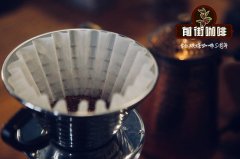
Dripper: Hario V60
Water Temperature: 90 degrees
Grind Size: Fuji Royal grinder setting 3.5
Brewing Method: Water-to-coffee ratio 1:15, 15g of coffee. First pour 25g of water for a 25-second bloom. Second pour to 120g, then pause. Wait until the water level in the coffee bed drops to halfway, then continue pouring slowly to 225g total, with extraction time around 2:00.
Analysis: Three-stage brewing clearly defines the coffee's front, middle, and back-end flavors. Because the V60 has many ribs and drains quickly, pausing during the pour helps extend extraction time.
FrontStreet Coffee Recommendation
Antigua sits among Guatemala's eight major highland growing regions - all subtropical, with abundant stable rainfall and fertile volcanic ash soil, producing Arabica beans that range from superior acidity and fruity aroma to smooth mellowness, worthy of single-origin brewing. If you enjoy this profile and want dependable everyday options, FrontStreet Coffee's entry-level specialty lineup is a good place to start.
Ethiopia: the natural-process Sidamo Huakui shows berry, floral, jackfruit, melon, and honey notes, while the washed Yirgacheffe Gedeb (Dingding) Cooperative lot offers jasmine florals, lemon acidity, and berry tones. Brazil: the Cerrado Red Bourbon everyday lot delivers typical cream, peanut, and cocoa flavors, and the higher-grown Fazenda Rainha - a rare Yellow Bourbon - adds buttery nut, melon-seed, macadamia, and almond aromas with sugarcane sweetness, thick and silky with or without milk.
Indonesia: FrontStreet's Mandheling, wet-hulled to suit the island's rainy climate, is richer and smoother than Blue Mountain with herbal, spice notes - and the PWN Golden Mandheling, triple hand-sorted plus machine-sorted, is even cleaner with clear woody aroma and caramel sweetness. Rounding out the list: Colombia Huila (Pink Bourbon and Big Navel) with soft florals and fruit acidity, Costa Rica's honey-processed Blackberry and raisin-honey Mozart with dried-fruit sweetness and osmanthus-rose fragrance, China's Yunnan (washed small-bean arabica and 2013 Natural Typica with nut, brown sugar, black tea, and hazelnut-apricot notes), and Panama's entry-level washed Boquete Geisha with unmistakable orange-honey character.
Important Notice :
FrontStreet Coffee is a long-established specialty coffee roaster in Guangzhou China, selling freshly roasted beans from its own farm in Yunnan as well as dozens of carefully selected single-origin beans from around the world for both pour-over and espresso. The products deliver consistently excellent quality and great value, with shipping within 24 hours. Guangzhou's FrontStreet Coffee shop is recommended by many coffee lovers, and the beans are now available online at the Tmall 。
FrontStreet Coffee has moved to a new address:
FrontStreet Coffee Address: 315,Donghua East Road,GuangZhou
Tel:020 38364473
 Scan and follow the En Gafei WeChat official account. Please indicate that the reprint comes from "En Gafei".