How does Sumatra Indonesia Java Island coffee bean taste? What is the story of Java coffee cultivation history?
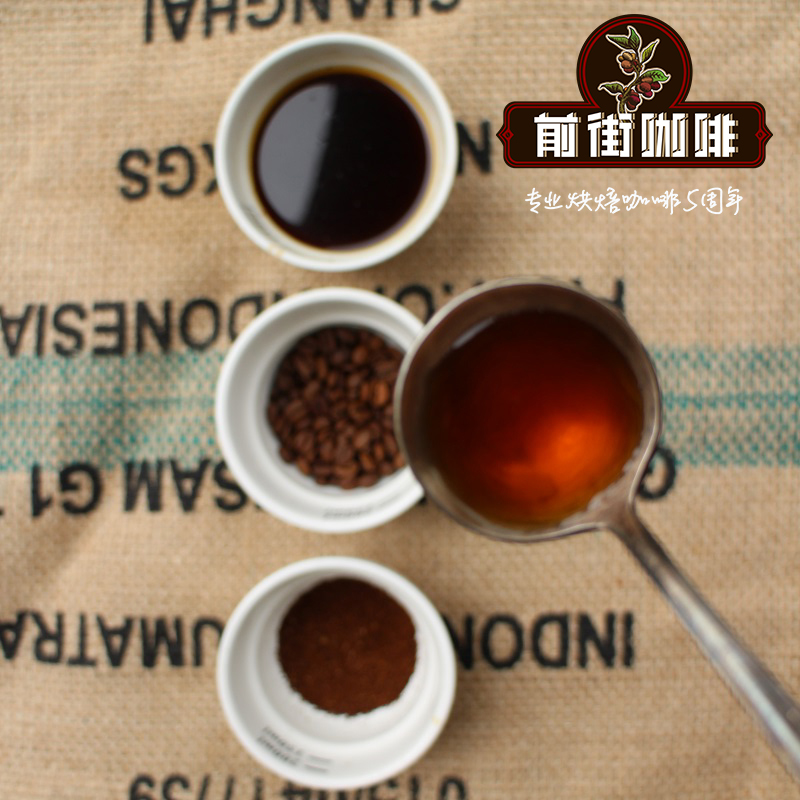
Flavor Profile and History of Java Coffee
What does Sumatra's Java Island coffee taste like, and how did coffee cultivation on Java actually begin?
Indonesian coffee is commonly split into a few main types: Sumatra Mandheling, Sulawesi Toraja, Java, and Kopi Luwak. Sumatra, Sumatra Mandheling and Mandheling all refer to coffees from the island of Sumatra. Today the best Java coffee comes from the Preanger, Cheribon, Buitenzorg and Batavia regions. Java coffee has a mature, delicate, gentle flavor with almost imperceptible spicy notes and a rich, full body. With age it grows even more aromatic, though truly aged Java is rare. Java is the region outside coffee's native habitat where coffee has been cultivated the longest. Coffee trees arrived on Java in 1699 at the urging of the mayor of Amsterdam, imported from Malabar. Coffee from Indonesia's archipelago regions, including Celebes, Lontar Island, Flores and Timor, is also sold as Java coffee. These beans are as good as Java beans, but the fresh crop is small and hard to buy.
Indonesia's total coffee production ranks among the largest in the world, with a balanced split between Arabica and Robusta and quality ranging from affordable to premium. Indonesia is also a country of 17,508 islands, the world's largest archipelagic nation, which makes its true territorial scope hard to grasp. Sumatra is the world's sixth-largest island. Java coffee is also known as Old Java, because on the long voyage to New York the moisture naturally dispersed, and the beans were well received there. Aged Old Java has a richer aroma, a unique musty flavor and a rare light brown color, though genuinely aged Java is uncommon.
Below 3,500 feet, Arabica coffee trees have virtually disappeared because of leaf disease. Today hardy Novaster, Liberica and hybrids of the two are cultivated with excellent results. Geographically, the main specialty coffee areas for Sumatra Mandheling are Aceh province in the north and North Sumatra province (abbreviated North Su) to the south of Aceh. Aceh's cultivation history runs more than thirty years earlier than North Su's. Aceh's annual production is about 30,000 tons, while North Su currently produces nearly 50,000 tons.
Coffee cultivation in Sumatra dates back to the 18th century, when the Dutch colonized Indonesia and introduced Arabica. It was not until World War II, when Japanese forces advanced south and reached Sumatra, that a Japanese soldier tasted the local coffee. Its rich, complex flavor left him unable to part with it, and he asked in surprise, "Where is this coffee grown?" He spoke in Japanese, and the local Mandheling people, reading his gestures, thought he was asking about their ethnicity, so they answered "Mandheling, Mandheling!" The soldier assumed the coffee was grown in Mandheling. After the war ended, he recalled the coffee he had tasted in Sumatra and commissioned Indonesian merchants to ship about fifteen tons of it to Japan. That flavor he introduced became hugely popular in Japan, establishing its status as the "king of beans" until Jamaican Blue Mountain arrived on the scene.
A coffee tragedy in the mid-1970s changed Java Island's standing among coffee lovers. Local farms collectively cut down the less productive, pest-prone superior Arabica trees and switched to high-yield, easy-to-care-for Robusta. This caused the once world-renowned excellent coffee to nearly disappear from the market. Today only six state-owned farms remain on the island, managed and cultivated by the government, still growing traditional superior Java Arabica trees. Thanks to these state-owned estates, we still have a chance to taste the remaining Java Arabica, whose production is already extremely limited.
Java and Sulawesi Toraja were introduced and cultivated during the same period. Java coffee is now dominated by Robusta varieties, so we will not dwell on it further. Sulawesi Toraja shares similar flavor characteristics with Mandheling, but the Japanese originally tasted coffee from Sumatra rather than Sulawesi, so it missed its chance at fame. Because of these different fates, Sumatra attracted abundant agricultural investment -- even Japanese UCC has direct farms here -- making today's Mandheling quality even better.
Flavor Profile
Flavor: The sweetness of blackberry and grape, combining slight acidity and bitterness.
Aroma: Rich and full-bodied, with nutty sweetness and bright, balanced acidity.
Other: Java Island's coffee trees were originally Arabica, but pest and disease pressure meant most Arabica trees could not survive, so hardy Novaster, Liberica and hybrids of the two are now cultivated instead.
FrontStreet Coffee's Recommended Brewing Method
Dripper: Hario V60
Water Temperature: 88°C
Grind Size: Fuji Royal grinder setting 4
Brewing Technique: Water-to-coffee ratio 1:15, using 15g of coffee. First pour 25g of water and let it bloom for 25 seconds. Second pour up to 120g and pause. Wait until the water level drops to half before continuing to pour. Pour slowly until reaching 225g total water, with an extraction time of around 2:00.
Analysis: A three-stage pour clearly separates the front, middle and back-end flavors of the coffee. Because the V60 has many ribs and drains quickly, pausing the pour extends the extraction time.
FrontStreet Coffee Recommendation
To taste the wet-hulled character that defines Sumatran coffee, start with FrontStreet Coffee's PWN Golden Mandheling. Sourced from Indonesia's PWN, it is built on beans of 18 screen and above, with fewer than three defective beans per 300-gram sample, meeting the top G1 standard and then going through three rounds of hand sorting. That rigor raises the cup's cleanliness and its intensity of sweetness, and the supply is limited.
For a more traditional take, FrontStreet Coffee's Lintong Mandheling comes from the Lintong area around Lake Toba in North Sumatra. Grown under the region's wet-hulled process, it is roasted medium-dark and delivers a heavy body with the earthy, herbal flavors people either love or hate: clove and woody aromas, low acidity, a spice-and-mint character and a strong, lasting sweetness.
Important Notice :
FrontStreet Coffee is a long-established specialty coffee roaster in Guangzhou China, selling freshly roasted beans from its own farm in Yunnan as well as dozens of carefully selected single-origin beans from around the world for both pour-over and espresso. The products deliver consistently excellent quality and great value, with shipping within 24 hours. Guangzhou's FrontStreet Coffee shop is recommended by many coffee lovers, and the beans are now available online at the Tmall 。
FrontStreet Coffee has moved to a new address:
FrontStreet Coffee Address: 315,Donghua East Road,GuangZhou
Tel:020 38364473
 Scan and follow the En Gafei WeChat official account. Please indicate that the reprint comes from "En Gafei".