How Many Coffee Regions Are There in Java, Indonesia? What's the Flavor Profile of Indonesian Java Coffee?

For more specialty coffee knowledge, please follow the WeChat official account: FrontStreet Coffee
When people think of Indonesia's specialty coffee regions, Sumatra comes to mind first. But beyond Mandheling, FrontStreet Coffee also offers beans from another specialty region in West Java—and this coffee differs sharply from the Indonesian profile most drinkers know. It lacks the herbal and spicy notes; instead, it offers more delicate tropical fruit acidity. In this article, FrontStreet Coffee introduces this West Java coffee.
Coffee Region Introduction
West Java Province is a first-level administrative region of Indonesia, located on the western part of Java Island, bordered by the Java Sea to the north and the Indian Ocean to the south, and including offshore islands. Java covers an area of 46,300 square kilometers and has a tropical rainforest climate, remaining hot and humid year-round.

The northern coastal plains are the hottest, while the mountainous interior is much cooler. High humidity often produces oppressive conditions. From November to March the northwest monsoon brings rain and clouds; from April to October the southeast monsoon brings more sun and less rain. Jakarta receives about 1,760 millimeters (69 inches) of rain per year, with average daily maximum temperatures of 30°C (86°F) and minimums of 23°C (74°F). In the highlands of Tosari (elevation 1,735 meters [5,692 feet]), average temperatures range from 22°C down to 8°C (72°F to 47°F). Java's soil is exceptionally fertile, periodically renewed by volcanic ash.
Java holds an important place in coffee history. Unlike most other Indonesian coffees, which are grown on small farms and processed in the local style, Java Arabica grows on large farms or plantations—many historically government-run—all using modern wet processing. The variety is S795, known locally as Jember, and artificially cultivated. FrontStreet Coffee offers this bean because it represents the refined aroma of the Java region: relatively soft acidity, a delicate mouthfeel, and good balance. The fragrance and acidity of Java coffee surpass those of coffees from Sumatra and Sulawesi.

Coffee Cultivation History
Coffee spread from Mocha to India around 1600 and was planted in Ceylon in 1658, though it never yielded good harvests there. In 1699 the Dutch brought coffee cultivation from India to Java, and in 1711 the first shipment of seedlings was exported to Europe by the Dutch East India Company (VOC, established in 1602). Within ten years, Java coffee exports rose to 60 tons per year. Indonesia was the first country outside Yemen and Ethiopia to cultivate coffee widely, and the VOC monopolized the trade for more than 60 years (from 1725 to 1780).
In the early Dutch colonial era, Typica was cultivated, with seeds introduced from Ceylon (modern-day Sri Lanka). The Dutch colonial government first planted coffee in Batavia, extending south to Sukabumi, then spread it through central and eastern Java, parts of West Java, Sumatra, and Sulawesi—establishing coffee's premium market position. Coffee trees from Java were exported to the Netherlands in 1711, grown in Amsterdam greenhouses, and sent to the Palace of Versailles in France in 1715. From there, the Dutch and French spread coffee cultivation across Asia and the Americas, marking the beginning of New World coffee.

In the late 19th century, Dutch colonists established large coffee plantations on the Ijen Plateau in eastern Java. In the 1920s, small farmers across Indonesia began growing coffee as a cash crop. But disaster struck in 1876, when coffee leaf rust swept through Indonesia and destroyed most of the Typica stock.
By the late 1880s, most plantations had been devastated by pests and disease, with the plague spreading across central and eastern Java. In the early 20th century, Arabica was severely damaged by leaf rust once more, destroying much of the Dutch variety system. In response, the Indonesian Coffee and Cocoa Research Institute (ICCRI) was established in 1911, building on the coffee and cocoa cultivation knowledge the Dutch had introduced centuries earlier. ICCRI pioneered coffee and cocoa research with national authorization for R&D, developing innovative technologies from farming through processing, and is recognized internationally as a leading research institution.

ICCRI serves coffee and cocoa farmers, aiming to solve persistent problems and strengthen technology transfer. It employs more than 300 staff across three main areas: research and service, and commercial and support personnel. There are 36 researchers, including 12 PhDs, 7 master's degree holders, and 17 college-level researchers, classified as 11 principal research scientists, 9 research scientists, 11 associate scientists, and 5 assistant scientists. ICCRI provides data and information to small farmers, private companies, national and regional governments, associations, and other stakeholders.
Java coffee is cultivated on nationalized estates that actively promote new Arabica varieties, which are distributed to small farmers through government development projects. Over 90% of Indonesian coffee is grown on small farms of less than 1 hectare per farmer. Most production is organic, with 19 farmer cooperatives and exporters holding international organic certification. More than 20 Arabica varieties are commercially cultivated in Indonesia, falling roughly into six major groups:

Typica is the original variety introduced by the Dutch. Most Typica was destroyed in the late 1880s when leaf rust swept Indonesia, but the Typica mutants Bergandal and Sidikalang can still be found in the highlands of Sumatra.
Hibrido de Timor (HDT), also known as "Tim Tim," is a natural hybrid of Arabica and Robusta that appeared as a single variety around 1917-1918 and was planted in Aceh in 1979.
Linie S: this lineage evolved from Bourbon in India. The most common members are S-288 and S-795, often found in Aceh Province, Flores, and Lindong.
The Ethiopian lines include Rambung and Abyssinia, varieties brought to Java in 1928 and continuously cultivated in Aceh. Another Ethiopian group found in Sumatra, called "USDA," was introduced to Indonesia in the 1950s.
Caturra is a Bourbon mutant originating from Brazil.

Catimor is a crossbreed bred to improve disease resistance and cup quality. There are many Catimor types, including one named "Ateng-Jaluk" currently being studied for its suitability in Aceh and its potential for excellent cupping scores.
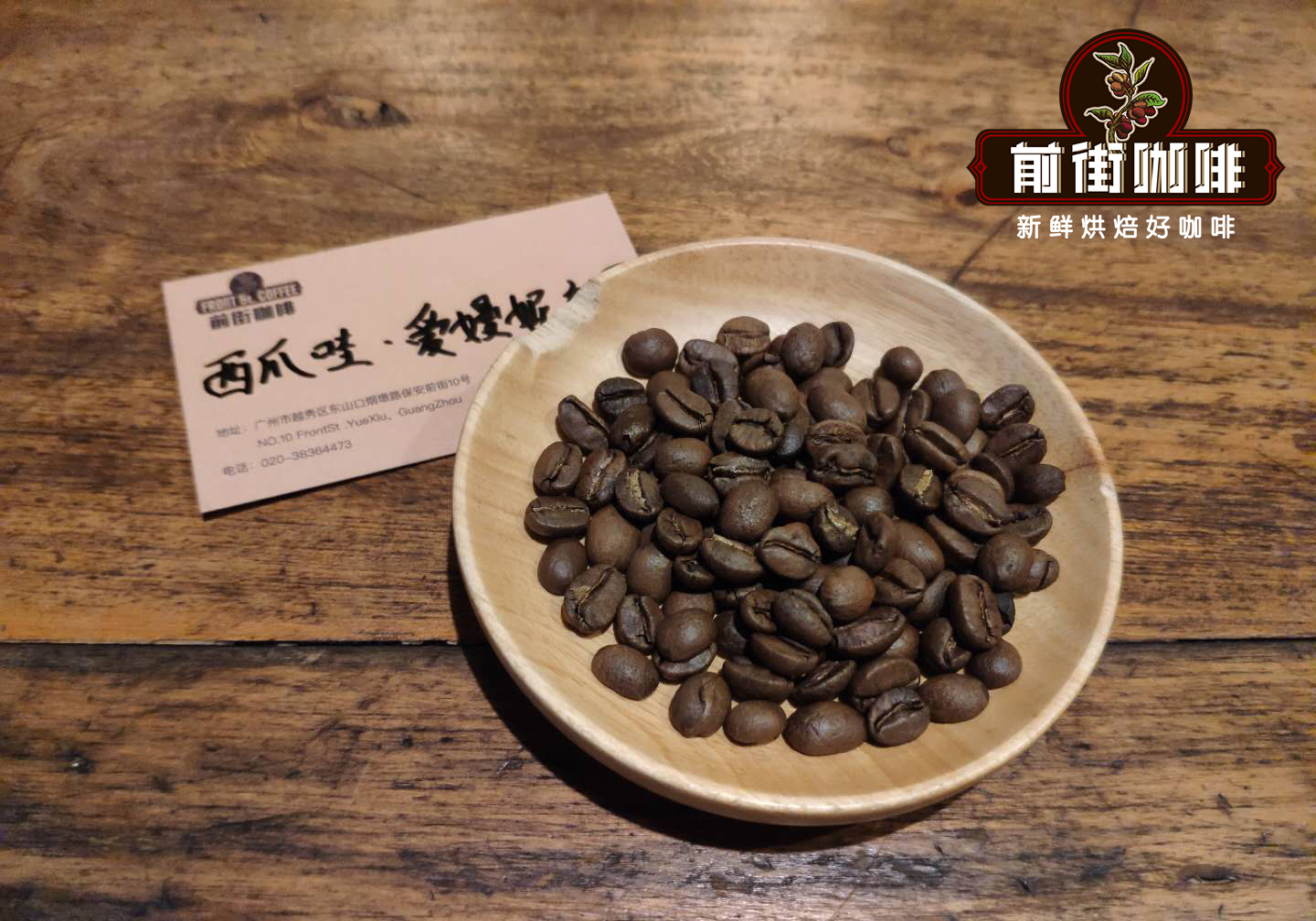
FrontStreet Coffee: Honey Processed West Java Coffee Beans
Country: Indonesia
Region: West Java, Mount Tenggale
Estate: Ameni Estate
Altitude: 1400-1600 meters
Variety: Jember
Processing Method: Honey Process
Coffee Variety
S795, known locally as Jember, produces blue-green beans. It descends from S288, itself an excellent hybrid cultivated in India in 1946. Because the first generation of S288 was a hybrid of Arabica and Liberica, it always retained an earthy Liberica taste. Indian botanists then crossed the first-generation S288 with the Kent variety to create the S795 we know today.
The S795 grown in West Java was introduced by the Jember Coffee Research Center in East Java, which imported varieties from India and distributed them to Java farmers—hence the local habit of calling S795 simply "Jember."

Processing Method
Honey processing is relatively complex, time-consuming, and demanding. The first step is to select high-quality cherries, then remove the pulp while keeping the mucilage layer intact—the heart of honey processing. This layer is rich in sugars and acids, and during drying, that sweetness and acidity gradually migrate into the beans. The second step, drying, is the most critical condition for producing quality coffee. Honey processing retains the cleanliness of washed coffee; although brightness drops slightly, sweetness and caramel notes increase. Depending on how much mucilage is left on, honey-processed coffee is divided into yellow, red, and black honey.
FrontStreet Coffee Roasting Parameters
FrontStreet Coffee's roasters noted that West Java green beans are high-density, so heat must be applied with particular care. To highlight the fruit and sweetness, a medium roast was chosen. The initial heat is set relatively high, then adjusted early during the dehydration stage so that taste and aroma stay even through the roast.

FrontStreet Coffee Cupping Report
Through cupping, FrontStreet Coffee found this Java coffee's defining trait to be its complex sweetness and fruit aroma. Compared with African Yirgacheffe, which is also celebrated for florals, the more pronounced fruit character stands out. The profile leans toward heavy tropical fruits like mango and jackfruit—complex and steady—with subtle red wine notes contributed by the honey process.

FrontStreet Coffee Brewing Recommendations
Water Temperature: 90-91°C
Grind Size: EK43s setting 10 (fine sugar size / 20 standard test sieve, sifting until 80% passes)
Coffee-to-Water Ratio: 1:15
Coffee Amount: 15 grams

FrontStreet Coffee Brewing Method:
First pour 30g of water for a 30-second bloom, then pour 95g more (scale shows around 125g), completing the pour in about 1 minute. When the water level drops to two-thirds of the coffee bed, pour the remaining 100g (scale shows around 225g), finishing in about 1 minute 40 seconds. At 2'00" the drip filtration is complete; remove the filter cone to finish extraction.
Brewing Flavor: very rich tropical fruit flavors, sweetness from fruits like mango and jackfruit, and a fermented red wine note.
FrontStreet Coffee Recommendation
If the herbal, spicy side of Indonesian coffee is not to your taste, FrontStreet Coffee's own lineup offers a useful point of comparison. The best-known Indonesian style comes from Sumatra's Aceh and North Sumatra provinces, where Arabica is grown around Lake Tawar in the Gayo Mountains and around Lake Toba in the Lintong region, and processed with the local wet-hulled (giling basah) method—a technique born of the island's humid climate, where growers hull the parchment while the beans are still semi-dry to speed up drying.
The flagship example is FrontStreet PWN Golden Mandheling from the PWN company: beans of 18 mesh or larger, fewer than 3 defects per 300-gram green sample, meeting the top G1 grade, followed by three rounds of hand sorting to strip out remaining defects. The result is unusually clean and sweet for a Mandheling, with caramel, dark chocolate, and herbal depth over a thick body—perfect for drinkers who dislike acidity.
To brew it well, FrontStreet Coffee recommends 87-88°C water, 15 grams of coffee at a coarse-sugar grind, a 1:15 ratio, and a three-stage pour: 30ml to bloom, 100ml to lift the bed, and a gentle final 95ml poured at the center to boost sweetness, yielding a full body with caramel sweetness and chocolate-nut flavors.
Important Notice :
FrontStreet Coffee is a long-established specialty coffee roaster in Guangzhou China, selling freshly roasted beans from its own farm in Yunnan as well as dozens of carefully selected single-origin beans from around the world for both pour-over and espresso. The products deliver consistently excellent quality and great value, with shipping within 24 hours. Guangzhou's FrontStreet Coffee shop is recommended by many coffee lovers, and the beans are now available online at the Tmall 。
FrontStreet Coffee has moved to a new address:
FrontStreet Coffee Address: 315,Donghua East Road,GuangZhou
Tel:020 38364473
 Scan and follow the En Gafei WeChat official account. Please indicate that the reprint comes from "En Gafei".