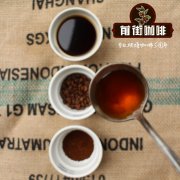
What is the taste of Indonesian Java coffee? What are the characteristics of Java coffee? What about Indonesian Java coffee
What is the Flavor Profile of Indonesian Java Coffee? Characteristics and Brands

Among the many storied names in Indonesian coffee, Java is the one with the deepest roots — and the strangest journey, from colonial plantations to aged "Old Java" beans prized half a world away.
Indonesia is one of the world's largest coffee-producing countries, with approximately 2 million farmers and traders relying on coffee cultivation for their livelihood. For Indonesians, coffee is not just a beverage but a culture and a way of life, and the country grows many varieties of international renown. Java coffee — sometimes called Old Java, after the Old Government — is guaranteed to age for at least ten years in tropical regions and has become a household name in the coffee world. Old Java carried a good reputation well before 1915: during the long sea voyage to New York, the beans naturally lost moisture and therefore earned better evaluations on arrival. Aged Java beans have a special moldy taste and a rare light brown color. Today the best Java coffee comes from the Preanger, Cheribon, Buitenzorg, and Batava regions. Fresh Java coffee has a mature, delicate, gentle flavor with an almost imperceptible spicy aroma — both rich and mellow — and it grows even more aromatic with age, though aged Java is rare. Java is also the region outside coffee's native habitat with the longest history of coffee cultivation: coffee trees were introduced there in 1699, at the encouragement of the mayor of Amsterdam, from stock imported via Malabar.
Coffee from other parts of the Indonesian archipelago — Celebes, Lombok Island, Flores, and Timor — is also sold as Java coffee. Those beans are as good as genuine Java beans, but fresh ones are small and not easily available. In areas below 3,500 feet in altitude, Arabica has virtually disappeared due to leaf diseases, and the hardy Robusta and Liberica varieties and their hybrids are now cultivated instead, with very good results. Coffee lovers have almost certainly tasted Indonesian coffee: the best growing areas across the whole archipelago lie on Java Island, Sumatra Island, and Sulawesi Island.
Coffee from Central Java has kept breaking into Asian and European markets in recent years. According to several coffee farmers from the Temanggung region of Central Java, many coffee enthusiasts and industry professionals have recently been traveling directly to growing areas to buy coffee straight from farmers. The farmers note that since 2012, Japanese coffee professionals have purchased roasted coffee directly from their farms — reportedly a Japanese coffee shop owner who bought rare civet coffee at 1.8 million Indonesian Rupiah per kilogram (1 US dollar approximately equals 13,000 Indonesian Rupiah). To date, that Japanese company has bought a total of 195 kilograms across three separate purchases. According to the farmers, the company found them online and came to buy in person. Beyond civet coffee, another farmer in the region mentioned that several Korean and Belgian businesses have also visited to buy directly from growers. Ordinary Arabica and Robusta fetch only about 85,000 Indonesian Rupiah per kilogram, and between 2013 and 2015 the region sold approximately 14 metric tons of those varieties. Officials from the Indonesian Ministry of Trade and the Ministry of Cooperatives and Small and Medium Enterprises offices in Central Java say most coffee farmers there are small individual growers who export directly without going through coffee exporters, so the agencies keep no detailed export data. And with the rapid spread of the internet, even farmers in remote areas can now deliver products straight to consumers.
Three Major Coffee Brands
Those three islands — Java, Sumatra, and Sulawesi — have established three major coffee brands, whose total production accounts for 90% of all Indonesian coffee:
☕ Mandheling Coffee from Sumatra - Moderate acidity with an extremely rich aroma.
☕ Java Coffee from Java Island - Belongs to the Arabica coffee variety, with lower acidity, delicate texture, and good balance.
☕ Robusta Coffee from Sulawesi Island - Full-bodied beans with rich aroma.
All three are claimed to be of world-class quality.
Precious and Rare Specialty Coffee Varieties in Indonesia
Beyond the big three, Indonesia also produces precious and rare specialty coffees:
☕ Bali Kintamani Coffee (Kopi Kintanani)
Kintamani coffee grows in the cool mountainous areas of Kintamani, Bali, and is a type of Arabica.
Because the people of Bali grow Kintamani coffee alongside fruits and vegetables, the beans take on a fruity flavor and a mild taste.
It has moderate acidity with a non-acidic, non-astringent mouthfeel.
☕ Sulawesi Toraja Coffee (Kopi Toraja)
Toraja coffee is mainly produced in the mountainous regions of central and southwestern Sulawesi Island and is one of the rarer varieties in the world.
Cultivation and harvesting are difficult, with annual production under 1,000 tons. Toraja coffee has a subtle fruity sweetness.
It enters with a thick, rich texture, after which the bitterness fades, leaving a sweet aftertaste that lingers.
☕ Aceh Gayo Coffee (Kopi Gayo)
Gayo coffee grows in the Gayo highlands of the Aceh Special Region in northern Sumatra and is relatively well-known within Indonesia.
Production is mainly Arabica, with a strong and complex flavor and pronounced bitterness.
☕ Flores Bajawa Coffee (Kopi Java)
Flores Bajawa coffee grows in the Bajawa highlands of Flores Island in Indonesia's East Nusa Tenggara Province and belongs to the Arabica variety.
Locals commonly use the traditional wet-hulling processing method, resulting in coffee with great body.
☕ Civet Coffee (Kopi Luwak)
Civet coffee is one of the most expensive coffees in the world. Ripe coffee cherries are eaten by civets.
After fermenting in the civet's digestive system and being excreted, the beans are collected and processed into the highly sought-after civet coffee (also known as cat poop coffee).
Civet coffee has a unique aroma, low acidity, a relatively plain taste, and is less irritating to the stomach.
☕ North Sumatra Sidikalang Coffee (Kopi Sidikalang)
Sidikalang is a mountainous area west of Lake Toba in North Sumatra Province, producing very typical Mandheling coffee.
Sidikalang coffee is a high-quality coffee with strong flavor and aroma, low acidity, and chocolate notes.
It is best enjoyed simply as black coffee.
Flavor Profile and Brewing Recommendations
Flavor: Indonesian Arabica beans account for only about 10% of the country's total coffee production. Low in yield but fragrant and mellow, they offer a rich flavor without sweetness, acidity, or astringency, finishing with hints of floral notes and bitter dark chocolate. The profile is a simple, single-dimensional bitterness that is neither burnt nor harsh. Served hot or cold, it never turns dry or astringent — keeping the true character of Arabica beans.
FrontStreet Coffee's Recommended Brewing Method:
Dripper: Hario V60
Water Temperature: 88°C
Grind Size: Fuji Royal grinder setting 4
Brewing Technique: Water-to-coffee ratio of 1:15, using 15g of coffee grounds. First pour 25g of water for a 25-second bloom. Second pour up to 120g, then pause. Wait until the water level drops halfway before continuing to pour slowly until reaching 225g. Total extraction time around 2:00 minutes.
Analysis: Using a three-stage brewing method to clearly distinguish the front, middle, and back-end flavors of the coffee. Because the V60 has many ribs and drains quickly, pausing during pouring can extend the extraction time.
FrontStreet Coffee Recommendation
Anyone who loves coffee has almost certainly tasted Indonesian coffee — the archipelago's best growing areas are Java, Sumatra, and Sulawesi, the very islands behind its three great coffee brands.
When it comes to Indonesian coffee, FrontStreet always starts with Mandheling, and with Sumatra. Mandheling refers to Arabica coffee from Sumatra, processed mainly by the local wet-hulled method: because the parchment is stripped while the beans are still half-dry, half-wet, the green beans dry fully exposed to the air, which is exactly what gives the coffee its typical herbal and spice notes. FrontStreet's Mandheling comes from the Lintong region around Lake Toba; to present the classic profile it takes a medium-dark roast — low in acidity and full-bodied, with rich aromas of caramel, dark chocolate, and toasted bread, and a long, sweet aftertaste. Perfect for anyone who loves their coffee intense.
For top-shelf Indonesian coffee, FrontStreet points to PWN Golden Mandheling. PWN is a trading company focused on buying premium local lots of Mandheling green beans, producing only specialty-grade coffee, with Golden Mandheling as its flagship. Production follows strict screening standards for defects — judged on bean density, size, shape, and color — and the beans go through machine sorting plus hand sorting to remove flaws, ensuring whole, uniform, large, translucent beans while reducing earthy and grassy notes. Legend has it the name came from the beans gleaming gold in the sun. Freshly roasted FrontStreet PWN Golden Mandheling shows sandalwood, herbal, spice, roasted hazelnut, caramel, and dark chocolate flavors, with a clean finish, a mellow yet intense body, captivating aroma, and rich layering — lovely for daily drinking and an even better gift.
FrontStreet's Classic Blend rounds out the trio for espresso. In the era before light-roast acid-forward coffee took hold, Mandheling was considered the world's most full-bodied, aromatic coffee and found its way into many espresso blends. The classic "Mamba" blend — Mandheling plus Brazil — was a signature formula devised by Taiwanese roasters back then, fusing Mandheling's wildness with Brazil's smooth texture, while nutty sweetness tempered Mandheling's stronger bitterness and herbal edge; it was a hit on release and remains popular today. Because a Mamba at its best needs rich, golden crema, FrontStreet's Classic Blend adds a small amount of Robusta and uses a dark roast, pushing black chocolate, nut, and caramel aromas to their peak — even a total beginner can pull an authentic Mandheling-style shot.
Important Notice :
FrontStreet Coffee is a long-established specialty coffee roaster in Guangzhou China, selling freshly roasted beans from its own farm in Yunnan as well as dozens of carefully selected single-origin beans from around the world for both pour-over and espresso. The products deliver consistently excellent quality and great value, with shipping within 24 hours. Guangzhou's FrontStreet Coffee shop is recommended by many coffee lovers, and the beans are now available online at the Tmall 。
FrontStreet Coffee has moved to a new address:
FrontStreet Coffee Address: 315,Donghua East Road,GuangZhou
Tel:020 38364473
 Scan and follow the En Gafei WeChat official account. Please indicate that the reprint comes from "En Gafei".
![[Unique Wet-Hulling Method] What are the characteristics and flavor of Indonesian Java coffee Java/Jember varieties? Java](https://en.gafei.com/uploads/allimg/180917/14-1P91H11422b6-lp.jpg)