Do Brazilian Santos Coffee Beans Taste Good? What Flavors and Textures Do They Have, and What Brewing Methods Are Recommended?
Is Brazil Santos Coffee Good? What Are Its Flavors and Textures, and What Brewing Methods Are Recommended?
Brazil grows roughly 30% of the world's coffee, concentrated mainly in the southeast of the country, and most of it is shipped through the port of Santos - which is how Brazil Santos beans got their name. As the world's largest coffee producer, Brazil's beans are also a core component of countless coffee blends. Yet because Santos has a distinctive profile that does not suit every buyer, it is often treated as a substitute bean when other origins fall short of production targets.
Santos belongs to the category of "neutral" coffees: a mild, even-keeled taste that is neither aggressively bitter nor sharply acidic, which has earned it the reputation of being the "backbone of coffee." That neutrality makes it a natural blending partner - the ever-popular Mamba coffee, for example, is a fifty-fifty blend of Brazilian and Mandheling beans.
Coffee first arrived in Brazil in the early 18th century. In 1727, the Brazilian government dispatched a dashing army officer who, ostensibly to mediate a border dispute, secretly carried coffee seeds back from French Guiana. Legend has it that the governor's wife of French Guiana was so taken with the officer that at the farewell dinner she hid coffee seeds in a bouquet of flowers and handed them to him.
Today Brazil dedicates two million hectares of land to coffee, more than 70% of it Arabica - by far the largest share. Much of this coffee ends up with large roasters around the world under the Santos name (after the export port, not a growing region). That said, Brazil is entirely capable of producing superb coffee, and small-lot specialty coffee there does not come exclusively from small farms. The country's main producing regions include Sul de Minas (South Minas), Matas de Minas (the Minas forest region in the southeast), Cerrado, Chapadas de Minas (the north-central Minas highlands), Mogiana, Parana, and Bahia. Both traditional and mutated varieties are grown, such as Bourbon, Mundo Novo, Icatu, Catuai, and Iapar.
Brazil: The Coffee Continent
Brazil, often called the "coffee continent," is the world's largest producer and exporter, accounting for roughly one-third of global production. It is particularly famous for the Santos coffee shipped from the port of Santos in Sao Paulo state. The green beans are large, with a light green to pale yellow appearance, and the mild flavor makes Santos a gentle entry point for coffee newcomers. You can taste a faint sweetness even without sugar, while acidity and bitterness can be tuned through roasting. It serves widely as a blending base and in Mamba-style (Mandheling-Brazil) combinations.
Santos owes its worldwide fame to the port that ships it. The main growing areas are Sao Paulo and Parana states, and it is the highest-producing and best-regarded coffee in Brazil, which is why so many blends are built on a Santos foundation. Its taste sits in the neutral, aromatic category: no jarring acidity, just a slight, smooth bitterness that makes it very easy to drink. Santos also has a variant known as Bourbon Santos, which carries the sweet-sour deliciousness associated with Mocha - hence the nickname Brazilian Mocha.
Characteristics of the Beans
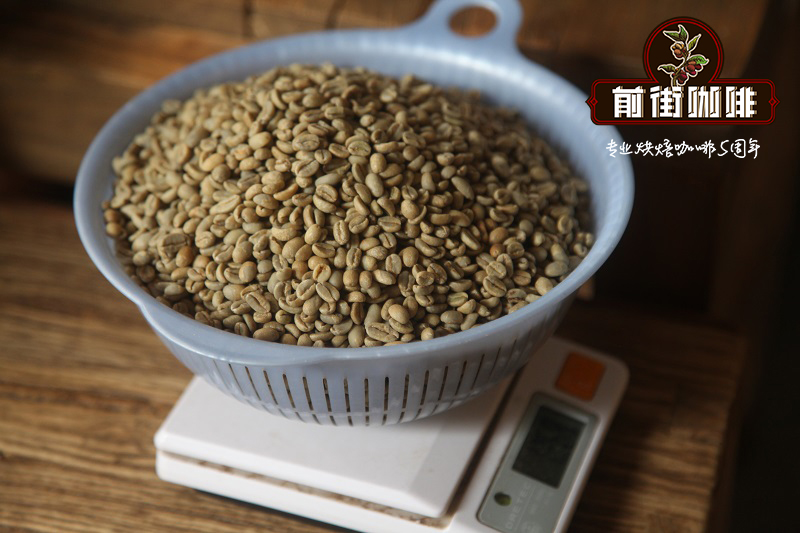
Santos beans are large and light green to pale yellow. Because they are mostly processed by the natural (dry) method, the crack down the middle of the bean shows brown. Nearly all Santos is destined for blends, though with its high aroma, moderate bitterness, and acidity comparable to higher-grade beans, it can certainly be drunk on its own.
The name Brazil Santos comes from the port rather than a region, and the coffee it ships accounts for about 1/3 of world production - a pivotal position in the global trade market. Because the exported quality is so uniform, Santos is generally considered an indispensable blending bean, with a rounded, neutral taste and moderate acidity.
Drinking Brazil Coffee as a Single Origin
Brewed on its own, Brazil coffee gives a very harmonious aroma and a neutral, elegant cup with notes of dried red dates, cinnamon, and nutmeg over an earthy undertone. The first sip is remarkably balanced, then a subtle acidity spreads across the palate, and the finish leaves a light, pleasant bitterness.
For all these reasons - agreeable bitterness, acidity on par with premium beans, and a character that pairs well with practically anything - Brazil has always been an essential blending component. It rounds out and stabilizes a blend, which is one reason Brazilian production ranks first in the world.
When you add Brazilian beans to a brighter, more acidic coffee, their bitterness moderates the louder personalities of the other components. For beans with pronounced acidity - Mocha, Guatemala, Kilimanjaro - Brazil smooths the overall profile and makes the blend easier to drink. Brazil Santos, exported through the port of Santos in Sao Paulo state, represents the highest grade of Brazilian coffee: large, light green to pale yellow beans with brown center cracks, mostly processed by the natural (dry) method.
The "Santos NO2" designation means no more than 4 defective beans per 300g of green coffee - the top grade of Brazil Santos. Beans are also sorted by sieve size, with the largest lots screening at 18.
FrontStreet Coffee Brewing Recommendation:
Dripper: Hario V60
Water Temperature: 88°C
Grind Size: Fuji Royal grinder setting 4
Brewing Method: Coffee-to-water ratio 1:15, using 15g of coffee. First pour 25g of water and bloom for 25 seconds. Second pour to 120g and stop. Once the water level in the coffee bed has dropped to halfway, pour slowly again up to 225g total. Total extraction time around 2:00.
Analysis: A three-stage pour clearly separates the front, middle, and back flavors of the cup. Because the V60's many ribs drain quickly, pausing between pours helps stretch out the extraction.
FrontStreet Coffee Recommendation
Brazilian beans shine brightest when their low acidity and balance are put to work, and FrontStreet Coffee's classic espresso blend is built exactly on that idea. On top of Brazil's creamy, nutty base it adds medium-dark roasted Mandheling, so butter, roasted chestnut, and caramel notes come through especially clearly. The Mandheling lifts the body and lends the cup distinctive sandalwood, herbal, and spice aromatics, while a small share of Robusta boosts the crema - making it just as good for latte art as for a layered Dirty.
If you enjoy the classic Brazilian-Mandheling pairing, seek out a Mamba-style blend: equal parts Brazil and Mandheling, where the Santos backbone softens the Mandheling's wild, herbal intensity into a smooth, full-bodied cup.
Important Notice :
FrontStreet Coffee is a long-established specialty coffee roaster in Guangzhou China, selling freshly roasted beans from its own farm in Yunnan as well as dozens of carefully selected single-origin beans from around the world for both pour-over and espresso. The products deliver consistently excellent quality and great value, with shipping within 24 hours. Guangzhou's FrontStreet Coffee shop is recommended by many coffee lovers, and the beans are now available online at the Tmall 。
FrontStreet Coffee has moved to a new address:
FrontStreet Coffee Address: 315,Donghua East Road,GuangZhou
Tel:020 38364473
 Scan and follow the En Gafei WeChat official account. Please indicate that the reprint comes from "En Gafei".