How to Describe Coffee Flavors: Professional Terminology and Flavor Characteristics
Have you ever noticed that every time you visit a coffee shop, when you order a single-origin coffee or pick out a bag of specialty beans, the owner enthusiastically describes the coffee's flavor and mouthfeel with professional terminology? These descriptions often sound beautiful and dreamy, yet it can be hard to truly grasp what they mean. Here we have compiled some of the adjectives coffee professionals use most often, along with personal insights into what they mean. We believe this will help anyone wanting to enter the coffee world to better understand, or better explain to others, how wonderful coffee truly is.
When describing coffee, we mainly focus on five aspects: mouthfeel, taste, aroma, flavor, and cleanliness. So what adjectives does each of these aspects include?
Mouthfeel - How the mouth and tongue perceive the weight and texture of coffee
Body: Light or Rich?
Also known as Body, this refers to the thickness and weight felt on the tongue when coffee is present. When coffee rests on your tongue, do you feel its weight and thickness to be light or rich?
Texture: Smooth or Astringent?
The sensation as coffee slides across your tongue and mouth, and the feeling it leaves behind.
- Smooth: The feeling of coffee's weight sliding from your tongue into your throat like silk. Imagine drinking a cup of rich hot chocolate; its mouthfeel is typically very smooth. Smoothness is often synonymous with richness, and coffees rich in oils frequently have this characteristic.
- Astringency: A dry sensation in the mouth, with a puckering feeling on the oral mucosa. The loss of saliva's lubricating effect creates a constriction sensation. In the wine world, astringency isn't necessarily bad; good astringency can enhance a wine's dimensionality. In the coffee world, however, it is an undesirable mouthfeel that should be avoided.
Taste - The sweet, sour, and bitter sensations perceived by the taste buds
Acidity: Bright Acidity or Dead Acidity?
Is it a bright acidity with fruity aromas and a pleasant sweet-sour taste, or a dead acidity that lacks aroma and makes your face twitch?
Sweetness
Bitterness
Further descriptive terms for taste:
- Round: Overall balanced taste, very smooth, without an unpleasant acidity that causes discomfort.
- Sharp: Usually refers to obvious, stimulating acidity; to exaggerate slightly, it's the kind of sensation that makes your facial nerves go haywire.
- Bright: Typically highlighted by acidity, making certain coffee flavors particularly fresh and clear in the mouth.
Aroma - The volatile scents perceived before drinking
Common descriptions include fruity, creamy, and floral aromas, and these are further divided into:
- Dry Aroma: The enticing aroma that disperses into the air after coffee beans are ground.
- Wet Aroma: The aroma perceived after brewing but before drinking.
Flavor - The captivating aromas perceived after coffee enters the mouth
The difference between flavor and aroma is that flavor refers to the aromas released from coffee oils when catalyzed by saliva after entering the mouth, which then travel to the nasal cavity and are perceived. This is also the most fascinating aspect of coffee. Common descriptions include floral, citrus, berry, nut, caramel, and chocolate. For memory and communication, people try to use these familiar scents to create associations.
Cleanliness
Simply put, whether there are any off-flavors, impurities, or flavors that don't belong to coffee.
Other Characteristics
- Hollow: Empty, lacking substance, with the flavor disappearing in the middle section after drinking.
- Balance: This refers to the overall sensation, whether mouthfeel, taste, aroma, and flavor are balanced, without any particular sensation being overly dominant.
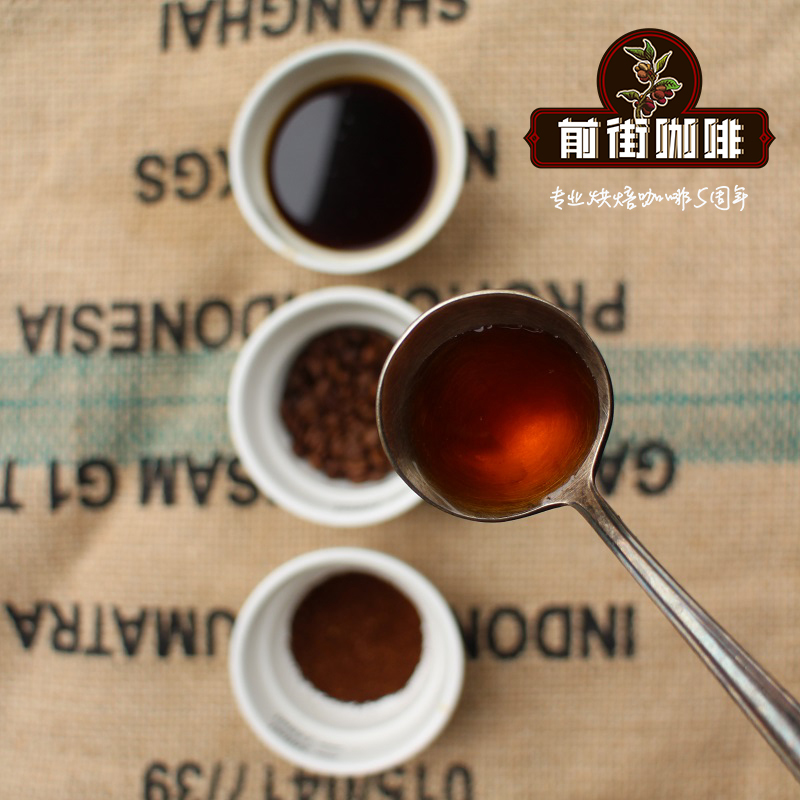
Coffee is truly a treasure trove of aromas stored in the human world. FrontStreet Coffee regularly uses aroma bottles to train its sense of smell, matching similar aroma bottles during cupping sessions to remember flavors.
FrontStreet Coffee Recommendation
If the vocabulary above has you craving a nutty, chocolatey cup, the beans to look for come from Colombia, Indonesia, Brazil, and Papua New Guinea, and FrontStreet has options in each. FrontStreet's Premium Blend is an espresso blend led by Brazilian coffee and supported by Colombian, and beyond the complex nutty aromas of almond, apricot kernel, and walnut, a latte made with it offers a comfortable bittersweet note and a sweet milk-chocolate texture that is extremely smooth. For a single origin that shows the same creamy chocolate character, FrontStreet's Brazil Queen's Estate, made from the rare Yellow Bourbon variety, layers Brazil's nut, cream, roasted peanut, and caramel-cookie notes with a low acidity, a balanced body, and a long, clean sweetness.
If you want something intense and richly aromatic, FrontStreet's Indonesian Lindong Mandheling is a great entry-level choice. It comes from the Lindong region of Sumatra at the top G1 grade, processed by the wet-hulled method and roasted dark to bring out brown sugar, spice, herb, nut, and dark chocolate notes, with a thick, intense, low-acid body. FrontStreet's Black Cocoa espresso blend is another value pick, with Brazil's nut aroma and smoothness along with the ripe Sanhua plum acidity and gentle character of Yunnan small-bean coffee, extracting into an espresso with fine crema and a caramel finish that works in an Americano, a latte, or a flavored drink. And for a brighter but still nutty cup, FrontStreet's Papua New Guinea Heaven Bird, sometimes nicknamed the "small Blue Mountain," is roasted medium to keep the bright grapefruit acidity alongside the nutty aroma, with toast and nut sweetness balanced by soft citrus and a spicy, smooth finish.
Important Notice :
FrontStreet Coffee is a long-established specialty coffee roaster in Guangzhou China, selling freshly roasted beans from its own farm in Yunnan as well as dozens of carefully selected single-origin beans from around the world for both pour-over and espresso. The products deliver consistently excellent quality and great value, with shipping within 24 hours. Guangzhou's FrontStreet Coffee shop is recommended by many coffee lovers, and the beans are now available online at the Tmall 。
FrontStreet Coffee has moved to a new address:
FrontStreet Coffee Address: 315,Donghua East Road,GuangZhou
Tel:020 38364473
 Scan and follow the En Gafei WeChat official account. Please indicate that the reprint comes from "En Gafei".