Notable Coffee Bean Brands in the Asia-Pacific Region: The Legendary History of Indonesian Sumatra Mandheling Coffee
Indonesia occupies a special place in Asia: vast in territory and in population alike. Ten countries in the world have more than 100 million people, and Indonesia is one of them, ranked fifth.
Geographically it has another distinguishing feature — it is known as the "country of a thousand islands." With that many islands, keeping them all governed is a feat in itself.
The word "coffee" is often traced to the Greek "Kawah," which, surprisingly, means "strength and passion." In Chinese, the word for coffee was in turn borrowed from the English "coffee."
So what kind of legendary history does Indonesian coffee carry? It is worth going through in detail.
Sumatra Coffee History in Indonesia
Before the 17th century, coffee growing and trade were firmly in the hands of the Ottoman Empire, with the main regions in Arabia and East Africa. Then, in 1683, the Ottoman Empire and the Holy Roman Empire met in a major battle at Vienna.
The battle ended in Ottoman defeat. From then on the empire declined, gradually ceding regional control to the Europeans.
It was in this opening that the Dutch were able to introduce coffee cultivation to Indonesia, making it one of the first growing regions to break free of Ottoman control.
Two sayings capture the two extremes nicely: "the year of the monkey, the month of the horse," for something indefinitely far off in time, and "the land of Java," for somewhere impossibly remote. Those first coffee beans were planted on Java, which remains a very important producing region in Indonesia today.
By the 1780s, Indonesia had become the world's largest coffee exporter. The good fortune did not last. At the end of the 18th century, leaf rust struck a fatal blow: countless trees died in the epidemic, and it took a determined effort afterwards to revive the industry.
Mandheling Coffee
Mandheling is one of Indonesia's most famous coffees, and its character lies in a flavour that is hard to mistake. Some drinkers find cigars in it, others spices, others still a woven straw mat. Whatever the comparison, it is a taste that many fall for at the first sip.
Most of those flavours come from the region's traditional processing. Indonesia practises wet-hulling, in which the parchment is removed while the fruit, mucilage and all, is still not dry. At that stage the beans hold roughly 30%-40% moisture and are especially soft, so their surface picks up small scratches. Those scratches ferment slightly during the drying that follows, which intensifies the flavours.
Altogether, Mandheling is rich and fragrant, with a sense of long history about it. Neither flood nor leaf rust could defeat it, and it has somehow persisted to this day, still showing the world its extraordinary flavour — one that almost conjures the distant scent of 19th-century Sumatran soil.
Recommended Sumatra Coffee Bean Brands
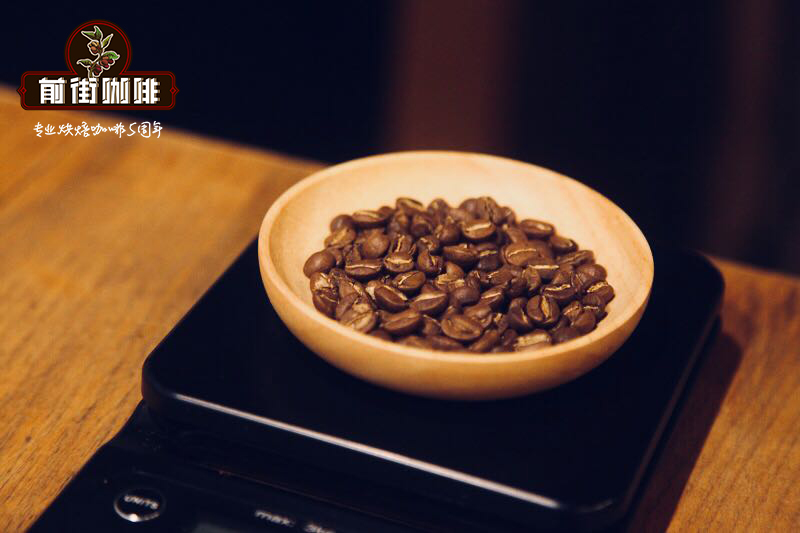
FrontStreet Coffee's roasted Sumatra coffee, [Golden Mandheling], is fully guaranteed in both brand and quality, and, more importantly, offers outstanding value. A 227-gram bag costs only 89 yuan. At 15 grams of coffee per cup, one bag makes 15 cups — about 6 yuan a cup. Set against cafés charging dozens of yuan for a single cup, it is a genuinely conscientious recommendation.
FrontStreet Coffee is a roastery in Guangzhou with a small shop but a wide range of beans, where you can find both famous and lesser-known lots, along with an online store.
FrontStreet Coffee Recommendation
Sumatra is Indonesia's largest source of both Arabica and Robusta, accounting for more than 60% of the country's output, and it is the higher ground of Aceh in the north and North Sumatra that grows most of the Arabica — the coffee the world calls Mandheling. The traditional Mandheling heartland lies around Lake Toba in North Sumatra's Lintong region, while the newer Aceh region sits in the Gayo highlands near Lake Tawar. Both depend on the region's wet-hulled process, developed because Sumatra's rainy season overlaps its harvest and makes sun-drying impractical. During wet-hulling the parchment is stripped while the beans are still half-damp, leaving the green coffee exposed to the air — and to airborne microbes — early, which is precisely what produces Mandheling's famously earthy, herbal, full-bodied character.
FrontStreet's PWN Golden Mandheling is the flagship of the style. PWN applies unusually strict standards: beans of 18 mesh and above, fewer than three defective beans in a 300-gram green sample to meet the top G1 grade, and three rounds of hand sorting on top of that, which is why the cup is so clean and its sweetness so intense. Much of this coffee goes to the Japanese and American markets, so genuine Golden Mandheling reaching other markets is limited. For pour-over, FrontStreet suggests 87–88°C water, 15g of coffee at a 1:15 ratio and a coarse-sugar grind, poured in three stages — a 30ml bloom, then 100ml, then a gentle 95ml centred pour — to bring out the body, caramel sweetness, chocolate and nuts. If you brew on an espresso machine, FrontStreet's classic blend layers medium-dark Mandheling over Brazilian creamy-nut coffee for butter, roasted chestnut and caramel, adding sandalwood, herbal and spice notes, with a little Robusta for extra crema.
Important Notice :
FrontStreet Coffee is a long-established specialty coffee roaster in Guangzhou China, selling freshly roasted beans from its own farm in Yunnan as well as dozens of carefully selected single-origin beans from around the world for both pour-over and espresso. The products deliver consistently excellent quality and great value, with shipping within 24 hours. Guangzhou's FrontStreet Coffee shop is recommended by many coffee lovers, and the beans are now available online at the Tmall 。
FrontStreet Coffee has moved to a new address:
FrontStreet Coffee Address: 315,Donghua East Road,GuangZhou
Tel:020 38364473
 Scan and follow the En Gafei WeChat official account. Please indicate that the reprint comes from "En Gafei".