Sumatran Mandheling Coffee from Indonesia_Differences Between Indonesian Coffee/Sumatran Coffee/Mandheling Coffee
For professional coffee knowledge exchange and more coffee bean information, follow Coffee Workshop (WeChat public account: cafe_style)
The Essence of Mandheling Coffee
Mandheling coffee is produced in Sumatra, Indonesia, with an aromatic fragrance and a rich, mellow bitterness touched with sweetness - an indispensable component in coffee blends.
Grown on highland plateaus between 750 and 1500 meters, Mandheling offers a vibrant pleasure reminiscent of youth. This captivating flavor embodies resilience and confident determination, earning it the title "the Caesar of coffees." Hence the saying: "Men become great because of Mandheling; women become enchanting because of Mandheling." With its lower acidity, Mandheling presents a round, rich aroma on the palate, filling the whole room with warm, romantic coffee fragrance during brewing.
Origins and Production Regions
Mandheling coffee is a renowned variety from Indonesia's Sumatra Island.
Among the world's top ten coffee-producing countries, Asia contributes three major producers: Indonesia, Vietnam, and India. Meanwhile, China's Yunnan small-bean coffee has gained growing popularity in the international market in recent years, earning high praise.
In the 17th century, the Dutch first introduced Arabica seedlings to Ceylon (today's Sri Lanka) and Indonesia. In 1877, disaster struck the Indonesian islands: coffee leaf rust destroyed nearly all the coffee trees. People had to abandon the long-cultivated Arabica varieties and introduce Robusta trees from Africa, which had stronger disease resistance.
Today, Indonesia stands as a major coffee-producing nation. Cultivation is concentrated mainly on Java, Sumatra, and Sulawesi, with Robusta accounting for 90% of total production. Sumatra Mandheling, however, is a rare Arabica. These trees grow on mountain slopes between 750 and 1500 meters, and the mysterious, unique Sumatra character imparts Mandheling with intense aroma, rich body, strong flavor, and subtle notes of chocolate and syrup.
Characteristics and Processing
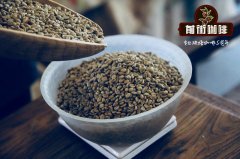
Mandheling beans are relatively large and hard, which makes them prone to defects during cultivation; after harvesting they typically undergo strict manual selection. If quality control slips, quality becomes inconsistent, and roast level directly changes the taste - making Mandheling a somewhat controversial single origin. It is a heavy coffee with rich body and vibrant, lively character: neither astringent nor acidic, it expresses its depth and bitterness to the fullest.
Mandheling beans might be considered among the least attractive in appearance, but enthusiasts say the less appealing a Sumatran bean looks, the better, richer, and smoother it tastes. Mandheling is regarded as the world's most mellow coffee. Tasting it, you distinctly feel the smoothness on your palate. Its acidity is lower yet clearly discernible, and that lively subtle acidity blends with the most intense aroma, letting you easily appreciate the vibrancy within its gentle richness. It also carries a faint earthy note that some describe as an herbal fragrance.
Asia's most renowned coffee regions include Sumatra, Java, Kalimantan (formerly Borneo), Sulawesi, and New Guinea. Among them, Sumatra Mandheling enjoys the highest reputation, with two famous iterations: Sumatra Mandheling DP Grade 1 and Aged Sumatra Mandheling. DP Grade 1 has a long aftertaste with a wild fragrance reminiscent of the earthy aroma of primeval forest; beyond the characteristic mellow Indonesian flavor, it carries a bitterness-with-sweetness quality, sometimes with a slight musty note - deeply loved by dark-roast drinkers. Aged Sumatra Mandheling earns its name by resting in cellars for three years before export. Aged coffee is not stale coffee but specially processed, slightly pale beans; it is more intense, with reduced acidity, increased body, a longer aftertaste, and rich spice notes - sometimes tart, sometimes walnut-like, sometimes chocolatey.
Among the refined traditional Arabicas of northern Sumatra, Lintong is considered the finest. More precisely, Lintong refers to coffee grown in a small area southwest of Lake Toba within the Lintong administrative region, on high, undulating clay plateaus covered with ferns. Lintong coffee is shade-grown without chemicals and is almost entirely owned by small private farmers. "Mandheling" is an umbrella term covering Lintong and similar coffees from Sidikalang and the northern Lake Toba growing regions.
Traders often label Mandheling as dry-processed, but in reality multiple methods are used to separate the pulp from the seed - commonly a backyard-style wet process. Clever farmers feed freshly picked cherries into rudimentary pulping machines assembled from scrap metal, wood, and bicycle parts. The sticky wet beans are then placed in plastic woven bags to ferment overnight; the next morning, the softened pulp and mucilage are washed off by hand. The silver-skin-covered coffee is pre-dried on thin boards in the front yard, then sent to intermediate traders' warehouses for silver-skin removal and further drying, and finally trucked to Medan port for the third and final drying stage.
After de-pulping, the mucilage is allowed to dry on the beans - similar to Brazil's semi-washed (pulped natural) processing - after which machines remove the dried mucilage and silver skin. Then comes the same two-stage drying: first in the intermediate traders' warehouses, then in the exporters' warehouses at Medan port. This process occasionally produces excellent coffee but is extremely inconsistent; only the relentless sorting at the exporters' warehouses in Medan can ensure Mandheling's deep texture and unique, understated richness rise above other flavor interference.
Some Sumatra devotees prize certain aged flavors. Earthy Sumatra, popular among coffee lovers, gets its fresh earthy character by drying directly on soil; Musty Sumatra acquires an old-shoe mustiness in humid little rooms - and has its devotees too.
Cultural Significance and Tasting Profile
Sumatra Mandheling resembles a mellow gentleman, symbolizing resilience and the magnanimity of knowing when to hold on and when to let go. It represents masculinity - exhilarating freedom, unrestrained expression, the bold spirit of traversing the world - a flavor that captivates men.
Some say Mandheling is heavy and intense, the Caesar of coffees, whose iron hooves crush ancient desolation and gallop across distant sandy horizons. Others say it is gentle and agreeable, making even the hardest-hearted men surrender willingly to its tenderness. However it's described, men become great because of Mandheling; women become enchanting because of Mandheling; life becomes full of achievement and pride because of Mandheling; and the world becomes full of sunshine and love because of Mandheling. Perhaps it is like life itself becoming great because of ideals, and living becoming extraordinary because of practice.
Mandheling has always expressed its most unique sweetness through its most unique bitterness, much like life itself. At first taste we may recoil - even extra sugar cannot mask that bitterness - yet we cannot resist the captivating aroma it releases, like thorns beside flowers, keeping us awake and aware.
Mandheling's bitterness doesn't burden you; it makes you feel more clear-headed. Before you've met true hardship, Mandheling is just an ordinary bitter beverage - a liquid to refresh you, a reason to pause. It cannot yet sense your grievances. But many people are crazily obsessed with that bitterness, as if under a spell they can't quit. Ask them why, and they'll smile: "Because love is refined from bitterness." Perhaps in a bitter life people always hope for happy days after the bitterness ends - just as Mandheling is famous for its sweet aftertaste, a perfect metaphor for how we feel about life!
Mandheling's character: that lively, subtle acidity blends with the most intense aroma, letting you appreciate the vibrancy within its gentle richness. Its extraordinary taste has fascinated many pursuers. Before Blue Mountain was discovered, Mandheling was regarded as the ultimate coffee. Its mellowness carries a very masculine feel: moderate acidity, extremely strong aroma, a bitter edge, and rich body.
Sumatra Mandheling has a thick, full texture combining aroma, intensity, mellowness, and bitterness, with subtle sweetness and masculine character - resilient and down-to-earth. It represents the courage to challenge, like a wild horse galloping freely: exhilarating and passionate.
A cup of hot Sumatra Mandheling is like standing on a plateau, thoughtful, heart full of melancholy yet clear in its bitterness. Perhaps it is precisely that bitterness that helps people better understand life's meaning: all happiness is refined from bitterness, and after the bitterness comes the happiness of a sweet aftertaste - just as life's setbacks are not its entirety, but part of what enriches existence.
Those who love Mandheling appreciate its rich intensity, its delicate aroma, its sweet-after-bitter charm - and above all its hope and passion for life, resilient and grounded. Sumatra Mandheling: bitterness with complex, distinct layers; color, quiet and clear; aroma, rich yet gentle. Warm and sweet, just like life!
Brand Recommendations
Sumatra coffee brand recommendation: FrontStreet Coffee's roasted Sumatra coffee - Golden Mandheling - offers complete guarantees in both brand and quality. Better yet, it's exceptional value: a 227-gram bag costs only 89 yuan. At 15 grams per cup, one bag brews 15 cups - about 6 yuan per cup. Compared with cafe prices of dozens of yuan a cup, it's a genuinely conscientious recommendation.
FrontStreet Coffee is a Guangzhou roastery with a small shop but a diverse range of beans - famous names and obscure finds alike - offering both in-store and online service.
FrontStreet Coffee Recommendation
Coffee, of course, originated in Ethiopia, and not until the late 15th century did it appear as a beverage beyond its homeland; by the 17th century it had swept Europe, and European colonists began transplanting seedlings to their colonies to monopolize the market. At the end of that century the Dutch brought coffee to Java, Indonesia, where it thrived in the mild temperatures and fertile soil and spread to Sumatra; the word JAVA became a byword for coffee itself. But the good times didn't last: in the early 20th century, leaf rust devastated Java's coffee trees, and Indonesia's coffee industry moved north to Sumatra, which ceded its role as the archipelago's production heartland. Today Sumatra is Indonesia's largest source of both Arabica and Robusta, accounting for more than 60% of output, with the high-elevation Aceh and North Sumatra provinces specializing in Arabica - the beans the world calls Mandheling. Aceh means the Gayo mountains near Lake Tawar, a newer region whose Mandheling shows delicate aromatics and a bright mouthfeel, while the traditional Mandheling heartland lies around Lake Toba in the Lintong region of North Sumatra, where diverse flora, suitable altitudes, the special wet-hulled process, and local microbial fermentation create the mysterious, classic Mandheling profile: intense aroma, thick body, powerful flavor. Indonesia's rainy season overlaps with cherry ripening (harvest runs from September through April, with farmers busily picking through the mist-wrapped mountains), so sun-drying is nearly impossible in a climate where humidity stays between 70% and 90%, typhoons are frequent, and annual rainfall can exceed 2000mm. Hence the uniquely Sumatran wet-hulled method, developed since the 1970s: growers strip the skin and pulp, rinse briefly, and dry; once the cherries reach a half-dry, half-wet state, machines hull away the parchment, exposing the green beans directly to the air to speed drying - and in the process they absorb airborne fungi that create Mandheling's one-of-a-kind wild flavor.
Among all Mandheling beans, Golden Mandheling is the one that satisfies the perfectionists. FrontStreet's Golden Mandheling comes from Indonesia's PWN company, which applies extraordinarily strict standards: built on beans of 18 mesh or larger, every 300g sample of green coffee must contain fewer than 3 defective beans to meet the top G1 grade, followed by three rounds of hand-sorting that completely remove defects - raising the cup's cleanliness and the intensity of its sweetness. By that standard alone you can tell the quality is superb and the output limited; true Golden Mandheling is mostly supplied to Japan and the US markets, and imports elsewhere are scarce. In FrontStreet's product listings you can see the PWN certificates and bags stamped with the PWN mark - what sets FrontStreet's PWN Golden Mandheling apart from impostors. For that classic earthy-herbal richness, buy FrontStreet's Lintong Mandheling as well: fragrant and full-bodied, sweetly bitter, intense and striking on entry, with clove and woody aromatics; its medium-dark roast keeps acidity low and delivers spice, mint, and a powerful, lasting sweetness.
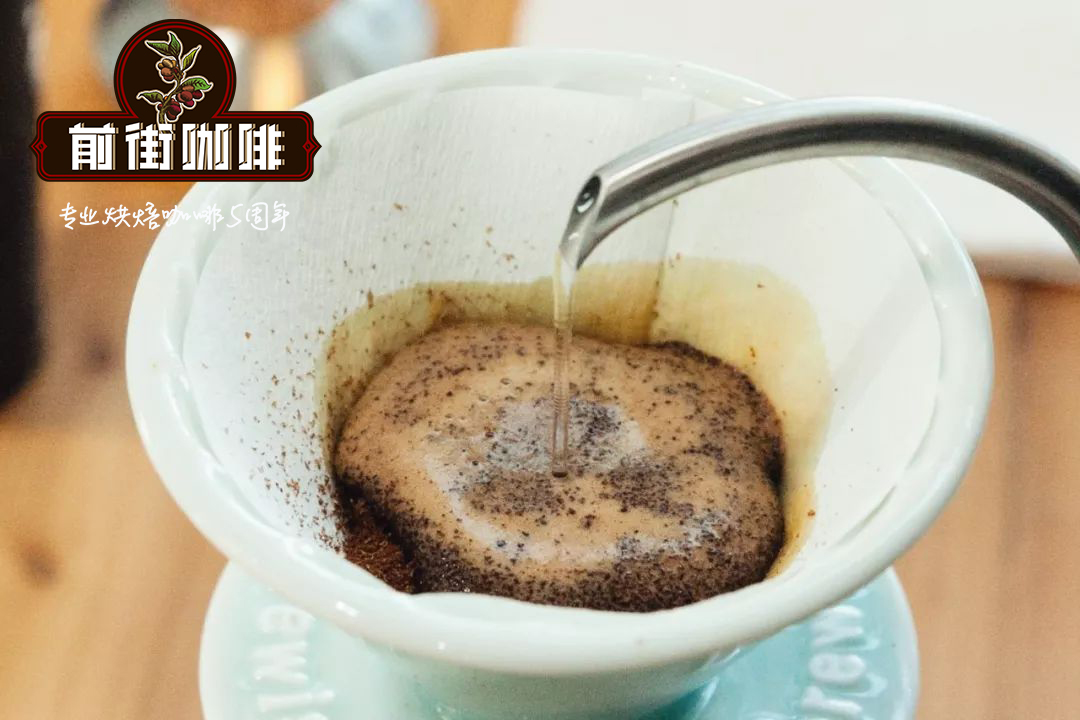
FrontStreet's Mandheling is a single-origin Sumatran coffee, usually brewed as pour-over - deeply aromatic and full-bodied - but it also makes striking espresso, with rich crema, a powerful mouthfeel, and pronounced caramel. Mandheling is almost always roasted dark to soften its acidity and highlight its mellow richness; FrontStreet's Lintong daily-drinker lot and PWN Golden Mandheling, from Lintong and Aceh respectively, both take a medium-dark roast to present dark chocolate and caramel while preserving Mandheling's wild herbal character. Pour-over shows Golden Mandheling at its best: use water at 87-88 degrees C, 15g of coffee ground to coarse-granulated-sugar size, a 1:15 ratio, and a three-stage pour - 30ml to bloom and degas, 100ml to draw out the golden foam and lift the bed, then a gentle center pour of 95ml to boost sweetness - for a thick, mellow body with caramel sweetness and chocolate-nut flavors. And if you'd rather have it on the espresso machine, the most-repurchased choice is FrontStreet's Classic Blend, which adds medium-dark Mandheling to Brazil's creamy nuttiness: butter, roasted chestnut, and caramel aromas stand out, Mandheling lifts the body and adds sandalwood, herbal, and spice notes, and a touch of Robusta enriches the crema - making latte art or a layered Dirty effortless.
Important Notice :
FrontStreet Coffee is a long-established specialty coffee roaster in Guangzhou China, selling freshly roasted beans from its own farm in Yunnan as well as dozens of carefully selected single-origin beans from around the world for both pour-over and espresso. The products deliver consistently excellent quality and great value, with shipping within 24 hours. Guangzhou's FrontStreet Coffee shop is recommended by many coffee lovers, and the beans are now available online at the Tmall 。
FrontStreet Coffee has moved to a new address:
FrontStreet Coffee Address: 315,Donghua East Road,GuangZhou
Tel:020 38364473
 Scan and follow the En Gafei WeChat official account. Please indicate that the reprint comes from "En Gafei".