What Are the Benefits of Cold Brew Coffee? How to Make Cold Brew Coffee and Which Coffee Beans Yield the Best Flavor?
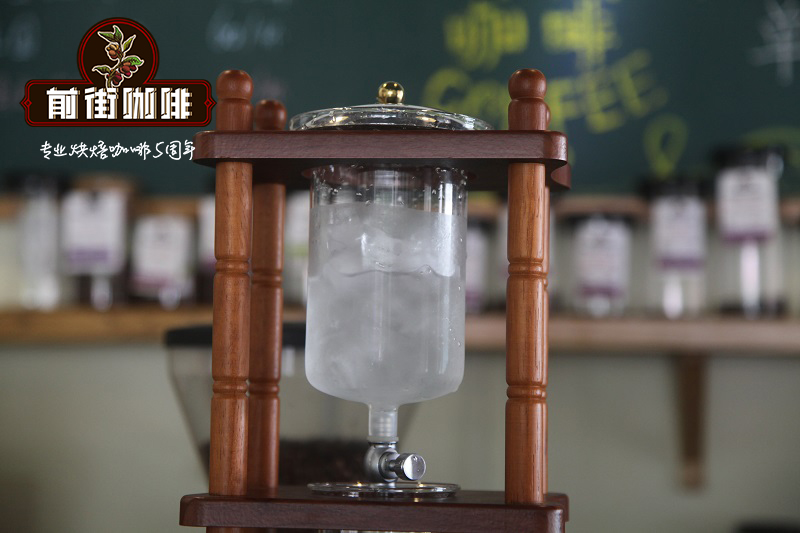
The Benefits of Cold Brew Coffee
Coffee dissolves more of its compounds at higher temperatures; the optimal brewing temperature is generally between 90.5-96°C. Cold brew uses water far below that range, so to reach a comparable extraction rate, we must extend the contact time between grounds and water.
Extracting at low temperature takes longer, but it markedly reduces acidity and bitterness, producing a sweeter, mellower cup. The low-acidity character is also gentler on tooth enamel and easier on the stomach.
That low acidity, however, is also cold brew's weakness. If a bean's inherent profile leans acidic, cold brewing struggles to express its full range. And since some drinkers specifically love bright acidity, the most common complaint about cold brew is simply that it isn't sour enough.
Setting acidity aside, a naturally sweet and fragrant cold brew beats a cup so sour and bitter that it needs sugar and milk just to become drinkable.
Many people also claim cold brew has less caffeine than hot coffee. This is genuinely hard to prove—and in fact, several data sets suggest cold brew can contain more caffeine than regular hot coffee. Counterintuitive, isn't it? Caffeine solubility depends on many factors, not just temperature and time. In theory, cold water extracts fewer oils and compounds, including caffeine, which would make cold brew the lower-caffeine drink; but the very long steep time should, in theory, dissolve more of it. The effects of time and temperature are difficult to calculate precisely, and once you add grind size and other variables, it becomes harder still. The question of caffeine content therefore remains open.
Another benefit of cold brew is novelty: a new way of drinking coffee, and a new experience. Drink it however you like, mixed with whatever you want—completely unrestricted, and no one will tell you otherwise.
How to Make Cold Brew Coffee
To make cold brew, simply steep ground coffee in cold water—room-temperature water may work, but chilled water is better. Find a well-sealed glass container, place the grounds at the bottom, and pour cold water over them. The recommended coffee-to-water ratio is roughly 1:8, adjustable to taste.
Seal the container and let it sit at room temperature for 12-18 hours. You can also refrigerate it, but it will need more time to develop that intense flavor and pleasant balance.
You can steep the grounds directly in ice water. The simplest method is a lidded glass jar: add grounds, add water, seal, and steep at room temperature for about 12-18 hours—a little longer is fine. In the refrigerator, because of the lower temperature, extraction takes longer; many people recommend about 24 hours. Different times and temperatures produce different flavor results, so it is worth experimenting.
When the time is up, filter out the grounds. Paper or cloth filters absorb the extracted coffee oils, stripping away some of the oily mouthfeel, while a metal filter preserves it.
To repeat with the two options spelled out: with filter paper or cloth, the oils are absorbed and the flavor comes out slightly cleaner and thinner; with a metal filter, the oils are retained, giving a slightly richer, more unctuous texture.
Characteristics of Cold Brew Coffee:
– Simple preparation process
– Time-consuming (12-18 hours, or about 24 hours in the refrigerator)
– Thorough, concentrated extraction with rich flavor
What Coffee Beans to Use for Cold Brew Coffee?
Ultimately it comes down to personal preference—there are no strict requirements, as long as you like the bean. That said, FrontStreet Coffee suggests natural-processed or honey-processed beans, which yield a sweeter cold brew that most drinkers prefer.
FrontStreet Coffee uses [Hartmann] and [Flower Queen] to create a cold brew coffee with a rich fermentation aroma.
FrontStreet Coffee Recommendation
Cold brew tends to amplify floral and fruit tones while muting woody and roast flavors, so light-to-medium roast beans express themselves best at low temperature. The FrontStreet Strawberry Sugar Geisha Blend is a natural first pick: it marries a Panama Geisha—source of delicate rose and orange notes—with a Costa Rica honey-processed coffee that contributes grape, dried blueberry, and strawberry-gummy sweetness. Cold brewed, it is sweet-tart, lively, and, after a short settling period, takes on a fruit-wine character.
If you love pronounced florals in iced coffee, choose the FrontStreet sun-dried Huakui (Flower Queen) from Ethiopia. Because the beans dried inside the whole cherry, they absorbed abundant sweet compounds, and in cold brew they show magnolia, cream strawberry, dried mango, guava, and black tea notes.
For a juicy, fruit-juice-like cold brew, the FrontStreet Kenya Cherry Tomato delivers: cherry tomato, pear, black plum, and dark plum acidity shine at low temperature, with low bitterness and a clean, lingering finish—thanks to the SL28 and SL34 varieties and Kenya's characteristic K72 double-washed fermentation.
And for an economical daily option, the FrontStreet washed Yirgacheffe Guodingding Cooperative is hard to beat: bright, sweet berry and honey flavors, a wallet-friendly price, and the versatility to work as pour-over, siphon, French press, or cold brew—a sensible staple for any home brewer.
Important Notice :
FrontStreet Coffee is a long-established specialty coffee roaster in Guangzhou China, selling freshly roasted beans from its own farm in Yunnan as well as dozens of carefully selected single-origin beans from around the world for both pour-over and espresso. The products deliver consistently excellent quality and great value, with shipping within 24 hours. Guangzhou's FrontStreet Coffee shop is recommended by many coffee lovers, and the beans are now available online at the Tmall 。
FrontStreet Coffee has moved to a new address:
FrontStreet Coffee Address: 315,Donghua East Road,GuangZhou
Tel:020 38364473
 Scan and follow the En Gafei WeChat official account. Please indicate that the reprint comes from "En Gafei".