Where Are the Best Blue Mountain Coffee Beans in Jamaica Produced From_ The Ancient Clifton Coffee Estate in Jamaica
Professional coffee knowledge exchange and more coffee bean information — follow Coffee Workshop (WeChat official account: cafe_style).
Introduction to Jamaica's Coffee-Growing Region
The Blue Mountains lie in the eastern part of the island of Jamaica. On a clear day the sun strikes the azure sea directly, and the peaks reflect that brilliant blue light back — hence the name.
The highest peak of the Blue Mountains reaches 2,256 meters above sea level, making it the tallest peak in the Caribbean and a famous tourist destination. Sitting in the coffee belt, the range has fertile volcanic soil, fresh unpolluted air, and a humid climate with fog and rain year-round (average rainfall 1,980 mm, temperature around 27°C). That combination of climate and exceptional altitude created the world-renowned Jamaican Blue Mountain coffee.
Introducing Clifton Farm
Clifton Mountain is the oldest coffee-producing area in Jamaica still operating normally today, and Clifton Farm is the only Jamaican coffee estate holding Rainforest Alliance certification.
It is recognized as a world-class Blue Mountain coffee-producing area. Its elegant great-house farm sits in the Newcastle area of the island, on the eastern slope of Catherine's Peak at an altitude of 4,300 feet.
History
As early as the mid-18th century, around 1750, Clifton Farm began planting and producing coffee.
According to a survey by the Jamaica Institute in 1810, Robert Hamilton owned the farm at that time. Clifton Mountain was divided into two parts: 80 mu of coffee and 427 mu of pasture on the mountaintop, and 111 mu of coffee and 264 mu of pasture at the foot of the mountain.
The Blue Mountain region is small, with only 6,000 hectares of planting area, so it is impossible for every coffee labeled "Blue Mountain" to have been grown there. Today's Clifton Farm is the largest estate in the region, which by international standards is still considered small-scale. Many estate owners are small landholders whose families have worked this land for two centuries.
The celebrated British painter and writer Marian North visited Jamaica and spent 5 months on Clifton Mountain. In her autobiography "Recollections of a Happy Life," she mentions the Clifton Hotel where she stayed: "The Clifton Hotel belongs to a local gentleman who lost his wife. He was unwilling to live in the hotel any longer, and instead rented it to different people each week, allowing more people to experience the cold air at 5,000 feet altitude and have the chance to wander through Jamaica's best and oldest coffee plantations."
Clifton Mountain Village
The coffee planting and processing area sits at an average altitude of 4,300 feet (1,310.64 meters). Sufficient altitude, gentle afternoon cloud and mist drifting through the forest for shade, abundant sunlight, and mineral-rich planting soil give the coffee trees excellent growing conditions and extend the ripening of the cherries.
In 1953 the Jamaican government established the Coffee Industry Board (CIB) to regulate and guarantee the quality of Jamaican coffee. Jamaica was the first country in the world to assign a specific geographical location to a particular coffee brand, somewhat similar to how the French wine industry established the AOC system.
All coffee exported from Jamaica is certified by the CIB. Rigorous testing by trained quality-control experts guarantees that every export is 100% authentic Jamaican Blue Mountain coffee.
The Sharp family: Jason, Lawrence (father), and Richard
As early as the mid-18th century, around 1750, Clifton Farm began planting and producing coffee. According to a survey by the Jamaica Institute in 1810, Robert Hamilton owned the farm at that time; today the Sharp family manages the estate.
Clifton's high altitude and long history, together with its distinctive processing methods, give Clifton coffee not only the roundness and smoothness characteristic of Blue Mountain No. 1 but also rich flavors with subtle floral notes.
This is also why Clifton is so loved and sells at such high prices — a standard of over ten thousand per barrel.
Washed Processing Method
Blue Mountain uses washed processing only.
Washing and fermentation are used to remove the skin, pulp, and mucilage. Farms using the washed method must build washing tanks and be able to supply a continuous flow of fresh water. During processing, the skin and pulp are removed first and the beans are left to ferment for 12-18 hours; the fermented beans are then placed in the tank and moved back and forth, using friction between the beans and the force of flowing water to wash them until they are smooth and clean.
After washing, the beans are still wrapped in parchment at a moisture content of 50%. They must be sun-dried down to 12-14% moisture. The beans are then screened and stored in dedicated warehouses. These procedures have to be strictly controlled, or the quality of the coffee will suffer.
Certification: Rainforest Alliance Certified — coffee carrying the certification mark on bags or barrels is certified product. Farms must comply with the Sustainable Agriculture Standard to earn certification (the Rainforest Alliance Certified frog seal). Clifton Estate is the only coffee estate to have obtained RFA Rainforest Alliance certification.
Jamaica Clifton Mount Estate
- Estate Owner: The Sharp family
- Certification: Rainforest Alliance Certified
- Location: Newcastle area
- Total Area: 250 acres
- Coffee Planting Area: 180 acres
- Average Altitude: 4,300 feet (1,310.64 meters)
- Processing Method: Washed
- Variety: 100% Arabica Typica
- Flavor: Perfect balance of acidity, body, and aroma
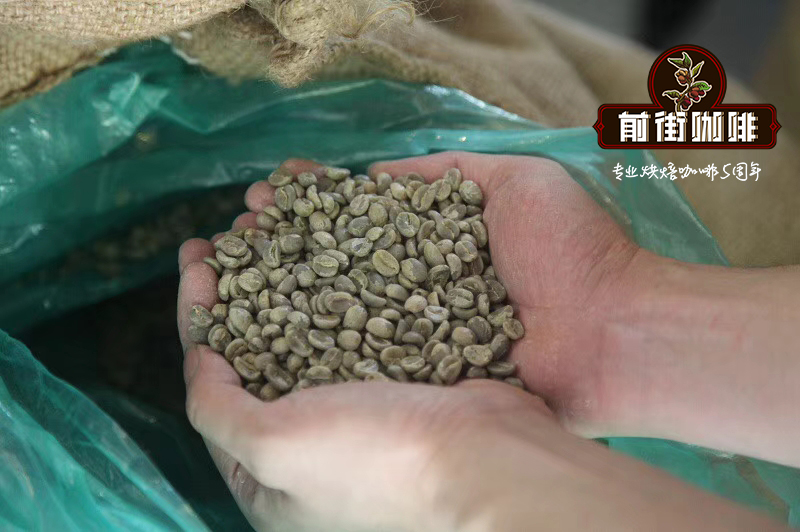
Green Bean Analysis
Blue Mountain is further divided into four grades. From top to bottom in quality they are NO.1, NO.2, NO.3, and PB, where PB refers to peaberries. Under CIB standards, coffee grown above 666 meters is called Jamaican High Mountain coffee, while coffee grown outside the Blue Mountain region is called Jamaican coffee.
Among them, the basic standards for NO.1 Blue Mountain green beans call for beans above 17 screen size, a defect rate below 3%, and a moisture content around 13%.
Variety: Typica
Roasting Analysis
How should Blue Mountain be roasted to express its flavor best?
Put simply, roast the beans thoroughly "inside and out," and once they are fully roasted, use better roasting technique to draw the flavor out.
Caramelization is the single most significant step affecting coffee flavor. After 6-7 minutes of roasting, the green beans have absorbed a large amount of heat energy, pyrolysis reactions begin, and the first cracking sound is produced. Some sugars convert to carbon dioxide, moisture continues to evaporate, and new aromatic components gradually develop, forming the so-called coffee oils, which combine with hundreds of aromatic substances such as nicotinic acid, citric acid, quinic acid, malic acid, acetic acid, and caffeine.
Roasting curve: Preheat the roaster to 170°C and add the beans with the heat damper at 3. After 1 minute, adjust the heat to 140°C, damper unchanged. Roast to 5'10", temperature 153°C: the bean surface turns yellow, the grassy smell disappears completely, dehydration is complete — adjust heat to 115°C, damper to 4.
At 8'00", ugly wrinkles and black spots appear on the bean surface, and the toast aroma clearly turns into coffee aroma, which can be defined as the prelude to first crack. Listen carefully for the sound of first crack. At 8'12" first crack begins — adjust heat to 90°C, open the damper fully (adjust the heat very carefully; too little and the cracking sound will stop), and unload at 201.3°C.
Blue Mountain Coffee Cupping
Cupping characteristics: A perfect and subtle balance of acidity, body, and aroma. The acidity is bright and delicate. The body is as smooth as velvet. The aroma has a slight penetrating quality, accompanied by floral, spicy, and citric tones. There is a hint of cocoa in the aftertaste.
The taste is very clean and complex, very mild, with chocolate sweetness and a very strong body. The flavor is rich and mellow, with a perfect combination of coffee's sweetness, acidity, and bitterness. It shows no bitterness at all, only moderate and perfect acidity, with a persistent fruity finish.
Dry aroma: roasted peanut, hazelnut, melon, chocolate-like
Wet aroma: oolong tea, caramel, honey, dark chocolate, almond skins, silky mouthfeel, brightness
Jamaica Coffee Brewing Analysis
Everyday filter cup options: V60, Kalita Wave, and KONO are all suitable.
KONO parameters: 15g coffee, water temperature 89°C, grind setting 4, coffee-to-water ratio close to 1:15, total time around 2:00.
Technique: 25-30g of water for the bloom, bloom time 30s, then pour to 120g and stop. Use a vertical stream and a small flow with a slow circular motion. Pour the second stage to 225g, with the flow and circular motion slightly faster to reduce fine particles clogging the filter and causing over-extraction.
Other Extraction Suggestions
- French Press: grind setting 3.5-4, water temperature 90°C
- Siphon: grind setting 4, water temperature 89°C
- AeroPress: grind setting 2.5, water temperature 88°C
Jamaica Coffee Bean Brand Recommendations
FrontStreet Coffee's roasted Jamaican coffee — Blue Mountain NO.1 Coffee Beans — offers full guarantees in both brand and quality. More importantly, it delivers extremely high value: a 100-gram package costs only about 158 yuan. At 15g per cup, one package makes 6 cups of coffee, putting each cup at only about 25 yuan. Compared with coffee shops charging over a hundred yuan a cup, this is a genuinely conscientious recommendation.
FrontStreet Coffee: A roastery in Guangzhou with a small shop but a wide range of beans, covering famous and lesser-known origins alike. Online store services are also available. https://shop104210103.taobao.com
FrontStreet Coffee Recommendation
For authentic Blue Mountain, grade matters as much as origin: Blue Mountain No.1 is among the highest grades Jamaica produces, and it is held to strict standards for bean size, defect rate, and overall quality. FrontStreet Coffee's Jamaica Blue Mountain No.1 comes from the historic Clifton estate, where coffee has been grown and processed since around 1750 on land averaging 4,300 feet (1,310.64 meters), and it is roasted medium-dark so the classic balance comes through fully — hazelnut, dark chocolate, cream, and caramel unfolding in layers, with acid, sweet, and bitter in agreement, a clean and complex cup, no bitterness to speak of, and a soft, lingering fruit finish. Traditional Blue Mountain is shipped in wooden barrels of 15, 45, and 70 kilograms, and a used barrel, together with the origin certificate, is one of the surest signs of a genuine lot; FrontStreet Coffee roasts to order and ships only beans roasted within 5 days, so the bag arrives at the peak of its flavor window.
Blue Mountain is balanced enough to brew almost any way you like, but a Kono dripper suits it especially well. Use 15g of beans rested 4-7 days from the roast date, ground a little coarser than you would grind a light roast — roughly the texture of white sugar — with 1:15 water at 87-88°C, and pour in three stages: 30g for a 30-second bloom, then up to 120g with a slow vertical stream, then up to 225g with a slightly faster circle to keep fines from clogging the filter. If you prefer a heavier cup, a moka pot with preheated water and medium-low heat, pulled off the stove just as the flow finishes, intensifies the chocolate, caramel, and nut notes while keeping the balance intact.
Important Notice :
FrontStreet Coffee is a long-established specialty coffee roaster in Guangzhou China, selling freshly roasted beans from its own farm in Yunnan as well as dozens of carefully selected single-origin beans from around the world for both pour-over and espresso. The products deliver consistently excellent quality and great value, with shipping within 24 hours. Guangzhou's FrontStreet Coffee shop is recommended by many coffee lovers, and the beans are now available online at the Tmall 。
FrontStreet Coffee has moved to a new address:
FrontStreet Coffee Address: 315,Donghua East Road,GuangZhou
Tel:020 38364473
 Scan and follow the En Gafei WeChat official account. Please indicate that the reprint comes from "En Gafei".