Is Jamaica Blue Mountain Coffee Really Out of Style? The Story of Jamaican Coffee and Its Status
The Rise and Fall of Blue Mountain Coffee
Before specialty coffee entered the public eye, when most people's understanding of coffee was still limited to vague categories like "black coffee" and "milk coffee," Jamaica Blue Mountain stood at the pinnacle of the coffee world, earning public respect with its balanced, mild flavor profile.
But fortunes turn in cycles. As the wave of specialty coffee swept the globe over the past decade, new varieties led by Panama Geisha, with their more impactful presence, seemed to make Blue Mountain coffee a thing of the past.
The Blue Mountain Controversy
Today the term "Blue Mountain" has become commonplace. A casual search for coffee beans on various online platforms turns up plenty of Blue Mountain options.
There is a significant catch, though.
Look closely at the names of these coffees and you will rarely find a plain "Blue Mountain Coffee." More often they read "Blue Mountain Flavored Coffee" or "Blue Mountain Blend." At least reputable brands follow this practice, while some disreputable ones simply label them Blue Mountain outright. The major brands go to such trouble with these names precisely because the coffees are not, strictly speaking, Blue Mountain coffee.
It is for this reason that, in the eyes of many baristas, discussing "Blue Mountain Coffee" is one of the three topics in the coffee world considered uncultured or outdated. (The other two are "Kopi Luwak" and "Why is this coffee sour?")
The Legacy of Blue Mountain Coffee
Anyone who knows about Blue Mountain Coffee knows it is one of the most expensive coffees in the world, but not everyone knows why. Like Rolls-Royce automobiles and Stradivarius violins, once something earns the reputation of being the best in the world, that reputation takes on a character of its own and turns it into an eternal myth.
Origin of the "Blue Mountain" Name
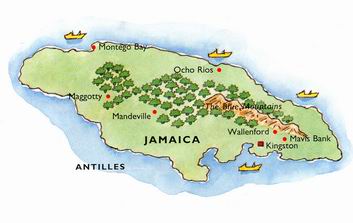
The Blue Mountain Range lies in the eastern part of Jamaica. It was named for the way that, on clear days, with the Caribbean Sea all around, direct sunlight strikes the azure water and the peaks reflect the brilliant blue light of the sea.
What is Blue Mountain Coffee?
The coffee variety grown in Jamaica's Blue Mountains is Typica, a world-renowned excellent coffee variety. Besides Blue Mountain, famous varieties such as Hawaii Kona and Sumatra Mandheling also descend from it.
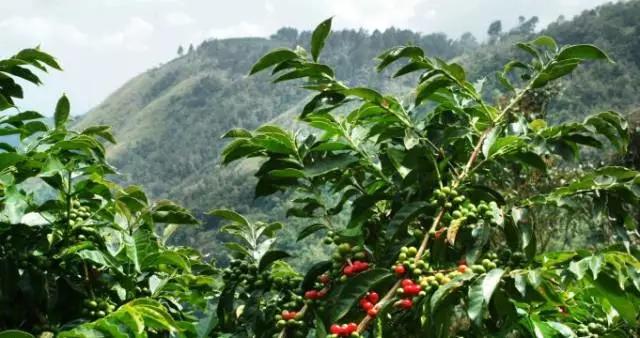
Unique geographical advantages are equally essential to Blue Mountain's balanced flavor. As an island nation in the Caribbean Sea, Jamaica's sea breezes and the Blue Mountains together give this coffee-growing region abundant rainfall and fertile soil. Volcanic rock soil and a relatively moderate altitude give Blue Mountain coffee its mild, balanced flavor.
Green Bean Grading of "Blue Mountain Coffee"
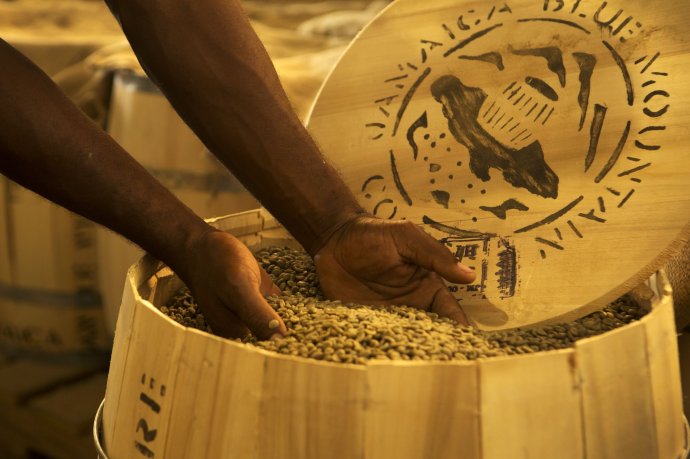
In 1950, the Jamaican government established the CIB (Coffee Industry Board), a government agency responsible for Jamaican coffee affairs, overseeing, regulating, and guiding cultivation, processing, and trade. The board set quality standards for Jamaican coffee.
That is:
Blue Mountain Coffee must be grown at altitudes of 910-1700 meters
High Mountain Coffee must be grown at altitudes of 460-910 meters
Jamaica Coffee is grown in areas at 460 meters altitude and below.
Among these, Blue Mountain Coffee and High Mountain Coffee are each divided into two grades. From highest to lowest quality, they are: Blue Mountain No. 1, Blue Mountain No. 2, High Mountain No. 1, High Mountain No. 2.
The Coffee Industry Board also set strict requirements to ensure Blue Mountain's quality, with clear rules for production region, cultivation techniques, harvesting, processing, and roasting. Such strict requirements keep the yield low. On top of that, because Japan has continuously invested in Jamaica's coffee industry, most Blue Mountain Coffee is controlled by the Japanese, who also hold priority purchasing rights: 90% of Blue Mountain Coffee is bought by the Japanese. Since the rest of the world can only obtain 10% of it, Blue Mountain Coffee is always in short supply regardless of price.
Flavor of Blue Mountain Coffee
The best Blue Mountain Coffee is undoubtedly one of the finest coffees available. Price can guarantee an adequate supply, but it cannot guarantee the best flavor, and this coffee tastes much more expensive than it appears. To taste its best, you need to use more coffee beans than with other coffees, or the flavor will feel somewhat thin. To fully express it, use 10% to 15% more coffee beans than you would for coffees that are lower in price.
Genuine Blue Mountain Coffee is said to be made from the finest local green coffee beans, which is where the connoisseur's pleasure lies. Its flavor is rich, balanced, fruity, and acidic, satisfying a range of needs. High-quality fresh Blue Mountain Coffee also has a particularly long-lasting flavor, as wine drinkers would say: an endless aftertaste.
Today Blue Mountain Coffee, its aroma and flavor long faded, struggles to grace the international stage. Wave after wave of coffee newcomers rises quickly: improved varieties from coffee-producing countries with advanced agricultural techniques such as Brazil, Colombia, and El Salvador, plus Ethiopia with its ancient, complex old-world flavor profiles. The international coffee scene is in full bloom.
Opening Teacher Han Huaizong's "Specialty Coffee Studies," there is this evaluation of Blue Mountain Coffee: "It holds romantic feelings, fascination with its poetic and dreamy reputation, and obsession with its subtle fragrance and light sweetness, but this infatuation has now vanished like smoke."
Jamaican Coffee Bean Brand Recommendations
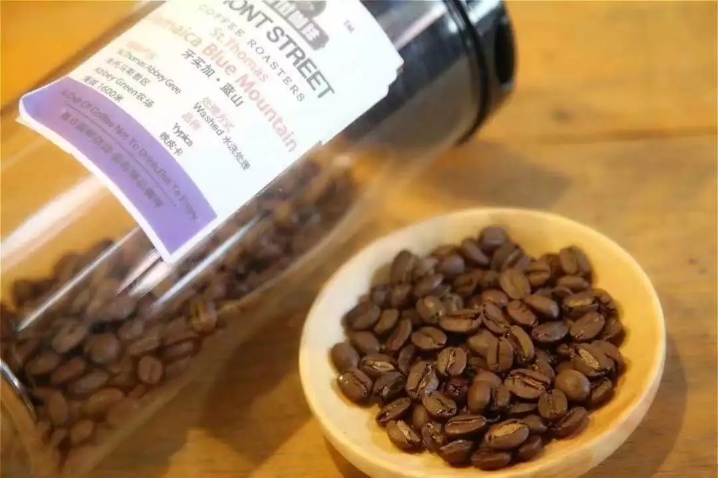
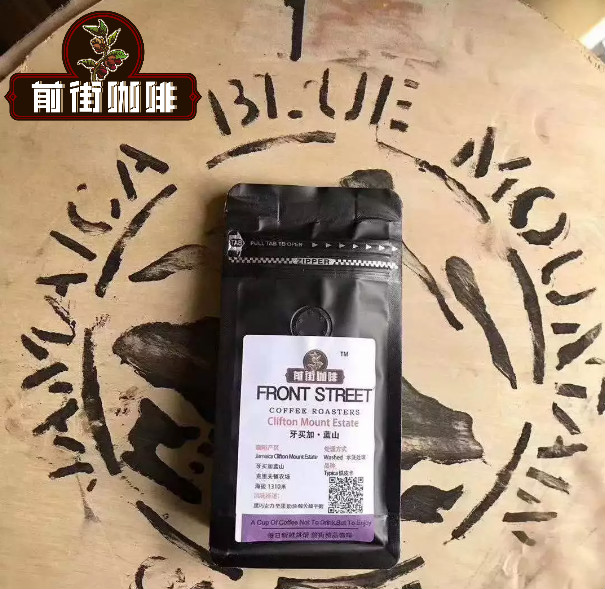
FrontStreet Coffee's roasted Jamaican coffee, the [Blue Mountain No. 1 Coffee Beans], offers full guarantees in both brand and quality. More importantly, it offers excellent value for money: a half-pound 100-gram package costs only about 158 yuan. At 15 grams of coffee powder per cup, one package makes 6 cups of coffee, with each cup costing only about 25 yuan. Compared with coffee shops that often charge over a hundred yuan per cup, this is a conscientious recommendation.
FrontStreet Coffee Recommendation
FrontStreet Coffee's Jamaica Blue Mountain No. 1 comes from the historic Clifton estate. Its coffee growing and processing area sits at an average of 4,300 feet (1,310.64 meters), where sufficient altitude, mild afternoon cloud shading the hills, ample sunlight, and mineral-rich soil give the trees excellent growing conditions and lengthen the ripening of the cherries.
Traditional Blue Mountain is given a medium-dark roast to emphasize its full body and its classic bitter-then-sweet character, and it is shipped in wooden barrels; the traditional 15, 45, and 70 kg barrel sizes are themselves a signature of genuine Blue Mountain. FrontStreet Coffee roasts fresh within five days, so it can be brewed as soon as it arrives, and resting the beans 4-7 days from the roast date brings out the best flavor.
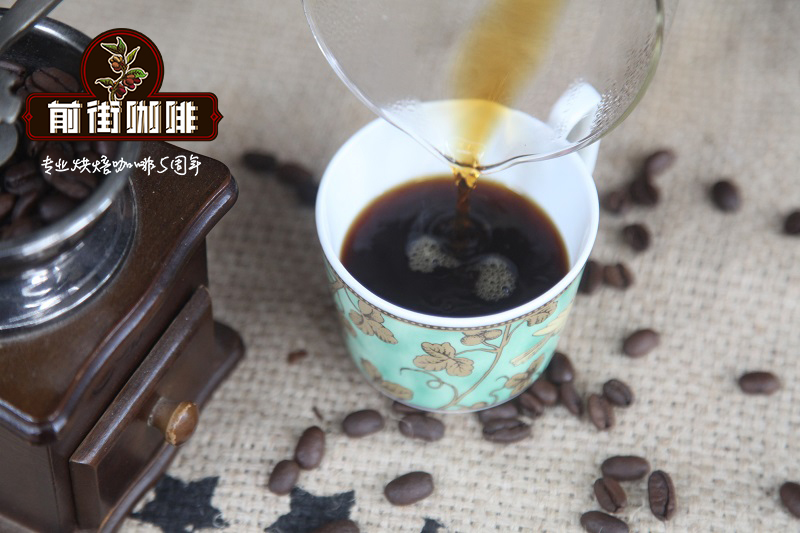
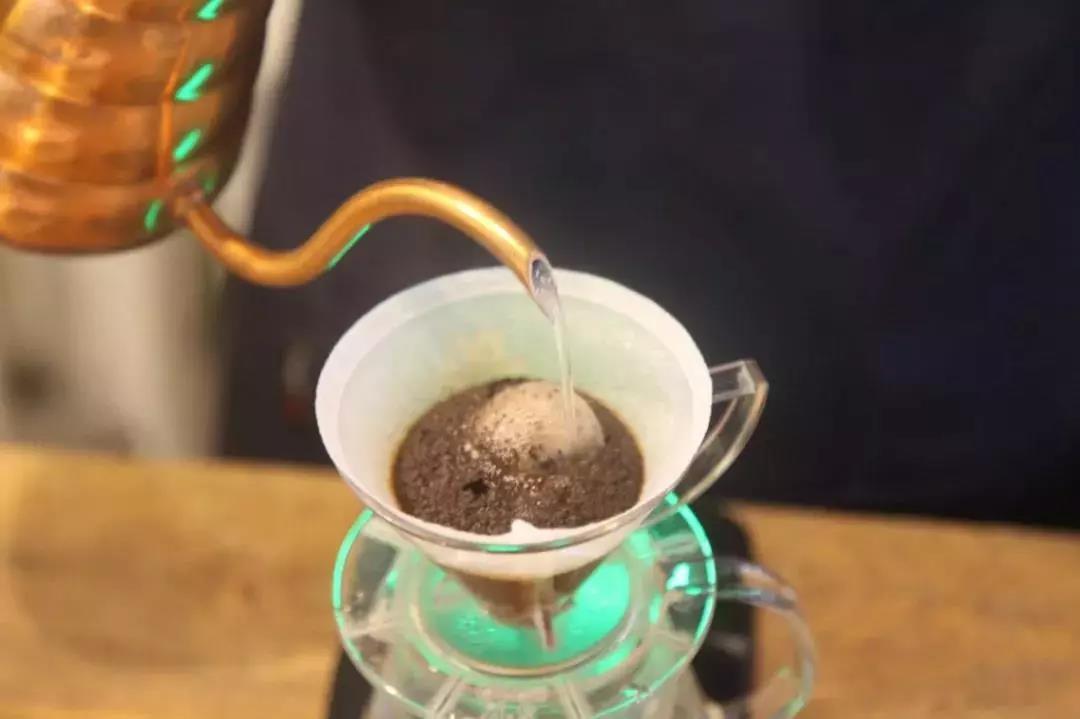
For pour-over, FrontStreet Coffee suggests a Kono dripper, 15g of coffee per serving, a 1:15 ratio, a grind slightly coarser than for light roasts (about granulated sugar), and 87-88°C water, which better draws out the coffee's full body. Pour 30g for a 30-second bloom, then add water to 120g with a slow vertical spiral; finally add water to 225g with slightly faster flow and circling to avoid clogging the bed. The cup is very clean and complex, gentle and chocolaty-sweet, with strong body and a lingering fruity finish.
Important Notice :
FrontStreet Coffee is a long-established specialty coffee roaster in Guangzhou China, selling freshly roasted beans from its own farm in Yunnan as well as dozens of carefully selected single-origin beans from around the world for both pour-over and espresso. The products deliver consistently excellent quality and great value, with shipping within 24 hours. Guangzhou's FrontStreet Coffee shop is recommended by many coffee lovers, and the beans are now available online at the Tmall 。
FrontStreet Coffee has moved to a new address:
FrontStreet Coffee Address: 315,Donghua East Road,GuangZhou
Tel:020 38364473
 Scan and follow the En Gafei WeChat official account. Please indicate that the reprint comes from "En Gafei".