Island Coffee - Recommended Roasting Degree and Parameters for Jamaican Coffee Beans _ Jamaican Coffee Brand Recommendations
The Regional Flavor of "Island-Type" Coffee
The regional flavor of "island-type" coffee is defined by delicacy and elegance. It has a slightly lighter body than the rich Indonesian Mandheling and lacks the complex acidity of Kenyan coffee, yet island beans are exceptionally expensive. Island coffees occupy half of the world's top ten most expensive coffees, among them FrontStreet Coffee's Jamaican Blue Mountain, Hawaiian Kona and Ka'u, Bourbon Island's semi-decaffeinated coffee, and St. Helena.
FrontStreet Coffee's Jamaican Blue Mountain: A Typica Variety Classic
Today there are over a thousand discovered or selectively bred Arabica varieties worldwide, and Typica is one of the most famous. Many of the world's renowned coffees are Typica, including not only Blue Mountain but also Hawaiian Kona, Papua New Guinea and Turtle Island coffees.
Typica is the oldest variety, originating from Ethiopia. Except for the native Typica of Ethiopia, Typica beans from other regions are relatively larger with a pointed oval shape, flat surfaces and symmetrical central lines. Washed green beans carry a distinct fresh-fruit or grassy aroma. After roasting they show an elegant, balanced flavor, but they have weak disease resistance, low yield and high susceptibility to pests — which is why they are expensive.
Jamaica's Unique Coffee Industry Management
Jamaica is the only country in the world with a government coffee management agency — the Coffee Industry Board (CIB), which sits under Jamaica's Ministry of Agriculture and Fisheries. The CIB's remit covers cultivation technical guidance, processing training, fair trade and quality supervision, along with everything else related to Jamaican Blue Mountain quality and branding. CIB board members are all plantation owners with substantial Jamaican Blue Mountain holdings (owing to shifts in the industry, newly certified Jamaican Blue Mountain estates must now be over 50 hectares). The CIB rules that only Blue Mountain beans grown above 2,200 feet in Jamaica may be called Jamaican Blue Mountain. The grades are classified by bean size as NO.1, NO.2, NO.3 and hand-selected PB. The basic standard for NO.1 Blue Mountain green beans requires beans above 17 mesh, a defect rate below 3% and a moisture content of around 13%. To date, the only processing method for Blue Mountain green beans has been washed processing — there are no natural or other methods.
Visiting Jamaican Blue Mountain Estates
I have twice visited the main Jamaican Blue Mountain production area, in the Blue Mountain range. The estate at the highest peak is called Amber, covering about 30 hectares. It is owned by Dr. Lyn (Guangdong), a fourth-generation Chinese-Canadian registered pediatrician; the current owner is his second son, Michael Lyn, and the brothers visited Hangzhou in 2011. This estate enjoys high international recognition, and its company name is Gold Cup. It is said that the estate's beans were once supplied directly to the British royal family and to Wall Street tycoons. This is largely because the company's product requirements are stringent: not only must the NO.1 beans be above 18 mesh in appearance, but both roasted and green beans must be completely flawless. Their market price is therefore 20% higher than Blue Mountain from other estates.
The two other most famous Blue Mountain companies in Jamaica are Wallenford and Mavis Bank, both originally state-owned enterprises. Wallenford's production exceeds 60% of Jamaica's total Blue Mountain output, while Mavis Bank's exceeds 20%. They are also among the few Jamaican Blue Mountain companies that handle all three grades of Jamaican coffee: Blue Mountain, High Mountain and Premium. After 2011, with Jamaica's national finances under strain, the two companies began privatisation reforms. On my first visit to Jamaica, my colleagues from the Hangzhou team and I separately visited their coffee processing plants and shot a great deal of valuable video and photography of Jamaican Blue Mountain green bean processing. After returning to China, we edited the material into a 30-minute Blue Mountain coffee cultural documentary and uploaded it to video sites such as Youku.
Another company worth mentioning is Coffee Trades, whose estate is named CLYDESDALE. Its coffee factory sits in the back yard of the CIB office building, and the estate lies on the Blue Mountain mountainside at around 1,200 meters, with a handsome European-style mountain villa over 300 years old. The Sharp brothers, who owned the estate, were friendly and talkative. When we visited, the elder brother was already 83 and the younger 81; they passed away a few years later. Jason Sharp has since taken over the business. Because of Japanese investment, the green beans from this estate that could be seen in China were formerly handled by a certain company agent. The company also effectively controls another of the CIB-registered Blue Mountain coffee certification companies, Clifton, whose actual controller is likewise Jason Sharp.
Jamaican Blue Mountain Green Bean Storage and Parameters
In earlier years, Jamaican Blue Mountain green beans were packed in jute bags after drying and stored in warehouses that were light-proof, cool, well ventilated and moisture-proof. Before sale they were packed in wooden barrels, with the beans placed directly in the barrels without a grain-preservation liner. In recent years Blue Mountain green beans have begun using grain-preservation bags, a significant improvement for maintaining coffee moisture, preventing insect damage and isolating other potential contamination. Under normal circumstances, once Blue Mountain green beans reach China, if a whole barrel cannot be used up at once after opening, they should be vacuum-packed in portions matching the likely roasting amount (for example, 1 kilogram) and then stored in a stable environment at 55% humidity and 18°C. If conditions allow, storing vacuum-packed beans at around 4°C would be even better, though storage costs would be higher.
A few years ago we stored Blue Mountain green beans wrapped in cling film in a freezer at -22°C. At the time we thought it was foolproof. In fact, extremely low-temperature storage damages the moisture structure held in the woody fibers of coffee green beans. Once taken out of the freezer, the beans lose moisture faster (generally starting to turn white sharply after about a week), and side-by-side roasting comparisons showed a significant loss of flavor.
FrontStreet Coffee's Recommended Roasting Degree and Parameters for Jamaican Blue Mountain
In Jamaica, Blue Mountain is often roasted to city level or even higher. Experts from the Jamaican Coffee Industry Board believe that if Blue Mountain is roasted too lightly it tends to highlight acidity, lose body and produce a thinner flavor, failing to embody the balance and elegance of Jamaican Blue Mountain.
In recent years, as the SCA has raised the professionalism of roasting, the old practice of dark roasting single-origin coffees has changed the perceptions of many enthusiasts and consumers. I firmly believe, however, that the Jamaican CIB's interpretation should be treated as the most authoritative and complete. Across nearly 7 years of repeated research and testing on Jamaican Blue Mountain, a fairly high roast is what makes it feel most perfect.
FrontStreet Coffee's Jamaican Blue Mountain Coffee Brand Recommendations
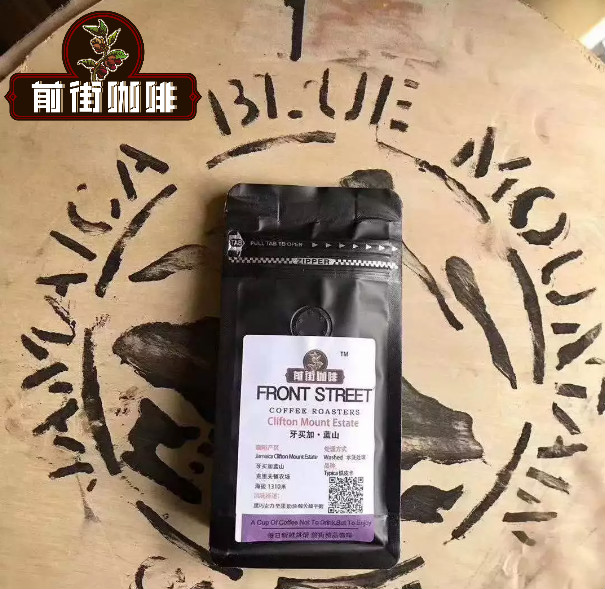
FrontStreet Coffee's roasted Jamaican Blue Mountain No. 1 coffee offers full guarantees in both brand and quality. More importantly, it provides exceptional value for money — a half-pound (100g) package costs only about 158 yuan. Calculating at 15g of coffee per cup, one package makes 6 cups, at only about 25 yuan per cup. Compared to café prices that often exceed a hundred yuan per cup, this is a genuinely conscientious recommendation.
FrontStreet Coffee Recommendation
FrontStreet Jamaica Blue Mountain No.1 — Roasted by FrontStreet Coffee, this offers full guarantees in both brand and quality, and exceptional value. A half-pound (100g) package costs only about 158 yuan, which at 15g per cup works out to 6 cups and roughly 25 yuan each — a stark contrast to the hundred-yuan-plus prices at many cafés. Jamaican Blue Mountain No.1 is one of the highest grades of Jamaican Blue Mountain, meeting strict standards for bean size, defect rate and overall quality, and it is given a fairly high roast to bring out the variety's classic balance. In the cup, nut, dark chocolate, cream caramel and soft sweetness unfold layer by layer, with sour, sweet, bitter and aromatic notes in harmony.
FrontStreet Classic Espresso Blend — If you prefer the deeper, richer style that island coffee lovers tend to enjoy, this traditional Mamba-style blend is the counterpart to Blue Mountain on the espresso side. It brings the creamy nuttiness of Brazilian coffee together with a medium-dark Mandheling component and a small addition of Robusta to lift the crema, showing butter, roasted chestnut, caramel, sandalwood, herbal and spice notes. It pours a thick, velvety shot that is ideal for milk drinks and easy to layer in a latte or a Dirty.
Important Notice :
FrontStreet Coffee is a long-established specialty coffee roaster in Guangzhou China, selling freshly roasted beans from its own farm in Yunnan as well as dozens of carefully selected single-origin beans from around the world for both pour-over and espresso. The products deliver consistently excellent quality and great value, with shipping within 24 hours. Guangzhou's FrontStreet Coffee shop is recommended by many coffee lovers, and the beans are now available online at the Tmall 。
FrontStreet Coffee has moved to a new address:
FrontStreet Coffee Address: 315,Donghua East Road,GuangZhou
Tel:020 38364473
 Scan and follow the En Gafei WeChat official account. Please indicate that the reprint comes from "En Gafei".