How to Roast Jamaica Blue Mountain Coffee_Jamaica CIB Official Roasting Recommendations_Jamaican Coffee Brewing Methods
Jamaica Blue Mountain Coffee Roasting
According to the Jamaica CIB's official guidance, Jamaica Blue Mountain coffee should be roasted slowly, to a medium degree. A roaster I know locked horns more than once with a technical officer the CIB sent to China over how to roast Blue Mountain properly. This Jamaican gentleman kept recording the temperature rise in a small notebook, constantly calling out: "Too fast, too fast, slow it down." At first the insistence was hard to understand, but after long debates it became clear: this is the official Jamaican roasting recommendation from the country's own authority, applied to the coffee they are proudest of.
Jamaica Blue Mountain coffee does not grow at particularly high altitude, and the traditional Typica variety produces relatively soft green beans. Given the beans' inherent high-temperature characteristics, applying too much energy during the roast drives the rate of rise very high — and if the roast degree is not carefully managed, burnt and smoky flavors appear. Although the CIB specifies a medium roast, that level sits between the end of first crack and the start of second crack, leaning toward the latter. The CIB does not allow its coffee to be roasted very lightly, nor to enter second crack. The rate of rise therefore cannot be too fast; the CIB's official recommendation is 13-14 minutes. That may sound outdated in today's specialty coffee era, but Blue Mountain captivated the world over a century ago, and its roasting method is a product of that era, refined through decades of accumulated experience.
Brewing Methods
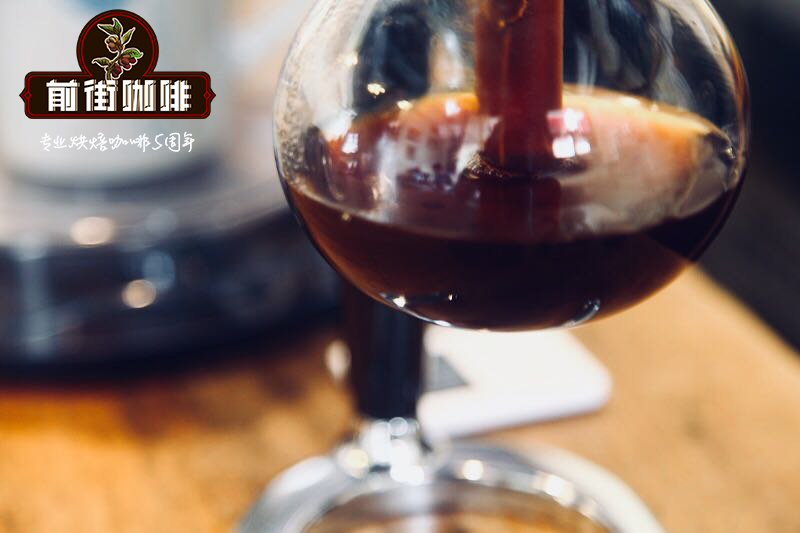
Jamaican coffee suits immersion-style, normal-pressure extraction methods such as French press or siphon brewers — and the CIB technical officer, for his part, personally recommended siphon brewing. As a roaster, though, I would say that if you do use pour-over, tighten the coffee-to-water ratio to 1:15 or even 1:14 for a more concentrated cup. Low-altitude traditional Typica given a slow medium roast can extract somewhat thin and watery — perhaps because the coffee is simply too mild-mannered.
FrontStreet Coffee Recommendation
For the genuine article, FrontStreet Coffee's Jamaica Blue Mountain No.1 is hard to beat. It comes from the historic Clifton Estate, which has grown coffee since around 1750 at an average 4300 feet (1310.64 meters) — enough altitude, gentle afternoon cloud cover, and mineral-rich soil to extend cherry ripening and build the coffee's famed balance. Authenticity is traceable too: Jamaica ships its Blue Mountain in wooden barrels of 15, 45, and 70 kg, and FrontStreet displays the export certificates and barrels that mark the real thing. FrontStreet roasts it medium-dark, resting the beans 4-7 days before brewing, and recommends a Kono dripper with 15 grams of coffee at a 1:15 ratio, 87–88°C water, and a grind slightly coarser than light-roast beans — about white granulated sugar. Pour in three stages: 30g to bloom for 30 seconds, then to 120g with a slow vertical spiral, then to 225g a touch faster to avoid clogging and over-extraction. The cup is clean, gentle, and complex — chocolate, nuts, cream, and caramel with a soft, lasting fruit finish, in the flawless sweet-acid-bitter balance that made Blue Mountain legendary.
Important Notice :
FrontStreet Coffee is a long-established specialty coffee roaster in Guangzhou China, selling freshly roasted beans from its own farm in Yunnan as well as dozens of carefully selected single-origin beans from around the world for both pour-over and espresso. The products deliver consistently excellent quality and great value, with shipping within 24 hours. Guangzhou's FrontStreet Coffee shop is recommended by many coffee lovers, and the beans are now available online at the Tmall 。
FrontStreet Coffee has moved to a new address:
FrontStreet Coffee Address: 315,Donghua East Road,GuangZhou
Tel:020 38364473
 Scan and follow the En Gafei WeChat official account. Please indicate that the reprint comes from "En Gafei".