The Difference Between Americano and Pour-Over Coffee_ Do Americanos Need Single-Origin Beans? An Introduction to Americano Coffee Beans
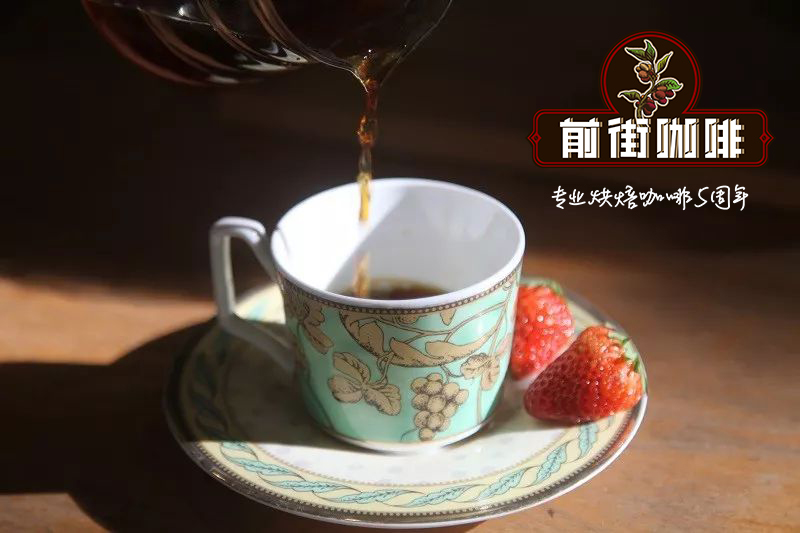
I love pour-over single-origin coffee, believing I can taste the different flavors of various beans and even experience the "romance" of making coffee by hand. But sometimes I find myself puzzled — since the principle behind pour-over is the same as an American coffee machine, why not just use a machine to extract coffee directly? Wouldn't that be more convenient?
The Difference Between American Coffee and Pour-Over Coffee
Setting aside the joy and "romance" of the manual coffee-making process
Today
we will give a detailed explanation for this confusion
Believe me, after reading this article
regardless of your level of understanding of specialty coffee
you will gain new insights
American coffee machines and pour-over methods have both differences and similarities. Let's start with American coffee machines, also known as American drip coffee. In 1963, Bunn successfully developed the first commercial American coffee machine, and after improvements it entered American households in 1967.
Drip coffee machines are extremely easy to use — even someone who has never made coffee before can easily brew a cup of American drip coffee: place filter paper in the filter cup, pour ground coffee into the filter cup, attach the filter cup to the drip machine, add purified water or soft water to the top of the machine (remember not to use tap water, since its high hardness and scale will shorten the machine's lifespan — soft water with TDS below 100 is best), set the temperature, and when the water reaches your set temperature it will extract evenly (as shown in the picture below).
A Quick Note on Choosing American Coffee Machines
I don't recommend buying American drip machines that cost two to three hundred yuan on certain online platforms. The American coffee they produce is either unevenly extracted or over-extracted, resulting in a burnt, bitter taste that seriously diminishes the enjoyment of a delicious cup.
Low-end drip machines don't require filter paper and mostly use mesh filters like this. These mesh filters let water pass through quickly, causing under-extraction. If the coffee is ground too fine, water stays in the coffee grounds too long, causing over-extraction and coffee that tends to taste bitter and astringent.
Professional American coffee drip machines use filter cups that require filter paper. The benefit of filter paper is that it slows down extraction. For example, if you use coarsely ground coffee, the filter paper slows the extraction speed, actually producing more even extraction.
Now let's talk about the water outlet holes. To save costs, low-end American drip machines usually have only one outlet hole in the center. That means the center outlet can only pour water over the middle of the coffee grounds. Pour-over, by contrast, requires circular pouring from inside to outside to ensure even water distribution and uniform extraction, preventing some grounds from being over-extracted while others are under-extracted.
So how do American drip machines simulate the pour-over process? You may have noticed that this one has ten holes, meaning its water outlets are evenly distributed above the filter cup. The purpose is to ensure even extraction of the coffee grounds and to mimic the pour-over process as closely as possible.
Professional American drip machines also use more advanced temperature control systems. Coffee is very sensitive to water temperature — too high or too low will affect the extraction of flavor.
Today, international cupping competitions all use American drip machines, because many of them meet the Golden Cup standards of the SCAA (Specialty Coffee Association of America) and can produce a perfect cup.
Demonstrating the Differences in Pour-Over Coffee
To visually demonstrate the differences in pour-over coffee, let's use pictures to explain.
PS: As we all know, to make pour-over coffee you first need a suitable kettle. Some people prefer gooseneck kettles for the Japanese style, while others like grenade-style American kettles for quick pouring. But regardless of the method, a good taste that suits your preferences is what matters most.
The Complete Pour-Over Process
Ground coffee beans (Small Fuji scale 3.5)
20 grams of coffee grounds, approximately enough for 1-2 people
First bloom with 30g of water, pouring evenly from inside to outside. The bloom water should be poured slowly with a fine stream, staying as close to the coffee bed as possible.
When the coffee grounds stop expanding, it's time for the second pour
Second pour: circle evenly from inside to outside, avoiding contact with the filter cup walls, since water will flow down the cup's channels and cause under-extraction.
Third pour: reach the appropriate water volume. Here we use a 1:15 coffee-to-water ratio, meaning we pour 300g of water.
After reaching 300g, stop pouring. The total drip time should be approximately 2 minutes and 20 seconds.
A cup of pour-over coffee is complete
The Art and Science of Pour-Over vs. Drip Coffee
The pour-over process is more complex than that of American coffee machines, which allows for more possibilities and uncertainties. This is one of the reasons we are passionate about pour-over. American coffee machines are too stable — every cup meets Golden Cup standards, which can feel rigid and uninteresting. Pour-over displays more open flavors, letting you taste more nuances with finer detail. Coffee from drip machines, by contrast, has more compact flavors with relatively fewer flavor notes than pour-over. This is also why, in World Cupping competitions, when triangular cupping is used to find one different coffee among three, the difficulty is higher with drip machines. Their water temperature is also relatively higher than in pour-over, so flavors don't open up as much. People with less sensitive senses of smell and taste find it hard to tell two beans apart if they come from the same region and use the same processing method.
The same coffee bean can show different flavor characteristics when brewed with different pour-over methods, though its main flavor profile remains unchanged. Drip machine production, in contrast, is more rigid — its extraction can only meet Golden Cup standards and is hard to vary much, though it is very consistent.
FrontStreet Coffee Recommendation
Whether you pour by hand or brew on a drip machine, the bean does the heavy lifting — and FrontStreet roasts exactly the kind of single origins that shine here. Ethiopia Huakui is one of the biggest stars of recent specialty coffee, overflowing with tropical fruit — strawberry, passion fruit, jackfruit, even lychee — with clear sweetness, very little bitterness, and a smooth, juicy body that many drinkers call "the coffee that doesn't taste like coffee."
For a cleaner, brighter cup, try FrontStreet's Kenya Cherry Tomato, a washed Kenyan single origin from the Sika region, grown at 1,550–1,750 meters from the classic SL28 and SL34 varieties. Its traditional 72-hour double washed fermentation draws out the fruit while keeping the cup clean and pure, and a light roast protects the lively acidity and complex fruit. Expect cherry tomato and smoked plum on the nose, a bright, full acidity like fresh-pressed juice, mid-palate sweetness with pear and black plum, and a clean, long finish of yellow sugar and green tea.
And if your taste runs to a stronger, low-acid cup — the kind that works just as well as an Americano or with a splash of milk — reach for FrontStreet's PWN Golden Mandheling. Roasted dark, it has very low acidity and a rich, lingering body, packed with herbal and dark chocolate aromas with a faint earthy note. It is the go-to choice for anyone who likes a bold cup and doesn't care for acidity.
Important Notice :
FrontStreet Coffee is a long-established specialty coffee roaster in Guangzhou China, selling freshly roasted beans from its own farm in Yunnan as well as dozens of carefully selected single-origin beans from around the world for both pour-over and espresso. The products deliver consistently excellent quality and great value, with shipping within 24 hours. Guangzhou's FrontStreet Coffee shop is recommended by many coffee lovers, and the beans are now available online at the Tmall 。
FrontStreet Coffee has moved to a new address:
FrontStreet Coffee Address: 315,Donghua East Road,GuangZhou
Tel:020 38364473
 Scan and follow the En Gafei WeChat official account. Please indicate that the reprint comes from "En Gafei".