Washed Yirgacheffe Coffee Flavor Characteristics and Pour-Over Brewing Temperature Ratio Recommendations
Professional Coffee Knowledge Exchange
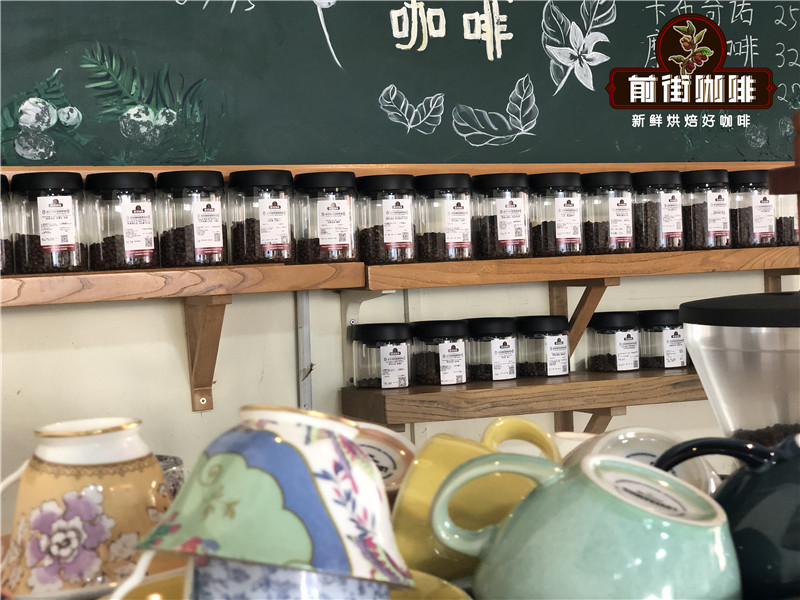
As the coffee industry develops, more and more innovative processing methods have emerged. Anaerobic and barrel fermentation are the most talked-about lately, and FrontStreet Coffee carries several anaerobic and barrel-processed beans that are very popular in the shop—their aromas are indeed striking and memorable.
Yet some customers still prefer classic flavors. One regular at FrontStreet Coffee comes every weekend without fail to order a cup of washed Yirgacheffe. His taste leans toward fresh, clean flavors, so washed Yirgacheffe suits him perfectly. FrontStreet Coffee offers two main categories of Yirgacheffe: washed and natural. The washed version tastes fresher and cleaner, while the natural retains the pulp character, showing fermentation notes with enhanced sweetness and richness—clearly different in the cup. Today, we focus on the specific flavor characteristics of washed Yirgacheffe.
Yirgacheffe Coffee Growing Region
Yirgacheffe is located in the Gedeo zone of southern Ethiopia. Thanks to its distinctive style and wide popularity, Yirgacheffe coffee has established its own category in product classification and holds a firm place in the global specialty market. Yirgacheffe itself is a small town, with three neighboring growing areas—Wenago, Kochere, and Gelena Abaya—also classified under the Yirgacheffe name because their coffees share strong similarities. The area's coffee trees were first cultivated by European monks and later managed by farmers or cooperatives.
Ethiopia's Coffee Production Systems
Ethiopian coffee can be classified into three categories by cultivation method:
Forest Coffee
These wild coffee trees grow mostly in southwestern Ethiopia, typically surrounded by many shade-providing plants. The trees are mixed varieties of multiple species, and their reproductive capacity and yield fall short of artificially selected high-yield varieties.
Garden Coffee
These trees are usually planted around dwellings with fewer natural shade trees, which are more actively managed—frequent pruning keeps them from over-shading the coffee. Many producers apply fertilizer. Most Ethiopian coffee belongs to this type.
Large Farm Coffee
This coffee comes from intensively cultivated large agricultural land using standardized methods, including pruning, compost mulching, fertilization, and disease-resistant variety selection.
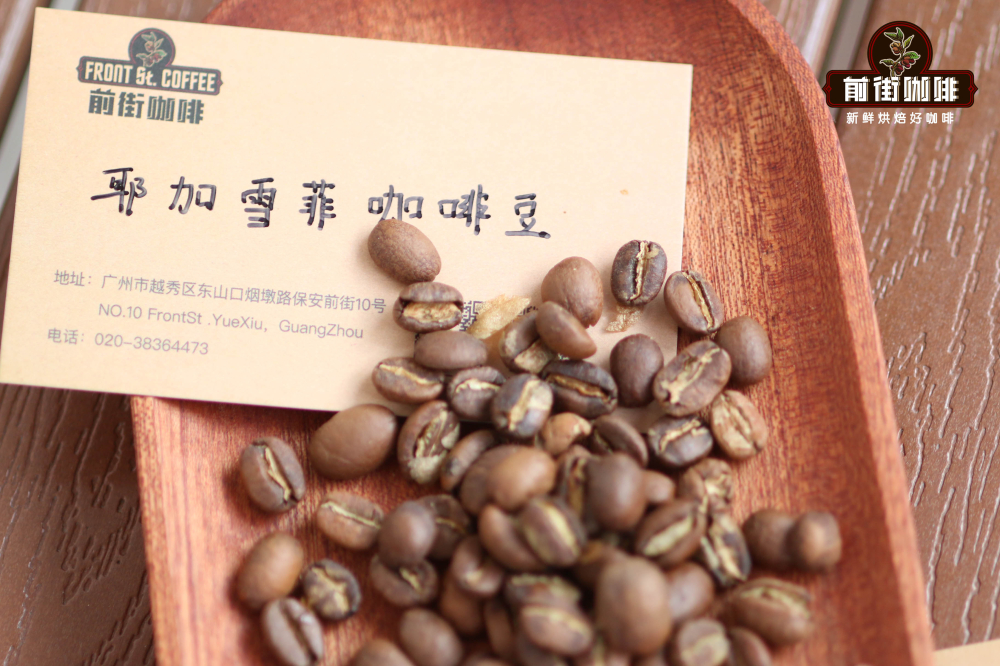
The Washed Processing Method
Traditionally, Yirgacheffe coffee used the oldest natural processing method. Because early natural-processed beans were mostly dried directly on the ground, they inevitably picked up earthy flavors, dust, and other impurities; with little proper screening, their quality was generally average. In 1972, Ethiopia introduced washed processing technology from Central and South America to improve quality. This made Yirgacheffe's jasmine fragrance and citrus-lemon freshness clearer and brighter, quickly making it one of the icons of world specialty coffee.
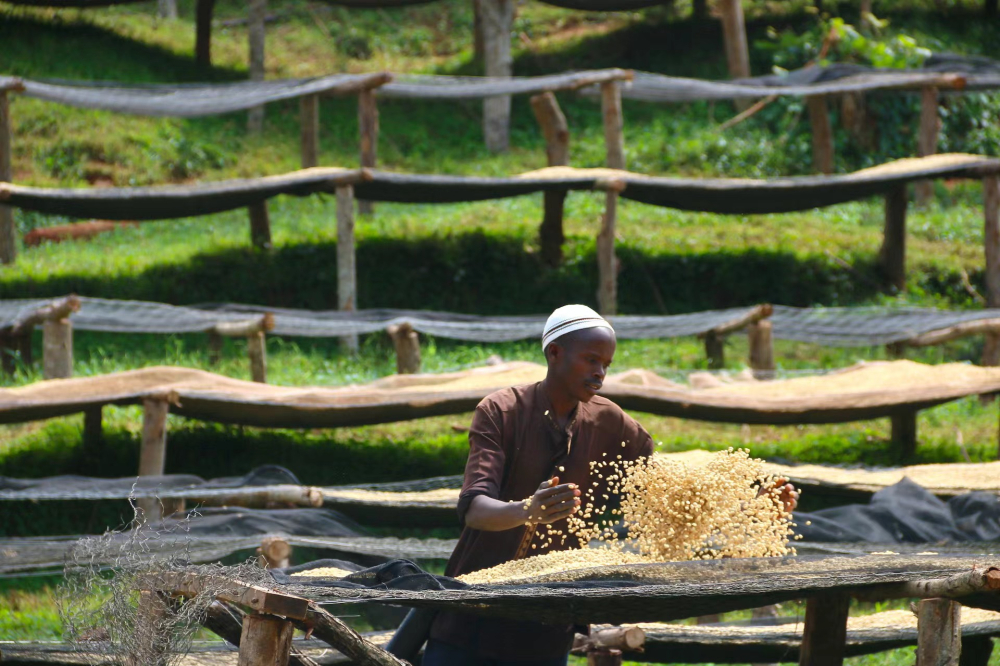
Compared with natural processing, the washed method offers better control over bean quality. Its main advantage is that washing slows the "fermentation" process. Because it requires large amounts of water, countries with limited water resources rarely use it. FrontStreet Coffee holds that washed processing best reveals a coffee's clean taste and pure flavor expression, so when analyzing a region's specific flavors, FrontStreet Coffee uses washed beans from that region as the reference. If a customer has never tried Yirgacheffe, FrontStreet Coffee will recommend the washed version first to establish a baseline of regional flavor—later, when they try natural or honey Yirgacheffe, they have a basis for comparison.
The Washed Processing Procedure
- Bean Selection: Harvested cherries are placed in large water tanks. Ripe fruit sinks, while unripe or overripe fruit floats.
- Pulp Removal: Machines remove the skin and pulp, leaving beans still coated with mucilage, which the washing process is designed to clean away.
- Fermentation: The mucilage clings tightly and cannot simply be rinsed off. The beans rest in tanks for about 18-36 hours while microorganisms ferment and break down the mucilage.
- Washing: The fermented beans go into water channels, rinsed back and forth so the friction between beans and water flow washes them clean.
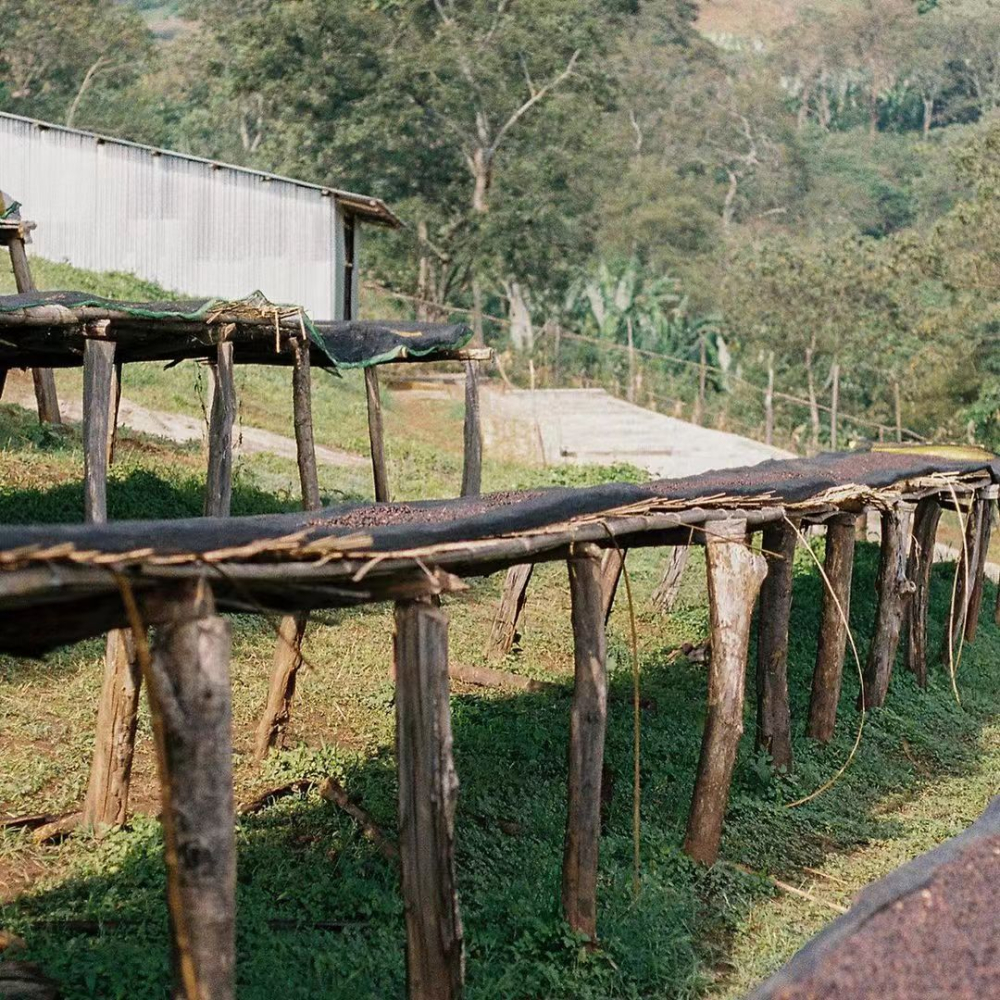
- Drying: After washing, the beans hold about 50% moisture and must be dried down to 12%, or they will mold and spoil. Sun-drying is the best method, taking 1-3 weeks and producing excellent flavor. Machine drying cuts processing time significantly, but the flavor is inferior to sun-dried beans.
- Hulling: After drying, the beans rest in warehouses for a week (to stabilize moisture) before being hulled to remove the parchment.
- Selection and Grading: Defective beans are removed to ensure quality, and the lots are delivered to exporters for sale worldwide.
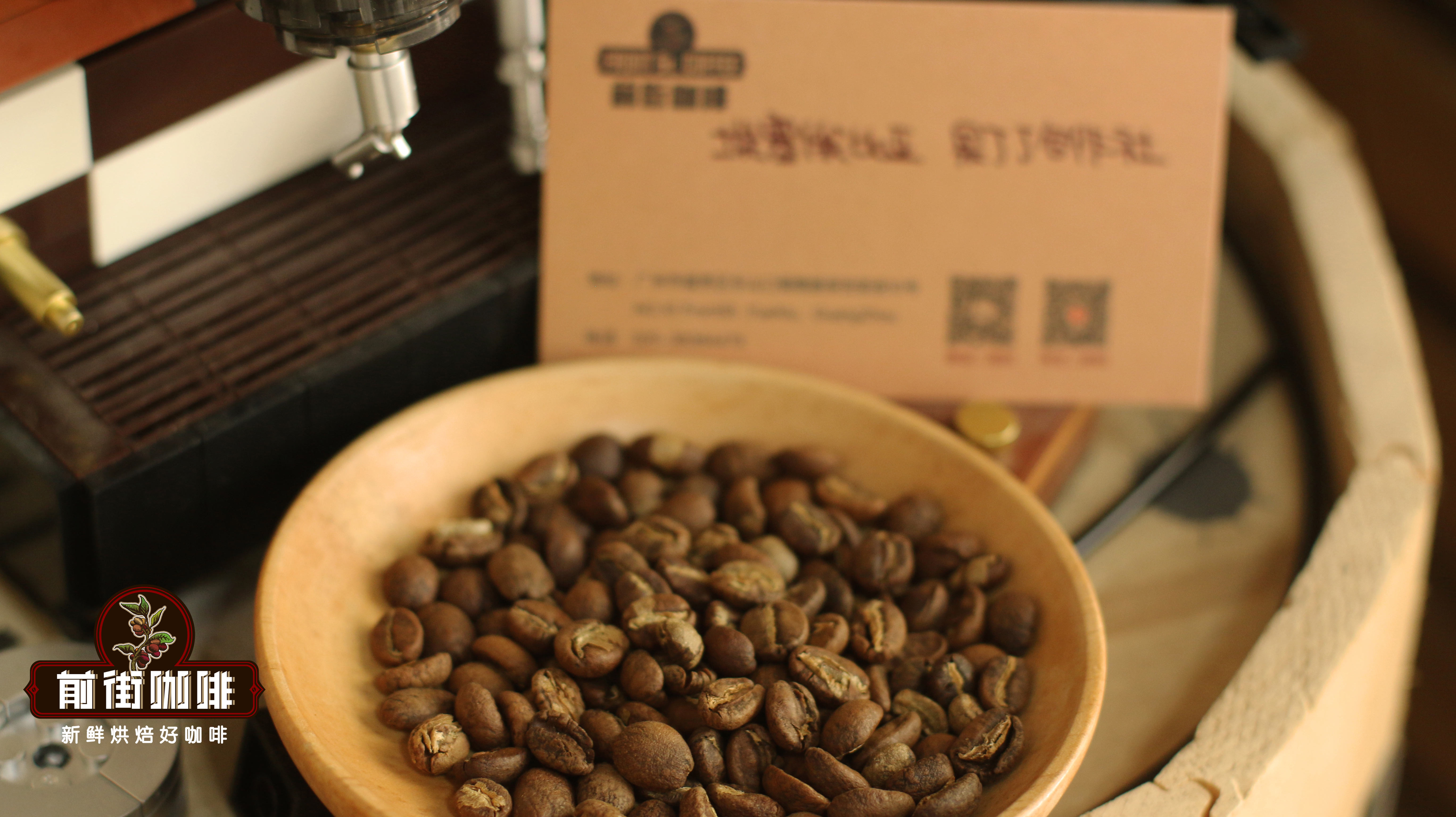
Yirgacheffe Coffee Bean Grading
Yirgacheffe varieties are local native landraces, small-seeded types with a rounder appearance and very small beans, mostly screen size 14-15. The ECX (Ethiopian Commodity Exchange, established in 2012) grading system scores Ethiopian coffee on two dimensions, combining physical attributes with cupping quality to determine grade.
The ECX grading and scoring standards are as follows:
1. Scoring for Washed Processing
- Physical characteristics account for 40%: Defect count (20%), appearance size (10%), color (5%), odor (5%)
- Cupping quality accounts for 60%: Cleanliness (15%), acidity (15%), mouthfeel (15%), flavor characteristics (15%)
2. Scoring for Natural Processing
- Physical characteristics account for 40%: Defect count (30%), odor (10%)
- Cupping quality accounts for 60%: Cleanliness (15%), acidity (15%), mouthfeel (15%), flavor characteristics (15%)
3. Overall Summary
- All coffee is first classified by processing method: Natural or Washed.
- Each is scored from G1 to G9 (9 grades) based on physical characteristics and basic cupping quality.
- G1-G3 undergo additional SCAA-standard cupping for detailed flavor evaluation. G1 and G2 scoring not less than 85 points are classified as Q1 grade.
- G1, G2, and G3 scoring between 80-85 points are classified as Q2 grade, while all G1, G2, and G3 below 80 points are classified as G3 grade.
- Q1 and Q2 are exported as Specialty Grade. G4-G9 keep their original grades and are exported as Commercial Grade along with G3.
For both washed and natural coffee, export-grade green beans with 3 or fewer defects per 300g are classified G1, and those with 4-12 defects per 300g are G2.
What's the Difference Between G1 and G2 Washed Yirgacheffe Coffee Beans?
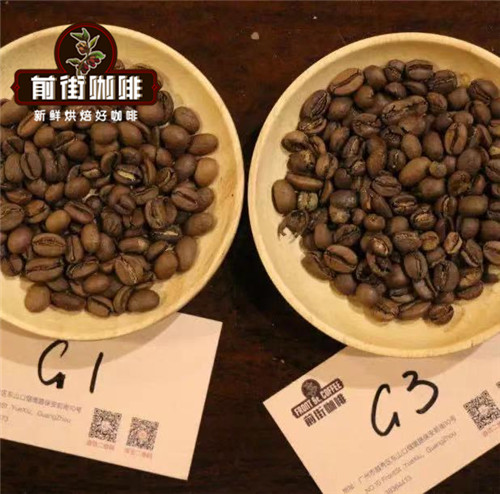
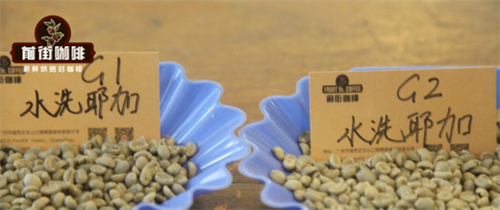
FrontStreet Coffee currently uses G1-grade Yirgacheffe but has also compared it with G2 lots. Taking washed Yirgacheffe as an example: the G1 green beans appear relatively uniform overall with a lower defect rate, while the G2 green beans show obvious size unevenness and a higher defect rate.
FrontStreet Coffee Roasting Suggestions
FrontStreet Coffee's overall view is that Yirgacheffe's most iconic qualities are its refined acidity and rich floral and fruit notes, so light roasting is used to highlight them to the fullest.
1. FrontStreet Coffee Washed Yirgacheffe G1
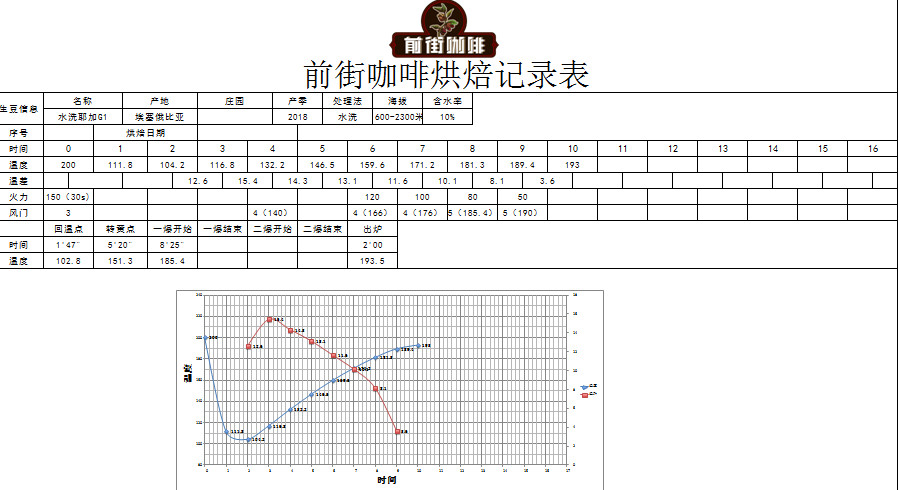
Charge the drum at 200°C, heat at 150, damper at 3; turning point at 1'46". When drum temperature reaches 140°C, open the damper to 4 with heat unchanged. At 151°C the bean surface turns yellow, the grassy smell disappears completely, and the drying stage ends—reduce heat to 120. At 7'37", wrinkles and dark spots appear on the bean surface and the toast aroma clearly shifts to coffee aroma, the prelude to first crack; listen carefully from here. First crack starts at 8'35"; open the damper to 5 and develop for 2'00" after first crack, dropping the beans at 193.5°C.
2. FrontStreet Coffee Washed Yirgacheffe G2
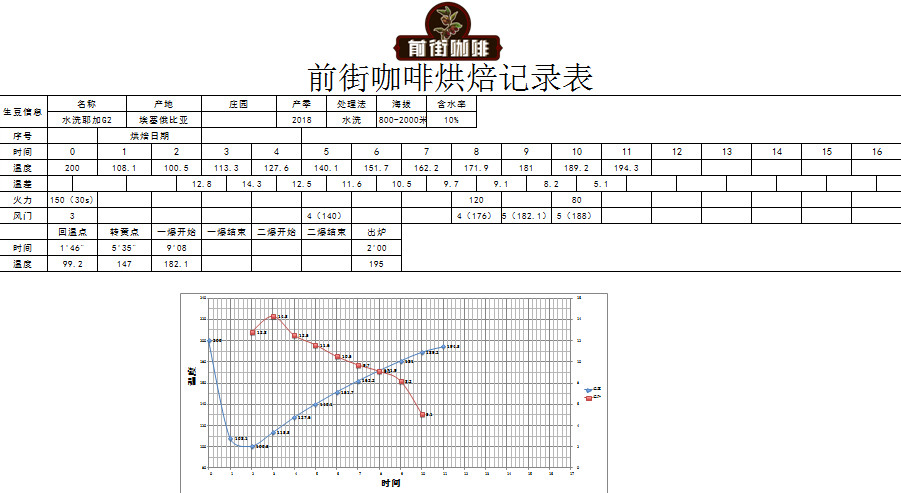
Charge the drum at 200°C, heat at 150, damper at 3; turning point at 1'47". When drum temperature reaches 132°C, open the damper to 4 with heat unchanged. At 147°C the bean surface turns yellow, the grassy smell disappears completely—reduce heat to 140. At 8'00", wrinkles and dark spots appear and the toast aroma shifts to coffee aroma, the prelude to first crack; listen carefully from here. First crack starts at 9'08"; open the damper to 5 and develop for 2'00" after first crack, dropping the beans at 195°C.
FrontStreet Coffee Cupping Report
1. FrontStreet Coffee Washed Yirgacheffe G1
- Dry Aroma: Jasmine, ginger flower
- Wet Aroma: Lemon, citrus
- Palate: Citrus, lemon, grapefruit, plum, Tieguanyin tea
2. FrontStreet Coffee Washed Yirgacheffe G2
- Dry Aroma: Jasmine, citrus
- Wet Aroma: Lemon, citrus
- Palate: Lemon, citrus, tea-like sensation
FrontStreet Coffee Pour-Over Suggestions
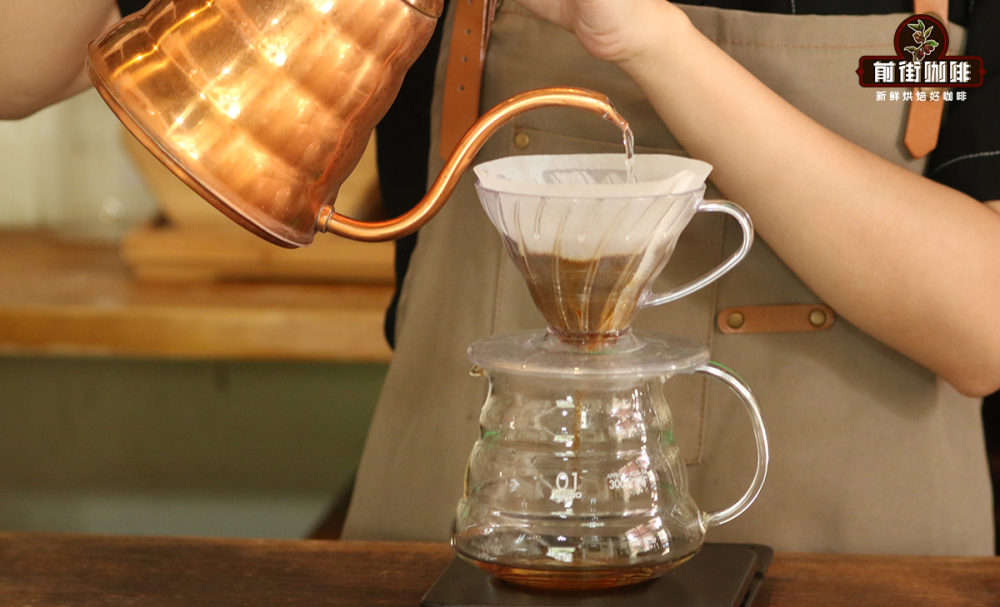
To fully extract Yirgacheffe's fruit acidity, FrontStreet Coffee uses a higher water temperature and a finer grind, paired with a fast-flowing dripper like the V60 to avoid over-extraction. The V60's 60-degree cone concentrates the grounds, so the water flow automatically converges toward the center, ensuring sufficient contact time between water and coffee. The spiral ribs inside the body run clockwise from bottom to top, holding the filter paper away from the wall so water flows freely, and the large outlet at the bottom makes the flow faster than most other drippers.
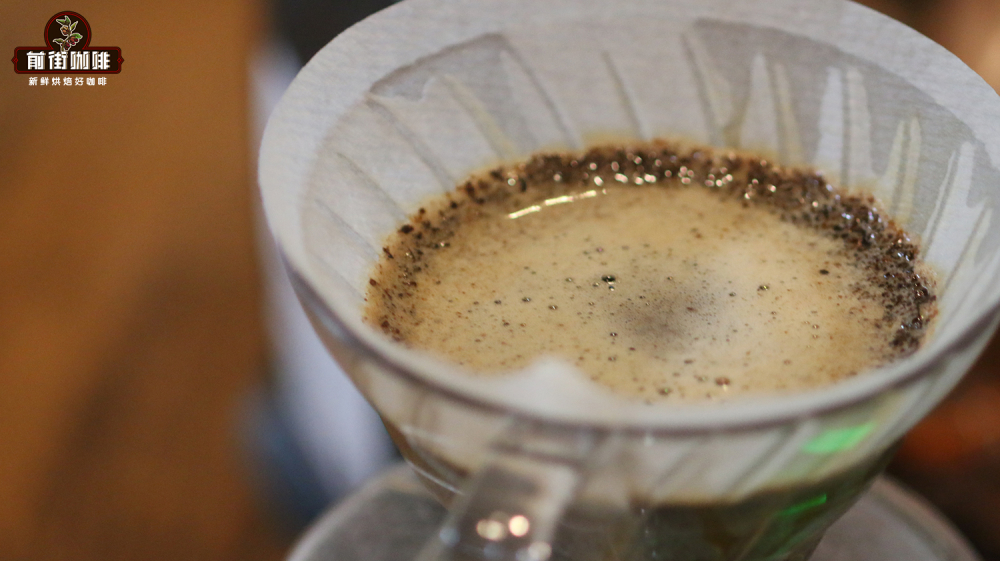
FrontStreet Coffee's brewing parameters: V60 dripper, water temperature 90°C, coffee-to-water ratio 1:15, dose 15g, grind size at 80% pass rate through the China #20 standard sieve.
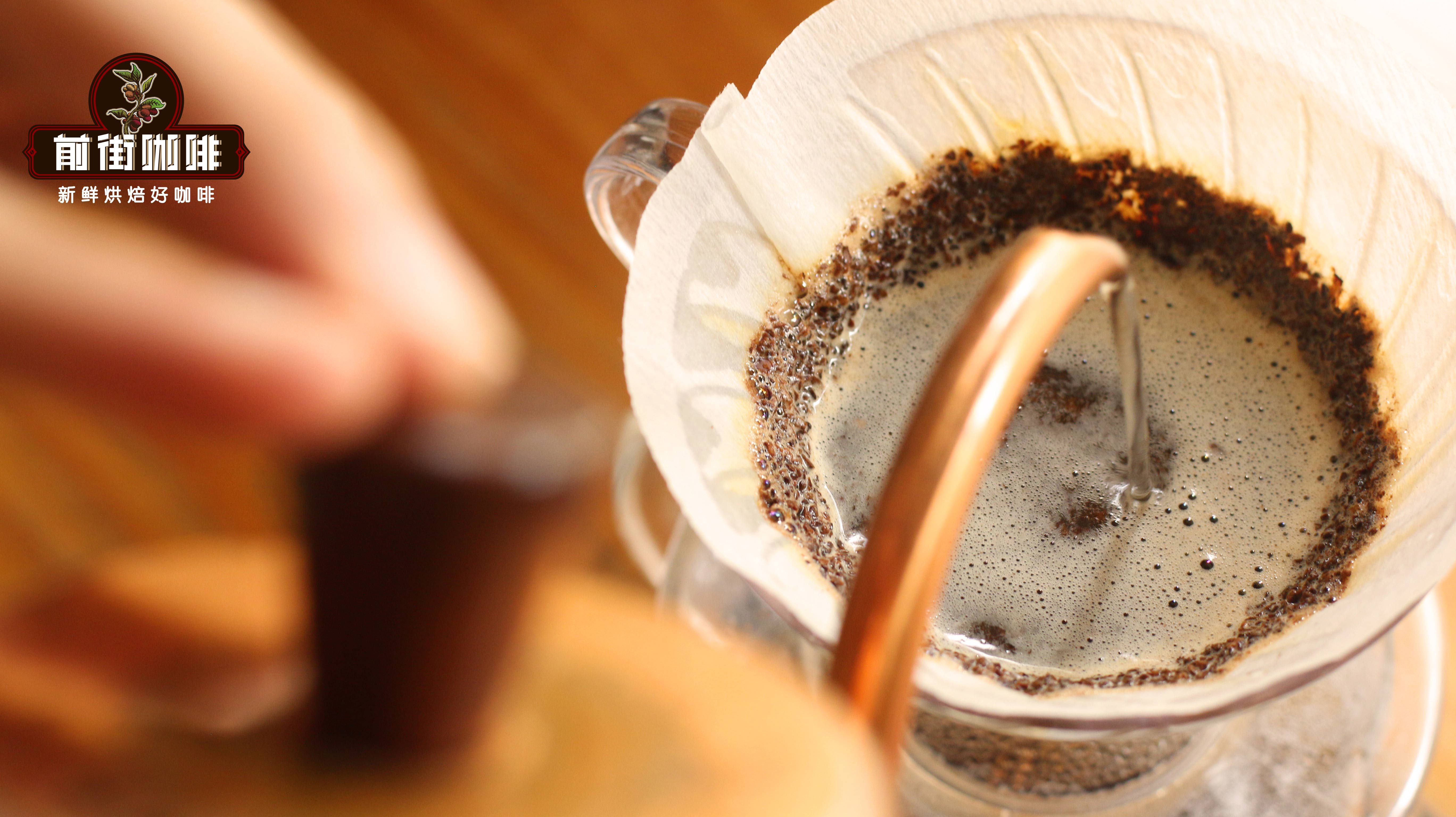
On grind size, FrontStreet Coffee notes that even within Yirgacheffe, each lot should be sieved to determine its own grind because grades differ. The brewing method: first wet the filter paper and preheat the dripper and server. Bloom with 30g of water for 30 seconds, then pour in small circles to 125g; when the water level drops to just expose the coffee bed, continue pouring to 225g, stop, and remove the dripper once the bed is again just exposed (timing starts at the bloom). Total extraction time is 2'05".
FrontStreet Coffee Washed Yirgacheffe G1
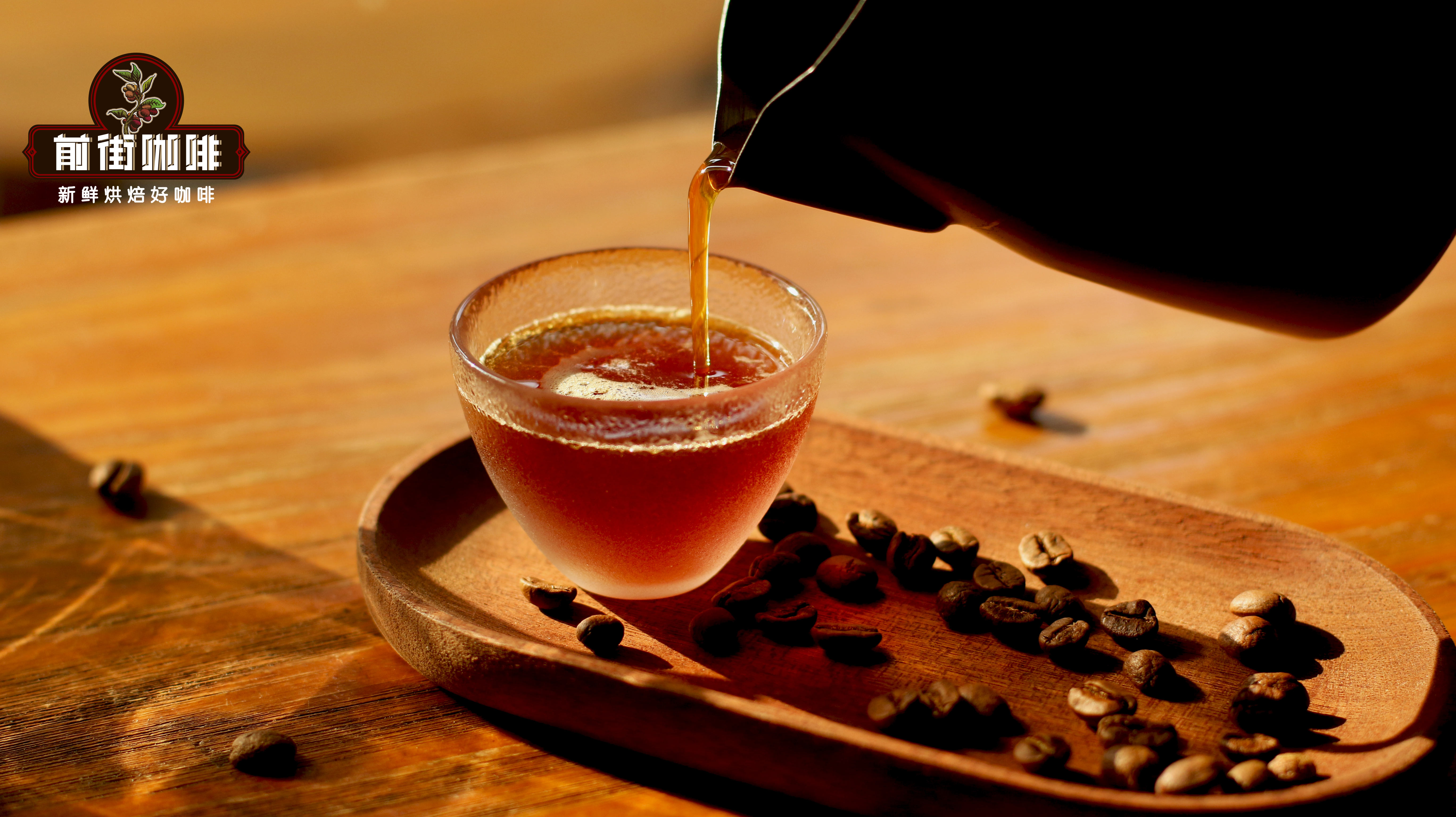
Jasmine on the nose with fresh lemon and caramel sweetness. The entry brings gentle citrus acidity and a creamy note, lemon acidity emerges mid-cup, and the finish shows sugarcane and oolong tea.
FrontStreet Coffee Washed Yirgacheffe G2
Jasmine fragrance with citrus acidity in the aroma. The entry offers lemon and grapefruit acidity with a black tea sensation, ending with a touch of cocoa and a caramel aftertaste.
Having run both coffees through the same process, FrontStreet Coffee's comparison is clear: from green to roasted, the G1 beans show relatively uniform particle size, while the G2 beans are noticeably uneven with more defects. In roasting, the G1's aroma is clearly perceptible; the G2 falls somewhat short. In flavor, the two are quite similar—mainly lemon, citrus, and jasmine—but the G1 offers richer, clearer flavor layers, while the G2's layers are fewer and muddier, with some impurity flavors.
Will Different Water Temperatures Produce Different Results When Brewing Washed Yirgacheffe?
FrontStreet Coffee mentioned earlier that a higher water temperature helps extract Yirgacheffe's fruit acidity, but customers often ask exactly which temperature to use. According to SCAA brewing recommendations, water temperature should fall between 85-94°C: light-roasted beans suit 90-94°C, while dark-roasted beans suit 85-89°C.
To show the impact of temperature on flavor, FrontStreet Coffee brewed its Yirgacheffe Worka Cooperative (Guodingding) lot with four different water temperatures. All parameters except temperature were kept identical: V60 dripper, 15g of coffee, 1:15 ratio, grind size BG#5F (80% pass rate through the China #20 standard sieve).
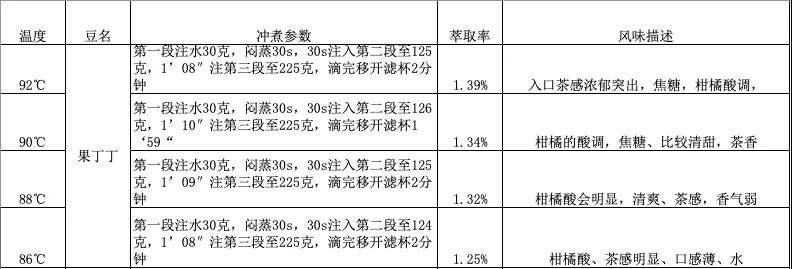
The results show that this light roast suits 90-92°C best: it presents the fruit acidity and sweetness that define the coffee. At 86-88°C, the acidity turns prominent while aroma falls short, leaving a thin, watery mouthfeel. Light roasts preserve more of a coffee's original character—at this level, beans carry rich floral and fruit acidity with multi-layered flavors, and slightly hotter water highlights them best.
More Specialty Coffee Beans
Beyond Yirgacheffe, FrontStreet Coffee carries a wide range of single-origin beans for every taste and brewing style.
FrontStreet Coffee Recommendation
If this article has you craving Yirgacheffe, start with FrontStreet Coffee's washed Yirgacheffe everyday lot: known for white jasmine florals, bright citrus and lemon acidity, and a tea-like body at an accessible price, it is the classic first step into Ethiopian coffee. For a step up, the FrontStreet washed Worka Cooperative (Guodingding) coffee comes from the Worka region at Yirgacheffe's southeastern edge—traditionally washed, with no bitter edge, just clean bright citrus and lemon acidity wrapped in jasmine.
To brew it, use a V60 with 15g of coffee ground to fine-granulated-sugar texture (80% pass through a #20 sieve), water at 90-91°C, and a 1:15 ratio: bloom with 30g of water for 30 seconds, pour to 125g over about a minute, then add the final 100g (225g on the scale) at around 1'35", finishing the drawdown at 2'00"-2'10". If you prefer fruitier profiles, the FrontStreet sun-dried Red Cherry lot—whole-ripe-cherry natural, turned every 2-3 hours at first to prevent uneven fermentation and dried for three to five weeks—adds berry juiciness, honeyed sweetness, and creamy smoothness on top of that signature Yirgacheffe citrus character.
Important Notice :
FrontStreet Coffee is a long-established specialty coffee roaster in Guangzhou China, selling freshly roasted beans from its own farm in Yunnan as well as dozens of carefully selected single-origin beans from around the world for both pour-over and espresso. The products deliver consistently excellent quality and great value, with shipping within 24 hours. Guangzhou's FrontStreet Coffee shop is recommended by many coffee lovers, and the beans are now available online at the Tmall 。
FrontStreet Coffee has moved to a new address:
FrontStreet Coffee Address: 315,Donghua East Road,GuangZhou
Tel:020 38364473
 Scan and follow the En Gafei WeChat official account. Please indicate that the reprint comes from "En Gafei".