Introduction to Washed Yirgacheffe: How to Brew and Ratios
FrontStreet Coffee · Washed Yirgacheffe: Origin, Brewing, and Flavor
What kind of coffee is Ethiopia's Yirgacheffe? To FrontStreet Coffee, it is a fine blend of flowers and fruit. The most prominent features of FrontStreet's Yirgacheffe are its floral aroma and lemon-like acidity. This fresh, clean flavor and mouthfeel are hard to describe. FrontStreet Coffee believes Yirgacheffe is a good choice for beginners, because it is clearly distinct from espresso and, more importantly, it is a coffee that doesn't taste like coffee — breaking the traditional impression of coffee and leaving you with the pleasant feeling of flowers stimulating your taste buds and your sense of smell.
The Yirgacheffe region lies in Ethiopia, the birthplace of Arabica coffee. It is a natural wetland, and Yirgacheffe originally meant "let us settle and thrive on this wetland." Once part of the Sidama region, it was established as one of Ethiopia's famous coffee regions in its own right, because the beans grown near Yirgacheffe town have unique floral and citrus flavors. Today, fewer and fewer people use "Yirgacheffe Sidamo" to search for Yirgacheffe beans.
The Washed Method
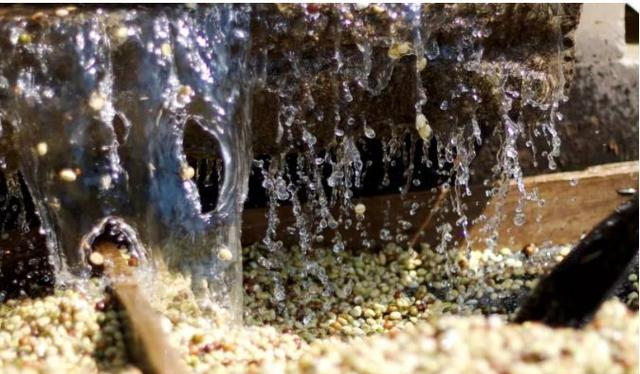
The washed method uses water and fermentation to remove the skin, pulp, and mucilage. Farms using it must build washing tanks and have access to a continuous supply of fresh water. During processing, the fermented beans are placed in the tank and moved back and forth, using the friction of the beans and the power of flowing water to wash them until they are smooth and clean. After washing, the beans are still wrapped in the parchment layer, with a moisture content of 50%. They must be dried down to 12%, otherwise they will keep fermenting and become moldy and spoiled. The better processing method is sun-drying; although it is complicated and takes 1-3 weeks, the flavor is excellent and quite popular.
What Are the Steps of the Washed Process?
Cleaning, collection, flotation, and rinsing — peeling (pulping) — fermentation (degumming) — washing — drying — storage.
What Happens in Each Step?
Cleaning, Collection, Flotation, and Rinsing
After picking, coffee cherries are sent for processing immediately, usually within 6 to 12 hours. The cherries are first weighed and classified, then placed in water tanks for soaking, the purpose being to select out the fruits that float because of insufficient quality.
Peeling (Pulping)
Next, the cherries are sent to a pulper to have their skin and pulp removed.
Fermentation (Degumming)
The fruit, now free of pulp and skin, is sent to fermentation tanks or barrels for static fermentation of 18 to 36 hours. The fermentation time is determined by the temperature. During fermentation, yeast produces enzymes and lactic acid bacteria break down the sugars in the coffee pectin. Lipids, proteins, and acids in the sugars are degraded and converted into alcohol acids. The smell, color, and pH of the coffee change, and the pectin composition changes too.
Washing
After fermentation and degumming, an appropriate amount of water is added to the pool for cleaning. During cleaning, the pectin decomposition products on the surface of the beans are removed by stirring. After cleaning, only the parchment, silver skin, and green bean remain.
Drying
The washed beans are sorted to remove defective ones. They are then sent to drying areas (waterproof cloth, cement floors, raised beds, and so on). Drying time depends on factors such as the climate and generally ranges from 5 to 14 days. At this point the moisture content drops from 55% to 11%.
Storage
Dried beans are called parchment beans — green coffee still wrapped in parchment. Parchment beans are sent to warehouses for storage and will be dehulled again before export.
What Are the Characteristics of Washed Beans?
FrontStreet Coffee believes washed coffee has more obvious acidity, better cleanliness, a medium body, and the most consistent green bean quality. African coffee regions often use the washed method, which lets African beans express citrus-like bright acidity more fully.

How Do You Brew Washed Coffee?
When roasting washed coffee, FrontStreet Coffee generally uses a medium-light roast. A medium-light roast retains more of the bean's acidity, allowing it to express clean, bright acidity after roasting. So when brewing medium-light beans, FrontStreet Coffee recommends a water temperature of 90-91°C. Too high a temperature extracts woody and other unpleasant flavors from a medium-light roast, while too low a temperature fails to fully extract the acidity. Next, let's use FrontStreet Coffee's Ethiopia Gotiti as a brewing example.
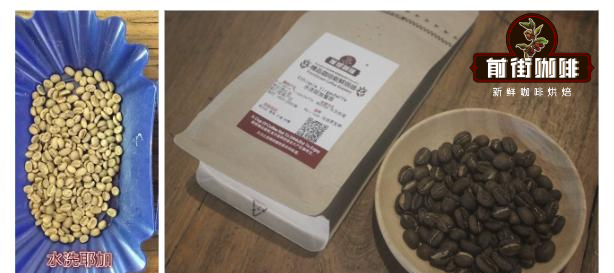
FrontStreet Coffee · Ethiopia Washed Yirgacheffe Gotiti
Country: Ethiopia
Region: Yirgacheffe
Altitude: 1,800-2,000 meters
Processing Method: Washed
Variety: Local heirloom

FrontStreet Coffee Brewing Parameters
Grind: Fuji 3.5 Water Temperature: 90°C Brewing Process: Pour 25 g of water for a 30-second bloom, split the pour at 120 g, and finish the brew at 226 g. Total Time: 2 minutes 5 seconds.
The V60 conical dripper has a large opening, and its unique spiral ribs let air escape more easily, improving extraction quality. The mouthfeel may not be thick enough, but its high concentration brings out sweet-tart flavors and distinct aromas, which is one of its main traits. It can also be paired with different pouring methods and a Kalita three-hole trapezoidal filter 0 in transparent resin.
Flavor: Lemon and nut aroma, with lemon acidity on entry, sucrose sweetness, a light floral note, and an oolong tea aftertaste.

FrontStreet Coffee Recommendation
Washed Yirgacheffe is the clearest introduction to Ethiopia's floral, citrus-driven style, and FrontStreet's Washed Yirgacheffe is an easy, everyday expression of it — white jasmine, bright citrus, lemon acidity, and a tea-like finish at a friendly price, which is why it has become so many drinkers' first specialty coffee.
To go deeper, FrontStreet's Washed Yirgacheffe Gotiti Cooperative follows the most traditional washed processing and comes from the Gotiti village, once part of the Worka cooperative under the Yirgacheffe Coffee Farmers' Cooperative Union. Clean, bright citrus and lemon acidity with jasmine florals; medium-light roasted, it shows green tea and honey notes and works well for pour-over, cold brew, and espresso alike.
Important Notice :
FrontStreet Coffee is a long-established specialty coffee roaster in Guangzhou China, selling freshly roasted beans from its own farm in Yunnan as well as dozens of carefully selected single-origin beans from around the world for both pour-over and espresso. The products deliver consistently excellent quality and great value, with shipping within 24 hours. Guangzhou's FrontStreet Coffee shop is recommended by many coffee lovers, and the beans are now available online at the Tmall 。
FrontStreet Coffee has moved to a new address:
FrontStreet Coffee Address: 315,Donghua East Road,GuangZhou
Tel:020 38364473
 Scan and follow the En Gafei WeChat official account. Please indicate that the reprint comes from "En Gafei".