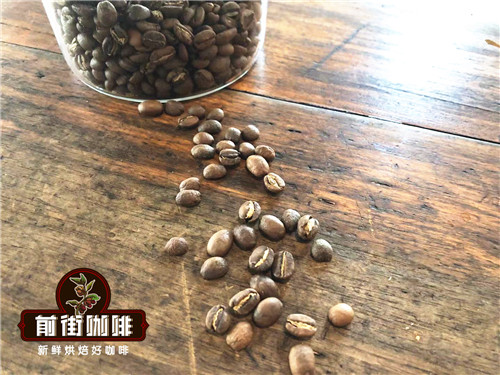
El Salvador Marina Cumbre Farm Las Cruces Mill Bourbon Coffee Bean Flavor Profile
El Salvador Marina Cumbre Farm and the Las Cruces Mill
Flavor and Profile of El Salvador Marina Cumbre Farm Las Cruces Mill Bourbon Coffee Beans
Marina Cumbre is a farm developed as part of a project in collaboration with the Jasal family. It is owned by producer Alejandro Duarte. Because he does not have his own mill, the coffee is processed at Beneficio Las Cruces. Alejandro places great emphasis on forest conservation: a large portion of the farm is natural forest, home to native trees, plants, and animals. The farm sits at an altitude of 1550 meters, covers 70 hectares, and has performed well over the years, known for sweet, delicate, classic El Salvador coffee. The planted varieties are a mixture of Bourbon and Pacamara. The producers are innovative in both processing and agronomy: they separate everything by the days of picking and apply different processes, fermentations, and drying techniques according to each lot's capacity and potential. For this coffee, the cherries undergo mechanical demucilaging, an overnight soak in clean water, and then careful drying on patios, with drying time managed by building up the coffee in layers and piles.
This coffee is processed at the Las Cruces mill owned by the Salaverria family, while the farm belongs to Alejandro Duarte. Marina Cumbre sits at the highest point of the Cordillera El Balsamo mountain range in central El Salvador, surrounded by Balsamo trees long established in the country. For Alejandro Duarte, environmental protection is a central mission: the farm preserves the native forest at its heart, which shelters many species and provides an ideal microclimate and shade for coffee cultivation. The farm also protects a water source that supplies surrounding communities and schools.
The farm is part of a project by El Salvador producer Jose Antonio Salaverria and his two sons, Andres Salaverria and the younger Jose Antonio Salaverria. Coffee cultivation there began in 1890, and according to the family, the original seeds and mother plants were imported from Antigua, Guatemala. The coffee is separated into small to medium-sized batches according to different parts of the farm and different varieties. The farm grows Bourbon Elite, Pacas, and Pacamara, and also takes part in the Procafe project planting new varieties, so it hosts native trees from around the world, natural mutants, and hybrids. Los Pirineos farm was one of the pioneers in establishing its own micro-mill in El Salvador, and its producers are still experimenting with processing and drying methods.
Coffee from the farms they own or cooperate with is processed at their central mill, Las Cruces, which they purchased in 1990 and have steadily improved ever since. Much of their success rests on passion for coffee: hard work, pragmatism, patience, and a focus on quality that is sustainable. They have also built a great team - Jose Antonio believes the workers and the team are his greatest assets.
Around the Santa Ana volcano in El Salvador there are three main coffee-producing areas, part of a long-term project. Most of the coffee is booked on three-year contracts. Lots are separated not only by farm and block (tablones), but quality is further optimized by changing the preparation to create different value-added products: cherries picked block by block pass through the pulper, then through fermentation, soaking, and drying methods chosen for each lot.
La Cumbre is a specific section of the Los Pirineos farm, located among the highest-altitude areas at 1485 meters and planted with old Bourbon. The climate and growing conditions are excellent; at this altitude the region turns cold, and cold nights slow maturation and develop exceptional flavor. Gilberto, a producer the family has worked with for many years, is always interested in experimenting with different preparations and processes. This coffee is picked ultra-ripe, mechanically demucilaged, then carefully sun-dried on raised beds for about 15 days, with drying time managed by building layers and piling the coffee.
Processing Method
Coffee is processed largely according to the experiments and adjustments made at the wet mill. An eco-pulper called Jotagallo removes about 80% of the mucilage mechanically. Their standard procedure sends the pulped parchment straight to the patio to dry, but most of the purchased coffee is instead soaked overnight for 10 hours after pulping, because they believe it makes the coffee more elegant: the cup tastes brighter and cleaner, shelf life seems to improve, and the acidity profile is clearer. These cups tend to be more closed at first but usually open up considerably in the months after picking. They favor this style even though some buyers prefer the regular process and honey-dried/pulp-naturals. The coffee is then dried on clay patios for up to 15 days, or on drying beds in sun or shade. The team runs many experiments - different fermentation methods, naturals and honeys, drying on patios, African beds, in shade and sun - with more to follow the next year.
Varieties
Mainly Bourbon, plus Catuai, Pacamara, and some rare varieties.
General Flavor Profile
Overall, these coffees taste like great classic El Salvador: sweet cherry, red berries, soft and rich, with good mouthfeel and intensity. They work well as espresso but are equally pleasant to drink - just good, very easy-to-like coffee, truly balanced and solid. Expect apple aroma; cherry and banana flavors wrapped in sweetness and a silky texture; red berries, plums, stone fruits, floral notes, dried fruits, cocoa, and hazelnuts.
La Cumbre coffee grows between 1500 and 1600 meters, about 200 meters higher than El Manzano. Compared with the already remarkable lower-altitude lots, it shows more pronounced fruit aroma and has earned higher cupping grades.
La Cumbre is an Arabica coffee of the Bourbon variety, harvested from late December to mid-February, with the beans dried on patios. Each batch is analyzed in the laboratory and cupped.
FrontStreet Coffee's Recommended Brewing Method:
Dripper: Hario V60
Water Temperature: 90 degrees
Grind Size: Fuji grinder setting 4
Brewing Technique: Coffee-to-water ratio 1:15 with 15g of grounds. First infusion of 25g water, bloom for 25 seconds. Second infusion to 120g, then stop pouring. When the water level in the coffee bed drops to halfway, continue pouring slowly to 225g total. Extraction time around 2:00.
Analysis: A three-stage pour clearly separates the front, middle, and back-end flavors. Because the V60 has many ribs and drains quickly, pausing the pour extends extraction time and better draws out the nutty and chocolate flavors in the back end.
Flavor: Multi-layered and overall clean, with a relatively light mouthfeel. The aftertaste carries a persistent caramel sweetness with a hint of bitterness.
FrontStreet Coffee Recommendation
If this bright, high-sweetness style is what you chase, FrontStreet Coffee's Costa Rica black honey coffee is a natural next step. Costa Rica is famous for honey processing: the skin is removed but the sugar-rich mucilage is kept on as the beans sun-dry, and in the black honey version - the closest to a natural, with the most mucilage retained, the deepest fermentation, and the highest sweetness - the cup shows sweet florals, grape, sweet orange, and liqueur chocolate at a medium-light roast.
For a darker option, FrontStreet Coffee's Brazil Queen's Farm shows how sweetness survives a deeper roast: at medium roast, pour-over reveals the roasted-peanut and dark chocolate aromas of the region, with a gentle sweetness that lingers long after each sip; pulled through a moka pot or espresso machine, it offers fine crema and a mellow, syrupy body that makes especially rich, sweet Americanos and lattes.
And for drinkers who love fruit-forward sweetness without any bitterness, FrontStreet Coffee's Colombia Sidra delivers grape, apricot, passion fruit, and fruit-candy sweetness with a winey finish; brewed over ice it is as refreshing as fresh grape juice.
Important Notice :
FrontStreet Coffee is a long-established specialty coffee roaster in Guangzhou China, selling freshly roasted beans from its own farm in Yunnan as well as dozens of carefully selected single-origin beans from around the world for both pour-over and espresso. The products deliver consistently excellent quality and great value, with shipping within 24 hours. Guangzhou's FrontStreet Coffee shop is recommended by many coffee lovers, and the beans are now available online at the Tmall 。
FrontStreet Coffee has moved to a new address:
FrontStreet Coffee Address: 315,Donghua East Road,GuangZhou
Tel:020 38364473
 Scan and follow the En Gafei WeChat official account. Please indicate that the reprint comes from "En Gafei".