Blue Mountain Coffee Bean Grading|What are the Flavor Characteristics of Blue Mountain Geisha Coffee?
Blue Mountain Coffee is growing Geisha coffee. That news surprised both the team at FrontStreet Coffee and coffee enthusiasts, and it raised plenty of curiosity. Many people asked the same question: is Blue Mountain Geisha a Blue Mountain coffee, or is it a Geisha coffee?
FrontStreet Coffee believes that with the Blue Mountain Geisha beans launched by Clifton Mount Estate, we cannot split the answer by saying that Blue Mountain means the balanced flavour of Blue Mountain coffee while Geisha means the charming florality of Geisha coffee. Everything needs innovation. Blue Mountain is a growing region, after all, while Geisha is a variety, so we cannot insist that Blue Mountain Geisha must be exclusively one or the other. The first batch of Blue Mountain Geisha arrived in China in late November 2020, and FrontStreet Coffee was among the first to obtain these beans.

The Blue Mountain Coffee Region
The Blue Mountains lie in eastern Jamaica at an elevation of 1,000-1,700 meters. Only coffee grown in this specific region can be considered authentic Blue Mountain coffee. Because the mountains are surrounded by the Caribbean Sea, on clear days when sunlight strikes the azure water the peaks reflect the brilliant blue of the sea, hence the name. Blue Mountain sits within the coffee belt, with fertile volcanic soil, fresh, unpolluted air, a humid climate, and year-round fog and rain (average rainfall of 1,980 mm, temperature around 27 degrees C). These conditions created the world-renowned Jamaican Blue Mountain coffee.
Here people use a mixed cultivation method, growing coffee trees alongside banana and avocado trees on terraced slopes. The terrain is rugged and uneven, with every coffee tree planted on steep mountain slopes, which makes harvesting extremely difficult; only experienced local women workers can handle the task. It is also crucial to pick the beans at the perfect stage of ripeness, since under-ripe or over-ripe beans will affect quality.

Clifton Mount Estate
All Blue Mountain coffee currently available at FrontStreet Coffee comes from Clifton Mount Estate. The estate began cultivating and producing coffee as early as the mid-18th century, around 1750. Its cultivation and processing areas sit at an average altitude of 4,300 feet (1,310.64 meters). The sufficient elevation, the gentle afternoon clouds and mist that shade the mountains, ample sunlight, and mineral-rich soil provide excellent growing conditions for the trees and extend the maturation period of the cherries.
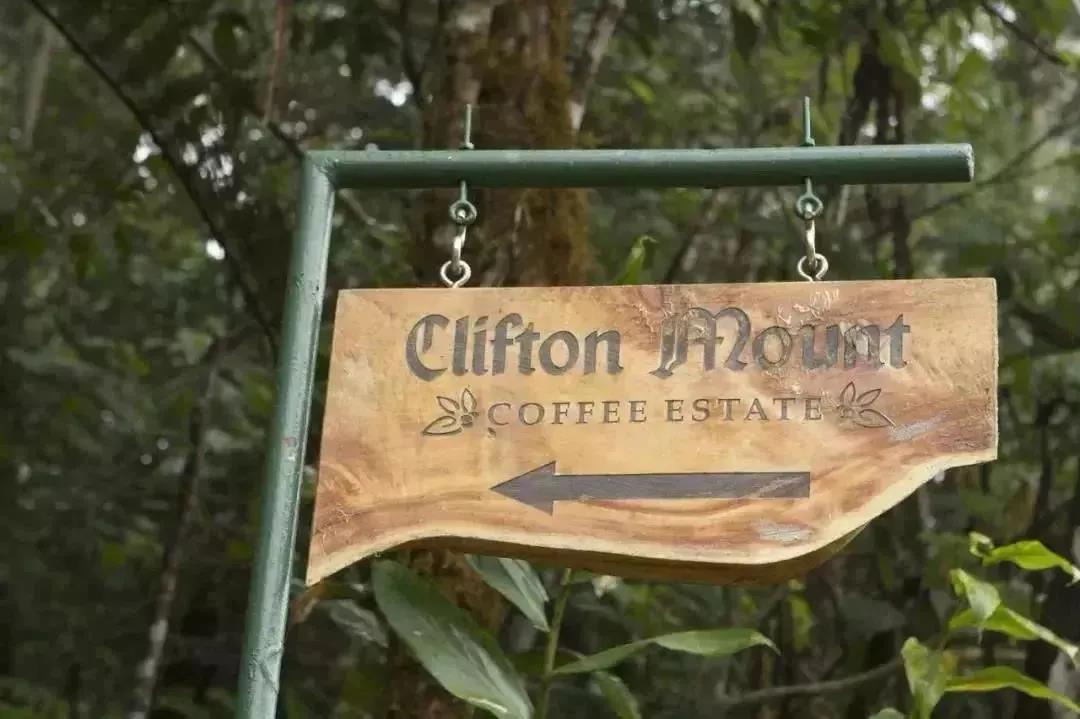
Clifton Mount Estate is also the only estate in the Blue Mountain region with Rainforest Alliance certification. Rainforest Alliance certification refers to traditional cultivation methods in which coffee grows under the shade of native forest trees, which benefits ecosystem protection; part of the alliance's revenue also supports wildlife protection in tropical rainforest reserves and improves workers' living conditions.
What are Blue Mountain No.1, No.2, No.3, and hand-selected PB?
- Blue Mountain No. 1: 96% of the beans must be screen size 17/18, with no more than 2% defective beans.
- Blue Mountain No. 2: 96% of the beans must be screen size 16, with no more than 2% defective beans.
- Blue Mountain No. 3: 96% of the beans must be screen size 15, with no more than 2% defective beans.
- Blue Mountain Peaberry: 96% of the beans must be screen size 10 single round beans, with no more than 2% defective beans.

What Is the Difference Between Traditional Blue Mountain and Blue Mountain Geisha?
Next, FrontStreet Coffee makes a comparative analysis of the most traditional washed Blue Mountain coffee and Blue Mountain Geisha through varietal roasting, cupping, and brewing.
Traditional Blue Mountain is the Typica variety: Blue Mountain Typica was transplanted from Martinique to Jamaica's Blue Mountains in the 1720s. Over more than 200 years it has evolved better disease resistance, showing superior resistance to coffee berry disease in particular compared with typical Typica. When Blue Mountain Typica is grown outside Jamaica, however, it cannot replicate its characteristic clean, sweet, subtle aroma. Blue Mountain Geisha, by contrast, is Geisha coffee: Geisha travelled from Ethiopia to Kenya, Uganda, Tanzania, and Costa Rica, and finally to Panama, where it became famous overnight in 2004 after the owner of Hacienda La Esmeralda discovered it and entered it into competition. Geisha beans are elongated in shape, with fresh, pleasant flavours.

Geisha beans must be grown at high altitude to develop a rich, charming florality. Hacienda La Esmeralda, for example, grows Geisha at an average altitude above 1,500 meters, while the Blue Mountain region sits at only 1,310 meters. In cupping Blue Mountain Geisha, FrontStreet Coffee found that its florality is not obvious; only careful tasting reveals a subtle jasmine fragrance.
Washed Coffee Bean Processing
Both the Blue Mountain Geisha and the traditional Blue Mountain coffee FrontStreet Coffee obtained use Jamaica's specialty washed processing. During processing, the fruit skin and pulp are first removed and the beans are left to ferment for 12-18 hours. The fermented beans are then placed in pools and moved back and forth, using the friction between beans and the power of flowing water to wash them until smooth and clean. After washing, the beans are still encased in parchment, with a moisture content of 50%. They must be sun-dried to bring moisture down to 12-14%, otherwise they will continue to ferment and become mouldy and spoiled. Afterwards the beans are screened and then stored in specialised warehouses.

FrontStreet Coffee Roasting Recommendations
Blue Mountain Geisha Coffee Bean Roasting:
Preheat to 180 degrees C with the heat at 130 and the damper opened to 3. Turnaround comes at 1'32"; when the drum temperature reaches 97 degrees C, keep the heat unchanged. At 3 minutes, adjust the damper to 4, and at 4 minutes increase the heat to 140. When the drum reaches 153.5 degrees C the bean surface turns yellow, the grassy aroma disappears completely, and the dehydration stage begins. At 8'36", ugly wrinkles and dark spots appear on the surface and the toast aroma clearly turns to a coffee aroma, which can be defined as the prelude to first crack; listen carefully for the crack from this point. First crack begins at 9'31", and after 1'28" of development the beans are dropped at 192 degrees C.

Washed Blue Mountain Coffee Bean Roasting:
Preheat to 165 degrees C with the heat at 130 and the damper opened to 3. Turnaround comes at 1'32"; when the drum temperature reaches 95.8 degrees C, keep the heat unchanged. At 3 minutes, adjust the damper to 4, and at 4 minutes increase the heat to 140. When the drum reaches 153.3 degrees C the bean surface turns yellow, the grassy aroma disappears completely, and the dehydration stage begins. At 8'36", ugly wrinkles and dark spots appear on the surface and the toast aroma clearly turns to a coffee aroma, which can be defined as the prelude to first crack; listen carefully for the crack. First crack begins at 10'06", and after 3 minutes of development the beans are dropped at 198.5 degrees C.
FrontStreet Coffee Cupping Comparison
FrontStreet Coffee cups sample beans within 8-24 hours of roasting. Our baristas typically use 200ml ceramic bowls. The cupping water temperature is 94 degrees C. The grind is controlled to a 70%-75% pass-through rate on a #20 standard sieve (0.85mm). The ratio is 11 grams of coffee to 200ml of hot water, or 1:18.18, which extracts a concentration precisely within the 1.15%-1.35% Golden Cup range, with a steeping time of 4 minutes.

Blue Mountain Geisha Coffee Bean Cupping:
- Dry aroma: caramel
- Wet aroma: floral
- Flavour: citrus, berries, grapefruit, caramel, honey
Washed Blue Mountain Coffee Bean Cupping:
- Dry aroma: nuts
- Wet aroma: chocolate
- Flavour: high cleanliness, good body, balanced acidity, sweetness, and bitterness
FrontStreet Coffee Brewing Insights
For the comparison, FrontStreet Coffee used a V60 dripper to brew both Blue Mountain coffees.
- Dose: 15g
- Grind size: medium-fine (78% pass-through on a #20 standard sieve)
- Ratio: 1:15
- Water temperature: 91 degrees C
- Dripper: V60 #01

FrontStreet Coffee Segmented Brewing Method:
- First pour 30g of water and bloom for 30 seconds.
- After blooming, pour the second segment, 100g in a circular motion from the centre outward. This pour can be done slowly, as Geisha is very resistant to extraction and needs enough pouring time to release its aroma. After pouring, wait for the water level to drop by half.
- When the coffee bed is about to be exposed, pour the third segment of 95g, for a total of 225g. Wait for the coffee to finish filtering, then remove the dripper. Total brewing time is 1 minute 50 seconds to 2 minutes 5 seconds.

Brewing Flavours:
Blue Mountain Geisha Coffee Bean:
The entry shows citrus acidity and the sweet-and-sour notes of grapefruit, with jasmine florality in the middle and a finish of honey and caramel sweetness.
Washed Blue Mountain Coffee Bean:
The entry shows dark chocolate and nut flavours, with high clarity, very bright character, good body, and a balance of acidity, sweetness, and bitterness.
FrontStreet Coffee Recommendation
Whether you prefer the classic or the experimental side of this comparison, FrontStreet Coffee has both covered. For authentic, certified Jamaican Blue Mountain, FrontStreet Coffee's Jamaica Blue Mountain No.1 is one of the highest grades in the category, from the historic Clifton Mount estate, which has been growing coffee since around 1750. Medium-dark roasted, it brings out the classic Blue Mountain balance with layers of nut, dark chocolate, creamy caramel, and soft sweetness in harmony.
For the aromatic Geisha that shares this cup's lineage, FrontStreet Coffee's Panama Esmeralda Red Label Geisha is the reference point, grown at 1,600-1,800 meters and cupping above 90 points, with orange-blossom honey, oolong tea, and a delicate fruit acidity. Readers who want a more accessible taste of Geisha can begin with FrontStreet Coffee's Panama Boquete Geisha, an entry-level Geisha that still delivers the variety's signature orange-blossom honey and tea-like finish at a friendly price.
Important Notice :
FrontStreet Coffee is a long-established specialty coffee roaster in Guangzhou China, selling freshly roasted beans from its own farm in Yunnan as well as dozens of carefully selected single-origin beans from around the world for both pour-over and espresso. The products deliver consistently excellent quality and great value, with shipping within 24 hours. Guangzhou's FrontStreet Coffee shop is recommended by many coffee lovers, and the beans are now available online at the Tmall 。
FrontStreet Coffee has moved to a new address:
FrontStreet Coffee Address: 315,Donghua East Road,GuangZhou
Tel:020 38364473
 Scan and follow the En Gafei WeChat official account. Please indicate that the reprint comes from "En Gafei".