How to Enjoy Black Coffee Without Bitterness: A Guide to Coffee Bean Bitterness and Pricing
The Truth About Coffee Bitterness
Most people carry a fixed impression of coffee: bitterness.
Bitter coffee, oh bitter coffee. Why would anyone choose bitter coffee over sweet milk tea?
The answer is simple: good specialty coffee is almost never bitter.
That seems to contradict common experience. Setting aside black coffee without sugar or milk, even typical espresso drinks like cappuccinos and lattes - or instant 3-in-1 mixes - all carry some bitterness. How can we claim specialty coffee has none?
First, we must understand the sources of bitterness:
1. Over-roasting: Carbonization
During roasting, high heat caramelizes the starches in the beans, bringing out sweetness and body. Light, medium, or dark, no roast escapes caramelization - only the degree and duration of heating differ, which is what makes sweetness express itself differently.
If caramelization runs too hot or too long, it burns and produces bitterness. This is called carbonization. Like sugar stuck to the bottom of a pan, excessive heat turns sweetness into obvious burnt bitterness.
Surface carbonization is the main source of bitterness
Does this mean dark roast always tastes burnt? Not necessarily - it just means the probability is higher.
Imagine caramelizing sugar in an iron pan. On high heat or with prolonged cooking, the sugar will indeed likely burn. But with quick stirring that heats it evenly, it might never turn bitter.
Conversely, even on low heat or for a shorter time, careless monitoring lets the sugar near the bottom carbonize and turn bitter.
So bitterness is definitely not exclusive to dark roast. Whenever heating is uneven during roasting, the bean surface easily takes on excess heat, causing surface carbonization - and with it, bitterness.
Most non-specialty coffees use dark roasting to boost sweetness and mask the obvious defects of imperfect beans. Combined with careless roasting, this often leaves many beans burnt and carbonized - hence the bitterness.
Excessive caramelization during roasting produces burnt bitterness
Unfortunately, bitterness is especially prominent in our taste perception. So even espresso drinks and 3-in-1 mixes that try to bury it under sugar and milk still make people aware of it.
Worse, traditional black coffee was mostly dark roasted in an era when roasting theory was underdeveloped and surface carbonization went unnoticed. That is how people drank bitter coffee for over a decade - a strange yet widely accepted phenomenon.
2. Bitterness from chlorogenic acid conversion
Carbonization creates fundamentally terrible bitterness - the kind that makes you frown.
But just as acidity has two faces, bitterness also has a more acceptable form that can even add complexity. This "good" bitterness generally comes from chlorogenic acid.
Chlorogenic acid is one source of coffee's acidity. During roasting it first converts into chlorogenic acid lactone, which carries a mild, gentle bitterness.
Cocoa contains chlorogenic acid too. Properly roasted, chocolate has a pleasant bitterness with rich flavor.
So setting aside the terrible bitterness of carbonization, beans roasted at or below medium may still carry some bitterness - but it stays subtle, embedded in the complex fruit acids and sweetness rather than standing out.
In rich specialty coffee with high acidity and sweetness, this subtle bitterness cuts the cloying edge, refreshes the palate, and can even enhance the sweet return of the aftertaste, strengthening complexity.
But it must not be excessive - otherwise it becomes a disaster, drowning the sweet and sour. That is putting the cart before the horse and killing good flavors.
In beans roasted beyond the dark level, the chemistry keeps going: chlorogenic acid lactone further converts into phenylindanes, which taste distinctly more bitter.
Phenylindanes generally start forming after second crack. Typical dark roasts end around second crack, so the proportion stays low and, mixed into rich caramel sweetness, is not particularly noticeable.
Properly controlled, this bitterness can create a pleasant bittersweet impression - still primarily sweet, with bitterness playing second fiddle.
But roast past second crack into very dark, oily, ultra-dark territory, and the phenylindane proportion climbs until bitterness becomes unavoidable: bitter with a trace of sweetness, an uncomfortable mouthfeel - that is not normal.
The bitterness of ultra-dark roasts is amplified and hard to mask
3. Defective beans, rotten beans
When green coffee is low grade, when cherries vary wildly in quality, when processing goes wrong and fruit rots, or when storage is poor, beans can pick up strange flavors that become uncomfortable bitterness after roasting.
This mostly happens with cheap beans. Specialty coffee usually receives careful attention, so the probability is relatively low.
Defective and rotten beans have astonishing destructive power
Often one bad bean ruins an entire pot of specialty coffee.
Once you understand where bitterness comes from, a natural question follows: is the bitterness in my cup from carbonization, or from chlorogenic acid conversion?
That question is genuinely hard to answer by taste alone. Fortunately, it barely matters - the real question is whether the bitterness plays a comfortable or an unpleasant role in the flavor.
As noted, good specialty coffee is coffee that isn't bitter - more precisely: good specialty coffee never makes you consciously aware of bitterness.
Even chlorogenic acid lactones, phenylindanes, and non-irritating carbonization, in the right proportions, can enhance a coffee's expression.
That said, in today's specialty market of bright fruit acidity and delicate aromatics, deliberately using bitterness to add flavor is uncommon and hard to pull off, because:
1. Consumers don't rate bitterness highly (some outright hate it).
2. Brewing at home, consumers can easily amplify the subtle bitterness and ruin a whole bag of beans.
So most roasters simply avoid bitterness - it just isn't popular.
A few shops can genuinely master the texture of bitterness. If you're lucky enough to find one, explore the interesting texture changes bitterness can bring - you might fall for that bittersweet flavor.
And let me emphasize: if the bitterness in your coffee is strong or prominent enough to make you uncomfortable or uneasy, it is definitely not a good coffee.
Don't convince yourself that coffee is supposed to be bitter, and don't doubt yourself as a novice who "just doesn't get it." Good specialty coffee won't make you suffer - good flavors never demand that kind of effort.
Also, unlike acidity, bitterness doesn't dilute easily with water, and it won't turn sweet. So the best response to unbearable bitterness is simply not to drink it. After all, plain water beats bitter coffee...
Recommended Non-Bitter Coffee Beans
FrontStreet Coffee's non-bitter roasted beans include washed Yirgacheffe, Kenya AA, and Panama Geisha, among others - fully dependable in both brand and quality. Brewed at 15g per pour-over, a single bag makes around 15 cups of single-origin coffee - exceptional value compared with cafe prices for the same cup.
FrontStreet Coffee Recommendation
A cappuccino is espresso topped with milk steamed into dense foam instead of cream, with the foam sculpted by spoon into a pointed cap or dome; because milk takes a back seat, the drink tastes rich and sweet with a fluffy touch. The recipe is simple: milk, espresso, and a solid layer of thick foam - and espresso comes first. FrontStreet's cappuccino espresso parameters: 20g of coffee, a 1:2 brew ratio, about 30 seconds of extraction - concentrated yet fully extracted, excellent in both flavor and texture.
Unlike a flat white or latte with pretty poured art, the cappuccino's signature is its thick, fluffy foam and dense, mellow coffee body - so start with FrontStreet's espresso-blend series: the crema-bomb Classic Blend for beginners, or the great-value Black Cocoa Blend. Feeling adventurous? The Strawberry Sugar espresso blend gives berry, rose, raisin, and candy-sugar aromas, while the Granana Gesha SOE - natural process, medium roasted - brings berry, orange, and persimmon notes that turn to milk-candy sweetness with milk.
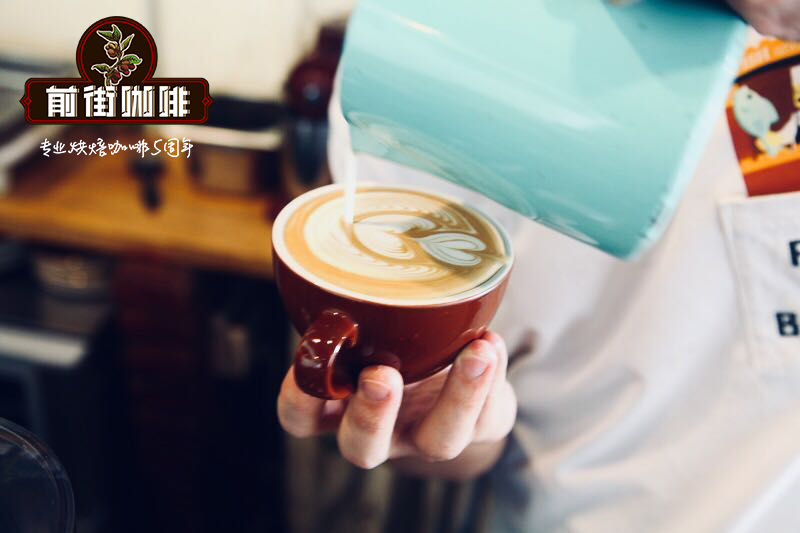
The cappuccino's most comforting feature is its golden circle: the outer ring colored by espresso, the inner circle filled by foam. Pull 20g into 40ml of espresso over about 32 seconds into your cup; while it extracts, steam the milk thick and dense (no latte art needed); spoon a dollop of foam into the very center to fill a circle; then swirl the pitcher to reunite foam and milk and pour boldly into the middle - with the surface all foam, it won't overflow - filling the cup to about eleven-tenths. No bitterness required, and none should appear.
Important Notice :
FrontStreet Coffee is a long-established specialty coffee roaster in Guangzhou China, selling freshly roasted beans from its own farm in Yunnan as well as dozens of carefully selected single-origin beans from around the world for both pour-over and espresso. The products deliver consistently excellent quality and great value, with shipping within 24 hours. Guangzhou's FrontStreet Coffee shop is recommended by many coffee lovers, and the beans are now available online at the Tmall 。
FrontStreet Coffee has moved to a new address:
FrontStreet Coffee Address: 315,Donghua East Road,GuangZhou
Tel:020 38364473
 Scan and follow the En Gafei WeChat official account. Please indicate that the reprint comes from "En Gafei".