What is the Roast Level for Yirgacheffe Coffee Beans? Light Roast Flavor Characteristics of Yirgacheffe Coffee
Professional coffee knowledge and more bean information - follow us for regular brewing guides and origin stories.
Ethiopia has eight major coffee-producing regions: Ekempti, Limu, Illubabor, Djimma, Harrar, Teppi/Bebeka, Sidamo, and Yirgacheffe.
Yirgacheffe is located in the Gedeo zone of southern Ethiopia, which also governs the well-known Yirgacheffe and Kochere areas. Because Yirgacheffe's coffee has a special, distinctive flavor that is widely loved, it was classified as its own category and has always held a place in the global specialty coffee market. Yirgacheffe itself is a small town in Sidamo province, with three neighboring small growing areas: Wenago, Kochere, and Gelena Abaya. Since the coffee from these areas tastes almost identical to Yirgacheffe's, Kochere has also been classified under the Yirgacheffe designation. In November 2009, Ethiopia implemented a new trading and grading system, establishing the Commodity Exchange (ECX) where coffee and other agricultural products are officially traded. Besides Yirgacheffe, three additional sub-regions were added - Wenago, Kochere, and Genlena Abaya - a sign that these three areas' flavors are delicate enough to be further subdivided.
Yirgacheffe is a high-altitude wetland region (around 1900 meters). Originally part of the Sidamo region, it was specifically separated into its own designation thanks to the classic floral notes, citrus tones, and bright acidity that made it famous. As Yirgacheffe coffee grows ever more popular, even beans from the same area develop different flavors depending on the washing stations or cooperatives that process them. Yirgacheffe is therefore further classified by cooperative, which has become essential information for coffee enthusiasts. Among these, the Mist Valley community is particularly famous - home to cooperatives like Idido and Beloya, and washing stations like Chelektu and Konga.
Coffee Grading
Ethiopia most commonly processes G1 or G2 grade coffee by the washed method, while grades G3 and above go through natural processing. In recent years, however, G1 and G2 coffees have also been processed naturally, opening more variations and possibilities in flavor. (Note: Ethiopia's green coffee grading is based on defect counts, where G1 has the fewest defective beans and G5 the most - the lowest grade.)
Additionally, because Ethiopia is considered by most to be coffee's birthplace, the country holds over four thousand unnamed coffee varieties. So when buying Ethiopian coffee, the variety column usually just reads "Heirloom." The beans vary in size, and a single batch may contain more than ten different varieties. Unlike Central and South American coffees, which can be sorted into specific varieties, progress has only recently been made: the world-renowned green coffee merchant Ninety Plus (90+) has begun planning and cultivating single-variety Yirgacheffe, calling it VARON (Variety + One). The flavor is quite clean, but the expected floral and citrus intensity fades, becoming instead a dried-fruit, tea-like coffee with more body and spice. Such coffee has its uniqueness and significance - whether its price and flavor can be accepted is another matter.
Roasting Degree
What roasting degree should you choose for Ethiopian Yirgacheffe?
If it's washed: for those who love floral notes and fruit acidity, choose a light-to-medium roast.
- For those who emphasize sweetness and can accept less aroma and fruit acidity, choose a medium-plus roast.
What about natural process? Natural beans have all of the above advantages: compared to washed, they carry more fruit aroma and are less acidic.
In roasting, the final drop temperature - the temperature at which beans leave the roaster - is crucial to flavor. The balance of sour, sweet, and bitter; whether the profile is fresh and lively or deep and solid; whether it shows layered complexity - all are affected by drop temperature. Drop temperature mainly governs the degree of caramelization and pyrolysis of the coffee's sugars (mainly sucrose). During caramelization, sugars decompose into aldehydes and ketones or dehydrate into small-molecule sugars, which then polymerize into dark brown products; the color of these products starts brown and darkens as the reaction progresses.
Many of these products bring bitterness, but proper caramelization gives coffee greater complexity and layering, a heavier mouthfeel, and caramel, chocolate, and roasted flavors. Pyrolysis reactions, meanwhile, break down the substances responsible for plant-like flavors.
Both caramelization and pyrolysis are endothermic - they need continuous heat to proceed. In roasting, therefore, the degree of these reactions is proportional to the drop temperature: the higher the drop temperature, the deeper the reaction.
Dropping at a lower temperature preserves floral and fruity aromas, and sweetness stays high because more sugars survive without pyrolysis. As drop temperature rises, floral and fruity aromas first mature, then decline, while nutty, caramel, and chocolate flavors strengthen - and complexity, mouthfeel, and layers all increase.
Excessively high drop temperatures bring excessive caramelization and pyrolysis: too many flavor compounds burn off, the cup turns heavily bitter with woody, smoky, roasted notes - and the coffee becomes dull.
Excessively low drop temperatures leave herbaceous compounds undecomposed, producing grassy, pea, and cucumber flavors.
By adjusting drop temperature you can steer flavor and the sour-sweet-bitter balance - but ultimately it is a matter of trade-offs.
Take FrontStreet Coffee's natural Yirgacheffe "Berry Orchard" as an example. We chose a medium-light roast, which both highlights this bean's flavors and retains a certain mouthfeel.
FrontStreet Coffee's brewing parameters recommendation:
V60 / 1:15 / 89°C / Time: two minutes.
Flavor: Strawberry, strawberry jam, cream, sucrose sweetness.
FrontStreet Coffee Recommendation
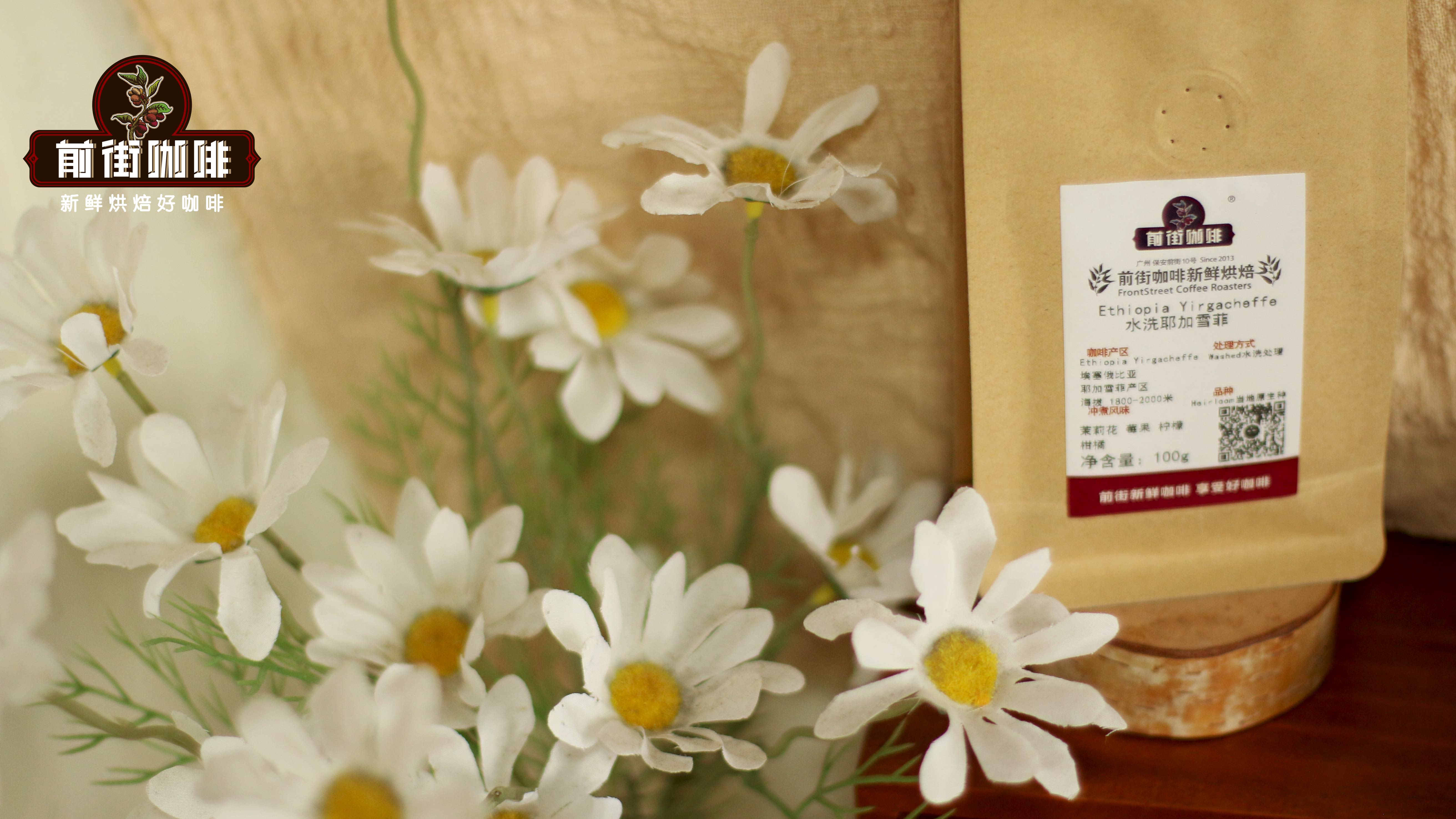
Yirgacheffe's signature floral-citrus character is best captured in FrontStreet Coffee's Washed Yirgacheffe daily bean - jasmine fragrance, bright citrus and lemon acidity, and a tea-like finish at an everyday price, making it the classic first Ethiopian for anyone entering specialty coffee. Roast it light-to-medium for florals and fruit acidity, or push toward medium-plus if you prize sweetness.
For a natural counterpart with more fruit and less acidity, FrontStreet Coffee's Natural Red Cherry Yirgacheffe uses only fully ripe, sun-dried cherries turned regularly on raised beds, delivering citrus acidity, berry juiciness, honey sweetness, and creamy smoothness - and the "Berry Orchard" lot's strawberry, cream, and sucrose sweetness shows exactly what a medium-light natural roast can do.
Important Notice :
FrontStreet Coffee is a long-established specialty coffee roaster in Guangzhou China, selling freshly roasted beans from its own farm in Yunnan as well as dozens of carefully selected single-origin beans from around the world for both pour-over and espresso. The products deliver consistently excellent quality and great value, with shipping within 24 hours. Guangzhou's FrontStreet Coffee shop is recommended by many coffee lovers, and the beans are now available online at the Tmall 。
FrontStreet Coffee has moved to a new address:
FrontStreet Coffee Address: 315,Donghua East Road,GuangZhou
Tel:020 38364473
 Scan and follow the En Gafei WeChat official account. Please indicate that the reprint comes from "En Gafei".