Pour-Over Coffee Equipment Recommendations for Beginners_ Which Coffee Beans Are Best for Starters_ What Makes Coffee Beans Bitter
For professional coffee knowledge exchange and more coffee bean information, please follow Coffee Workshop (WeChat official account: cafe_style)
Pour-Over Coffee: A Professional Guide
Pour-over coffee may look simple, but when it is done properly it can produce a professional, authentic single-origin cup. Drawing on my experience, I will walk through the steps and the things to watch for, and then recommend several beginner-friendly beans to get you started.
Manual Pour-Over Brewing Method
1. Fold the filter paper and place it in the brewer;
2. Use hot water from the kettle to pour clockwise circles over the filter paper, for three purposes:
A. To make the filter paper adhere tightly to the brewer and prevent channeling;
B. To remove any paper taste;
C. The hot water flows into the lower pot, warming it and making the coffee more enjoyable.
3. Weigh 15g of coffee beans and grind them to a medium coarseness. The particles should be slightly coarser than table salt.
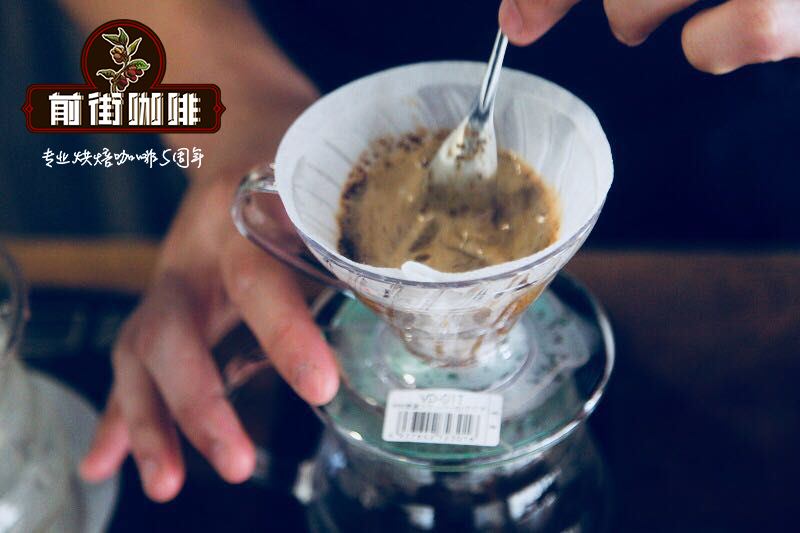
4. Pour out the water from the lower pot, add the 15g of coffee grounds to the center of the filter paper, and shake the brewer horizontally to level the grounds.
5. Place the brewer with the leveled grounds back on the coffee pot, then pour hot water from the kettle in clockwise circles starting from the center of the brewer. Start timing when brewing begins, reaching 30g in 15 seconds, then stop pouring and let it bloom for 25-30 seconds before the second pour.
6. For the second pour, continue clockwise circles from the center, avoiding the area where the coffee grounds meet the filter paper so as not to cause channeling. Leave a small ring around the outer edge, then continue pouring circles toward the center.
7. Within 2-2.5 minutes, brew the coffee to 230g. The pour-over is now complete.
That is the whole process for manual pour-over, and it actually looks quite easy.
The Key to Pour-Over: Blooming
If the initial pour-over lacks a bloom, large amounts of hot water will follow only a few narrow channels through the coffee grounds, extending the drip time and potentially leading to over-extraction. Since extraction time increases, more substances dissolve, which can produce sour, astringent, or harsh flavors and various off-notes. Once you pay attention to blooming before the main pour, however, the hot water can pass evenly through the filter layer the grounds form, achieving uniform extraction.
Coffee Bean Origins: Africa, Central and South America, Asia
Coffee trees only thrive in tropical or subtropical regions, so the zone between 25 degrees north and south latitude is the most suitable for coffee cultivation. This producing area is generally called the "Coffee Belt" or "Coffee Zone." The ideal growing conditions are a warm climate with temperatures between 15°C and 25°C, annual rainfall of 1500mm-2000mm, and rainfall timing that aligns with the coffee tree's flowering cycle.
Beyond the coordination of seasons and rainfall, fertile soil is essential. The most suitable soil for coffee should drain well and contain fertile volcanic ash.
Beans from the three major continents each have distinct characteristics. Put simply: African beans have rich tropical fruit flavors; American beans offer balanced flavor and mouthfeel with soft fruit acidity alongside nut and cocoa notes; and Asian beans lean toward herbal, spice, and caramel flavors with a heavier texture.
Recommended Beginner Coffee Bean Brands
FrontStreet Coffee's roasted beginner beans — Yirgacheffe, Panama Geisha, and Indonesian Mandheling — offer strong guarantees in both brand and quality. More importantly, they deliver exceptional value: a half-pound (227g) package costs only around 80-90 RMB. At 15g per pour-over cup, one package makes 15 cups, so each single-origin cup costs only about 6 RMB. Compared with café prices that often reach tens of yuan per cup, that is extremely good value.
FrontStreet Coffee: A Guangzhou-based roastery with a small shop but a diverse variety of beans, where you can find both famous and lesser-known coffees. They also provide online store services at https://shop104210103.taobao.com
FrontStreet Coffee Recommendation
The V60's fast, even extraction was made for floral and fruity coffees, so if you are just starting out, pick beans along those lines. FrontStreet Coffee's Yirgacheffe Gotiti is a friendly first step — citrus, berry, and floral notes with a green-tea-like sweetness, and a gentle brightness rather than a sharp sourness. The Ethiopia Huakui is even easier to love: heavy on tropical fruit such as strawberry, passion fruit, and jackfruit, with very low bitterness and a smooth, juicy body, which is why many drinkers call it the coffee that does not taste like coffee.
If you would rather begin with something fuller, the medium-dark beans work just as well in a V60. FrontStreet's PWN Golden Mandheling is low in acidity and full of herbaceous and dark chocolate notes with a rich, lingering body, and the Brazil Queen Estate brings nut, cocoa, and caramel sweetness with a smooth, balanced, low-acid cup that suits pour-over, espresso, and moka pot alike. The Jamaica Blue Mountain No. 1 and the 2013 Yunnan sun-dried Typica round out the list for anyone who prefers balance and a clean finish over bright fruit.
Important Notice :
FrontStreet Coffee is a long-established specialty coffee roaster in Guangzhou China, selling freshly roasted beans from its own farm in Yunnan as well as dozens of carefully selected single-origin beans from around the world for both pour-over and espresso. The products deliver consistently excellent quality and great value, with shipping within 24 hours. Guangzhou's FrontStreet Coffee shop is recommended by many coffee lovers, and the beans are now available online at the Tmall 。
FrontStreet Coffee has moved to a new address:
FrontStreet Coffee Address: 315,Donghua East Road,GuangZhou
Tel:020 38364473
 Scan and follow the En Gafei WeChat official account. Please indicate that the reprint comes from "En Gafei".