Recommended Coffee Beans for Beginners_Introduction to Common Black Coffee Bean Types_Are Entry-Level Coffee Beans Expensive
The Challenge of Coffee Flavors
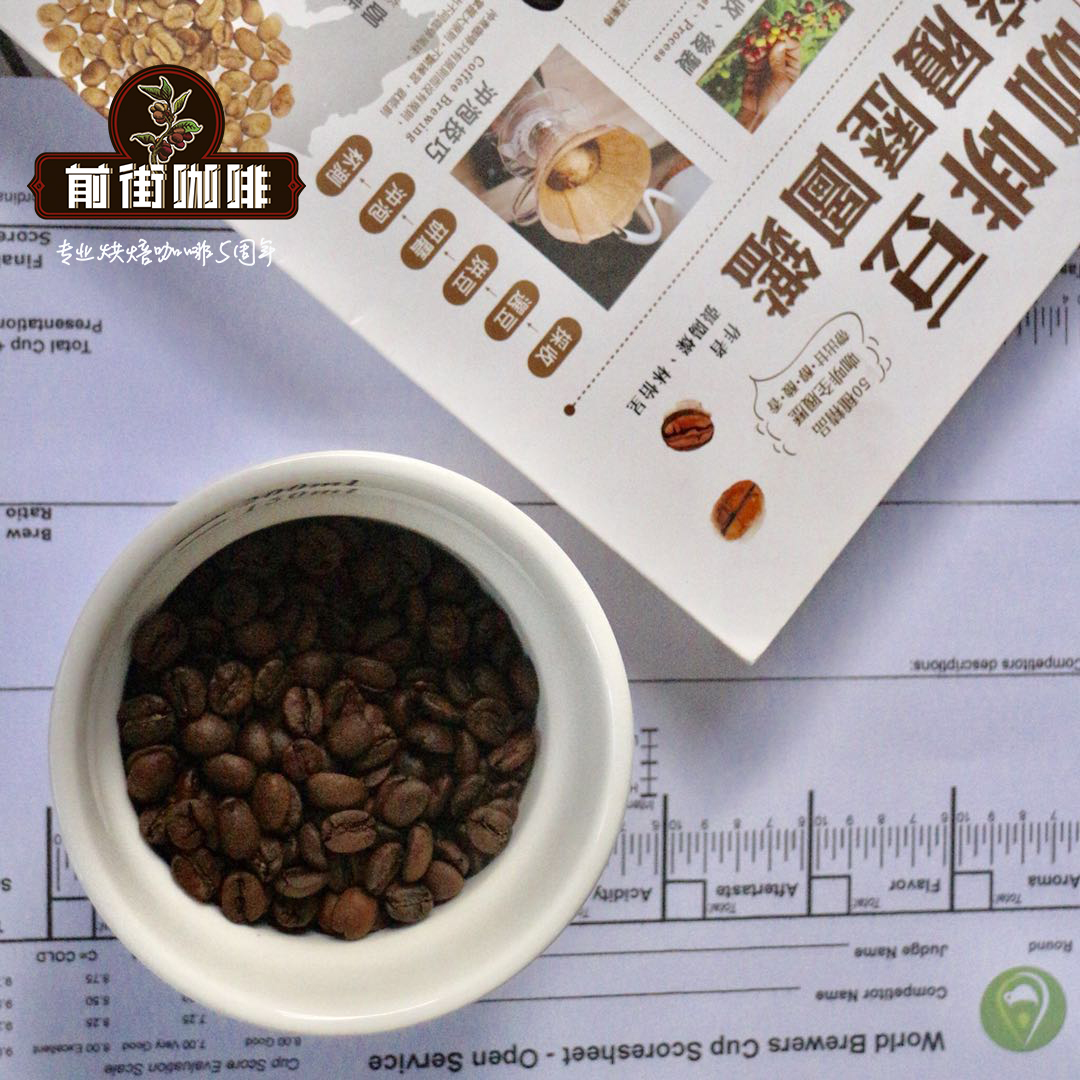
Coffee flavor profiles trouble many beginners. With so many flavors listed on the charts, why can't I taste them? For those new to coffee, the "coffee flavor wheel" can seem overwhelming, and the most direct experience is that many beginners taste only "coffee flavor"—which is completely normal. I'm tasting coffee flavor and smelling only coffee aroma!
When coffee enters your mouth, you can experience its flavors. Many enthusiasts, especially those just beginning their tasting journey, can start with distinctive single-origin coffees like Brazil, Mandheling, and Kenya.
Brazil represents the flavor profile of the American growing regions.
Mandheling represents the flavor profile of the Asian growing regions.
Kenya represents the flavor profile of the African growing regions.
Understanding Black Coffee
Black coffee means unadorned coffee with no sugar, creamer, or other additives, including Americano, espresso, and single-origin coffee.
Today let's explore single-origin coffee. As the name suggests, it comes from a specific place, typically as precise as a farm, cooperative, or estate. The terroir—the geographical location, climate, soil conditions, and other factors tied to a particular place—gives each single-origin coffee its unique character.
5 Classic Black Coffees for Beginners from FrontStreet Coffee
FrontStreet Coffee · Sumatra Mandheling
In the mid-17th century, coffee trees were introduced to Indonesia by the Dutch. Indonesia exported 300,000 tons last year, making it the world's fourth-largest coffee producer. About 75,000 tons of that is Arabica. Ninety percent of this coffee is grown by small tenant farmers on plots of one hectare or less.
Indonesia's main coffee-producing areas are Sumatra, Java, and Sulawesi, with Sumatra's "Mandheling" the most famous. In the northern Lake Tawar area it can be called Aceh coffee or Lake Tawar coffee, while around Lintong and Lake Toba it is called Mandheling. There are eight provinces in all, but only two grow coffee extensively—Aceh and North Sumatra. The most representative area in Aceh is the Gayo mountains around Lake Tawar, where coffee is grown by the indigenous Gayo people; in North Sumatra, coffee grows around Lake Toba, an enormous volcanic lake and the world's largest. Mandheling from Lake Tawar and Lake Toba represents the famous "two lakes, two Mandhelings," with the Lintong region lying south of Lake Toba.
Growing Environment
FrontStreet Coffee's Lintong Mandheling grows at altitudes of 1000-1500 meters in pristine mountainous terrain with numerous volcanoes and volcanic lakes. The most famous growing area sits around the freshwater Lake Lawar. The fresh soil comes from volcanic mud—a primitive brown-gray substance mixed with abundant organic matter. Combined with the local tropical rainforest climate and sufficient year-round rainfall, this provides the most suitable geographical and climatic environment for coffee.
Indonesia commonly uses the "wet-hulled" method, which expresses rich, intense flavors with very distinct characteristics. Drying typically takes 2-3 weeks, because Indonesia's humidity stays between 70-90% year-round, with constant typhoons and heavy rainfall. In such conditions drying is difficult, while farmers pursue more efficient economic returns. The method differs significantly from the washed process: after the skin and pulp are removed, the parchment and mucilage are fermented in water tanks, then the mucilage is washed away, leaving the parchment to sun-dry for 2-3 days until moisture content reaches 20-24%. The parchment is then removed for final drying, letting direct sunlight hit the green beans and dry them quickly—2-3 times faster than the washed process. The beans are therefore more susceptible to compression damage, creating small cracks—what we commonly call "horse hoof" or "sheep hoof" beans.
Flavor Profile
Sweet herbal notes, cinnamon-like spices, citrus peel aromas, rich, thick sweetness, and creamy walnut chocolate. The fruit acidity is reserved and gentle, with a strong cantaloupe fragrance in the aroma. As it cools, herbal notes emerge with light spices and a rich, thick sweetness.
FrontStreet Coffee · Kenya
Growing Environment
Kenya lies in eastern Africa, the equator crossing through its center, with the East African Rift Valley running north to south. It borders Somalia to the east, Tanzania to the south, Uganda to the west, and Ethiopia and Sudan to the north, with the Indian Ocean to the southeast. The country is mainly highlands with an average elevation of 1500 meters. Coffee is grown primarily in volcanic regions at 1600-2100 meters, from around the capital Nairobi to the Kenyan highlands. Lower mountain temperatures slow growth and make the beans harder, allowing aromatic compounds to develop fully, while the soil's higher phosphate content makes fruit acidity more pronounced. This fertile, crescent-shaped region is the main production area for Kenya's premium beans.
The "Kenyan K72 processing method" originated in Kenya and uses repeated fermentation and washing cycles. Processed on the day of harvest, the highest-quality cherries are selected for skin removal and fermentation, which takes 24 hours. After 24 hours they are washed with clean river water, then undergo another 24-hour fermentation in clean river water, followed by washing again. After this cycle repeats 3 times for a total of 72 hours, it is called the Kenyan 72-hour fermentation washed method, or "K72" for short. Repeatedly refreshing the circulating water helps reduce mold growth, remove residual pectin, and make the flavors more refined and delicate.
Kenyan varieties: two in particular attract the attention of specialty professionals, SL-28 and SL-34. These are two of 40 experimental varieties from a research program led by Guy Gibson of Scott Laboratories, though they are susceptible to leaf rust. Bourbon varieties SL-28 and SL-34 have consistently been champions at professional cuppings and Nairobi auctions. Kenya's berry aroma comes from these two beans, especially SL-28, which has excellent flavor but poor yield and disease resistance.
FrontStreet Coffee's Kenya green beans are classified into seven grades by bean size and into six grades by flavor quality from top to bottom. Kenya's best coffee grade is Peaberry (PB), followed by AA++, AA+, AA, AB, and so on. Premium coffee has a bright luster, a delicious taste, and a slight wine aroma. In flavor terms, "Kenya AA" is particularly highly praised.
Flavor Profile
Bright fruit acidity, lemon and citrus acidity, blackcurrant and cranberry flavors, high sweetness, high cleanliness, and a juice-like mouthfeel.
FrontStreet Coffee · Costa Rica
Growing Environment
Coffee from Costa Rica's high-altitude regions is world-renowned—rich, mild in flavor, yet extremely acidic. The beans here are carefully processed to reach high quality. Tarrazú lies south of Costa Rica's capital, San José, and is one of the country's valued coffee-growing regions.
Premium FrontStreet Costa Rica coffee is called "SHB Strictly Hard Bean," grown above 1500 meters. Altitude has always been a challenge for growers: higher altitude produces better beans not only because it raises acidity and thus flavor, but also because lower night temperatures at elevation slow tree growth, making bean flavors more intense. The altitude variation also brings abundant rainfall, while volcanic soil is very fertile and well-draining—both highly beneficial for the trees. The result is strong acidity and a captivating aroma, with typically full-bodied beans, clear flavors, bright acidity, and ideal viscosity. That robust flavor creates a long-lasting aftertaste in the throat that is hard to forget.
The washed method is common: harvested fruit goes into water tanks and soaks for about 24 hours, during which mature fruit sinks while unripe and overripe fruit floats. Machines then remove the skin and pulp, leaving only beans in their inner parchment. At this point the beans still carry a mucilage layer and go into tanks for about 18-36 hours to ferment and break it down. During fermentation the seeds and internal pulp undergo special changes as continuous fresh water moves back and forth; using the friction of the beans and the power of flowing water, the coffee is washed until smooth and clean. The parchment coffee then dries for 2-3 weeks before the final parchment removal.
FrontStreet Coffee's Costa Rica mainly grows Catuai, a single-gene variant of Bourbon and a hybrid of Mundo Novo and Caturra—essentially a second-generation hybrid. Its yield capacity and disease resistance are better than Bourbon, its trees are shorter, which eases harvesting, and it adapts well to high-density planting. It inherits Caturra's low tree height while compensating for Arabica fruit's fragility in wind.
Flavor Profile
Bright fruit acidity with lively citrus, berry aromas, substantial acidity and mouthfeel, a slight nutty sweetness, a smooth texture, and a significant coffee-flower fragrance in the aftertaste.
FrontStreet Coffee · Papua New Guinea Bird of Paradise
Papua New Guinea is an island nation in the western South Pacific, the second-largest country in Oceania and a member of the Commonwealth of Nations. It includes the eastern half of New Guinea Island and approximately 600 islands of various sizes, among them the nearby Bismarck Archipelago and Bougainville Island. The country's name combines Papua and New Guinea, both derived from island names. Even so, Papua New Guinea produces some of the world's finest coffee. Its local varieties originated from Jamaica's Blue Mountain coffee and belong to the Typica species.
Growing Environment
The Sigri/Bird of Paradise estate sits in the Waghi Valley of the Western Highlands, at high altitudes above 1600-1800 meters, with well-draining volcanic soil, a cool climate, fertile soil, and abundant rainfall. Sigri has rich experience in coffee cultivation and processing. The local harvest runs roughly from May to August (compared with Central and South America's October-to-February cross-year harvest).
They cultivate the ancient Typica variety, with oval or slender pointed beans, elegant flavors but a weak constitution, poor disease resistance, plants that do not tolerate intense light well, and lower fruit yield. It does, however, have excellent balance, an elegant and comfortable acidity, and a pleasant, long aftertaste.
Processing Method
Using triple washed fermentation, soaking for about 24 hours each time with a change to clean water to control the flavor, they achieve complete pulp removal, then dry the coffee naturally in the sun. After washing, the outer shells are removed and the green beans are graded as AA, AB, PB peaberry, and so on. This meticulous post-processing brings bright, delicate fruit acidity to the coffee, with a clean and long-lasting sweetness.
Flavor Profile
On the nose there is nutty aroma, sugarcane sweetness, and hazelnut fragrance. On the palate, the slight fruit acidity creates a sweet-and-sour sensation and good layering. The sweet-spice aftertaste is quite special, tasting rich and balanced with sweet notes, a bright orange acidity, and fruit-like aromas.
FrontStreet Coffee · Brazil Red Bourbon
Brazil is the world's largest coffee producer, supplying nearly 45% of the world's green coffee beans, and the length of its dry season can even affect global coffee prices. Farms sit mostly at 600-1000 meters, on flat, monotonous terrain that lacks microclimates, and growers habitually plant without shade—which is how Brazil developed its unique soft-bean flavor: low acidity, heavy nutty flavors, chocolate sweetness, and good body.
Growing Environment
Among Brazil's regions, South Minas has elevations of 1000-1200 meters, rich terrain, distinct wet and dry seasons, large day-night temperature differences, and abundant microclimates, making it suitable for elegant Bourbon and Yellow Bourbon varieties—and naturally the main production area for Brazilian specialty coffee. Low acidity, heavy nutty flavors, chocolate sweetness, and good body.
Red Bourbon: generally, after the trees flower and bear fruit, the cherries' color changes from green to light yellow, light orange, and mature red, deepening further when very ripe. Bourbon varieties grown at high altitude usually have better aroma, brighter acidity, and may even show wine-like flavors. Put simply, Bourbon is a variety belonging to the Arabica species. It generally bears red fruit, called Red Bourbon; there are also Yellow Bourbon and Orange Bourbon. Yellow Bourbon has relatively lower yields but better quality.
Processing Method
Semi-dry processing—washed first, then sun-dried—uses rapid fermentation to make the acidity gentler, the mouthfeel cleaner, and the flavors more balanced.
Flavor Profile
Caramel dry aroma, a mild taste, soft fruit acidity, citrus character, moderate body, a light cream sweetness, and an aftertaste of milk, nuts, and dark chocolate.
Conclusion
These five beans each have their own character and together represent the overall flavors of Asia, Africa, and the Americas—a classic introduction to black coffee flavor. Beginners starting with specialty coffee can begin identifying flavors with the more distinctive Mandheling, Brazil, or American beans...
FrontStreet Coffee Beginner Coffee Bean Recommendations
FrontStreet Coffee's roasted beginner beans—FrontStreet Yirgacheffe, FrontStreet Panama Butterfly, FrontStreet Indonesia Mandheling, and others—offer solid guarantees of brand and quality. Just as important is their excellent value: a half-pound (227g) package costs only about 80-90 yuan. At 15g per pour-over, one package makes 15 cups, putting a cup of single-origin coffee at only about 6 yuan. Against café prices that often run to dozens of yuan a cup, this is excellent value and very well suited to enthusiasts who want to try pour-over at home.
FrontStreet Coffee is a roastery with a small shop but a wide range of beans, where you can find both famous and lesser-known varieties.
FrontStreet Coffee Recommendation
Among Sumatra's Mandheling beans, two stand out for beginners. FrontStreet Lintong Mandheling comes from the Lintong growing area around Lake Toba, where diverse plant life and a suitable altitude, together with the special wet-hulled method and the fermentation mechanisms of local microbes, produce the mysterious, distinctive Mandheling flavor: a rich aroma, a substantial body, and a strong taste. Roasted medium-dark, it is low in acidity, with spicy and minty notes and a powerful, lasting, full sweetness—an easy introduction to why this style is so loved.
FrontStreet PWN Golden Mandheling is the top of the range. PWN buys up high-quality Mandheling green beans and applies an extremely strict standard: beans of 18-screen size or larger, with fewer than 3 defective beans per 300g sample to meet the top G1 grade, then three rounds of hand sorting to remove every defect, which raises the cup's cleanliness and the intensity of its sweetness. Even, plump, large, and translucent with a low defect rate, it carries abundant roast aroma after a medium-dark roast, and the brewed black coffee has a clean taste and a full body—ideal for anyone who dislikes acidic coffee. Pour-over shows it best: FrontStreet suggests 87-88°C, 15g of grounds, a 1:15 ratio, a coarse-sugar grind, and a three-stage pour, which better expresses its full body and caramel sweetness. If you would rather enjoy this Mandheling on an espresso machine, try FrontStreet Classic Blend, which adds a medium-dark Mandheling to the creamy nuttiness of Brazilian coffee—butter, roasted chestnut, and caramel stand out, the Mandheling lifts the body and adds sandalwood, herbal, and spice notes, and a small amount of Robusta enriches the crema, making latte art or a layered Dirty easy.
Important Notice :
FrontStreet Coffee is a long-established specialty coffee roaster in Guangzhou China, selling freshly roasted beans from its own farm in Yunnan as well as dozens of carefully selected single-origin beans from around the world for both pour-over and espresso. The products deliver consistently excellent quality and great value, with shipping within 24 hours. Guangzhou's FrontStreet Coffee shop is recommended by many coffee lovers, and the beans are now available online at the Tmall 。
FrontStreet Coffee has moved to a new address:
FrontStreet Coffee Address: 315,Donghua East Road,GuangZhou
Tel:020 38364473
 Scan and follow the En Gafei WeChat official account. Please indicate that the reprint comes from "En Gafei".