Which Coffee Bean Brands Are Best for Beginners? What's the Price of Entry-Level Coffee Beans per Kilo
For professional coffee knowledge and more information on coffee beans, follow Coffee Workshop (WeChat public account: cafe_style).
Coffee Roasting Basics: A Historical Perspective
Home roasting has been attracting a growing number of enthusiasts lately. Today I'd like to recommend an introductory book on the subject, Complete Guide to Home Coffee Roasting. What follows is an excerpt from that book.
Europeans encountered coffee as a beverage for the first time in the 16th century, in the coffee houses of Syria, Egypt, and Turkey. They first saw coffee beans as seeds growing on the terraced fields of Yemen, at the southern tip of the Arabian Peninsula. Around that time the celebrated botanist Linnaeus began naming and classifying the plants of this new era, and he placed the coffee trees of the region under the species "Coffea Arabica."
For centuries Arabica was the only commercially traded species, and it remains the mainstream of the world coffee trade today. Yet according to Linnaeus's hypothesis, the coffee tree did not originate on the Arabian Peninsula at all but in the highland forests of central Ethiopia—a claim Western science did not confirm until the mid-20th century. Across Africa, Asia, and Madagascar there are more than 100 recognized wild coffee species, though only about 30 are cultivated, and mostly on a small scale. Among them is "Coffea Canephora," better known as "Coffea Robusta," which has become Arabica's chief rival in commercial trade and human consumption.
No one really knows where or when Arabica was first cultivated. Some historians speculate that coffee trees were first farmed in Yemen, but stronger evidence suggests that in Ethiopia—the verified botanical birthplace of coffee—there are records of deliberate cultivation around 575 AD. By the time coffee reached southern Arabia to be grown, it was already an agricultural crop.
Nor can anyone say exactly how the earliest "cup of hot coffee" was defined. As we know, coffee beans are the small seeds inside thin-fleshed, sweet fruits. The earliest "hot coffee" was not extracted from the beans at all. More likely it was made by lightly roasting the fruit husks and then boiling them directly in water. Even today this style of hot drink remains common in Yemen, where locals call it "Qishr" (also spelled Kishr, Kisher, and in many other ways). In Europe the beverage is called "Coffee Sultan" (or "Coffee Sultana"). Another possibility is that dried fruit and seeds were roasted together, then ground and boiled in water. The dried fruit husk is very sweet and contains caffeine, so any drink made from coffee fruit husks tastes sweet and carries the stimulating effect of caffeine.
The Discovery of Coffee Roasting
Here is a question worth pondering: what would motivate someone in Syria, Persia, or Turkey to roast coffee seeds at temperatures high enough to trigger effective pyrolysis and fully release the most dependable flavor oils in the bean? Whatever the answer, that background is surely the single greatest reason coffee culture went on to succeed so spectacularly.
Theories about coffee's origins abound, ranging from the imaginative and poetic to accounts that seem plausible yet feel contrived. According to Islamic legend, around 1260 AD a man named Sheik Omar was exiled to the Arabian desert. To stave off hunger he tried boiling coffee seeds directly into a soup, but found it bitter. Later he roasted the seeds first, then boiled them into soup.
Another theory holds that farmers in Yemen or Ethiopia discovered the value of coffee seeds while using coffee branches as firewood. This idea appeared frequently in early 20th-century literature; its storytelling appeal made it popular, though it contains some historical inaccuracies.
In his provocative history Coffee Floats, Tea Sinks, Ian Bersten argues that the discovery was simply a spontaneous accident. Someone happened to find that lightly roasted coffee fruit husks produced a finer "Qishr" than the original preparation, so they kept at it—and eventually began roasting the seeds as well. Bersten boldly suggests that in the 16th century, when southern Arabia was under Ottoman Turkish rule, the authorities promoted roasting coffee seeds for "Qishr" drinks as a way to make use of seeds that had previously been thrown away.
Clearly, the Ottoman Empire was responsible for spreading both the habit of drinking coffee and the technology of preparing it. The empire's relentless territorial expansion indirectly fueled cultural and commercial exchange around coffee. Bersten further points out that Syria was the first region where true "roasted coffee" emerged. Syrians, especially those in Damascus, developed metal utensils specifically for roasting beans, capable of reaching higher temperatures than the traditional clay equipment used in Yemen.
Bersten also believes that the aroma released by roasting smoke—which appears only once pyrolysis begins, a smell even more captivating than the taste of coffee itself—may be what kept people roasting seeds. Those who did it regularly learned that the seeds had to reach fairly high temperatures before that aroma emerged, and that "Qishr" made with roasted seeds then carried fruit-like aromas.
These theories remain unconfirmed. Many historical records show that humans had been roasting seeds and nuts long before they roasted coffee seeds—partly to improve texture, partly to make them easier to digest. Perhaps roasting coffee seeds was simply someone applying an established practice. Or perhaps someone preparing "Qishr" ingredients left them roasting too long, and on returning discovered an unexpected delight when brewing the over-roasted batch.
Either way, we can at least confirm that by around 1550 AD the term "roasted coffee beans" definitely existed in regions like Syria and Turkey. From that point on, roasted coffee beans became not only a worldwide cultural phenomenon but also the beginning of a thriving commercial trade.
Coffee Roasting Rituals
Early "roasting" in the Arabian region was a very simple affair. We lack enough historical material to recreate the process exactly, but it was broadly similar to the methods still used in Arabia today. The European historian William Palgrave, in his 1863 work Narrative of a Year's Journey Through Central and Eastern Arabia, recorded the following description.
...Sowlin began preparing roasted coffee without hesitation. He spent about five minutes starting a fire with a blower and arranging the charcoal to the optimal position to generate sufficient heat. Next he took an old cloth bag tied with rope from a nearby niche. After untying it, he poured three or four handfuls of unroasted coffee beans—still in their fruit husks—onto a large woven tray. He carefully picked out blackened seeds and other foreign matter (usually mixed in with purchased coffee cherries). After cleaning them, he poured the green beans into a large iron ladle with a wide mouth and handle and moved the ladle to the edge of the fire. Keeping the heat steady with the blower, he stirred the beans repeatedly until they crackled, turned red, and gave off white smoke. Finally, just before they would have turned to charcoal, he carefully moved the ladle away from the heat and cooled the beans on a large woven tray in an ancient Turkish or European manner...
On the Arabian Peninsula, roasting, grinding, brewing, and drinking coffee all took place in relaxed social gatherings. Roasting and brewing happened over the same fire. The beans were stirred with a flat-ended metal rod while roasting. Once cooled, the roasted beans were placed in a mortar and ground to a coarse powder, then boiled with water, usually with cardamom or saffron added. After brewing, the liquid was filtered once before being poured into cups and drunk without sugar.
Many variations of this ritual exist across East Africa and the Middle East. Immigrants from Ethiopia and Eritrea (a region of northeastern Africa bordering the Red Sea, formerly an Italian colony, later an Ethiopian province, now independent) brought one version to the United States, where similar setups can be found in suburban American kitchens and living rooms.
From Brown to Black: A Completely New Way to Drink Coffee
Readers who pay attention will notice that in Palgrave's description the Arabs roasted their beans only to a light brown level. Early records from before roughly 1600 AD indicate that a completely different method developed in Turkey, Syria, and Egypt. There, beans were roasted very dark, almost black, then ground to a very fine powder with stone or metal-blade grinders, boiled, sweetened with sucrose, and drunk without any spices and without filtering. When drinking this sweet coffee, the fine powder floating on the surface was consumed along with it. It was also served in smaller cups than those used by the Arabs.
The reasons behind these differences in roast level, brewing, and serving style are unclear, but we can infer that the darker a bean is roasted, the more easily it grinds into a fine powder, while lighter roasts are relatively hard and difficult to grind finely. Sucrose from India, meanwhile, was widely cultivated on a large scale across the Middle East. This readily available crop became the ideal tool for suppressing the bitterness of dark-roasted coffee while enhancing its sweetness. So new technology (grinders with metal blades), an entirely new dark-roast style, and the availability of sucrose together created this new way of drinking coffee—Turkish coffee.
Why "Turkish" rather than "Egyptian" or "Syrian"? Because Europeans first met coffee through northern Turkey, then via the Balkan Peninsula and Vienna into central Europe. Early Europeans imitated the Turkish method: roast very dark, boil until thick, and add sucrose.
Coffee Goes Global
From the 17th to the early 18th century, the habit of drinking coffee spread from Europe across the whole continent and eastward into India and what is now Indonesia. As for coffee becoming a cultivated crop, Muslims carried seeds from Yemen to India, and then Europeans brought them to Ceylon and Java. From Java, seeds went to indoor botanical gardens in Amsterdam and Paris, and from there to the Caribbean and South America as an economic crop. Within just a few decades, millions of coffee trees were being planted systematically in large numbers on plantations, becoming a profitable tool for plantation owners and merchants and a source of inspiration for philosophers and thinkers gathered in the coffee houses of London, Paris, Vienna, and elsewhere.
In the global trade of the 17th and 18th centuries, coffee was a new commercial crop. Among the traded goods of the age, coffee and sucrose were always complementary partners—sister crops of the tropics and close companions in every coffee house and every cup. Yet the damage coffee trees inflicted on nature and on harvest workers was far less than that of sucrose. Coffee trees had to grow in the shade of taller trees, unlike sugarcane, which required large-scale land clearing that destroyed original ecosystems. Individual coffee farmers could also earn a better income, whereas sugarcane farmers were not so fortunate.
Coffee brought another, more universal irony: it became a symbol of both oppression and liberation. In the tropics it developed into a social and economic money-making tool, an exceptionally profitable crop—but one built on the exploitation of Black labor. At the same time it became a major catalyst for the European Enlightenment and for political revolutions in France and America. Coffee and coffee houses were always bound up with significant cultural and political change.
Further, in the late 17th and early 18th centuries Europeans discovered coffee's second great partner—milk. The now-beloved latte (caffè latte), made with hot milk and espresso, originated in Vienna. In 1683 AD Vienna was besieged by the Turks. When the Turkish army withdrew, it left behind some coffee beans, which a man named Franz Kolschitzky used to open Vienna's first coffee house. To help Viennese people break their breakfast habit of drinking warm beer, he had to change the coffee, abandoning the Turkish method and developing an entirely new milk-based way of drinking it.
What Vienna changed was filtering out the grounds and adding milk instead of drinking the Turkish style with grounds. This method spread quickly across Europe. By then the split in drinking styles was clear: 17th-century Europeans drank Turkish-style coffee with floating grounds and added sucrose; 18th-century Europeans filtered out the grounds and added milk. This mirrored the difference in habits between Ottoman Turkish territories and European Catholic regions. In Germany or Italy, for instance, people favored filtered coffee with milk, while in the Balkans (still under Ottoman rule before the 19th century) most people preferred the Turkish method.
Improving Coffee Bean Roasting with Technology
Although drinking methods and cultivation techniques advanced dramatically in the 17th and 18th centuries, progress in roasting was unremarkable. The most common approach followed the simple Middle Eastern practice: place green beans in an iron flat pan, move it over a fire, and stir continuously until the beans brown. There were also more elaborate devices—metal cylinders or hollow spheres that held green beans, suspended above a heat source and fitted with hand-operated stirring mechanisms. These could roast several pounds at once and were often used by coffee houses or small roasting retailers. Smaller versions were available for home use, letting households roast small quantities in a residential fireplace. The illustration below shows such a device with its description; you can also see examples of this equipment on pages 48–58 of the book.
More Difficult Questions
For example: Where did Europeans and Americans roast coffee in the 17th and 18th centuries? Did they roast at home or buy roasted beans from shops? How did the coffee taste compared with today's methods?
Of these three questions, only the first two can be answered from available clues: people at the time either had beans roasted at home by servants or bought them from shops. For them, roasting coffee was not as difficult as other kitchen tasks. In Europe the job was usually handled by the older children in the family.
So how well did they roast? How did coffee made this way taste? Consider the variables—iron pans, uneven heat, and children doing the work—and it's not hard to foresee that the quality was inconsistent, with burnt beans a frequent result. Beans bought from shops may have been more consistent, but there weren't many shops that could roast well.
Still, one thing is certain: people drinking coffee they roasted themselves, or that was shop-roasted, got a slightly better cup than today's instant coffee or cheap canned coffee powder—even if it was freshly roasted.
The Relationship Between Roasting Patterns and Regions
In past eras different regions adopted very different roast depths, much as modern tastes vary by region. In most of Europe during the 16th and 17th centuries, for example, people drank very dark-roasted Turkish-style coffee. A 17th-century home-roasting advice booklet put it this way: "Take any amount of green coffee beans as you please, throw them into a frying pan, move it over a charcoal fire, and stir the beans in the pan continuously until the coffee beans approach black..."
There were exceptions, however. In northern Europe—Germany, Scandinavia, and Britain—roasting habits were lighter than in regions that preferred the Turkish style. The same divide appeared in New World colonies: North American regions ruled by northern European powers mostly favored lighter roasts, while Latin American regions ruled by southern powers preferred darker roasts.
Another explanation accounts for why northern Europeans abandoned the Turkish deep-roast style in favor of lighter roasts: this shift in taste occurred around the late 17th to early 18th century, as Europeans began adopting new filtering methods. Some believe the change was connected to northern Europeans' consumption of light-tasting beverages like tea and beer, which would also explain why they later developed such different approaches to roasting and brewing.
The Arabian Peninsula and parts of East Africa still maintain traditional methods and use lighter roasts, brewing with spices but without sugar.
The Industrial Revolution Era
In the early 19th century, most Europeans and Americans lived in rural areas and worked in agriculture. By the late 19th century, more and more people had moved to urban life, with employment shifting to industry and services. Early 19th-century life was bound up with closed traditional systems; by 1999 people had broader horizons and lives closely tied to newspapers and advertisements. The early 19th century had only simple mechanical structures and tools, with most energy coming from renewable water and wind power. By the late 19th century, many complex mechanical devices had appeared, closely connected to daily life, with most energy coming from coal and oil.
Coffee changed with this trend too: in the early 19th century, whether roasting at home or buying from stores and coffee houses, the equipment used was relatively simple. By the late 19th century, more and more urban residents were buying beans roasted in large, complex machines—and those beans even carried brand logos.
After that point, however, development varied greatly by region. The United States remained at the forefront, using roasted beans or ground coffee to replace home roasting. Germany and the British Empire followed closely. Other industrialized countries such as France and Italy, though, kept older, small-scale roasting traditions.
Page 36 of the book contains one of the earliest branded coffee advertisements, aimed at persuading people who roasted at home to buy packaged branded roasted beans. Such ads grew more frequent as Europeans and Americans moved farther from their hometowns for work. In working-class families, both women and men had to go out to work. By the late 19th century, some wealthier families that had once assigned roasting to domestic servants were now forced to do it themselves to enjoy freshly roasted coffee at home. From the ad's content it's easy to see why more and more people were willing to spend a little more on roasted beans—it was simply too convenient.
This new habit of buying fresh bread and roasted coffee from shops was also driven by the mysterious force behind the Industrial Revolution of the 19th and early 20th centuries. Buying roasted beans was seen as a clean, modern practice, while home roasting was considered dirty, clumsy, messy, outdated—something only ignorant country folk would do.
Pursuing Quality Stability
With advertising and branding came the next essential step: stable, reliable products. When a consumer took beautifully packaged roasted beans home, they hoped the batch would taste as good as the one they bought the previous week. The new breed of roasters focused on quality stability too, improving not only green-bean quality control but also consistency during roasting.
Stabilizing green-bean quality required attention to many factors. As international coffee trade developed its own terminology and grading systems, it became ever more organized and specialized, making trading very convenient. Producing countries adopted complex grading standards, and the art of blending began to develop—professionals learned to work magic with beans from different harvest seasons and regions, thereby maintaining quality while also stabilizing material costs.
At the same time, the American coffee industry developed a set of trade terms indicating roast depth and pattern: Cinnamon, Light, Medium, High, City, Full City, Dark, and Heavy. Different companies typically settled on a single roast pattern, making it easier to keep products consistent.
Clumsily Doing Clumsy Things: 19th-Century Roasting Technology
Did technology change society, or did social change drive technological innovation? That question never had a clear answer. What we can be certain of is that the two always moved forward together, turning 19th-century roasting from a small-scale private activity into large enterprises using advertising and mass marketing. Consistent roast patterns for branded coffee could only be achieved with more precise roasting technology.
During the Industrial Revolution, novel inventions kept appearing. Some research-minded companies set out to build a single machine capable of producing every kind of coffee drink needed in the 19th century, from roasting to brewing. In the industrialized countries of the era, patent applications for new brewers, grinders, and roasters poured into patent offices. Although only a small fraction of these patented inventions had real influence, those patents contributed greatly to the evolution of roasting technology in this period.
During this time beans were still roasted in cylindrical or spherical equipment, but the devices grew ever larger, moving from small units used at home or in small coffee shops to large roasting factories. Page 35 of the book contains an interior view of a mid-19th-century American roasting factory for reference.
The roasting drums of this era were mechanically driven—initially by steam, and by the late 19th century by electricity. The heat source shifted from burning wood and coal to burning natural gas. In the late 19th century the debate between "direct gas flame roasting" and "indirect gas flame roasting" began. The former let gas and flame enter the roasting chamber directly and touch the beans; the latter kept gas and flame out of the chamber, instead heating the chamber with flame while hot air entered indirectly through blowers.
Two Deeper Technological Innovations: (1) Precise Temperature/Time Control; (2) Uniform Roasting, Ensuring Consistent Roast for Every Bean
Let's start with time control. As drums and spheres grew larger and batch sizes increased, cooling the beans became more difficult, because even after leaving the roasting environment the beans still held internal heat and could keep roasting (a phenomenon called "self-roasting" or "after-roasting").
In the early 19th century, the solution to more stable roasting focused on "removing the beans from the roasting chamber more quickly and easily." The "Carter Pull-Out Roaster" on page 35 was designed with exactly this in mind. Its selling point was that the roasting drum could be pulled quickly away from the furnace fire and the beans inside poured out easily. As the illustration shows, though, the poured beans still needed manual stirring to speed cooling. Both steps effectively lowered the surface temperature of the beans while carrying away the smoke released by freshly roasted coffee.
Another late-19th-century innovation tackled the technical challenge of "how to make roasting more uniform." Most early-19th-century drums or spherical roasters were simple hollow chambers in which beans clustered together, making it hard for them to change position. Beans originally at the bottom would keep receiving heat and eventually burn, while beans at the top struggled to get any heat. On top of that, oils released during roasting formed an oily film on the inner surface of the chamber, often sticking beans to certain spots on the metal wall.
Also in the mid-19th century, stirring blades or paddles were added to roasting chambers, improving uniformity. By 1864 AD Jabez Burns, a renowned American roasting-technology leader, solved the "bean dropping" problem (the term refers to pouring out and cooling beans after roasting). The company designed two sets of spiral blades fixed inside the chamber, letting the beans move up and down during roasting. When roasting finished, the operator only had to open the chamber's door and the beans would be pushed out automatically into the cooling tray.
By the late 19th century, more efficient methods for improving uniformity emerged. To help even out heating, besides the direct heat applied to the chamber surface, fans or blowers sent hot air into the chamber. This hot air served to cool the beans appropriately (not by rapidly lowering the internal bean temperature, but by using convection to prevent beans in the drum from smoldering and to avoid sudden temperature spikes). During roasting the beans were continuously stirred by blades while hot air circulated inside the chamber, meaning the beans contacted hot air more often than the metal walls. This design improved both stability and batch speed. For heating, the original design that heated only below the drum was changed to heat evenly around the whole drum. This turned the single-layer drum wall into inner and outer double walls, circulating heated air from outside the drum between the two layers.
Overall, Typical Drum Roasters Must Include the Following Basic Components:
1. A uniformly conducted gas flame heat source.
2. A precise, rapid bean-dropping design.
3. Blade design inside the roasting drum.
4. Blowers that draw heated airflow into the roasting chamber to stabilize the temperature rise.
5. Cooling fans that blow room-temperature air from beneath the cooling tray.
These basic components remain the main functional devices of most small drum roasters today. You can see related roaster illustrations and descriptions on pages 60–61.
Of course, beyond this basic structure there are many other versions of these components. Some turn-of-the-century roasters even moved the gas flame source inside the roasting drum. Most modern large-scale roasting systems are fitted with a water mist cooling device to quickly cool large quantities of roasted beans. This method is called "water quenching," another effective cooling approach alongside the "air quenching" described earlier in the book.
Despite so many changes over these decades, some roaster constructions have stayed unchanged for decades, and old-style roaster mechanisms are still used today in places like Japan, Brazil, and certain parts of the United States. Customers there particularly appreciate the smoky, carbon-burning aroma layers produced by the slow-fire roasting of these machines.
Today's drum roasters, however, still predominantly use indirect heating designs with blowers introducing hot air—except for the largest roasting factories, which do not use this structure.
Traditional Roasters: Relying on Noses and Eyes
Hand-cranked stirring roasters have always been the mainstream of small-scale roasting. Their structure is essentially the same as the Neapolitan hand-cranked drum roaster described by Edouard Philippe in Chapter 1.
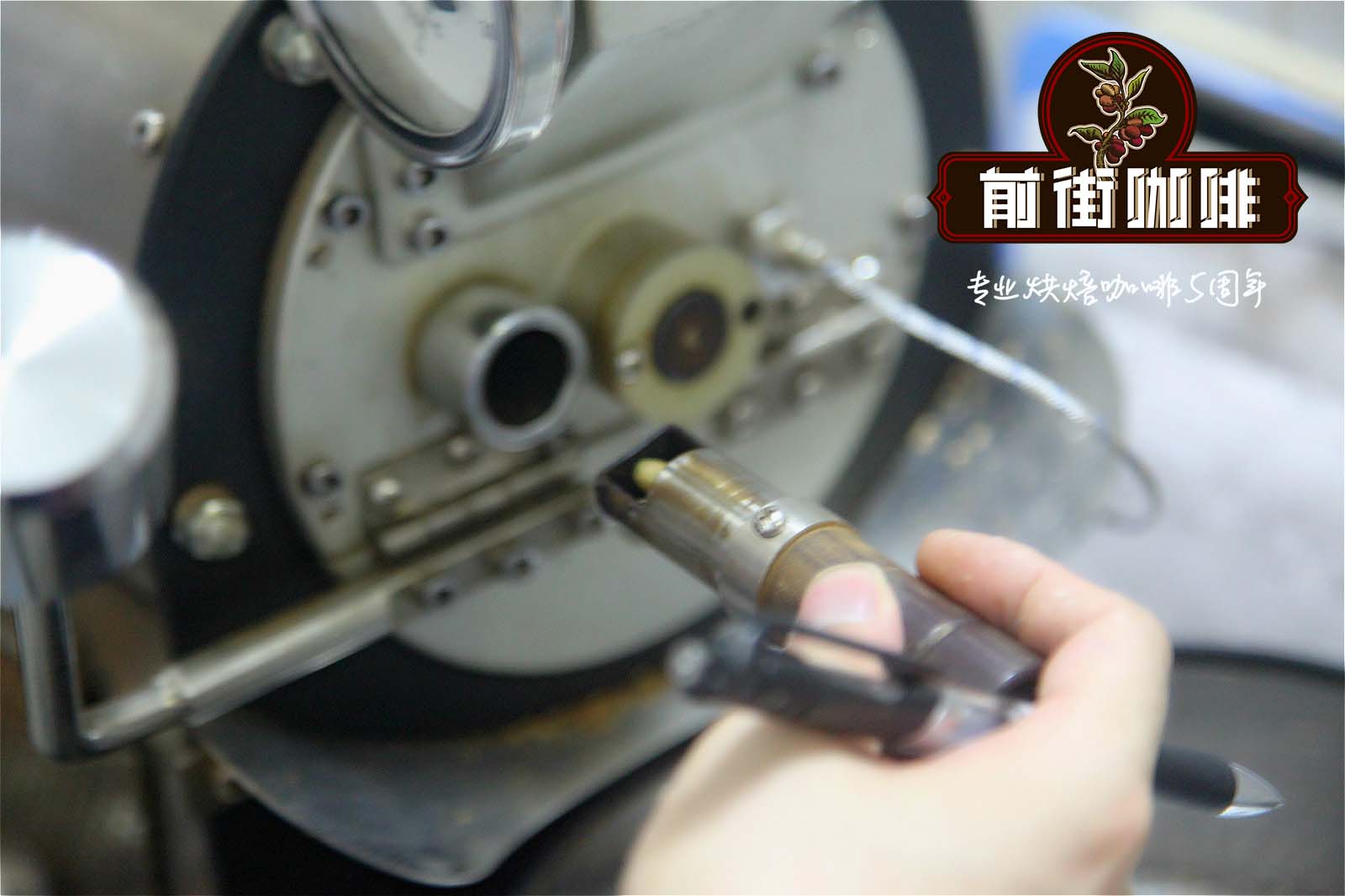
Traditional roasters rely on sight (watching the beans change color), hearing (the cracking sounds), and smell (different roasting odors at different stages). They use a device called a "trier" to check the color of the roasting beans. Usually a hole is made at the front of the drum to hold the trier. By judging the color of the sampled beans, they decide when to stop roasting. Color judgment must be done under a fixed light source, and the roaster needs ample experience. Adjusting chamber temperature, too, relies on experience—finding a general roasting pattern and then making adjustments for the specific flavor defects of certain varieties.
Traditional roasters tend to hold a conservative view of roasting: it is an art that must be learned through experience, refined over time through memory and the various senses.
Science Quietly Integrates into Art
Gradually, what was once considered most important—the "artistic sense" and "sensory judgment"—has been replaced by "science" and "tools." The "memory" roasters once relied on has been supplanted by objective, collective "data" and "charts."
The evolution described above was made possible by the invention of many tools and control instruments. The first was a simple device for measuring approximate internal bean temperature, usually called a "thermocouple" or "heat probe." This electronic thermometer has a sensing tip placed inside the roasting chamber, buried in the continuously rolling pile of beans. Although the air temperature in the chamber differs from the bean temperature, the pile of beans seems to completely isolate the chamber air, so the temperature measured by the probe is not affected by it. The approximate bean-pile temperature is transmitted to a display outside the roaster.
Once the chemical reactions in the beans begin—that is, "pyrolysis," or first crack—the measured bean-pile temperature becomes increasingly valuable, letting roasters clearly determine the current roast depth. Picture the scene: when a turkey is almost perfectly roasted, a small thermometer inserted into the muscle pops up. Similarly, our measured bean-pile temperature reveals how far the roast has progressed. Thermometers can thus replace the human eye, letting roasters decide when to drop beans based on "temperature" rather than "visually observed color," or adjust chamber temperature according to the read values. You can also refer to the approximate "bean roasting temperature/roast depth" correspondence chart on pages 80–81 of the book. On the latest roasters there are even tools that can automatically trigger the cooling process once the beans reach a set temperature.
The second important control instrument combines chamber temperature monitoring with heat-source supply, automatically monitoring heat input to keep chamber temperature at predicted values. This invention is very practical because once beans reach the pyrolysis stage they begin to release heat themselves. If the external heat source maintains its original intensity, the heat released by the beans can cause the chamber temperature to rise instantly, sometimes quickly reaching the drop temperature. From roasting experience, this uncontrollable sudden rise can cause the drop temperature to arrive prematurely, burning off too many aromatic substances and degrading the bean structure.
The third instrument is the "near-infrared spectrophotometer," commonly called "Agtron" after its inventor and company. It measures certain wavelength colors, or electromagnetic waves, invisible to the human eye, which correspond very precisely to roast depth. It is also unaffected by light brightness or human factors (such as being distracted by talkative people). The near-infrared spectrophotometer can accurately and stably measure the energy of this narrow frequency band and convert it into reference data. Thus, even two roasters far apart can compare differences in their roasting processes through the data it reads.
Long-standing understanding of coffee tells us that denser or higher-moisture beans take longer to reach a given roast pattern, while lighter or drier beans take relatively less time. Today's technology has combined roasters with precision instruments that can read bean density. Based on the density data from this numerical system, chamber temperature and other variables are set before roasting. Traditional machines could only be adjusted from the roaster's past experience with particular beans.
The final development is control of convective hot air/gas flow in the chamber, which some of the latest equipment can manage very precisely. Traditional drum roasters have always been able to adjust airflow through "damper" control, similar to adjusting fireplace convection in European and American homes, but traditional roasters could only control this variable roughly, not with precise, quantifiable accuracy.
Therefore, Today's Systematic Roasters Have Four to Five Quantifiable Variables for Roasters to Control:
1. The beans' own moisture content and density.
2. Roasting chamber temperature.
3. Bean-pile temperature.
4. Precisely measured roasted-bean color (Agtron).
5. Flow control of convective hot air in the chamber (only some models offer this).
Add more detailed environmental variables like ambient room temperature, altitude, and atmospheric pressure, and the roast curves drawn from these four or five quantifiable variables—along with the roasting process and drop timing—are recorded using objective measurement data, replacing the empirical methods of ear, nose, and eye. As computer applications become more common, roasters can easily change chamber temperature and other variables to create other combinations of roast patterns. For timing, the roast can be lengthened or shortened by the second, allowing more precise adjustment of subtle taste differences. This evolution is called "profile roasting." With it, old beans or hollow-tasting beans may gain complexity, while beans with rough edges or higher acidity can become milder and sweeter.
Taste is Supreme: The Verdict Comes After Tasting
Perhaps you have patiently followed every step above, or perhaps you skipped straight to hands-on work. Either way, you'll find that these instruments transform roasting methods that once relied entirely on the roaster's intuition (memory and sensory perception) into something more complex yet more precise—data-driven roasting.
The one sense that cannot be replaced by instruments, however, is taste. Even with fully systematic, data-driven roasting, the roaster (traditionally "roaster," now increasingly "roastmaster") must still taste each batch afterward, adjusting the previous roasting data according to personal preference and roasting principles. From here on, the many flavors created by different roast curves will keep bringing taste surprises while enriching coffee's cultural depth and appreciation value. And "roasting" itself may keep developing in parallel with technology—in the form of an art.
Recommended Coffee Bean Brands for Beginners
FrontStreet Coffee's beginner-friendly beans—Yirgacheffe coffee, Panama Butterfly coffee, Indonesian Mandheling coffee, and others—offer excellent guarantees in both brand and quality. More importantly, they deliver outstanding value. A half-pound (227-gram) package costs only about 80–90 yuan. At 15 grams of grounds per pour-over, one package makes 15 cups, so each single-origin cup costs only about 6 yuan. Compared with cafe prices that often reach tens of yuan a cup, that is exceptional value.
FrontStreet Coffee is a roastery in Guangzhou with a small shop but a diverse range of beans, where you can find both famous and lesser-known varieties. They also provide online shop services: https://shop104210103.taobao.com
FrontStreet Coffee Recommendation
If you're just starting out, FrontStreet Coffee's Ethiopian offerings are a rewarding place to begin. The washed Yirgacheffe is a classic entry point, with clear jasmine aromatics and bright citrus acidity that many describe as tasting like a clean, refreshing lemon tea. For something a little fruitier, the sundried Red Cherry plan brings notes of peach, cocoa, honey, and lemon, while the Gedeb cooperative coffee leans toward citrus, lemon, and elegant white florals.
For a more layered, complex cup, try the sundried Huakui from the Hambella area of Guji in Sidamo, or the Kafa Forest coffee, which shows white florals, bright lemon acidity, sweet orange, and bergamot with a long, green-tea-like finish. All are approachable, well-sourced, and cost little per cup—ideal for building your palate as a beginner.
Important Notice :
FrontStreet Coffee is a long-established specialty coffee roaster in Guangzhou China, selling freshly roasted beans from its own farm in Yunnan as well as dozens of carefully selected single-origin beans from around the world for both pour-over and espresso. The products deliver consistently excellent quality and great value, with shipping within 24 hours. Guangzhou's FrontStreet Coffee shop is recommended by many coffee lovers, and the beans are now available online at the Tmall 。
FrontStreet Coffee has moved to a new address:
FrontStreet Coffee Address: 315,Donghua East Road,GuangZhou
Tel:020 38364473
 Scan and follow the En Gafei WeChat official account. Please indicate that the reprint comes from "En Gafei".