What Are the Flavor Characteristics of Colombian Coffee? How to Brew Colombian Coffee
Colombian coffee needs little introduction. Names like Rose Valley, Night Flower & Moon, and Paradise Estate sit at the top of the specialty scene, and some of the world's most talked-about experimental lots—anaerobic fermented coffees in particular—have come out of Colombia. So what exactly gives Colombian coffee its distinctive character?

A Short History of Colombian Coffee
Colombia's coffee story is inseparable from its struggle with the drug trade. Until the 1980s, large parts of the countryside were planted with coca and opium poppy rather than coffee. Armed groups controlled vast territories while government authority barely extended beyond the cities, and Colombian drug cartels became notorious worldwide. Most of their product flowed into the American market, which eventually drew the United States into the conflict. In March 1984, with American advisors directing operations, Colombian government forces launched an attempt to dismantle the country's largest trafficking organization. The operation failed.
By 2000, US forces had intervened directly to go after the cartels and destroy drug plantations. To keep the drug economy from simply growing back, a coffee cultivation program followed, led by the Colombian government with American backing.
Coffee, of course, had been grown in Colombia for a long time—it just never attracted much investment. Why farm coffee when coca paid far better? Chaos rewards the highest-margin crops. Once the cartels were broken up, thousands of farmers who had grown coca found themselves without an income, and coffee became the replacement crop. The United States contributed agricultural technology, financial aid, and preferential purchasing. Today Colombia ranks as the world's third-largest coffee producer.
Any account of Colombian coffee has to mention one institution: the Colombian National Federation of Coffee Growers, known as the FNC. Much of the country's reputation for consistent quality rests on its work. By organizing growers nationwide under a single umbrella—with successful farmers mentoring and supporting others—the FNC helped raise production standards across the entire country.
Coffee Varieties Grown in Colombia
The main varieties are Caturra, Catuai, Colombia, and Castillo. Caturra is a natural Bourbon mutation and keeps much of Bourbon's cup quality. Catuai, a cross between Mundo Novo and Yellow Caturra, is a third-generation Arabica lineage that also performs well in the cup.
The Colombia variety is an improved Catimor developed through multiple generations of backcrossing at the Colombian National Coffee Research Center, released in 1980. In plain terms, it dilutes the Robusta genes inherited from Catimor. The government insisted it cupped differently from the original Catimor, but in practice its sensory performance fell short.
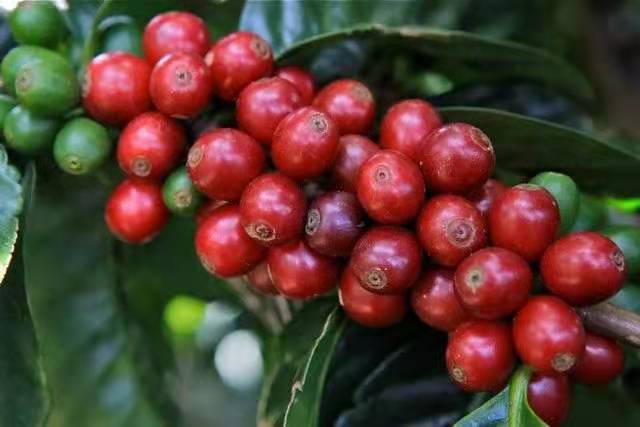
Castillo is the newer leaf-rust-resistant variety developed jointly by the FNC and the research center Cenicafé. Cenicafé's goal was to push yield and disease resistance higher while keeping quality on par with Caturra.
After 23 years of breeding and field trials, Cenicafé released the fifth-generation Castillo, approved for commercial planting in 2005.
Castillo is prized for its smooth body, aroma, and citrus acidity. In Cenicafé's blind tastings it matched Caturra and Bourbon for cup quality. FrontStreet Coffee's view is more cautious: it is genuinely hard to find a variety that excels at both disease resistance and flavor, and since Castillo still carries Robusta genetics, some flavor cost is inevitable.
Colombian Anaerobic Processing
When the genetics are mediocre, post-harvest processing can make up the difference. Before 2005, Colombian coffee was overwhelmingly Caturra and Catuai put through conventional washing, which produced the classic profile of rich chocolate and nut notes with a touch of fruity sweetness.
Nowadays, most premium Colombian lots go through some form of anaerobic processing, with Paradise Estate and Toucan & Palm Tree Estate as the most prominent examples. These estates work like artists, using experimental methods to draw out different expressions from the same bean. FrontStreet Coffee's Paradise Estate Sakura lot is a good case: a double anaerobic washed process that yields striking basil and mint aromatics, followed by a sweet strawberry character in the cup. It is genuinely captivating.
How FrontStreet Coffee Brews Colombian Coffee
Because most top Colombian coffee today is anaerobically processed, it rewards some adjustments at the grinder. Set your grind finer than you would for a traditionally washed coffee—on a standard setting these beans extract thin and underdeveloped. Keep the water from running too hot; FrontStreet Coffee suggests 90 degrees Celsius. Using our Sakura beans as an example:
Filter: V60#01
Water Temperature: 91°C
Dose: 15g
Coffee-to-Water Ratio: 1:16
Grind Size: Medium-fine (Chinese standard #20 sieve, 80% pass rate)
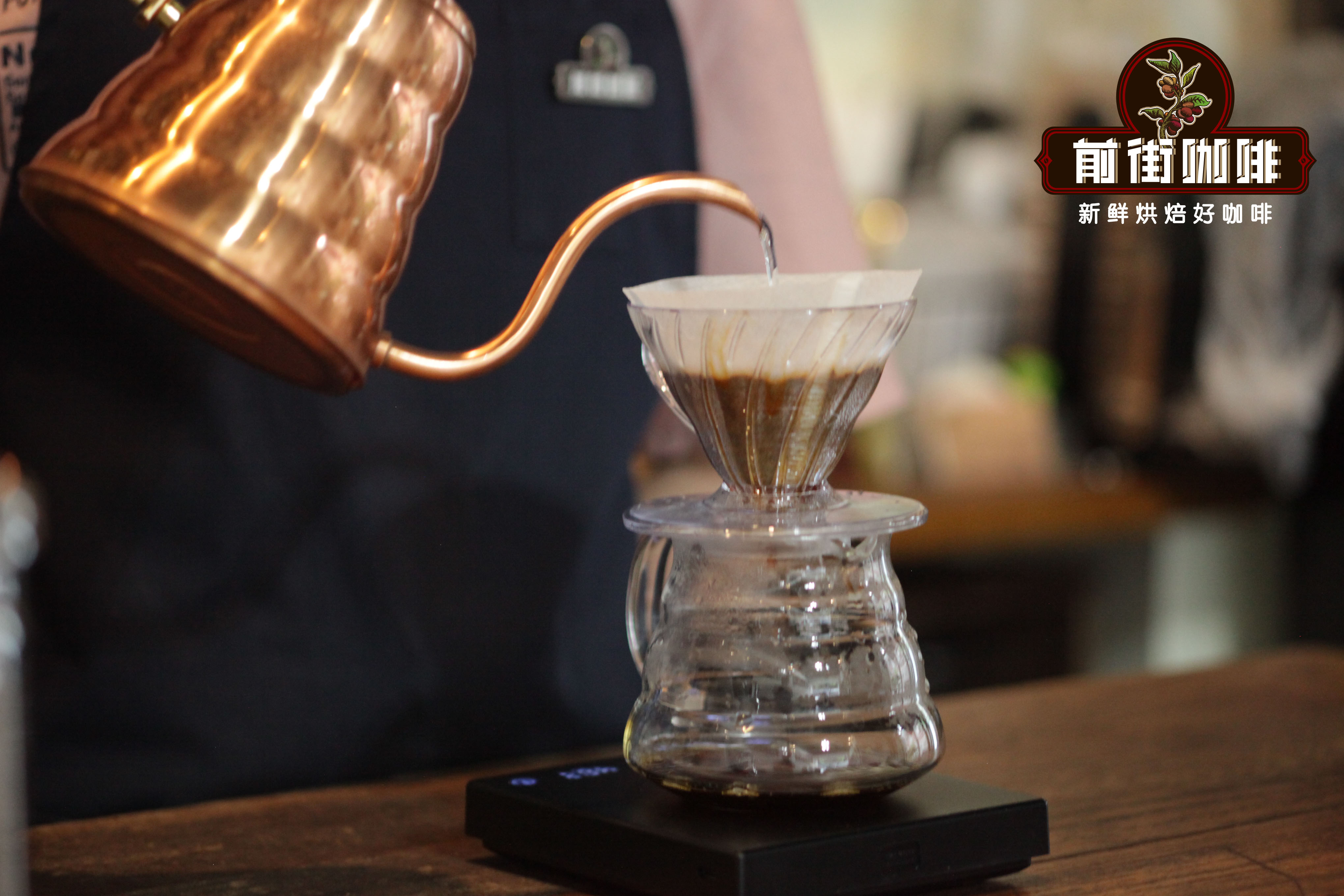
We use a three-pour method: start with 30g of water for a 30-second bloom, then pour in small circles up to 130g and pause. Once the bed is nearly exposed, pour again to 240g and stop. When the bed is nearly exposed a second time, lift the dripper off. Measured from the start of the bloom, total drawdown should come to about 1 minute 50 seconds.
FrontStreet Coffee Recommendation
Colombian coffee is remarkably versatile—it works as an espresso base, shines as a single-origin pour-over, and spans everything from bright, fruit-forward profiles to deep, heavy-bodied cups. Whichever style you prefer, there is a Colombian coffee to match. Here are three FrontStreet picks:
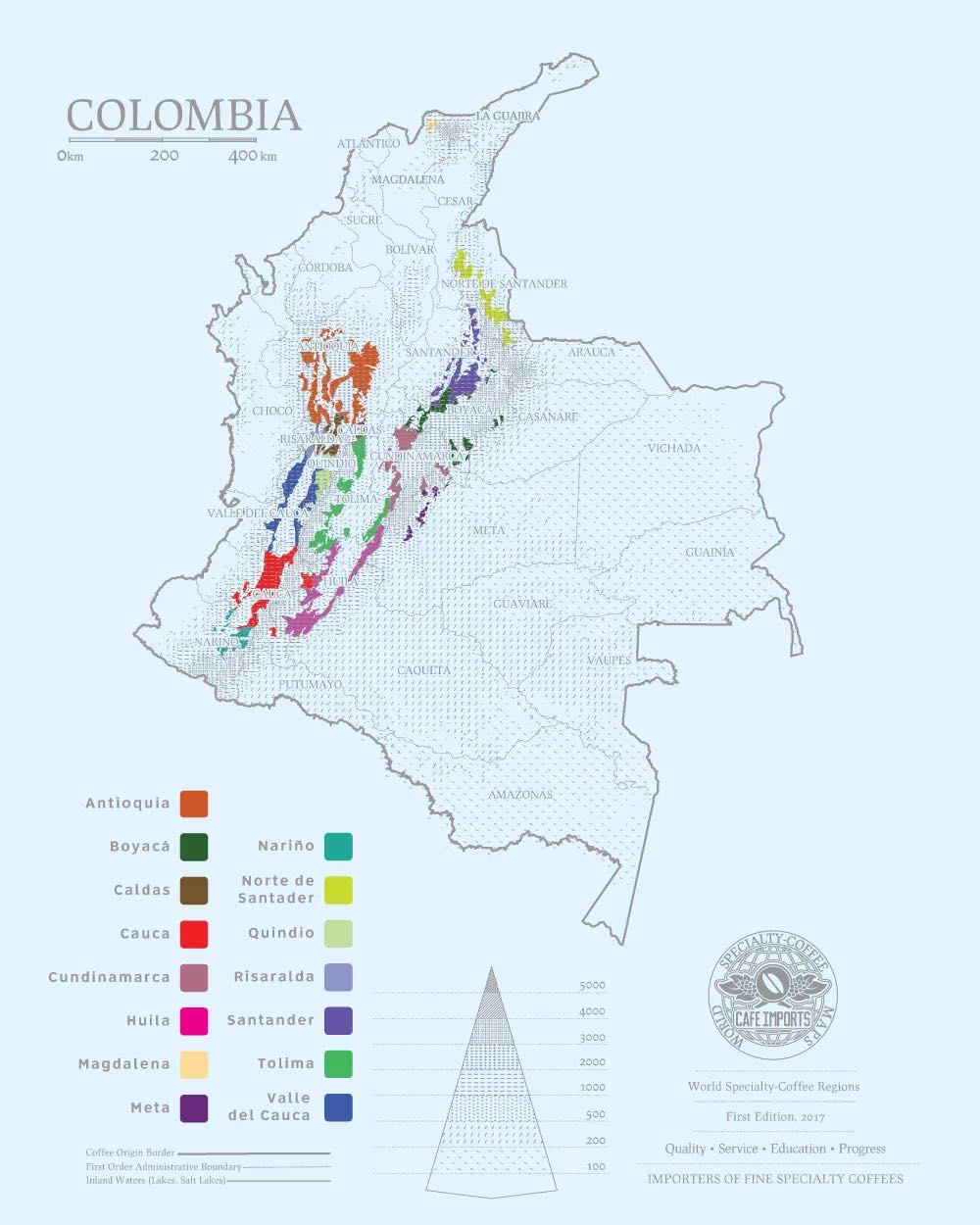
- FrontStreet Colombia Huila (washed): Huila, in the southern Central Andes, is Colombia's best-known specialty region—rolling hill country above 1500 meters, with the country's major rivers converging nearby to supply abundant water. Roasted medium-dark, our washed Huila highlights dark chocolate, sweet nuttiness, moderate body, and a smooth mouthfeel. It suits pour-over and French press, but it also pulls beautifully from a moka pot or espresso machine for Americanos and lattes.
- FrontStreet Colombia Boundary Estate Sidra (anaerobic natural): Anaerobic fermentation—sometimes called carbonic maceration—means fermenting the coffee in a sealed, pressure-rated stainless tank with little or no oxygen, controlling temperature, time, and pH throughout. Our Sidra goes through anaerobic natural processing, which transforms the cup into an abundance of tropical fruit. Roasted medium-light, it delivers passion fruit, grape, apricot, and dried-fruit sweetness whether you brew it as pour-over, cold brew, drip bag, or moka pot coffee.
- FrontStreet Specialty Espresso Blend: If you brew with a home espresso machine or a moka pot, this blend—developed originally for cafe use—pairs the creamy nuttiness of Brazil with the bittersweet dark chocolate of Colombia. Expect fine, golden crema and a shot that stands up beautifully to milk in a latte. It is very beginner-friendly and works equally well as the base for Americano, cappuccino, or mocha.
Important Notice :
FrontStreet Coffee is a long-established specialty coffee roaster in Guangzhou China, selling freshly roasted beans from its own farm in Yunnan as well as dozens of carefully selected single-origin beans from around the world for both pour-over and espresso. The products deliver consistently excellent quality and great value, with shipping within 24 hours. Guangzhou's FrontStreet Coffee shop is recommended by many coffee lovers, and the beans are now available online at the Tmall 。
FrontStreet Coffee has moved to a new address:
FrontStreet Coffee Address: 315,Donghua East Road,GuangZhou
Tel:020 38364473
 Scan and follow the En Gafei WeChat official account. Please indicate that the reprint comes from "En Gafei".